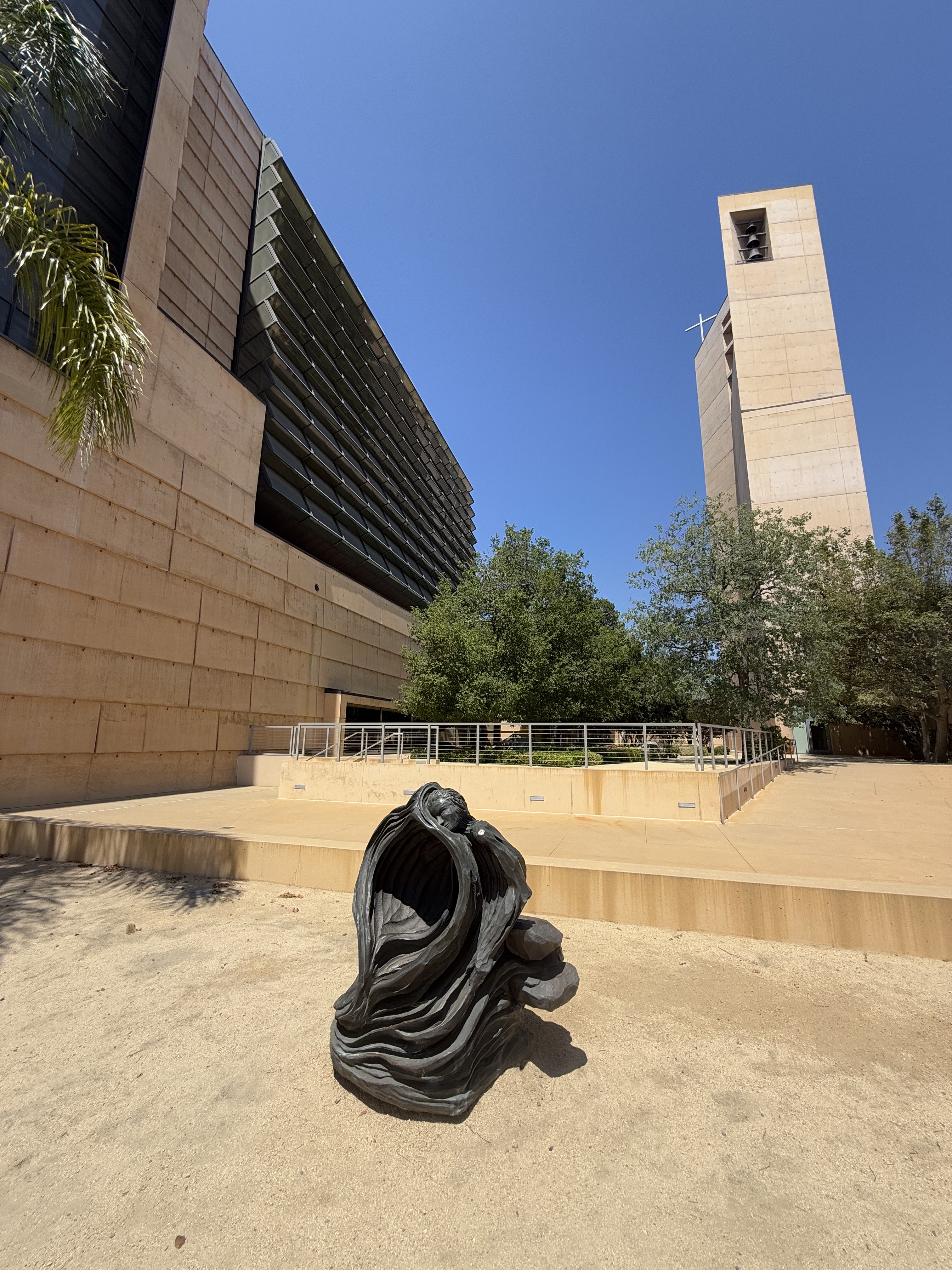
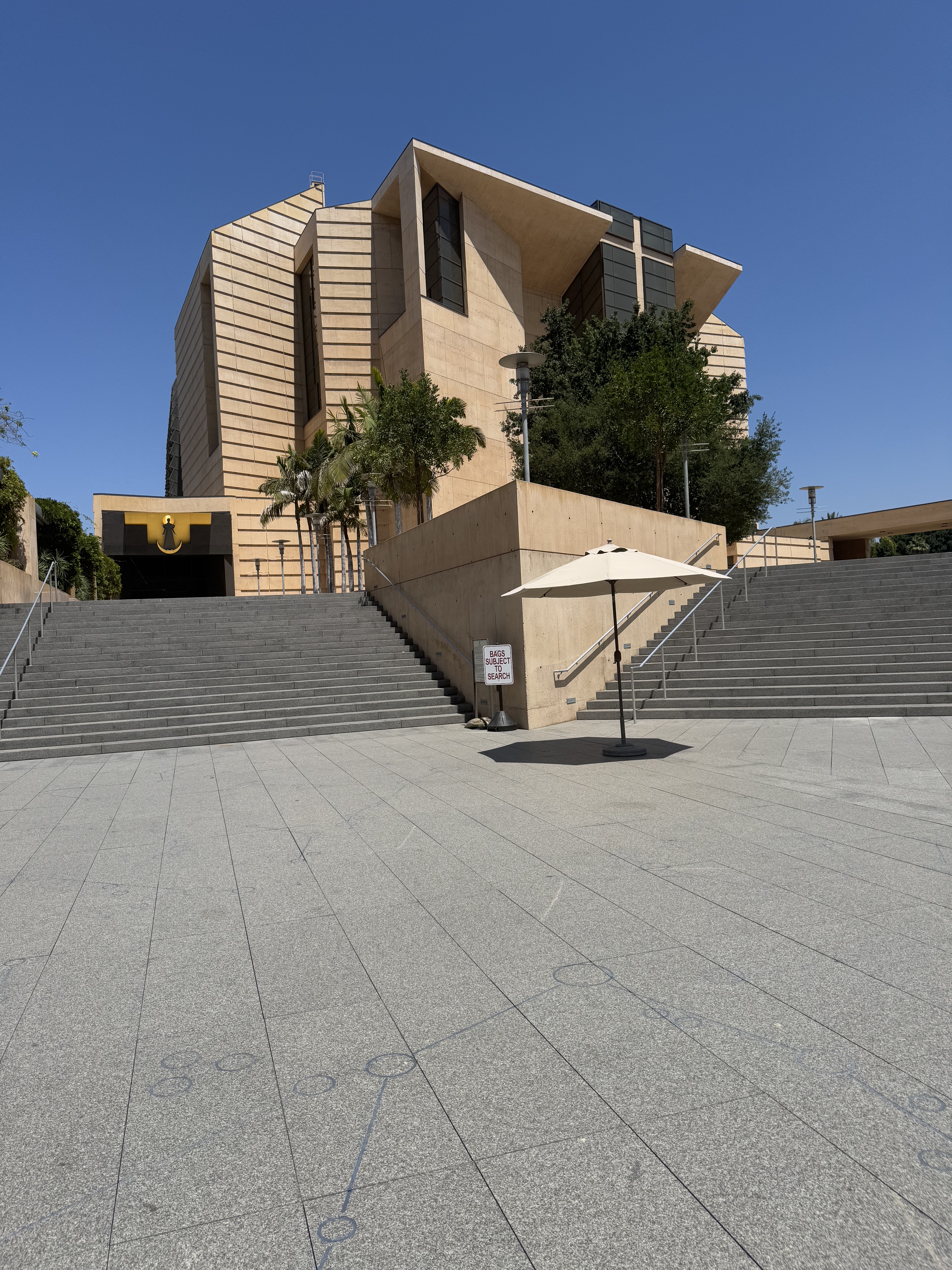
The Cathedral of Our Lady of the Angels arose from necessity when the 1994 Northridge earthquake rendered the historic St. Vibiana Cathedral structurally unsuitable for continued use. Cardinal Roger Mahony and the Archdiocese of Los Angeles commissioned Rafael Moneo to design a new cathedral complex capable of serving one of the largest and most demographically diverse Catholic populations in the world. Construction began in 1999 as part of downtown Los Angeles's late-century revitalization, with the building opening in 2002 as both a spiritual center and civic monument for an increasingly Latino Catholic metropolis.
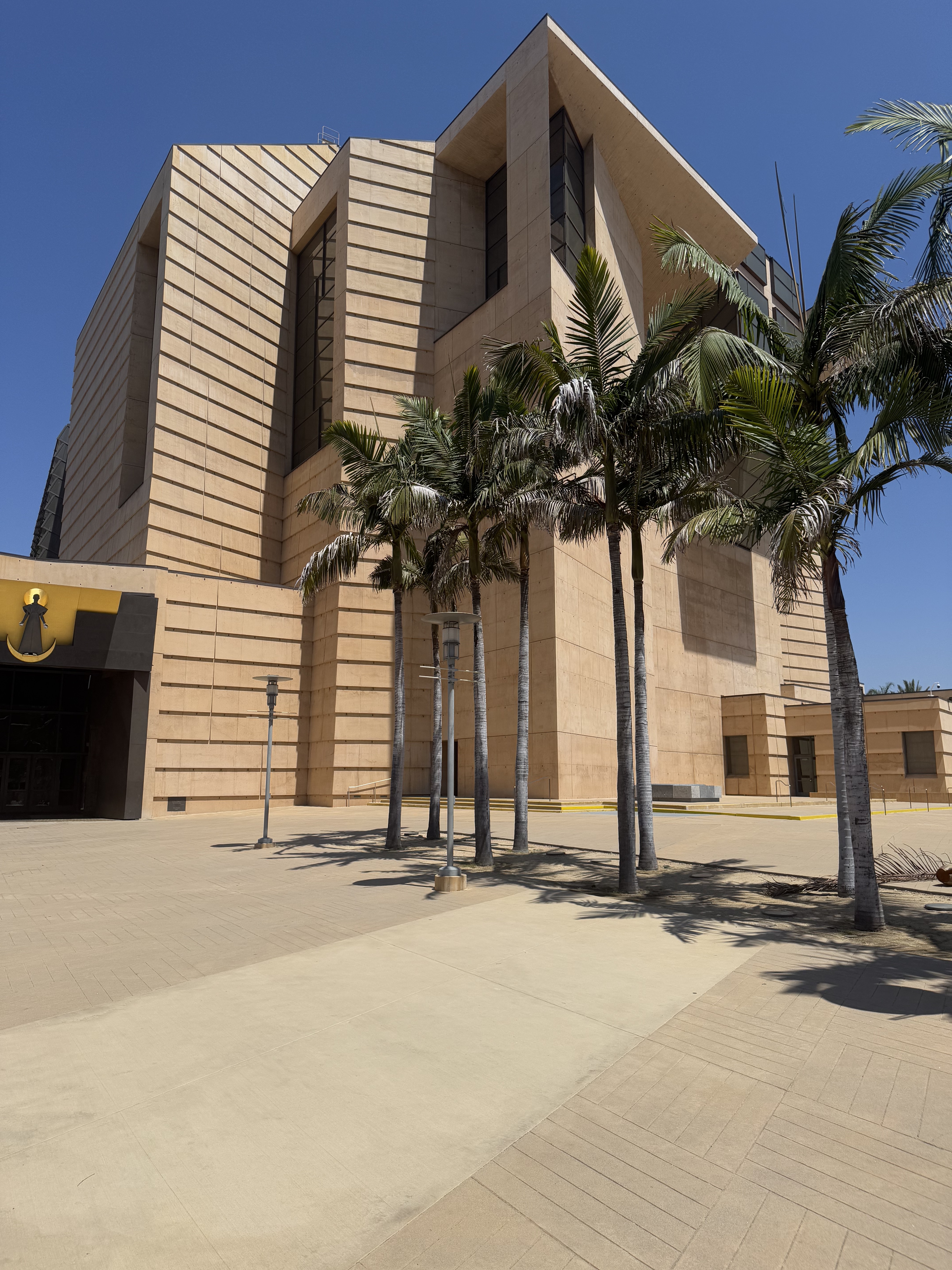
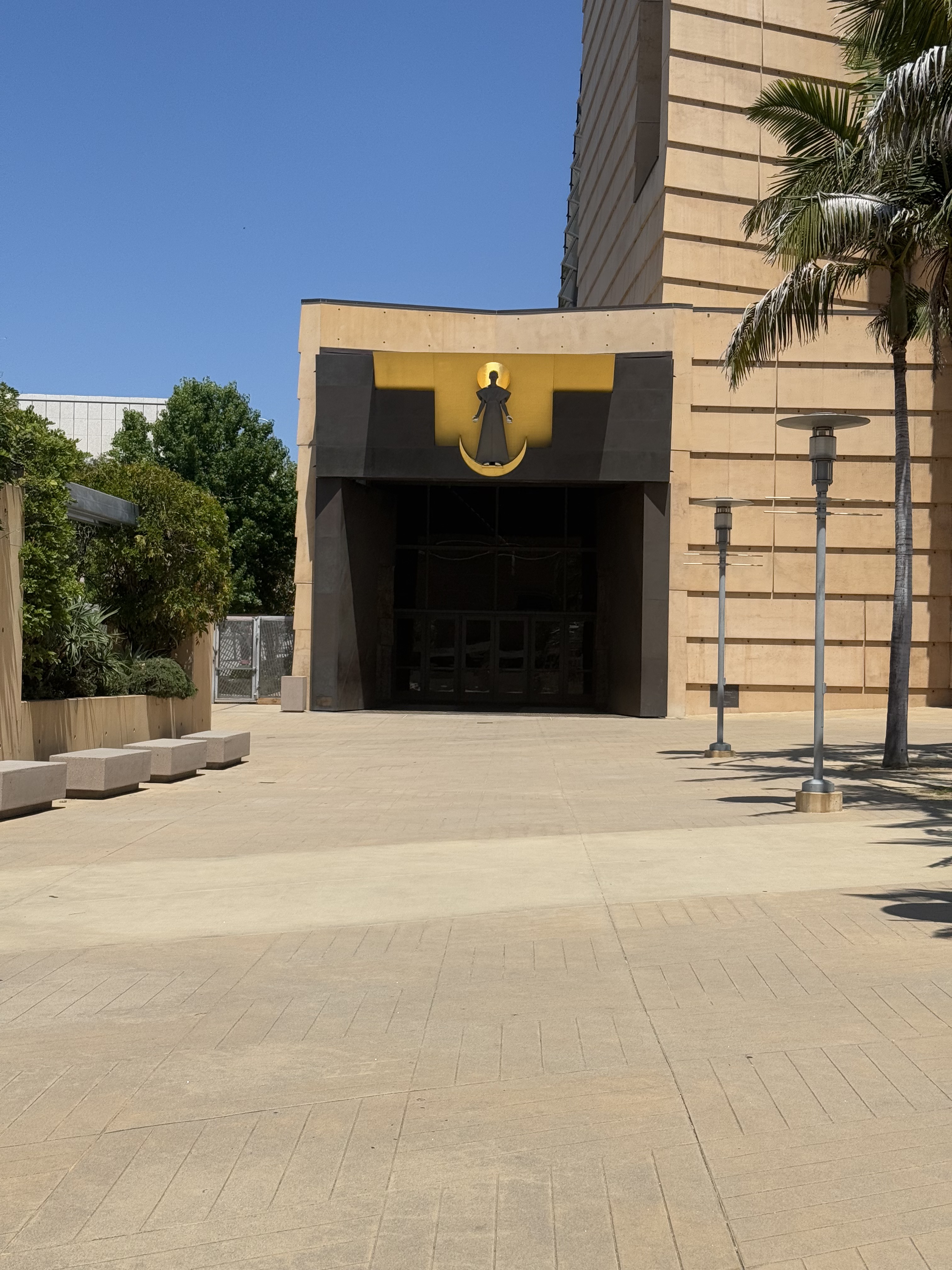
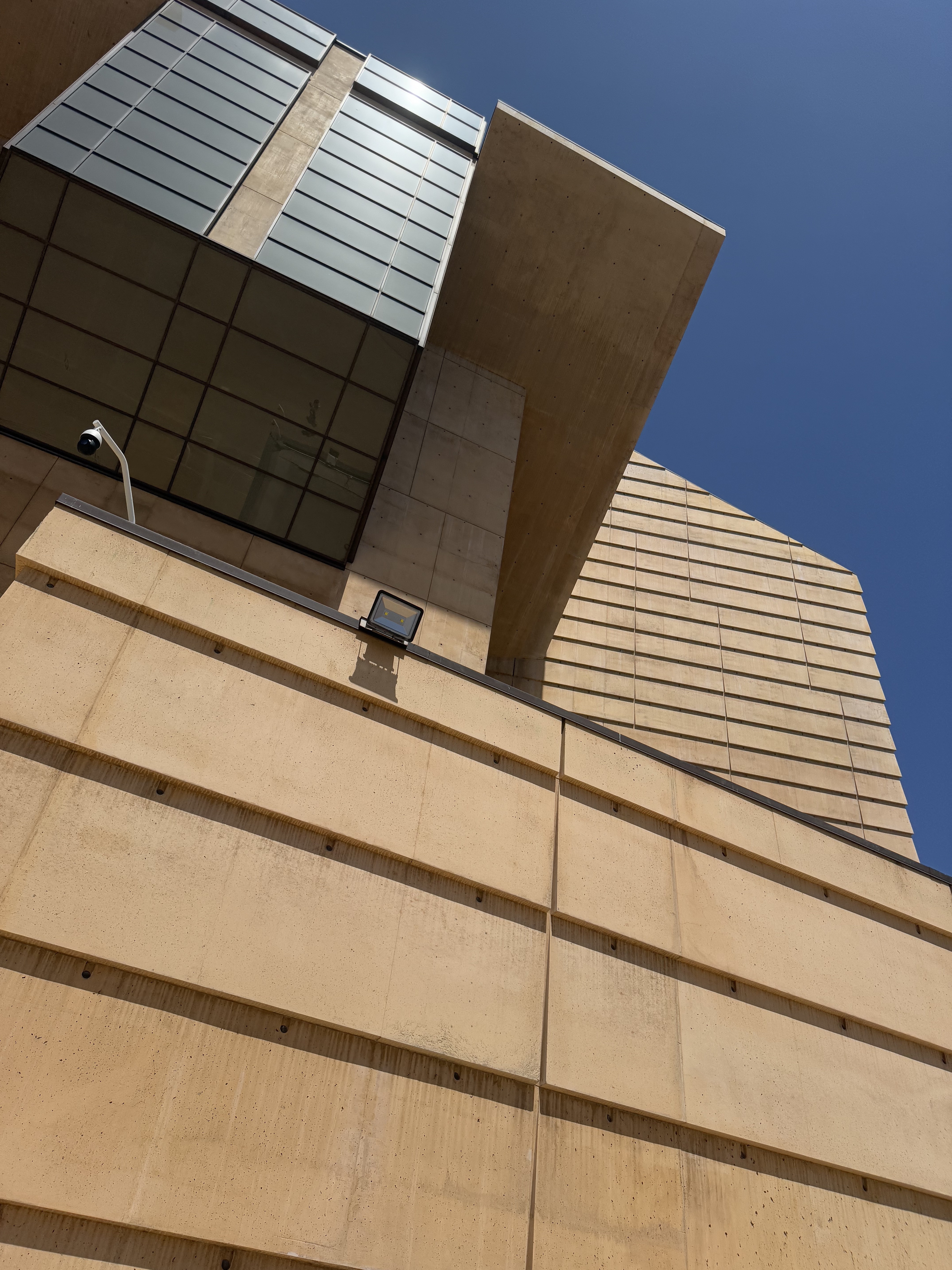
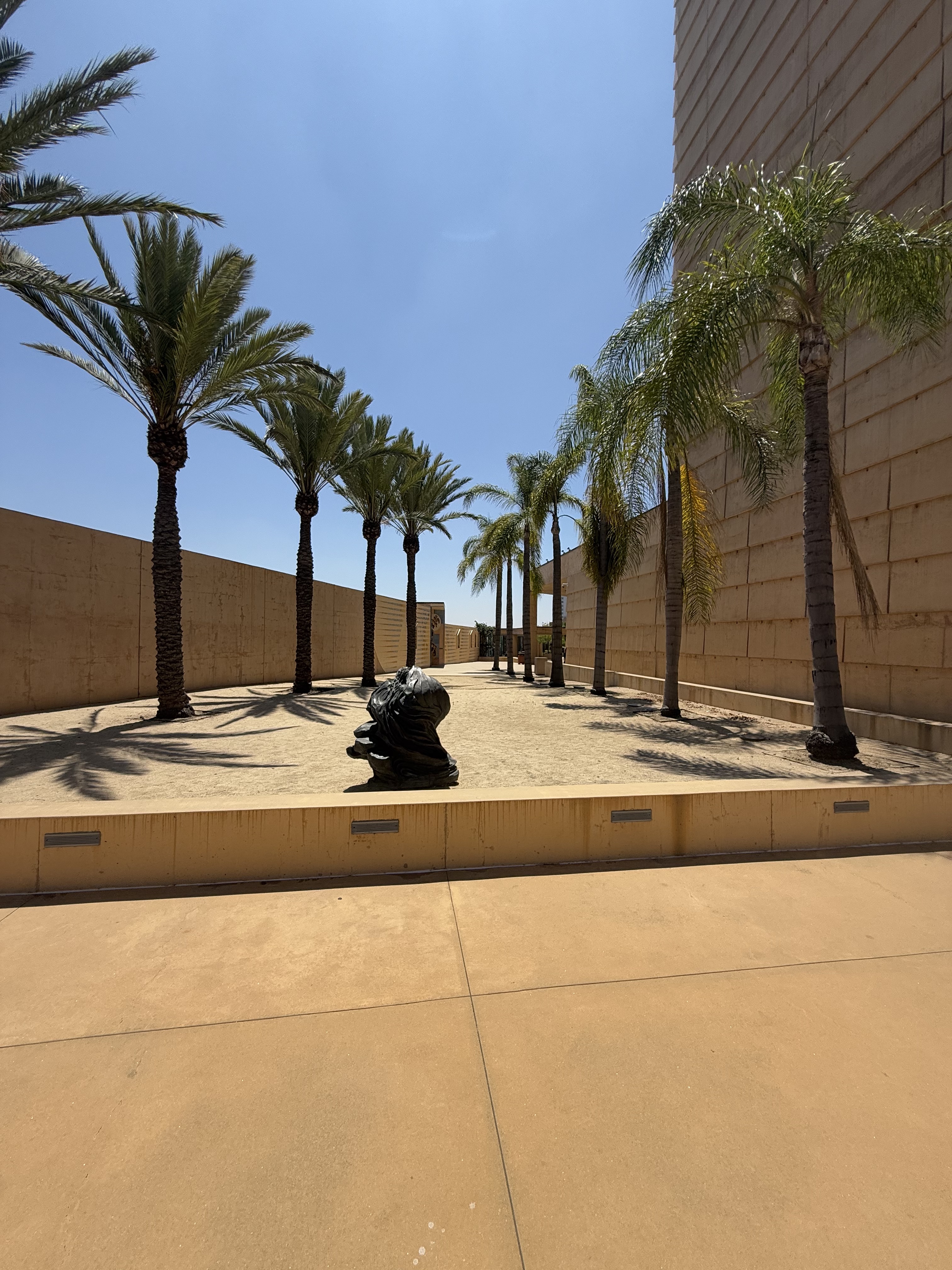
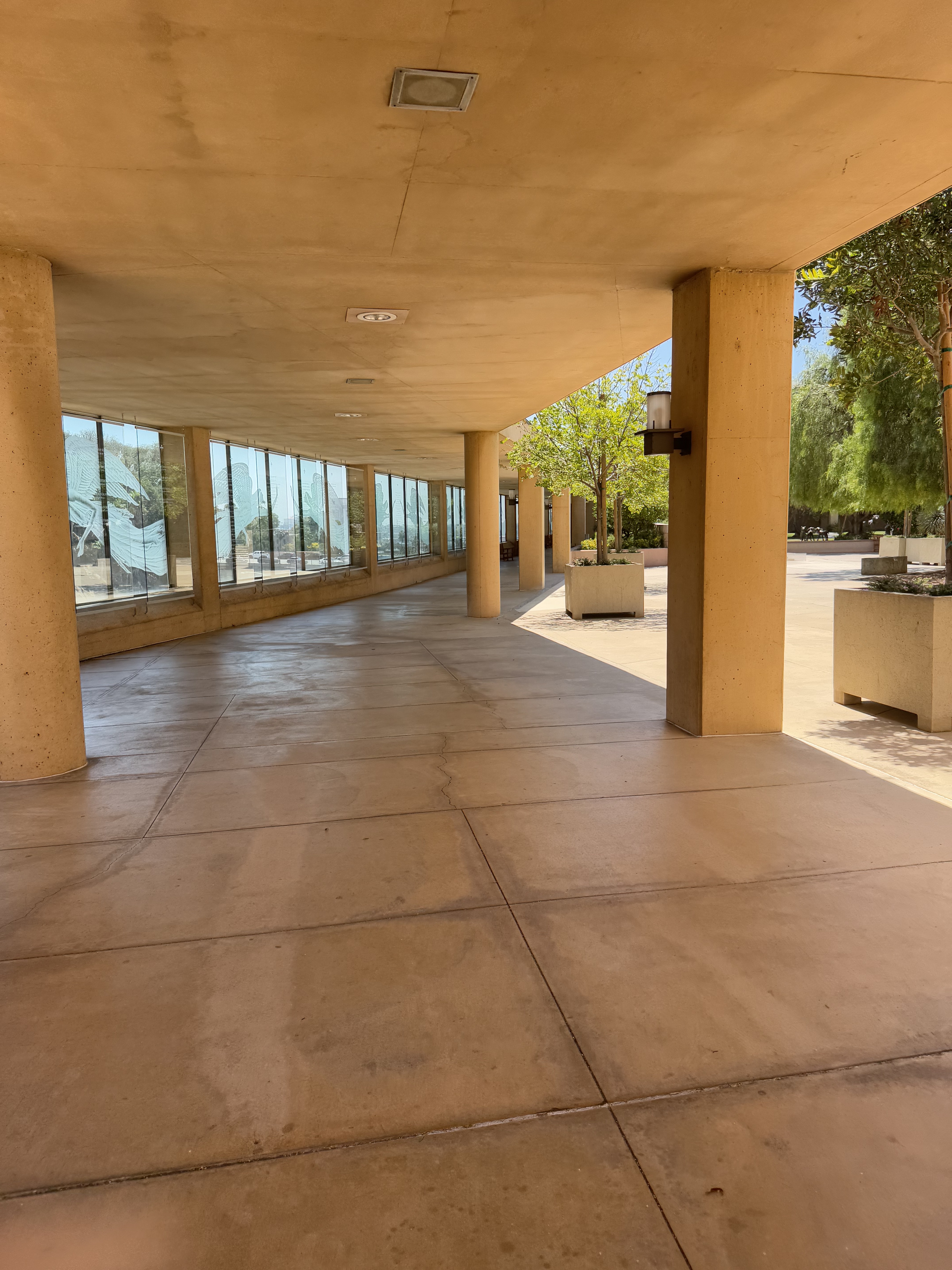
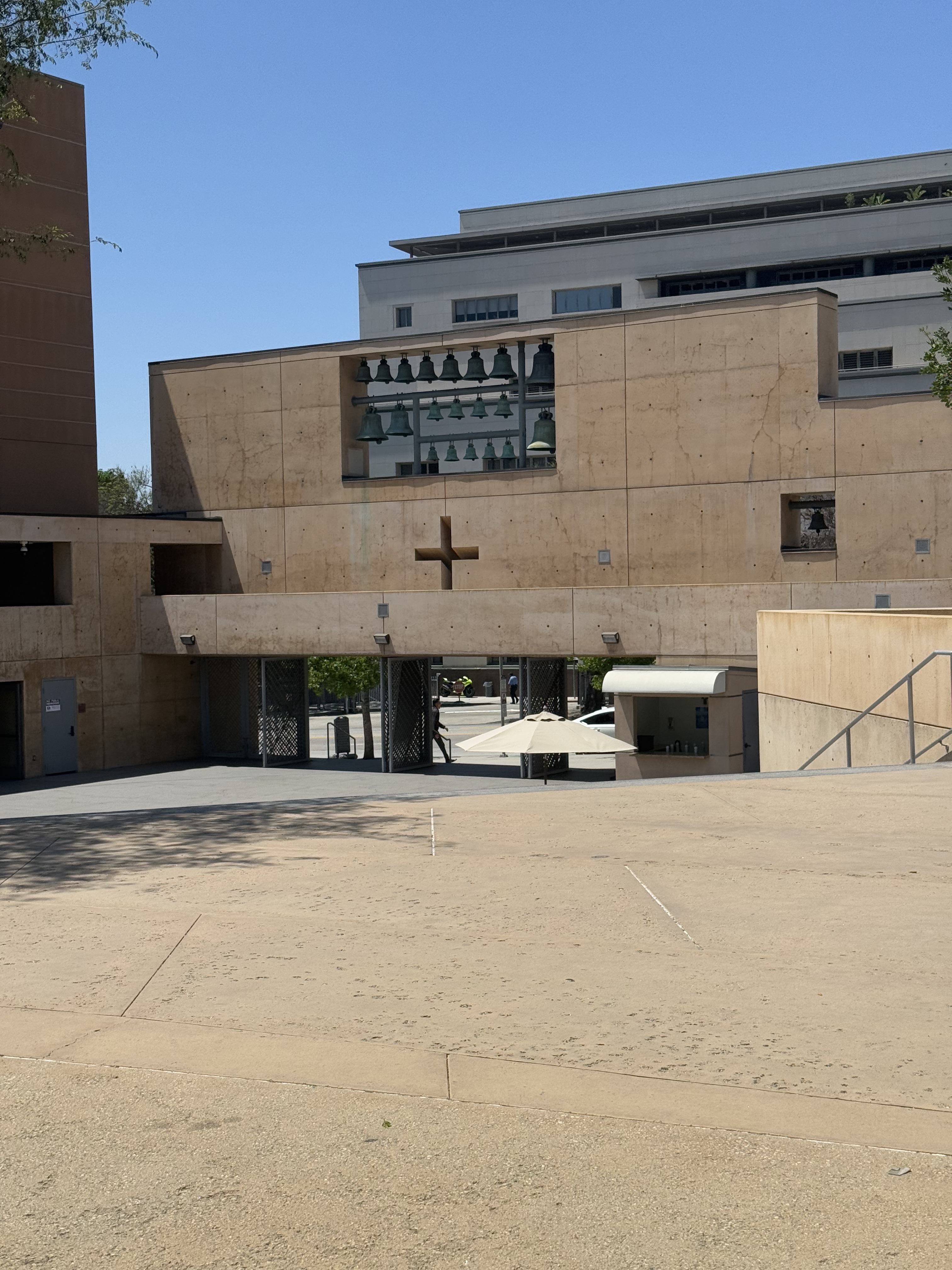
Moneo rejected traditional Gothic verticality in favor of a massive, earth-toned ensemble of warm concrete, alabaster, and carefully controlled natural light that reads simultaneously as fortress and mission-like precinct. The building unfolds as a sequence of urban thresholds including plaza, campanile, devotional gardens, mausoleum, and processional entries leading to an off-axis nave that reveals itself through movement rather than frontal symmetry. Alabaster windows punctuate the concrete walls, filtering daylight to create a solemn, tactile atmosphere that distinguishes the space from both suburban churches and contemporary glass-walled museums. The angular, monolithic forms anchor the complex firmly to the ground while the interior spaces emphasize procession and gradual revelation.