
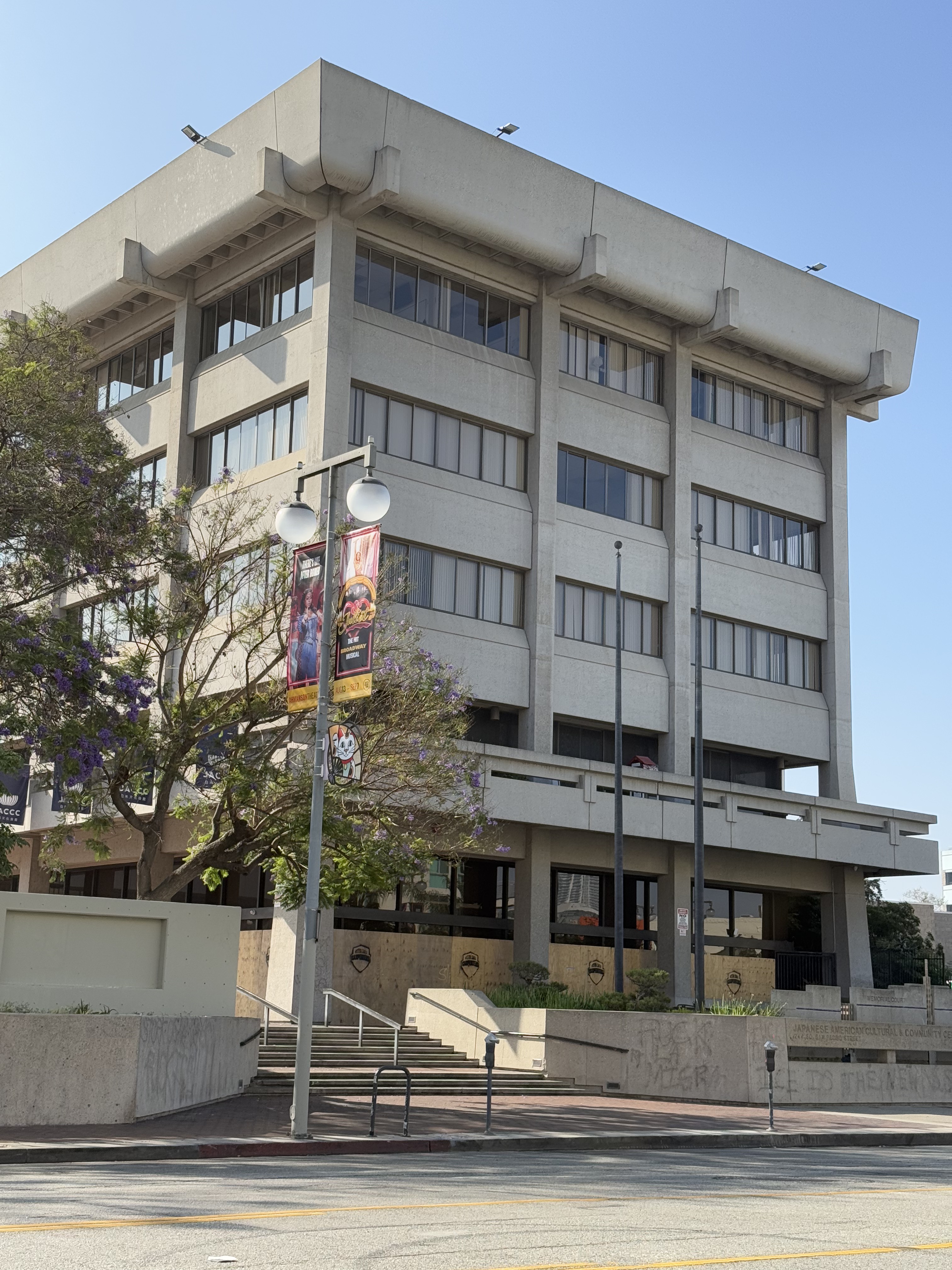
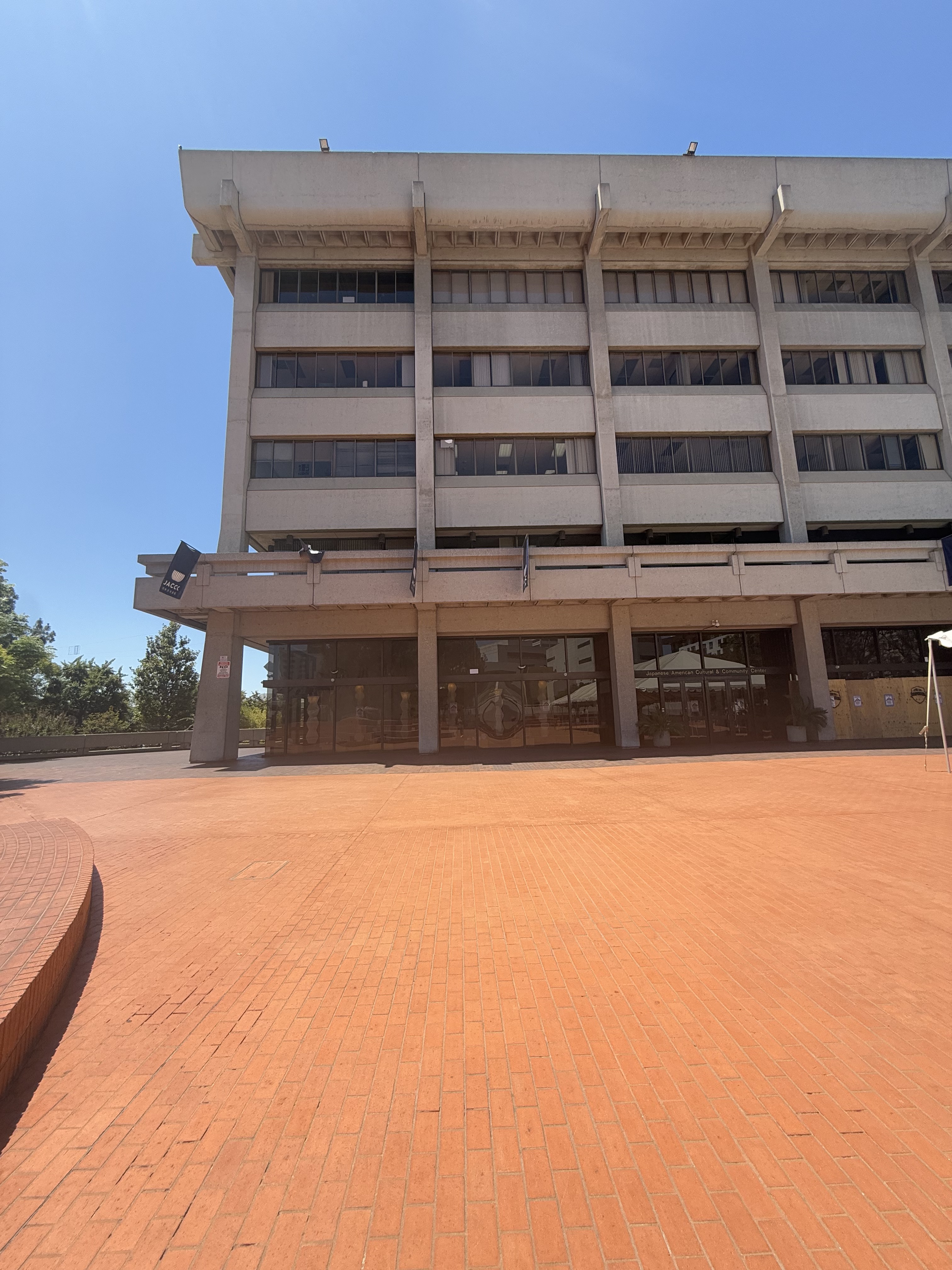
The Japanese American Cultural & Community Center emerged from years of organizing by Issei and Nisei leaders who envisioned a permanent cultural institution anchoring Little Tokyo's civic landscape. Developed between 1978 and 1983, the complex represents a profound statement of permanence and cultural confidence during a period when Japanese American communities were asserting their place in Los Angeles following decades of exclusion, wartime incarceration, and postwar rebuilding. Architects Kazumi Adachi, Kiyoshi Sawano, and Hideo Matsunaga worked within Japanese American professional networks to create what would become one of the neighborhood's defining public spaces. The project reflected a long-term investment in visible Japanese American civic presence rather than temporary programming alone.
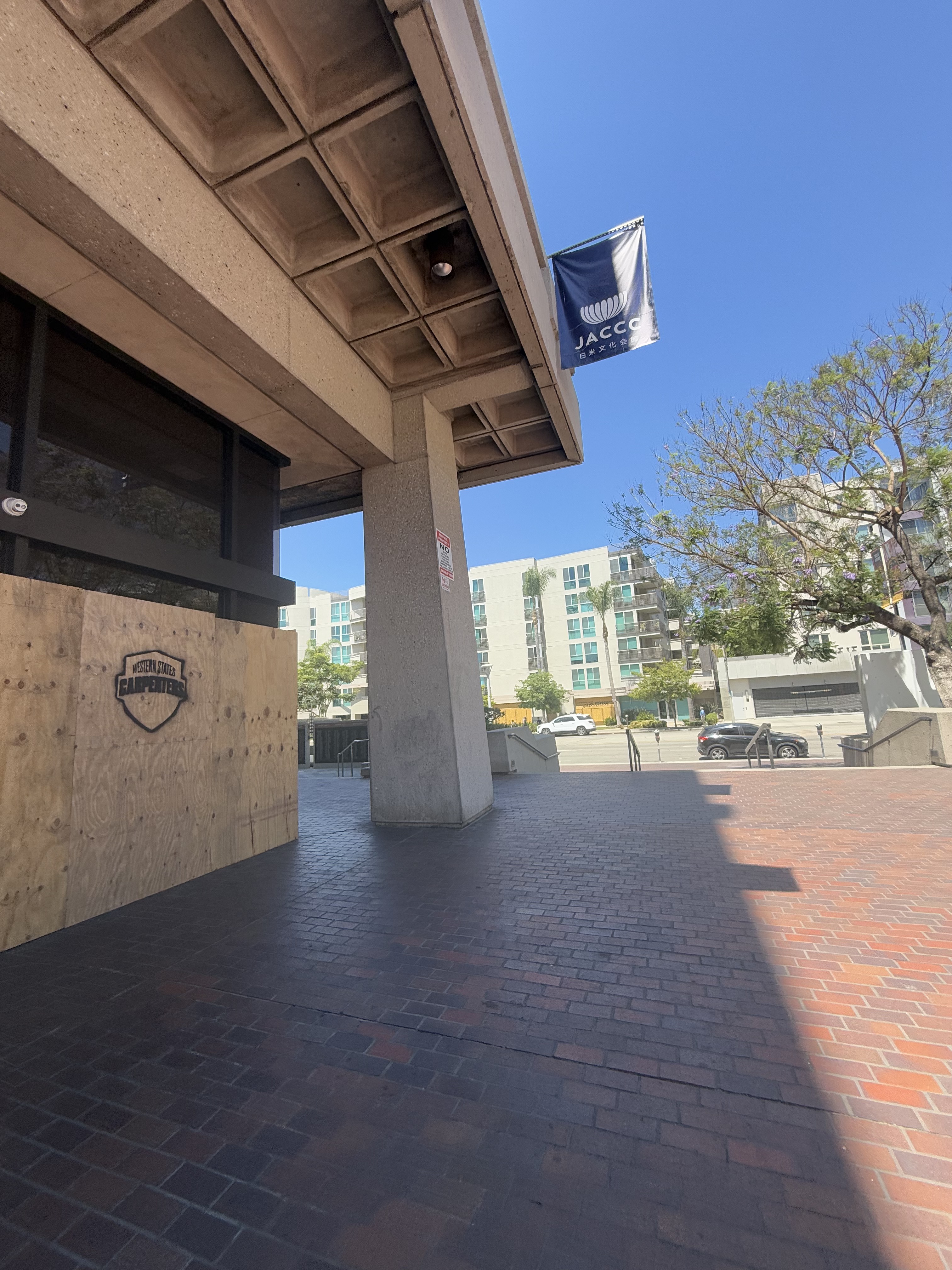
The center building demonstrates a sophisticated late-modern hybrid that translates Japanese spatial memory into American civic-institutional form without resorting to crude pastiche. Concrete massing defines the structure's monumental quietness, while recessed openings and layered roof lines create what has been described as "cultural Brutalism." The adjacent Isamu Noguchi Plaza proves indispensable to the complex's success, functioning as a multilevel brick and stone civic room punctuated by Noguchi's basalt sculpture "To the Issei," dedicated in 1983. Together, building and plaza create a cohesive architectural statement that balances monumentality with intimate community gathering spaces.