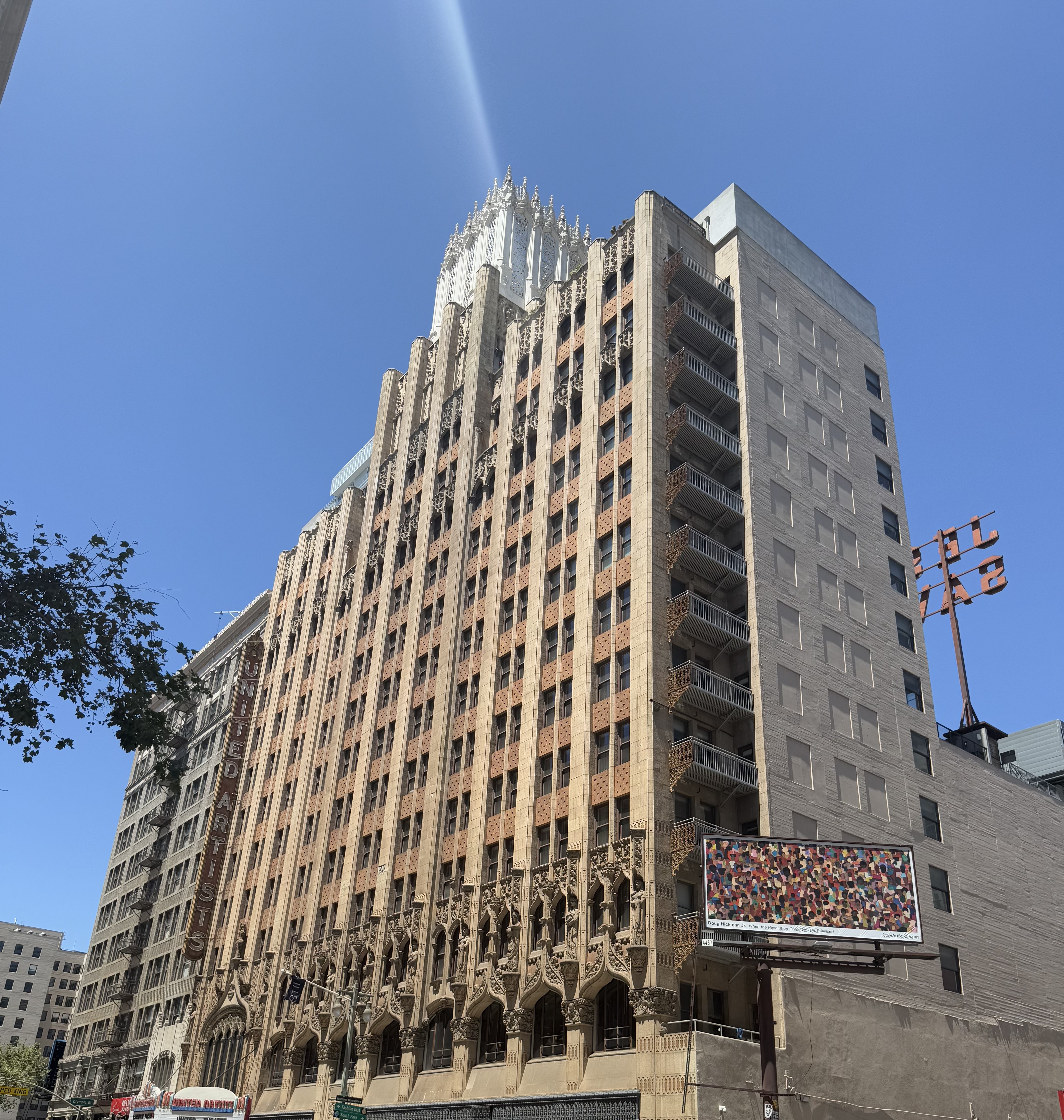
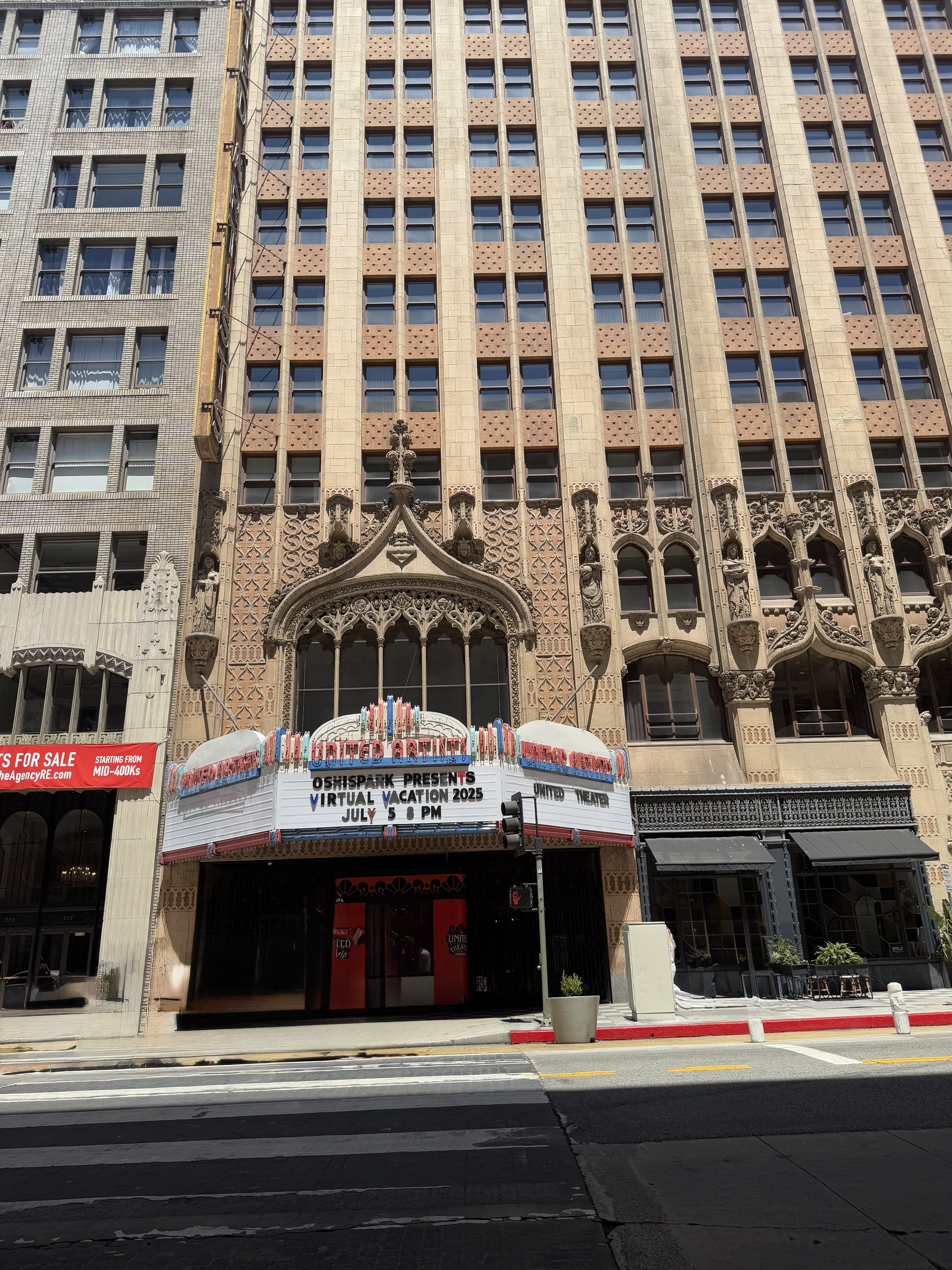
United Artists commissioned this Broadway theater building in 1927 as something unprecedented: a downtown showcase built not by exhibitors or theater chains, but by the artist-owned studio itself. Charlie Chaplin, Mary Pickford, Douglas Fairbanks, and D.W. Griffith had formed United Artists to control their own distribution, and this building represented Hollywood's most direct statement of creative independence on the city's primary entertainment corridor. The project combined corporate ambitions with theatrical spectacle, creating a headquarters where the studio could both conduct business and premiere its productions. At a moment when the film industry was reshaping Los Angeles, the building served as a bridge between studio politics and downtown urbanism.
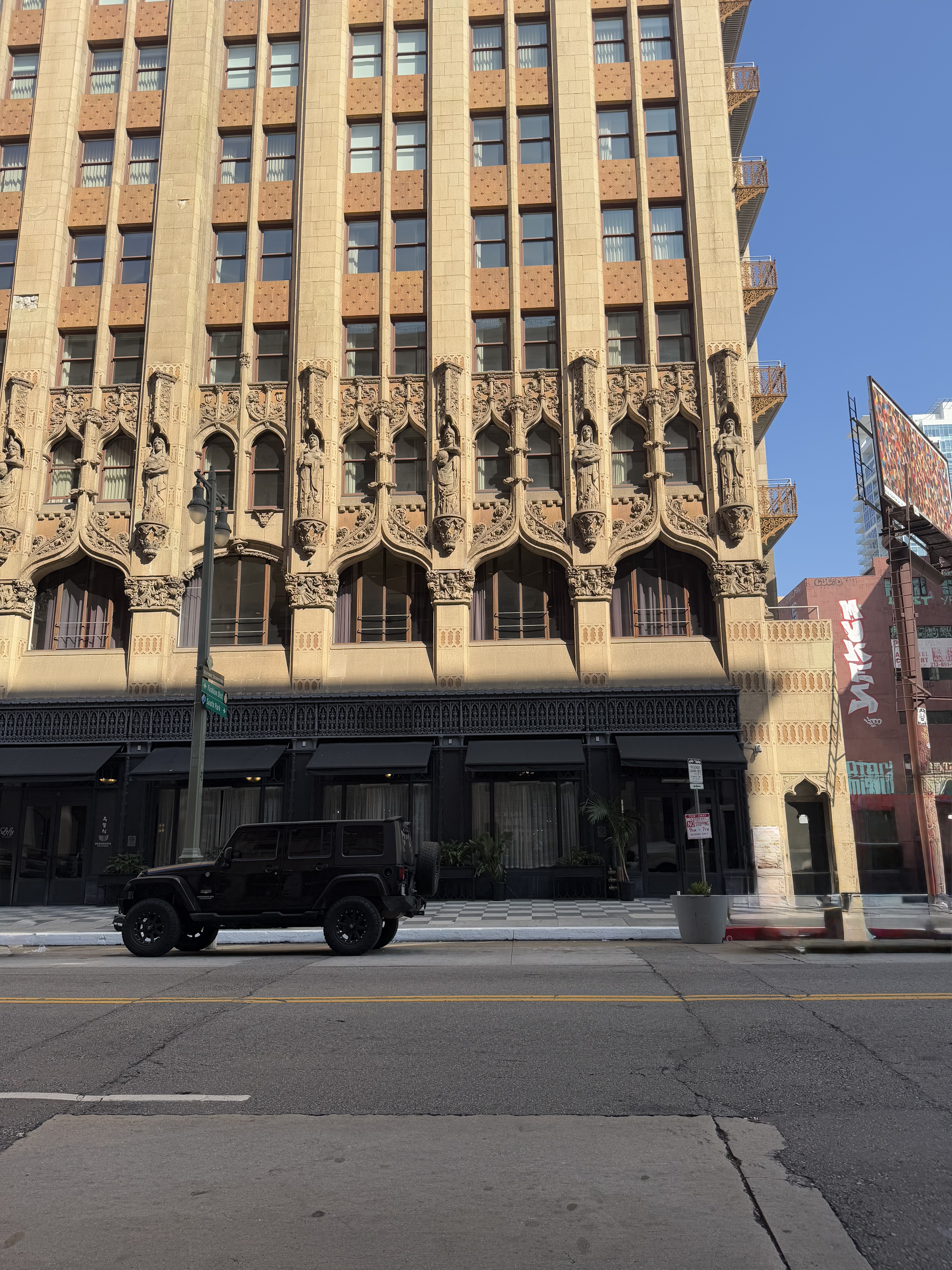
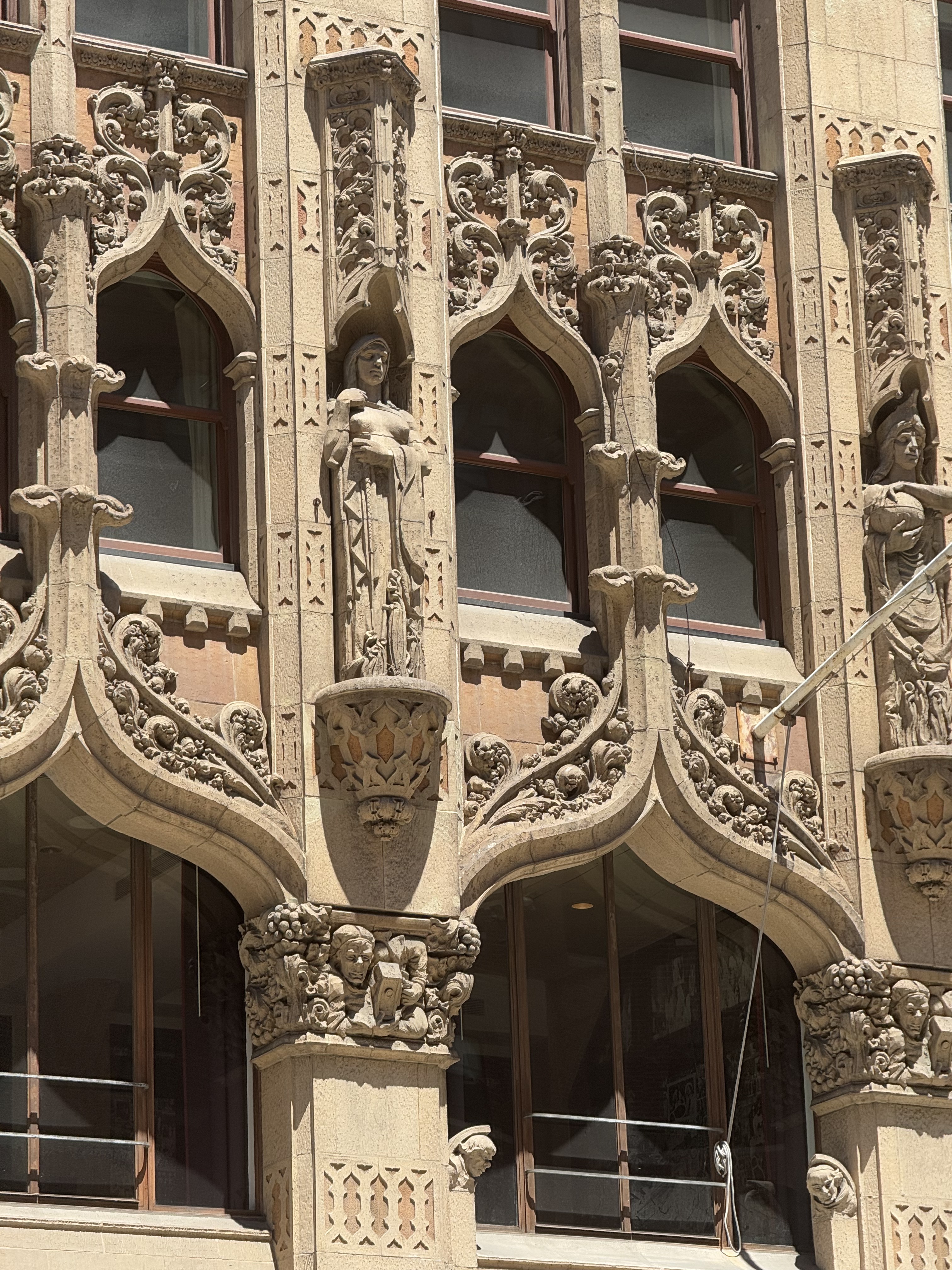
The structure splits its architectural identity between two distinct visions: Walker & Eisen designed the thirteen-story steel-framed office tower with the restrained commercial vocabulary typical of their prolific practice, while C. Howard Crane conceived the theater interior as a Spanish Gothic fantasy reportedly influenced by Mary Pickford's preferences. This division between envelope and interior creates a building that reads as corporate modernism from the street but transforms into an almost ecclesiastical space within the auditorium. Crane, a Detroit-based specialist who designed over 200 theaters nationwide, brought his mastery of grand entertainment spaces to what would become his only major West Coast theater work. The result juxtaposes urban pragmatism with devotional ornament, corporate efficiency with theatrical excess.