
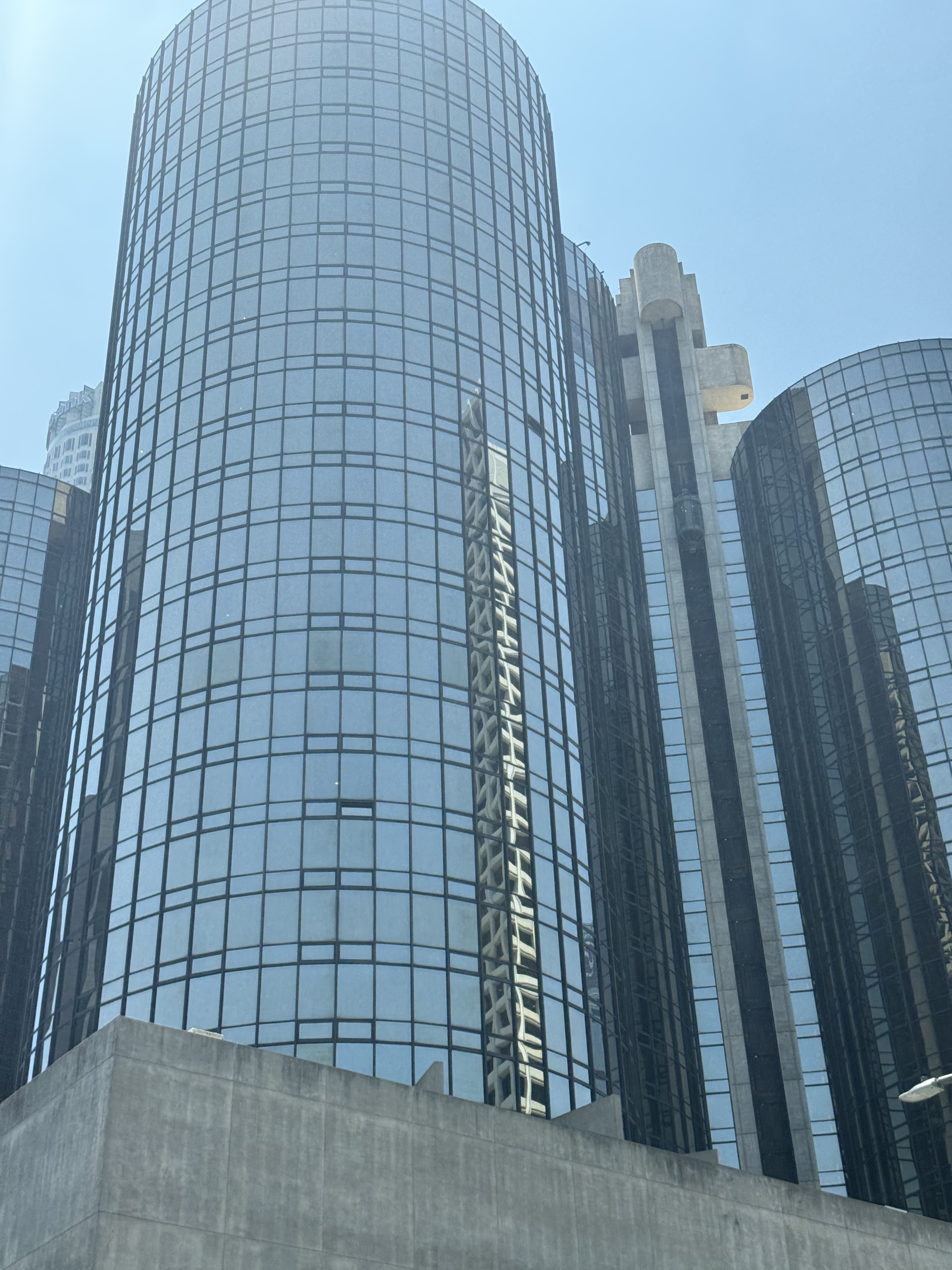
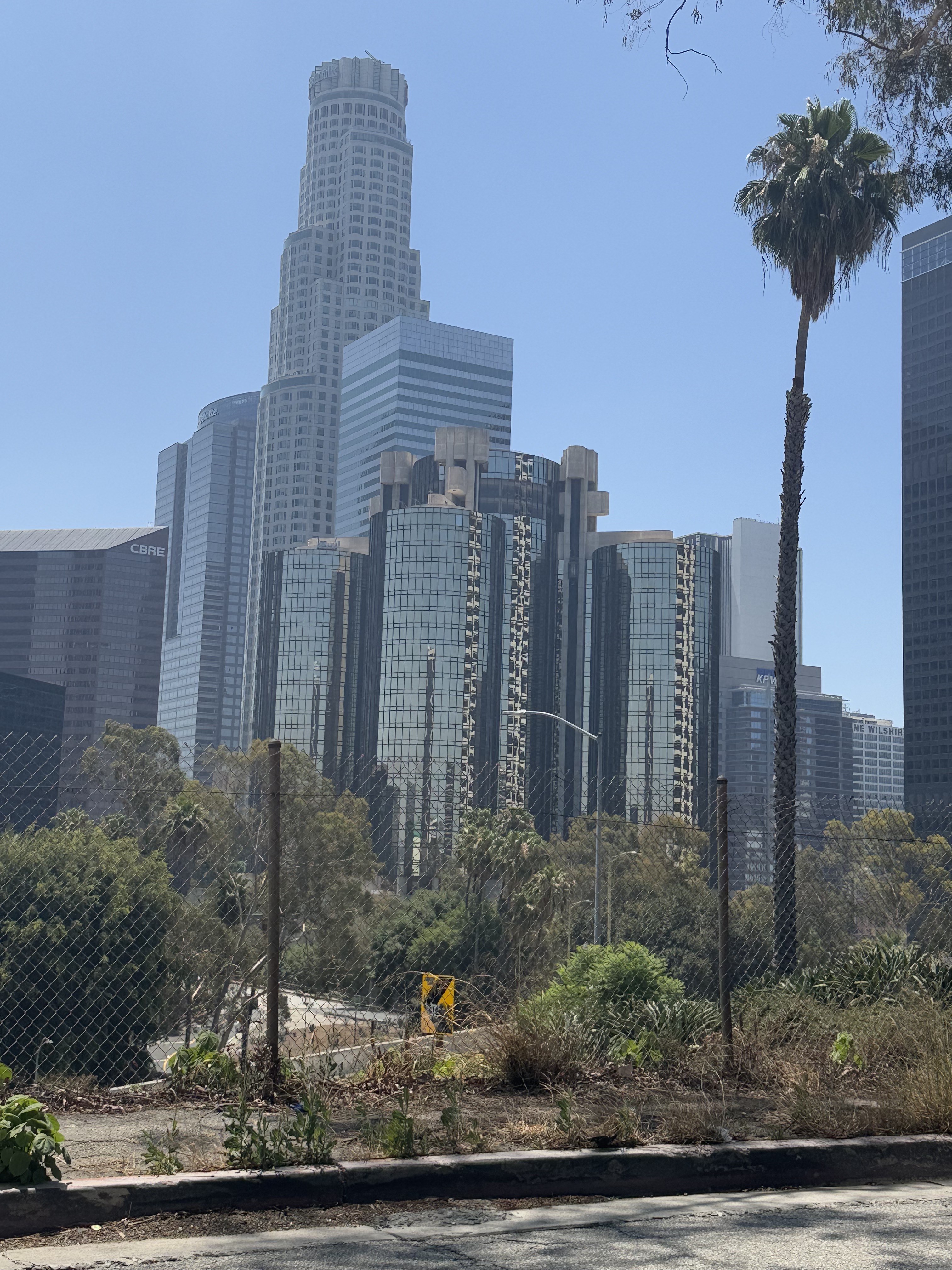
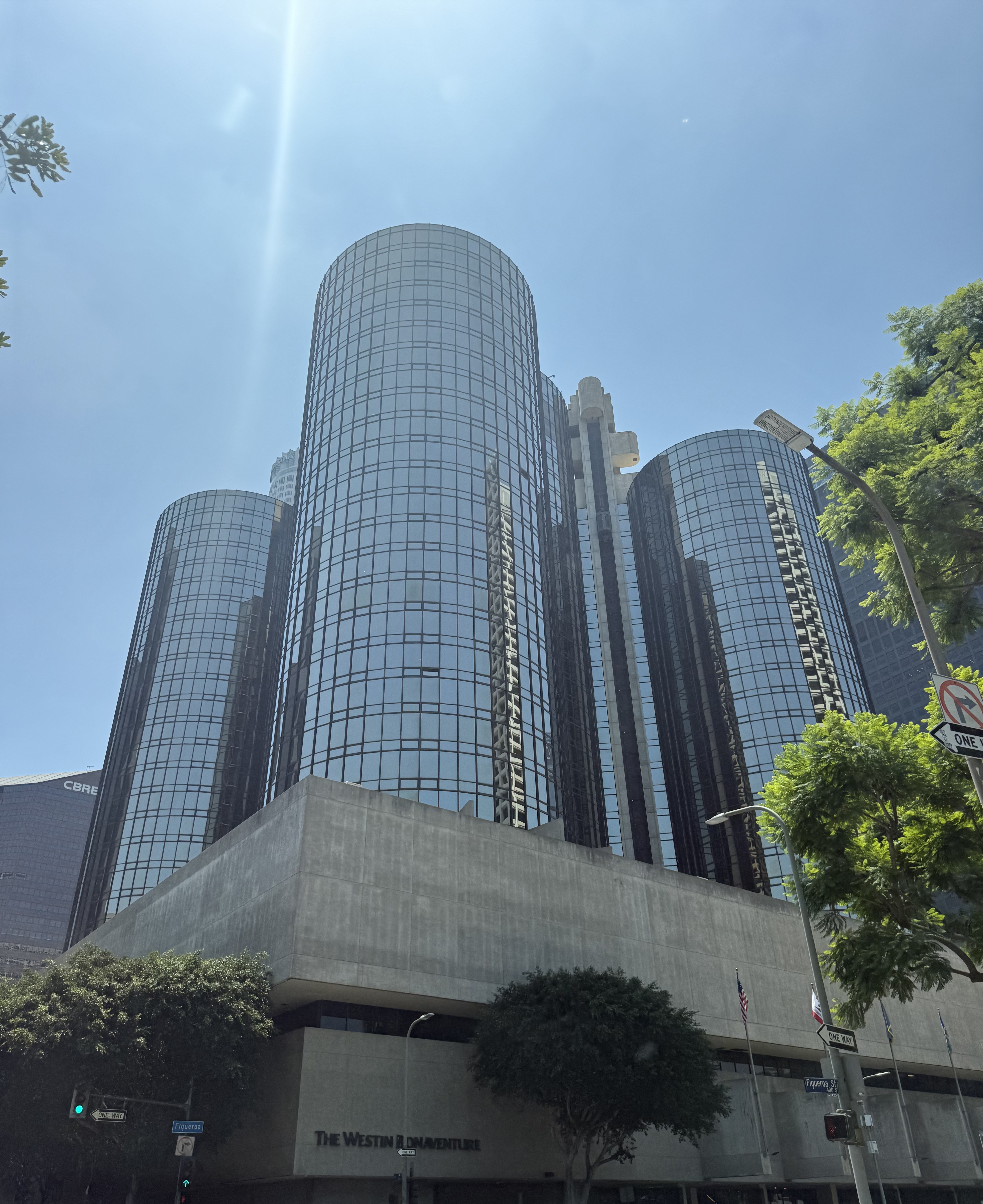
Rising from downtown Los Angeles between 1974 and 1977, the Westin Bonaventure Hotel emerged from a bold vision to revitalize the urban core through architectural spectacle. Developed through investment structures linked to John C. Portman Jr. with Japanese capital participation, the complex was conceived as an anchor for downtown's hospitality and convention infrastructure during an era when suburbanization threatened the viability of city centers. The project represented a calculated response to the postwar downtown crisis, promising to draw visitors and business back to a district many had written off as obsolete.
The building's most striking feature is its composition of five cylindrical mirrored towers arranged around a vast interior atrium that transforms circulation into pure theater. Glass elevators glide along the exterior surfaces of the reflective cylinders, while bridges and balconies create viewing platforms that overlook the soaring lobby space below. A revolving lounge crowns the complex, completing an architecture devoted entirely to reflection, disorientation, and what critics have termed "interiorized urbanity." The mirrored surfaces create an endlessly recursive visual field that blurs the boundaries between interior and exterior, reality and reflection.