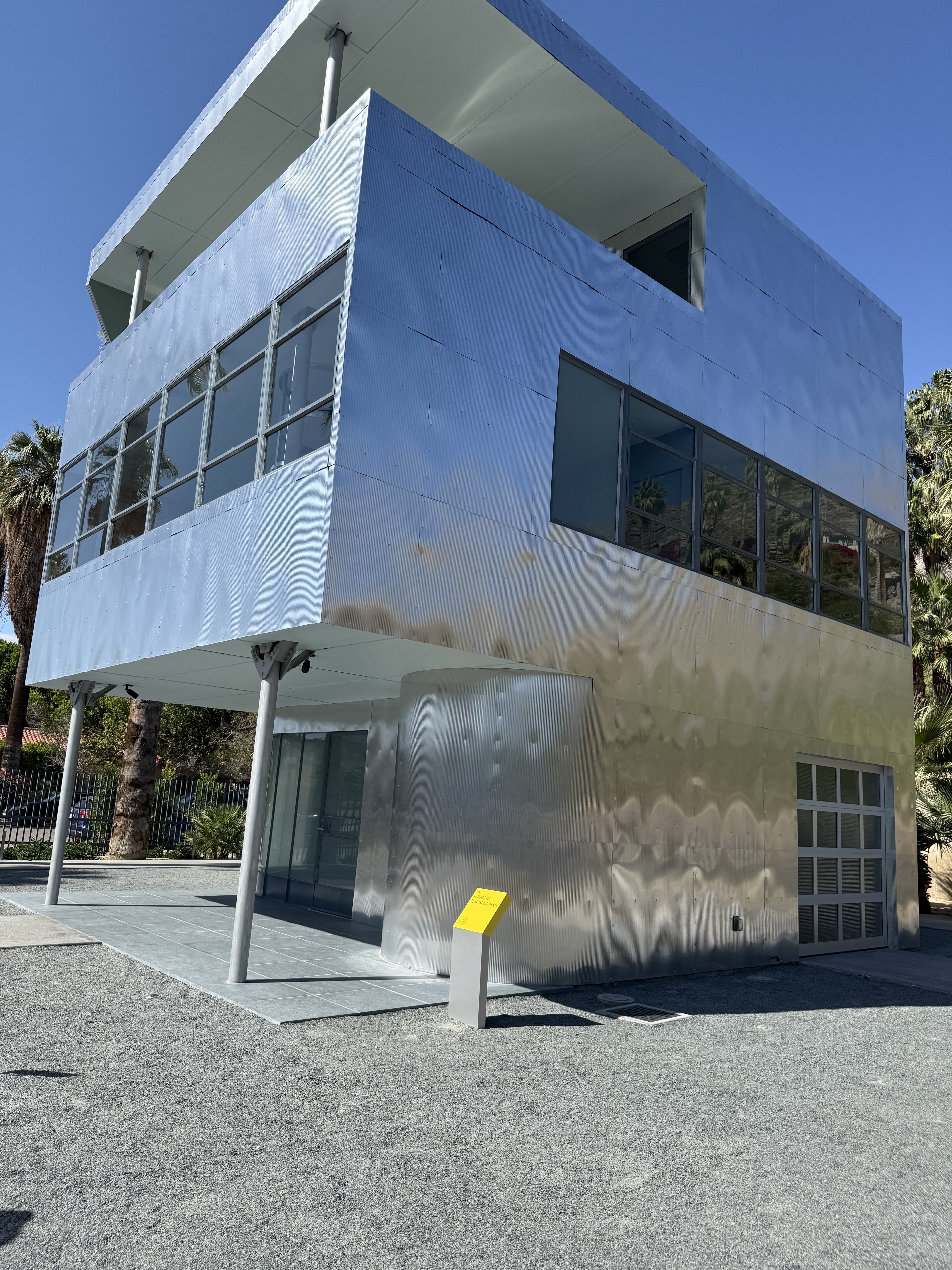
The Aluminaire House arrived in April 1931 as a provocation, a three-story all-metal prototype erected in ten days inside Manhattan's Grand Central Palace for the Architectural and Allied Arts Exposition of the Architectural League of New York. Designed by Architectural Record managing editor A. Lawrence Kocher and Albert Frey, a 28-year-old fresh from Le Corbusier's office, the structure made an argument that modernist theory could answer the Great Depression's housing crisis through prefabrication and industrial materials. Architect Wallace K. Harrison purchased it immediately after the exposition closed, moved it to Syosset, Long Island, and lived in it for decades, eventually pushing it against a hillside where it sat for some forty years. When a subsequent owner filed for demolition in 1986, Paul Goldberger's defense in the New York Times helped launch a 25-year rescue by historians Michael Schwarting and Frances Campani, who formed the Aluminaire House Foundation, relocated the structure to temporary display at the New York Institute of Technology, then trucked it cross-country to Palm Springs in 2017.
The building is a boxy volume lifted on pilotis with a recessed entry, clad entirely in aluminum panels over steel framing with plate glass and linoleum interiors, all assembled from standardized components donated by manufacturers. Leo Marmol of Marmol Radziner led the reassembly with Schwarting and Campani restoring it to its 1931 configuration, removing Harrison's later additions including the enclosure of the top floor. The interiors remain inaccessible, viewable only through the glazing. The house was the first all-metal residence built in the United States.