
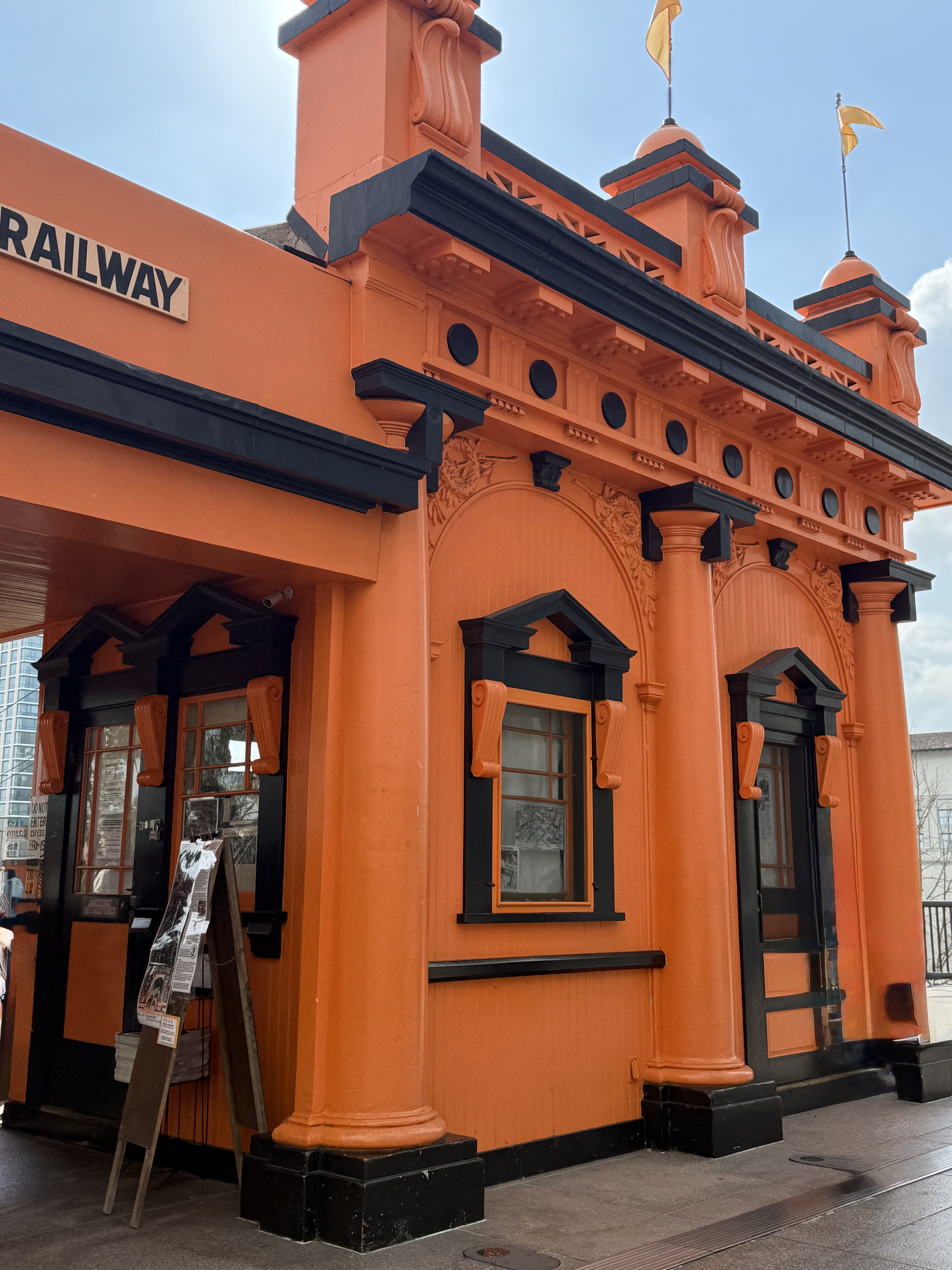
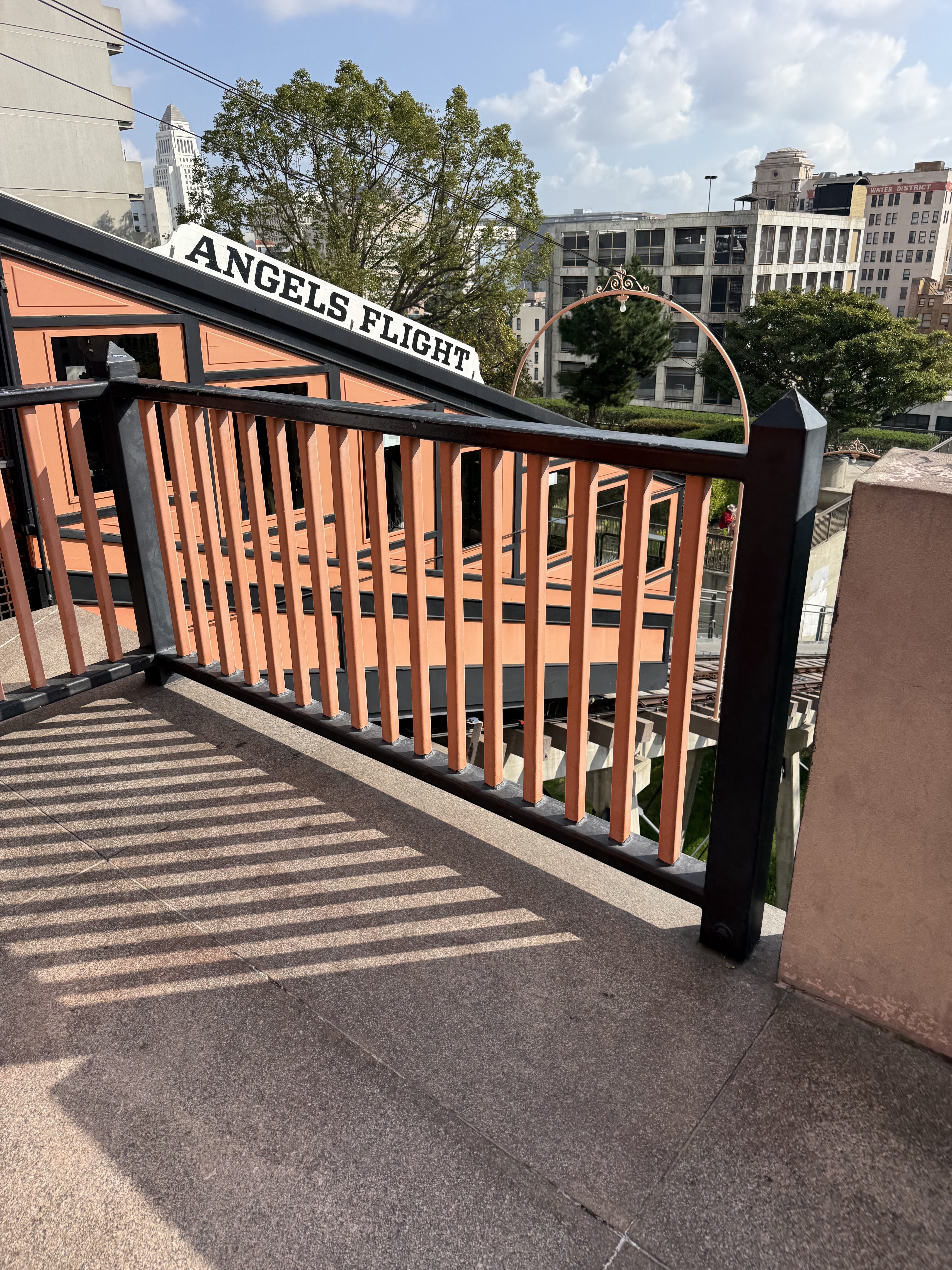
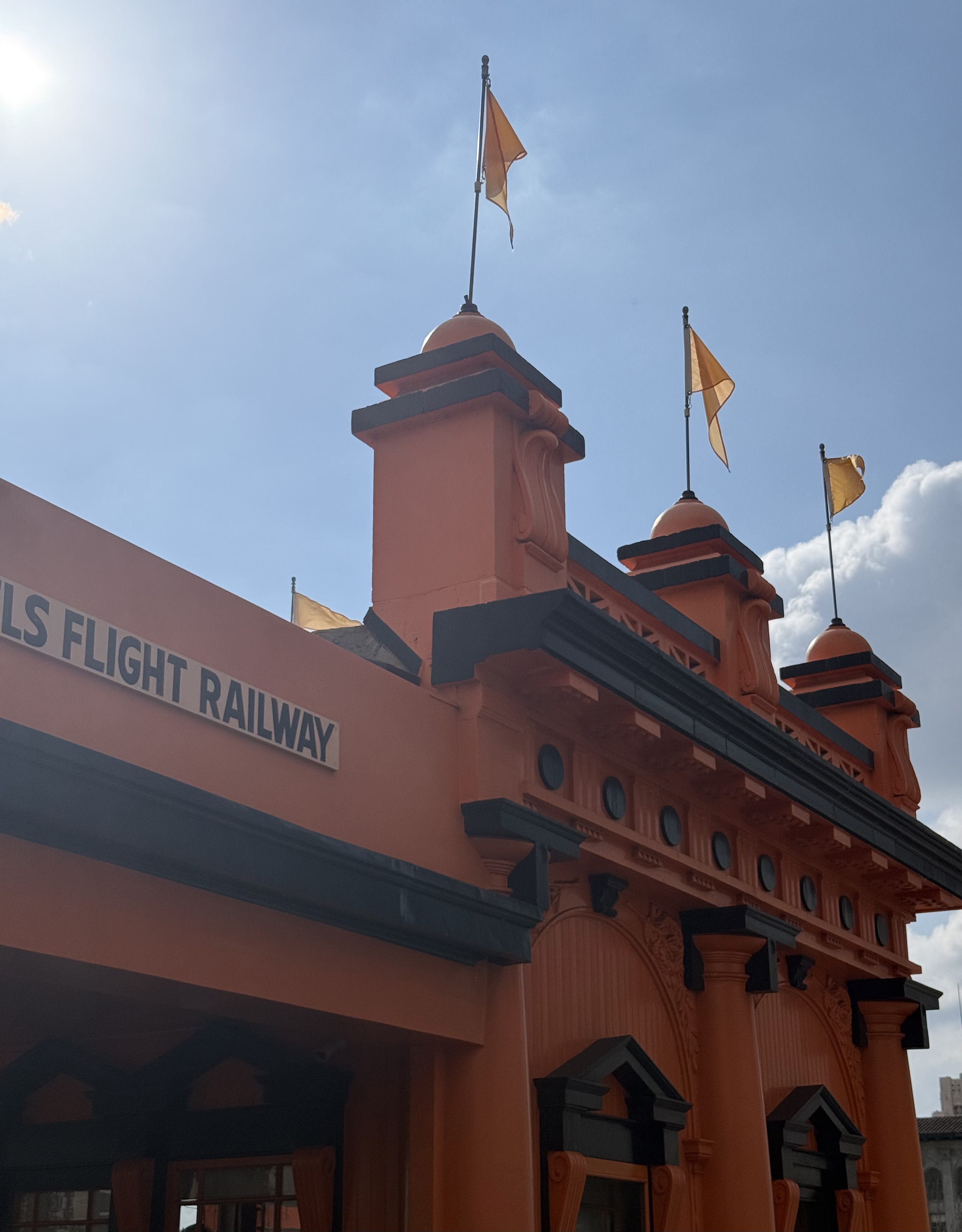
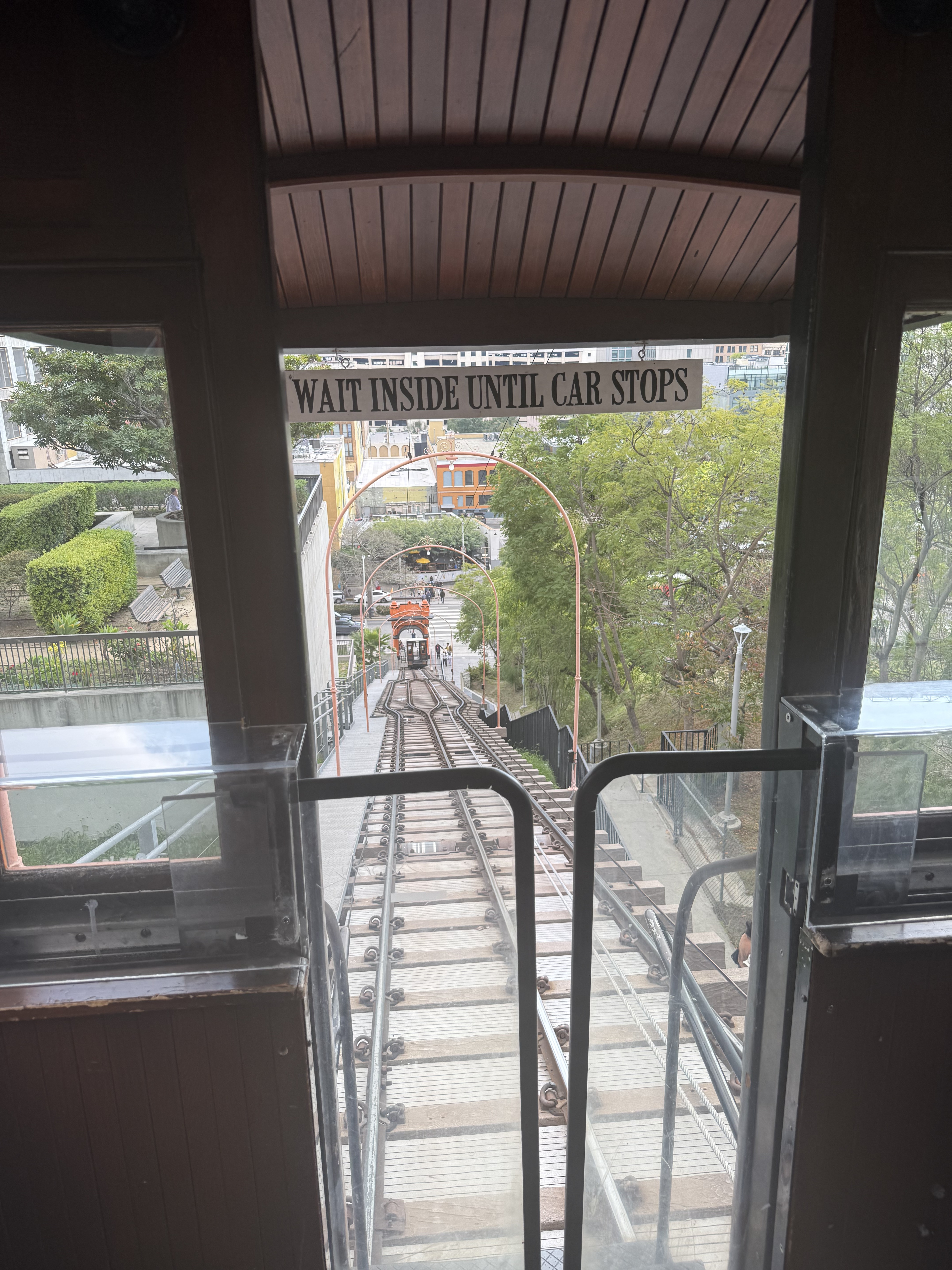
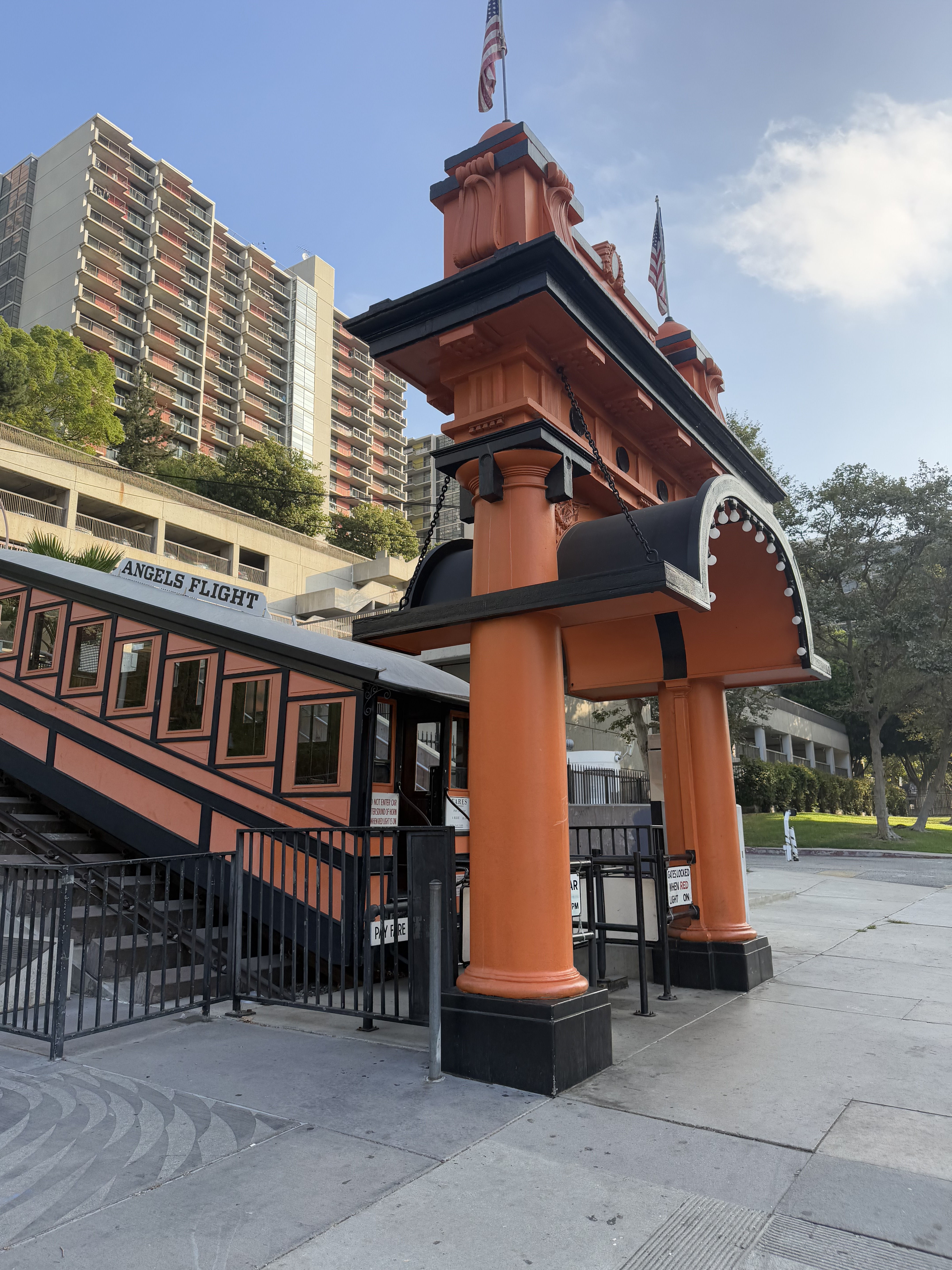
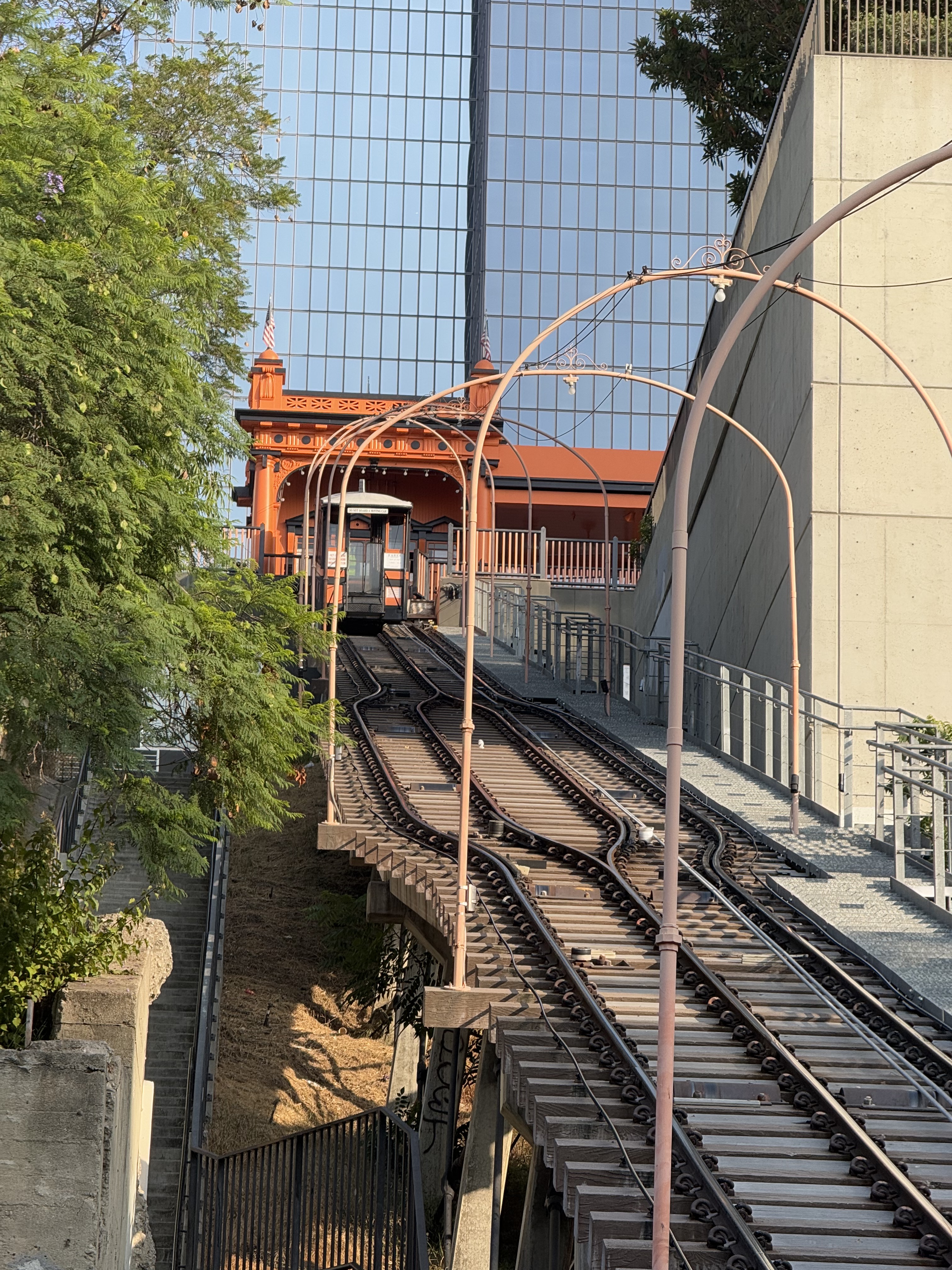
Colonel James Ward Eddy commissioned Angels Flight Railway in 1901 to transform Bunker Hill's steep topography from obstacle into opportunity, linking the commercial flatlands of Hill Street to the affluent residential district crowning the hill above. This narrow-gauge funicular emerged during the era when Bunker Hill served as Los Angeles's premier address, lined with Victorian mansions and grand hotels that required accessible connection to the city's business core. The railway was rebuilt in 1905 with its present cars and an elevated trestle over Clay Street, creating the configuration that would operate until urban renewal swept the hill clean in 1969.
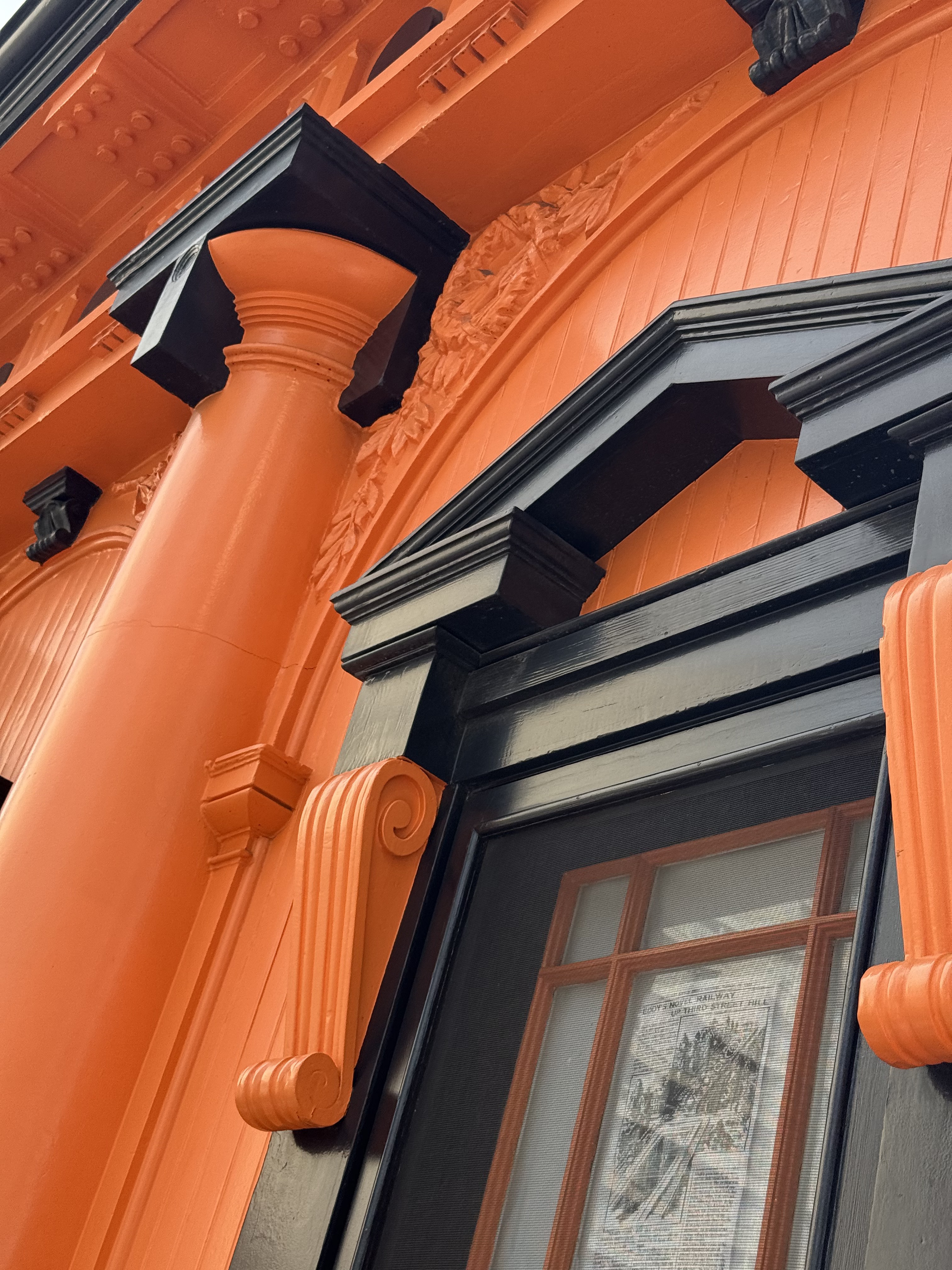
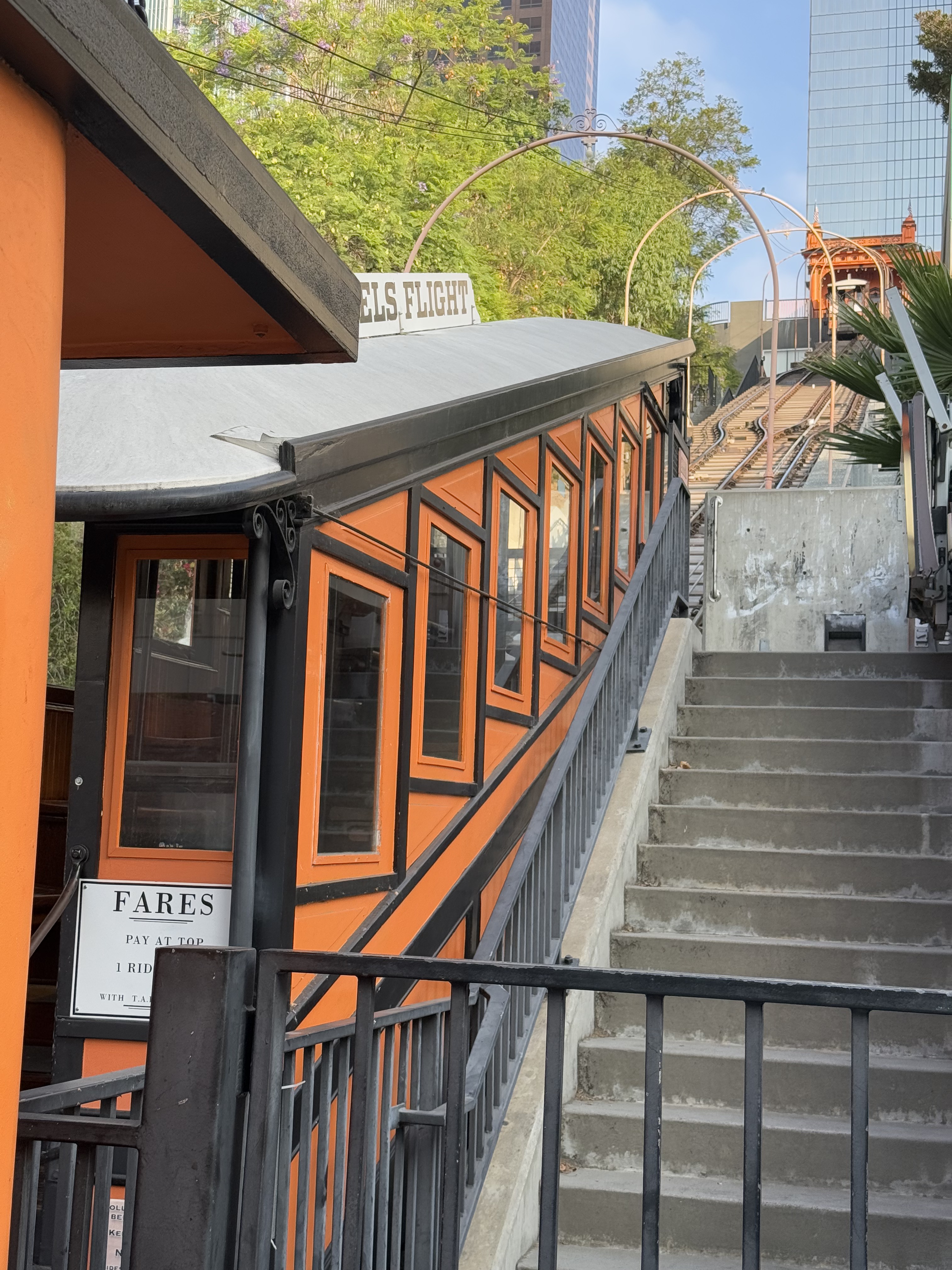
The system operates through elegant mechanical compression, employing two cars named Sinai and Olivet that move in counterweight balance along a steep grade, their timber and iron framing creating an open, theatrical experience of urban transit. The cars themselves feature traditional funicular design with stepped seating that accommodates the dramatic incline, while the stations frame the journey with simple but purposeful architecture that emphasizes function over ornament. This infrastructure transforms transportation into urban spectacle, creating what functions essentially as a moving room that provides both practical service and dramatic revelation of the city's vertical geography.