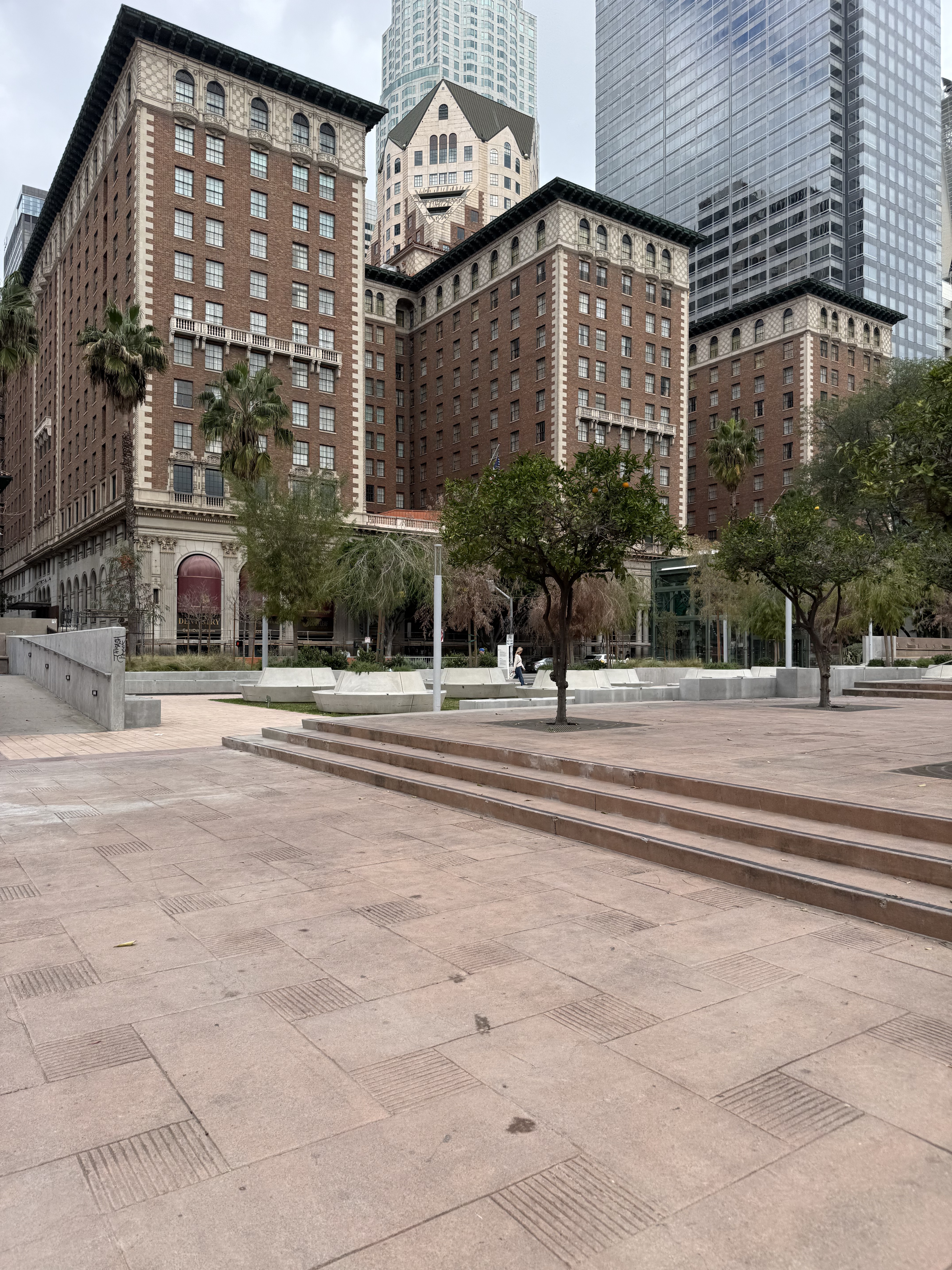
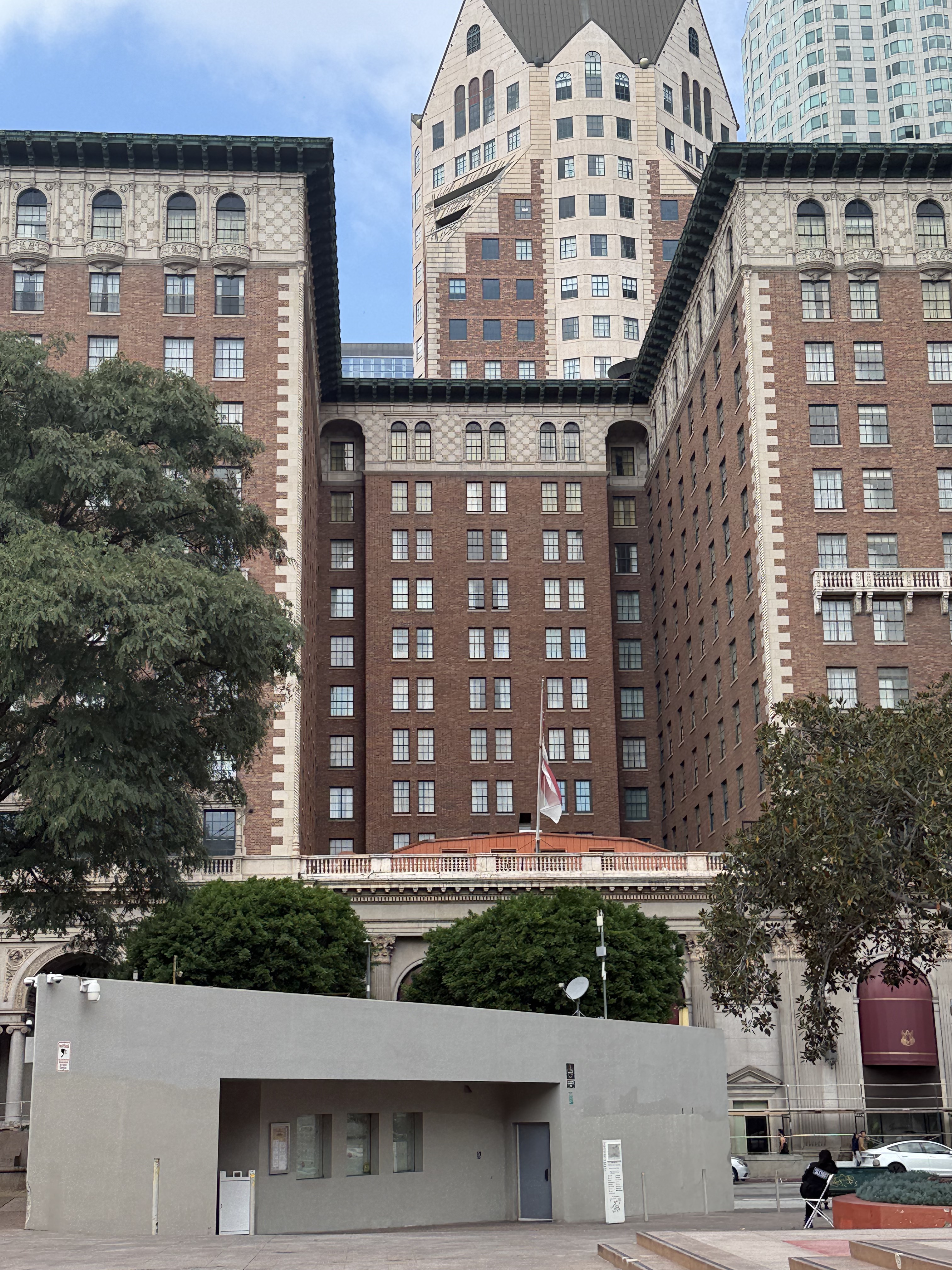
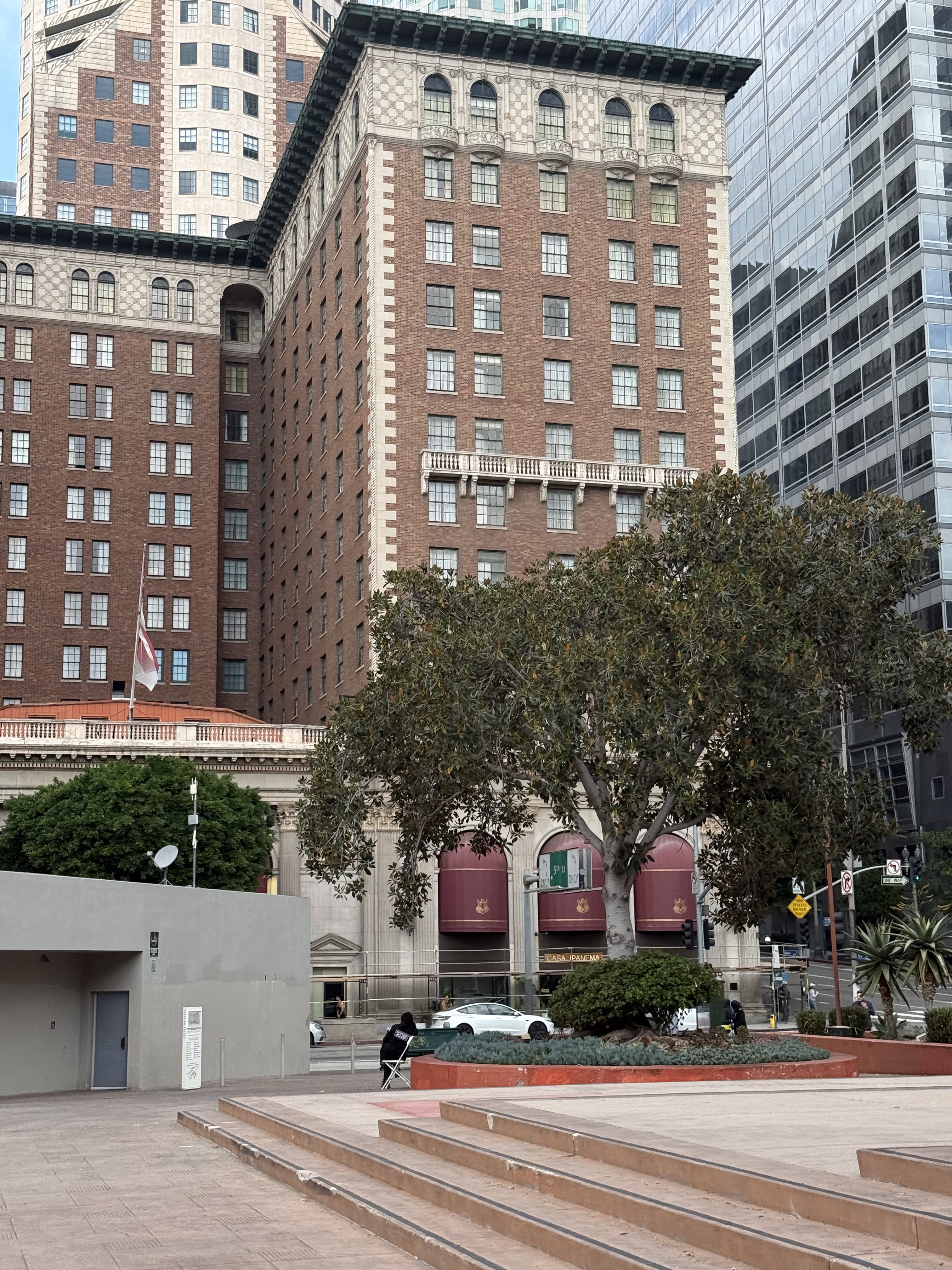
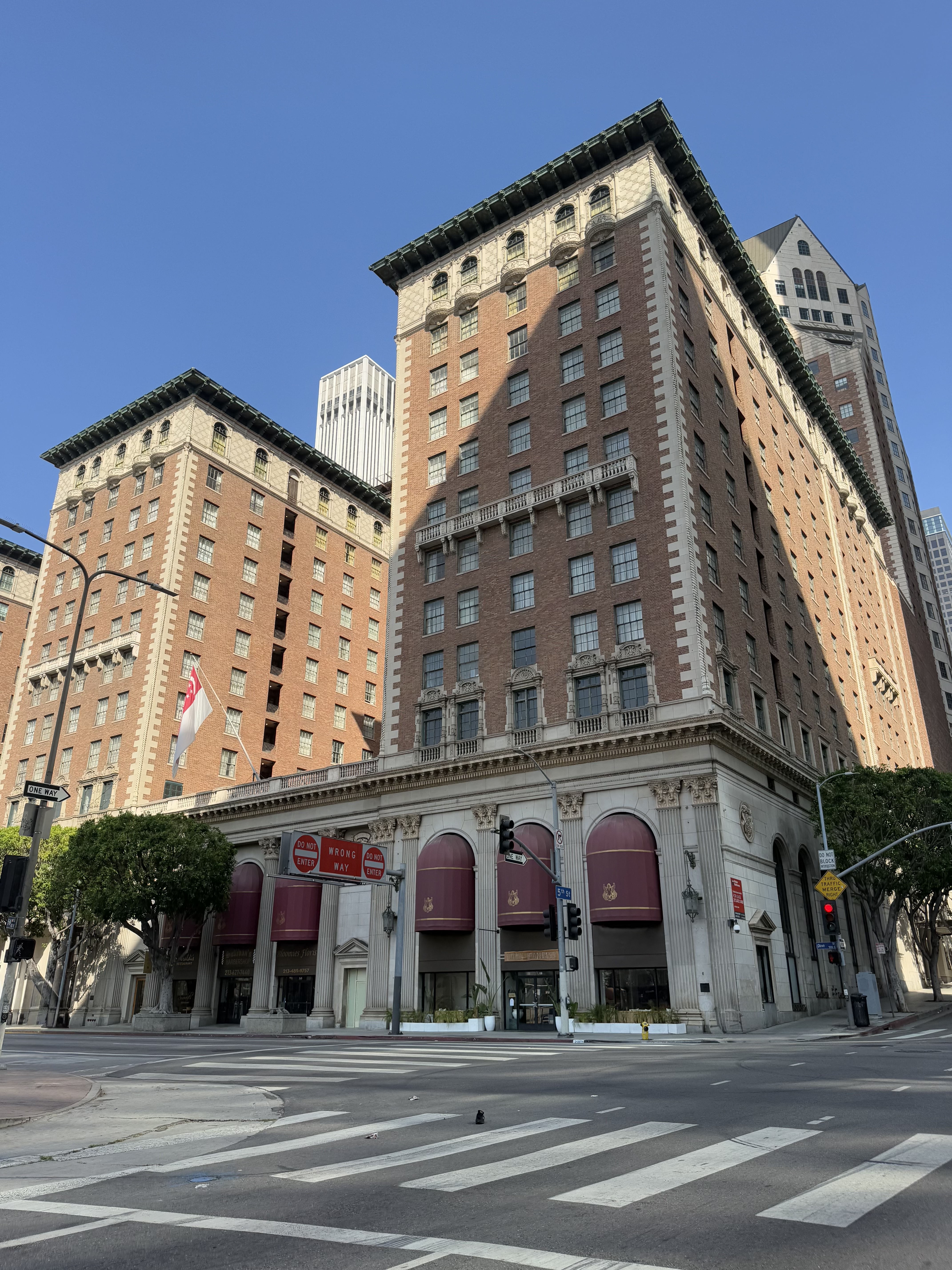
When downtown Los Angeles elite envisioned their city as a rival to New York and Chicago in the early 1920s, they commissioned what would become the largest hotel west of Chicago. The Biltmore opened in 1923 during the transformative decade when oil wealth, entertainment capital, and speculative urbanism were reshaping Los Angeles into a self-conscious metropolis. Schultze & Weaver, New York's premier luxury hotel architects, designed this monumental downtown palace to serve business travelers, civic banquets, entertainment industry guests, and upper-class social ritual. The building emerged from the same booster ambitions that sought to establish Los Angeles as an equal to older eastern and European capitals.
The steel-frame structure presents itself through limestone and terra-cotta facades that mask its modern engineering with Beaux-Arts and Renaissance Revival dignity. Inside, a carefully choreographed suite of lobbies, arcades, ballrooms, salons, and corridors integrates arrivals, vertical circulation, dining, entertainment, and convention use into a coherent urban palace. The building's architectural greatness lies not merely in its lavish decoration but in its sophisticated planning, where hospitality functions at metropolitan scale. Principal public rooms, grand staircases, and elaborate ceiling programs remain the most important architectural events, creating spaces that condense ready-made images of old Los Angeles grandeur.