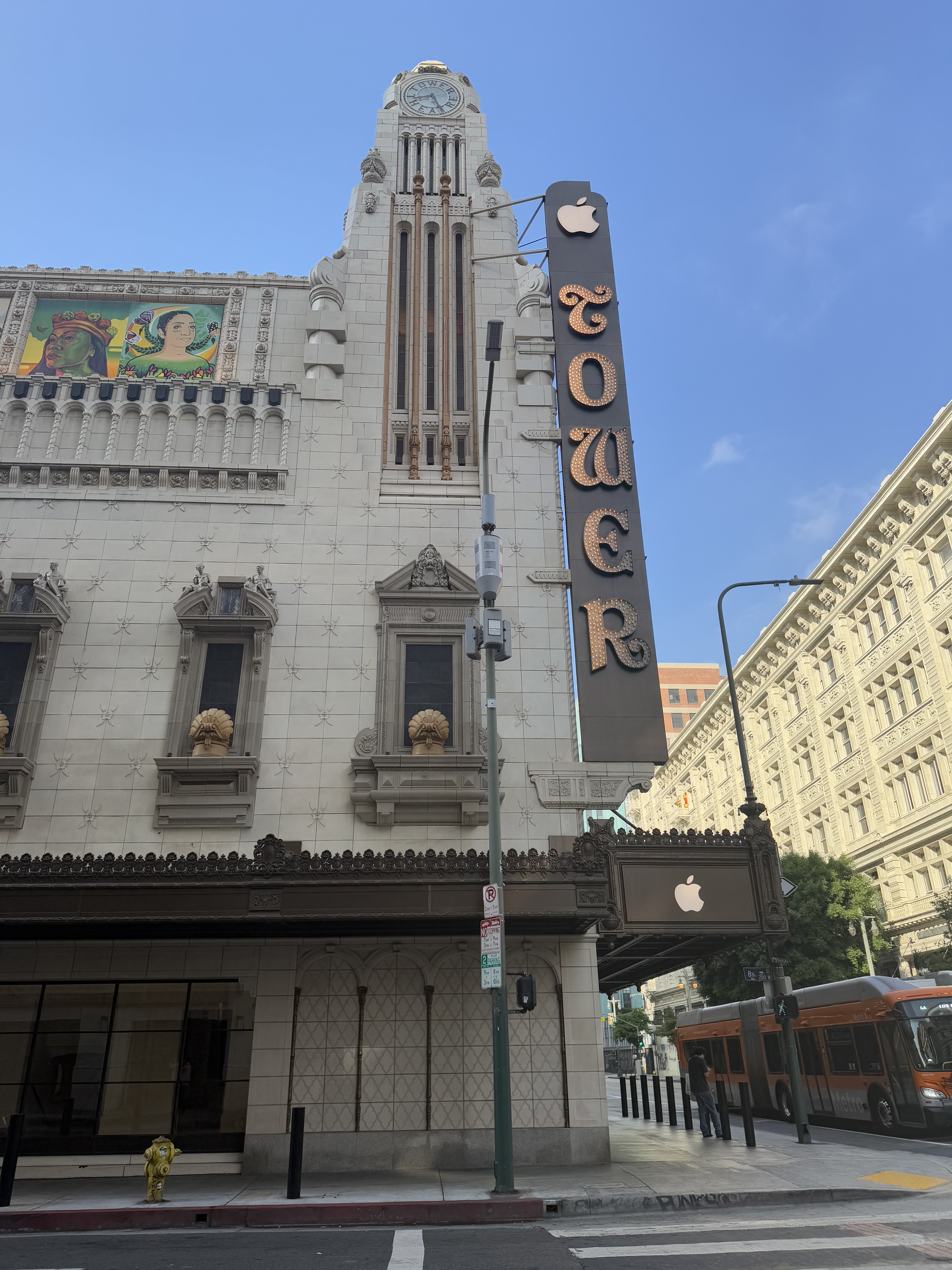
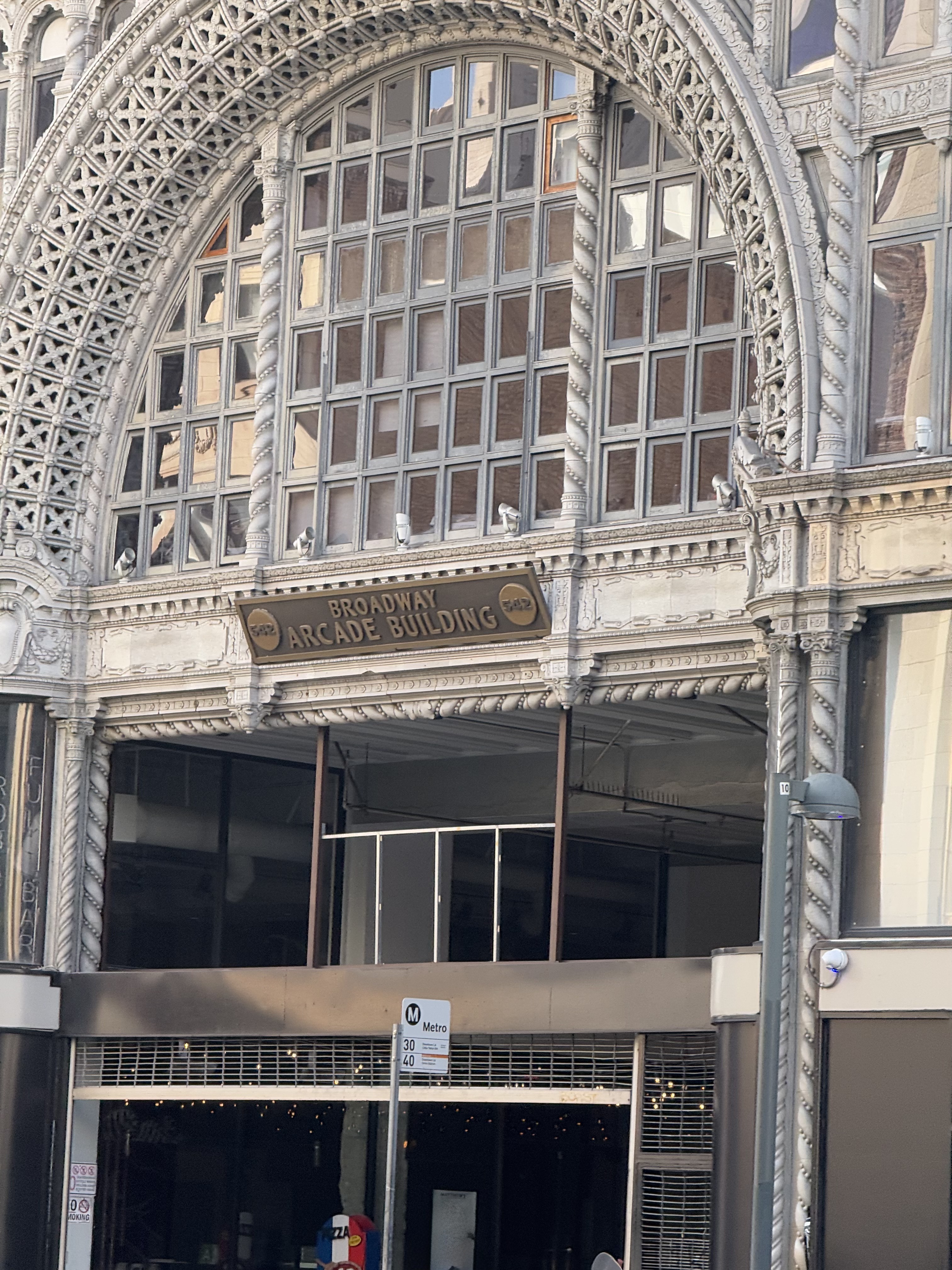
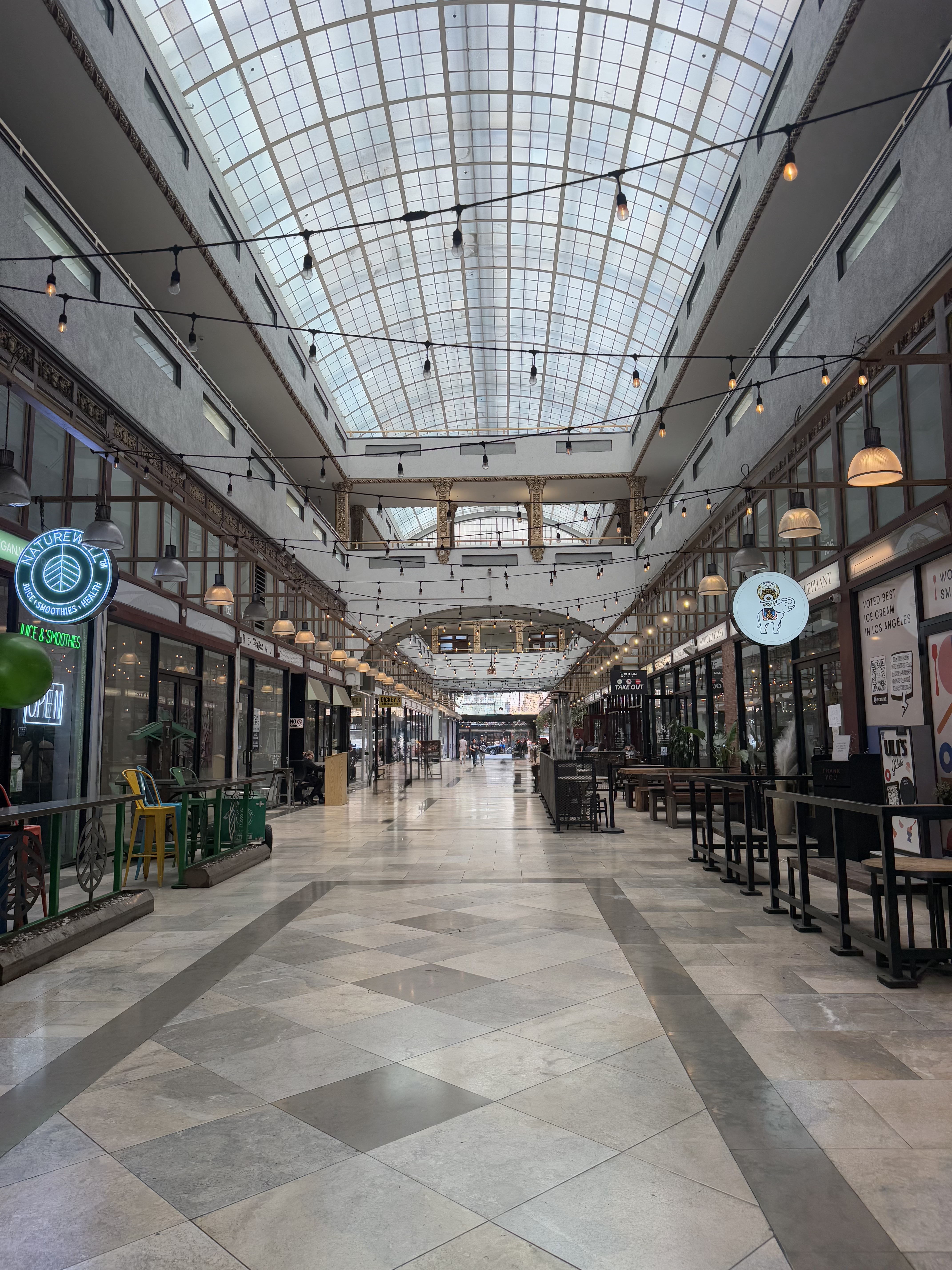
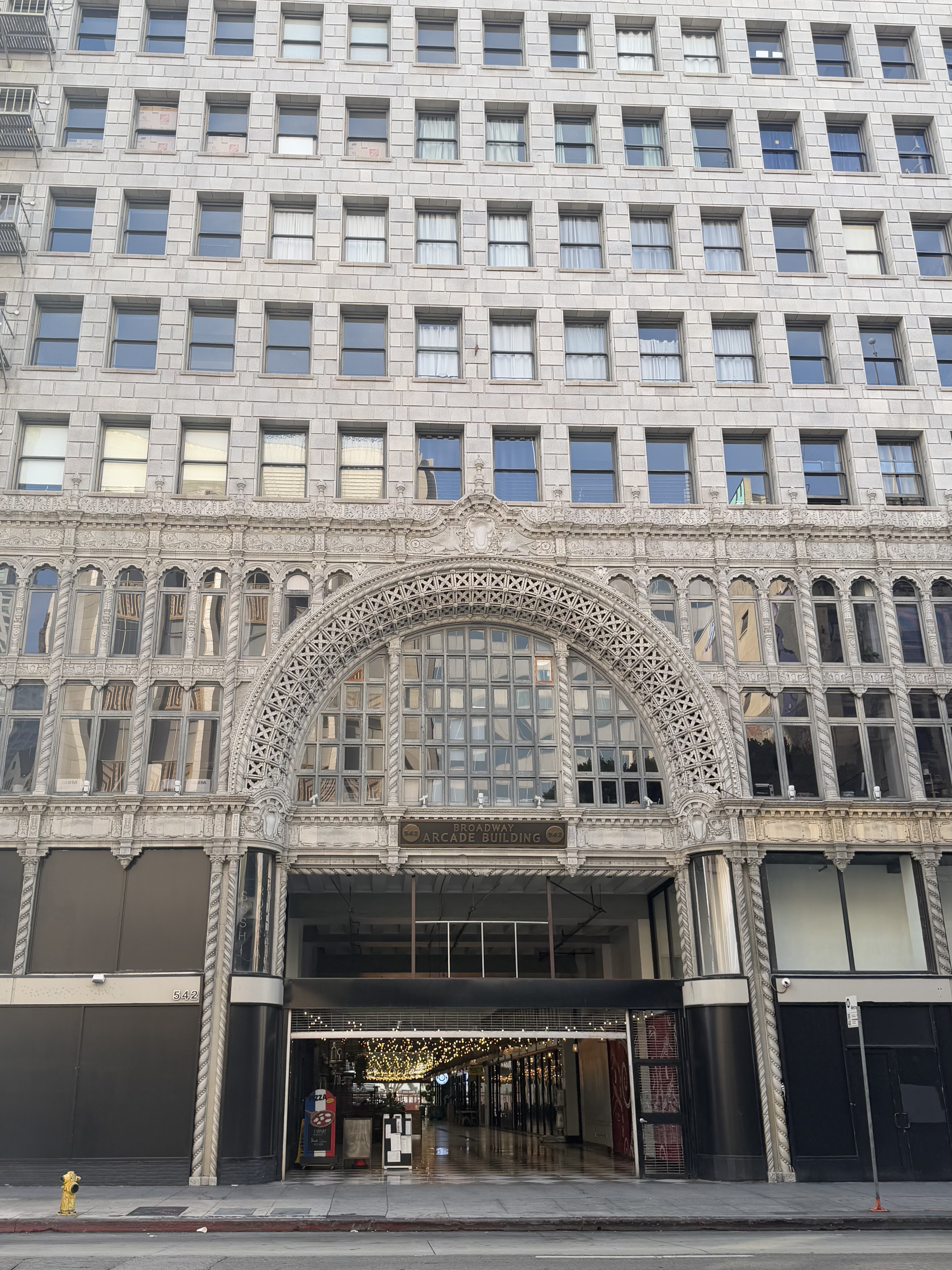
The Broadway-Spring Arcade Building emerged from a 1920s development competition that sought to modernize downtown Los Angeles while preserving the beloved pedestrian culture of the old Mercantile Place alley. Built between 1922 and 1924, the project replaced a narrow retail lane with something more ambitious: a hybrid office-and-shopping complex that would literally tunnel between Broadway's theater district and Spring Street's financial corridor. The winning design by Maurice Couchot and Kenneth MacDonald Jr. earned the architects $60,000, signaling the high stakes of this urban redevelopment. Rather than simply demolishing the old alley, the building consciously preserved its essential character as a covered retail passage while adding profitable office floors above.
The structure defies easy architectural categorization, mixing Beaux-Arts compositional discipline with Spanish Renaissance details across two street-facing towers connected by a long internal arcade. The facades present a formal commercial dignity to both Broadway and Spring Street, while the covered retail spine creates a more intimate pedestrian experience lined with storefronts. This sectional complexity transforms circulation itself into rentable real estate, with multi-story office floors supported above the more porous retail base through modern steel-frame construction. The arcade's proportions and detailing reflect MacDonald's Ecole des Beaux-Arts training, yet the overall conception answers distinctly American development pressures and Los Angeles's emerging car-and-pedestrian urbanism.