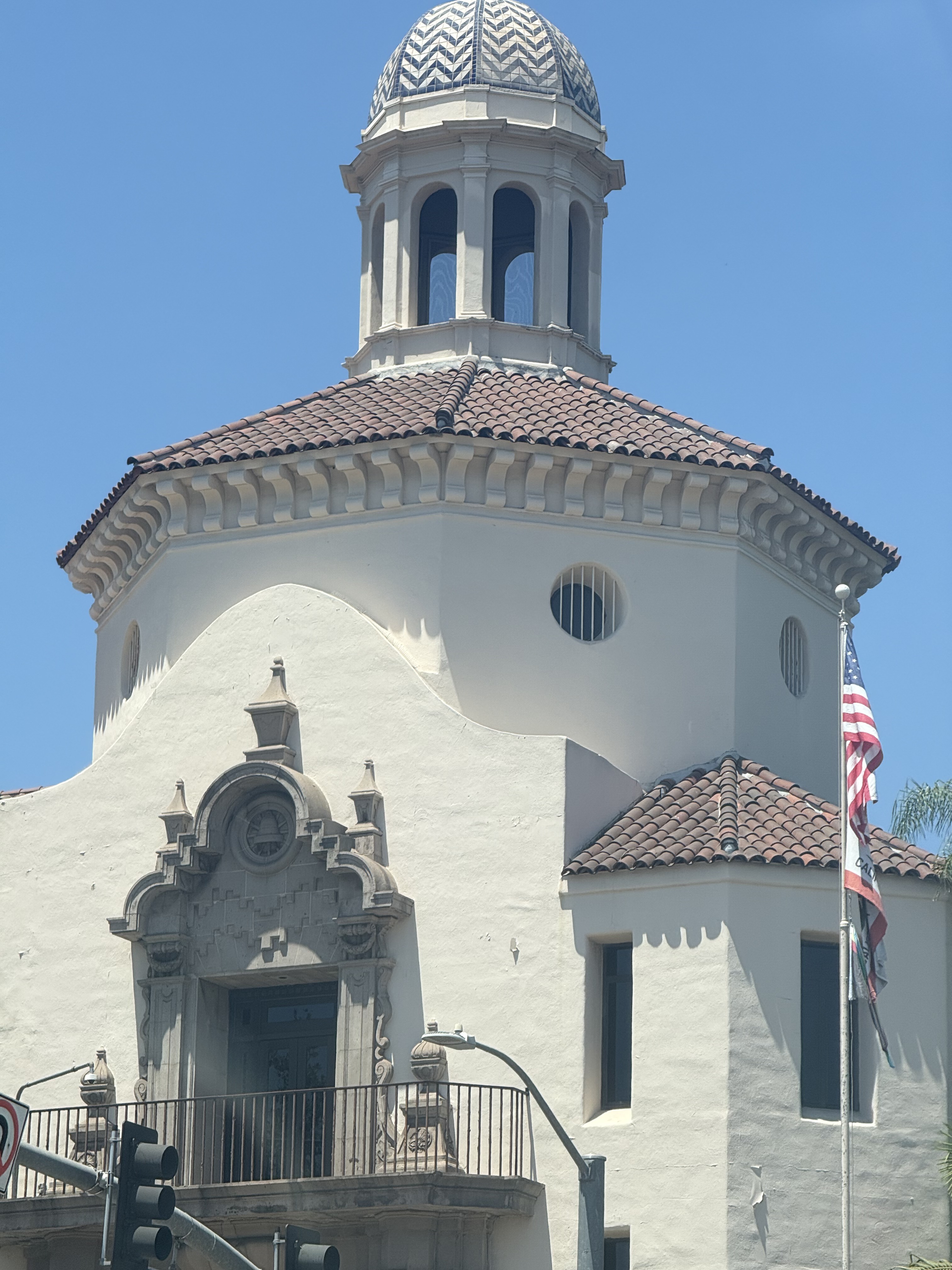
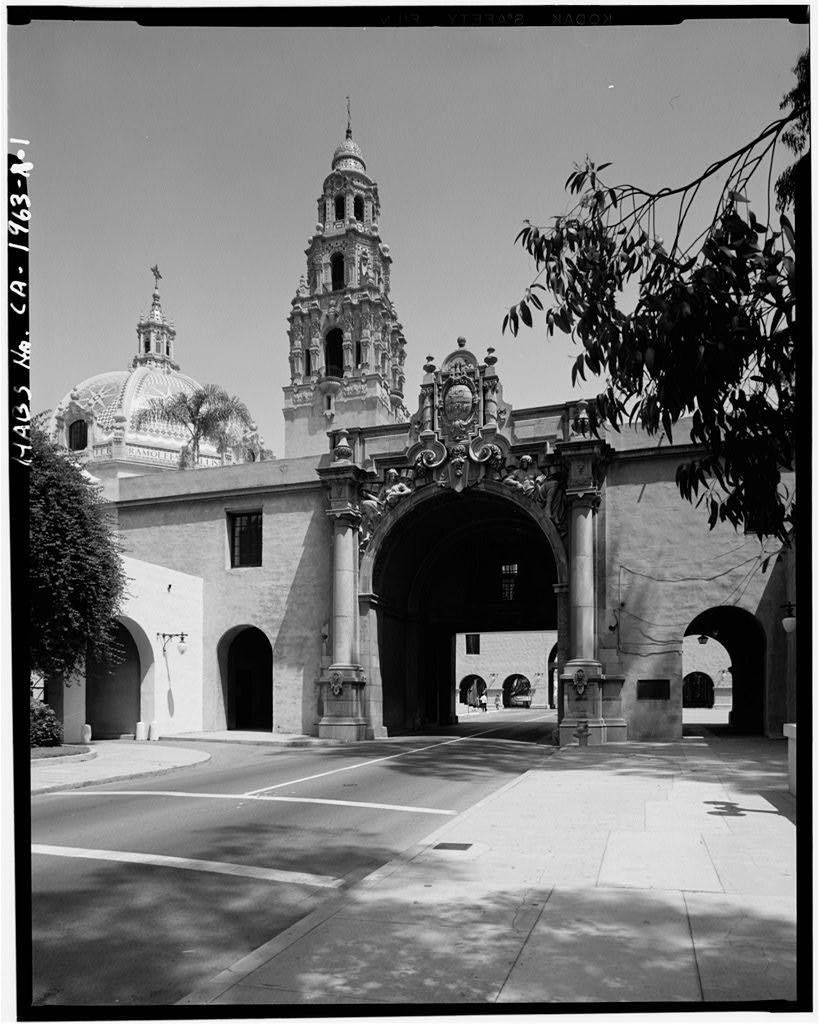
The City of San Diego and the Panama-California Exposition Company commissioned this building for the 1915 exposition, a world's fair timed to the opening of the Panama Canal. San Diego, with a population of around 40,000, mounted the fair to compete with San Francisco's larger Panama-Pacific International Exposition, betting on the event as a growth engine. The building was designed as a permanent structure, unlike most of the fair's pavilions, and has housed a museum continuously since opening. The commission displaced Irving Gill, San Diego's great modern architect, whose career never recovered after the exposition adopted a Spanish program that contradicted everything he had built.
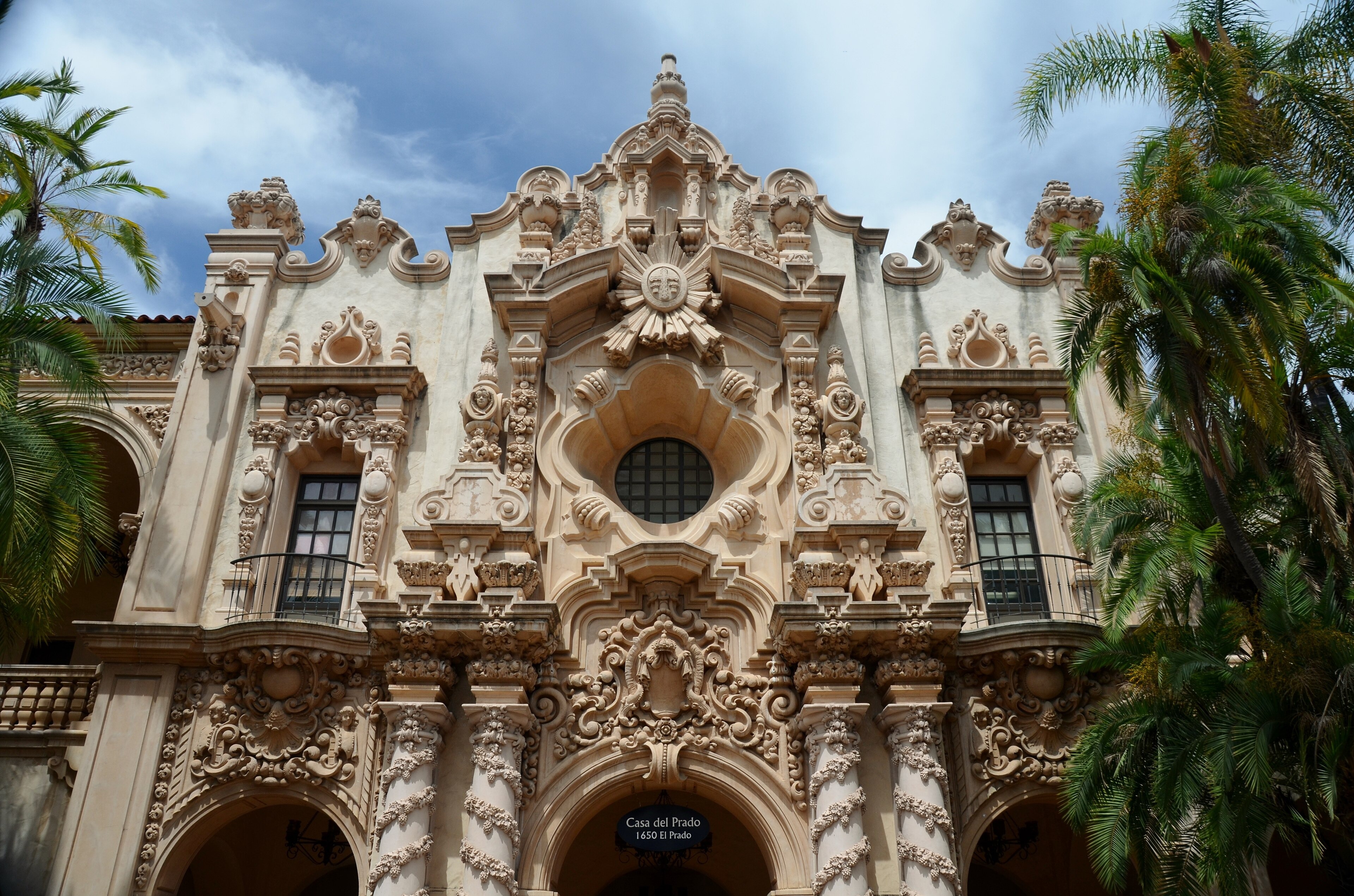
A domed, cruciform structure with a 198-foot tower, executed in reinforced concrete finished to read as stone and entered through an extravagantly ornamented Churrigueresque facade. Churrigueresque is the Spanish and Mexican Baroque mode of the late seventeenth and eighteenth centuries, in which ornament concentrates into a single dense sculptural panel around the entrance while surrounding walls stay plain. Bertram Grosvenor Goodhue took the idea from Mexican churches, particularly the sagrario of Mexico City Cathedral and Taxco, and executed it in cast concrete. The facade sculpture includes portrait busts and figures of Junipero Serra, Cabrillo, Vizcaino, Charles V, Philip III, and Father Luis Jayme, arranged as a genealogy of Spanish California and carved by the Piccirilli Brothers of New York, the family firm that also carved the Lincoln Memorial statue. The tower carries a tile dome, a lantern, and a carillon of 100 bells installed in 1946.