Raymond Cree commissioned this two-bedroom house in 1955 at age 82, a dramatic pivot from his original 1947 plan for the same hillside site. That earlier scheme, the Desert Hills Hotel, envisioned a nine-bungalow luxury resort arrayed on a pyramid-shaped hill with a contemporary restaurant at its base, a project that documents the speculative postwar desert-resort economy at full throttle. The unbuilt hotel and the modest house that replaced it eight years later form a compact record of a developer aging out of his own boom. Cree, a former Riverside County school superintendent turned real estate developer who once owned the land that became Thunderbird Country Club, had purchased roughly 8 to 12 acres of hillside desert scrub off East Palm Canyon Drive.
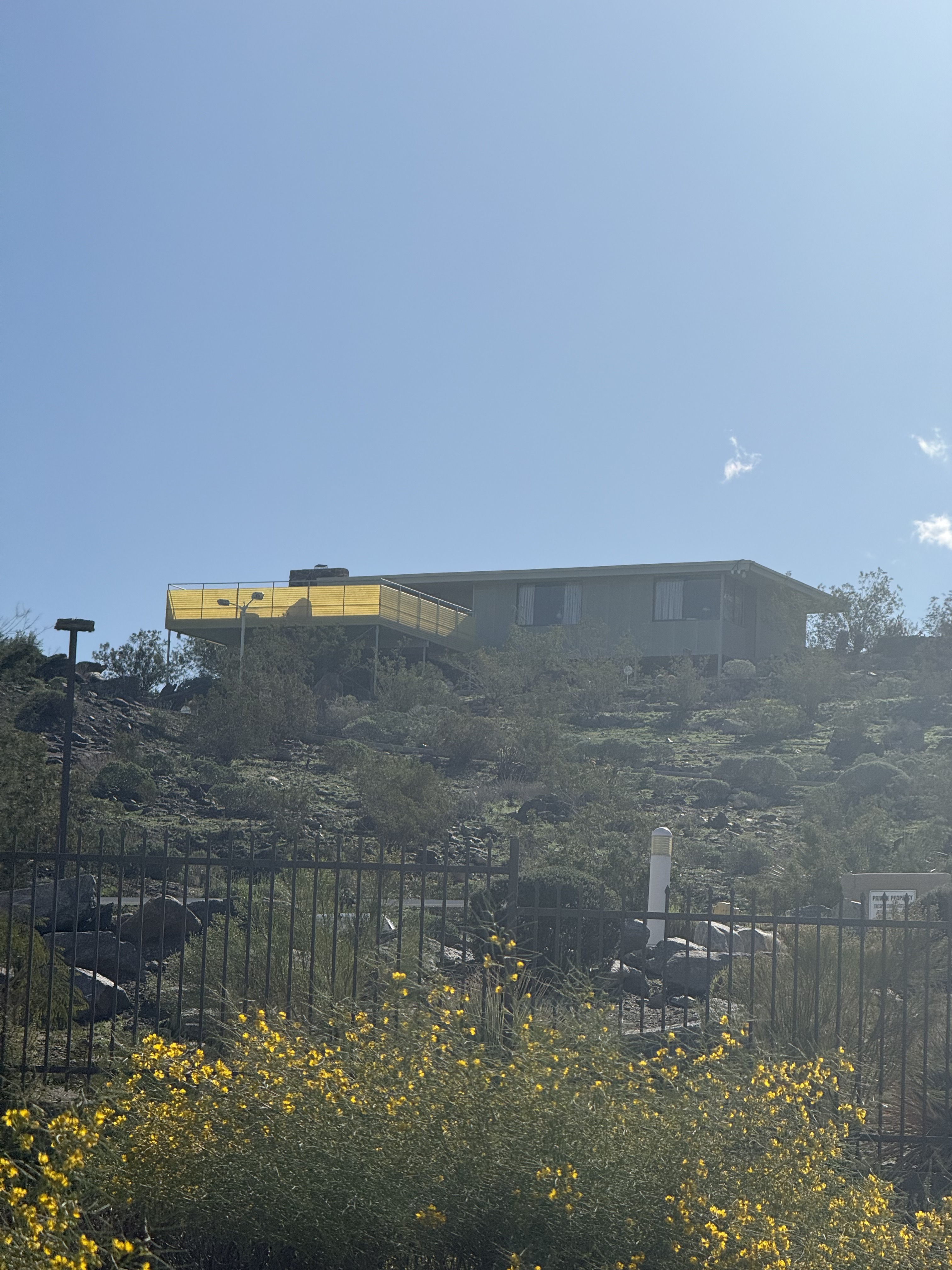
The house rises on steel pipe columns from a rocky hillside, lifting a two-bedroom volume above a carport and creating a large sundeck that maximizes view while minimizing ground disturbance. Industrial materials define the structure, and the entire composition is painted a silvery green keyed to the leaves of the brittlebush shrub, the same camouflage logic Albert Frey would later apply at Frey House II. The minimal footprint and elevated siting anticipate the hillside method Frey would refine over the next decade.