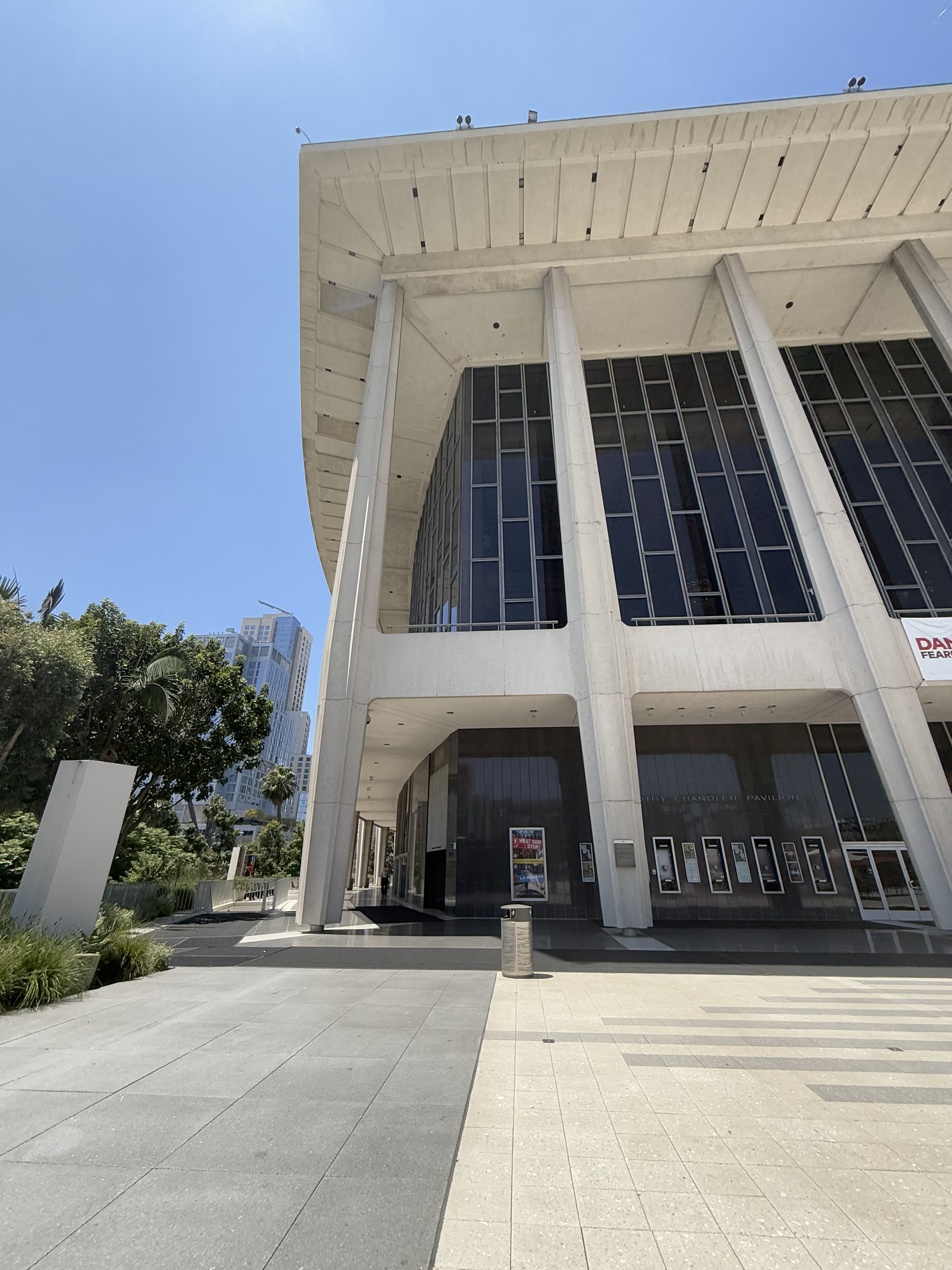
Dorothy Buffum Chandler's ambitious fundraising campaign transformed a vision for cultural prominence into concrete reality when the Dorothy Chandler Pavilion opened in 1964 as the first completed venue of the new Music Center. Originally conceived as the Memorial Pavilion, the building was later renamed to honor Chandler's decisive role in securing its construction through private philanthropy and public support. The Pavilion emerged during Bunker Hill's dramatic transformation from a mixed-income neighborhood into a showcase for corporate and cultural power, representing the ambitions of newspaper families, philanthropists, and county government to remake postwar Los Angeles with monumental civic architecture.
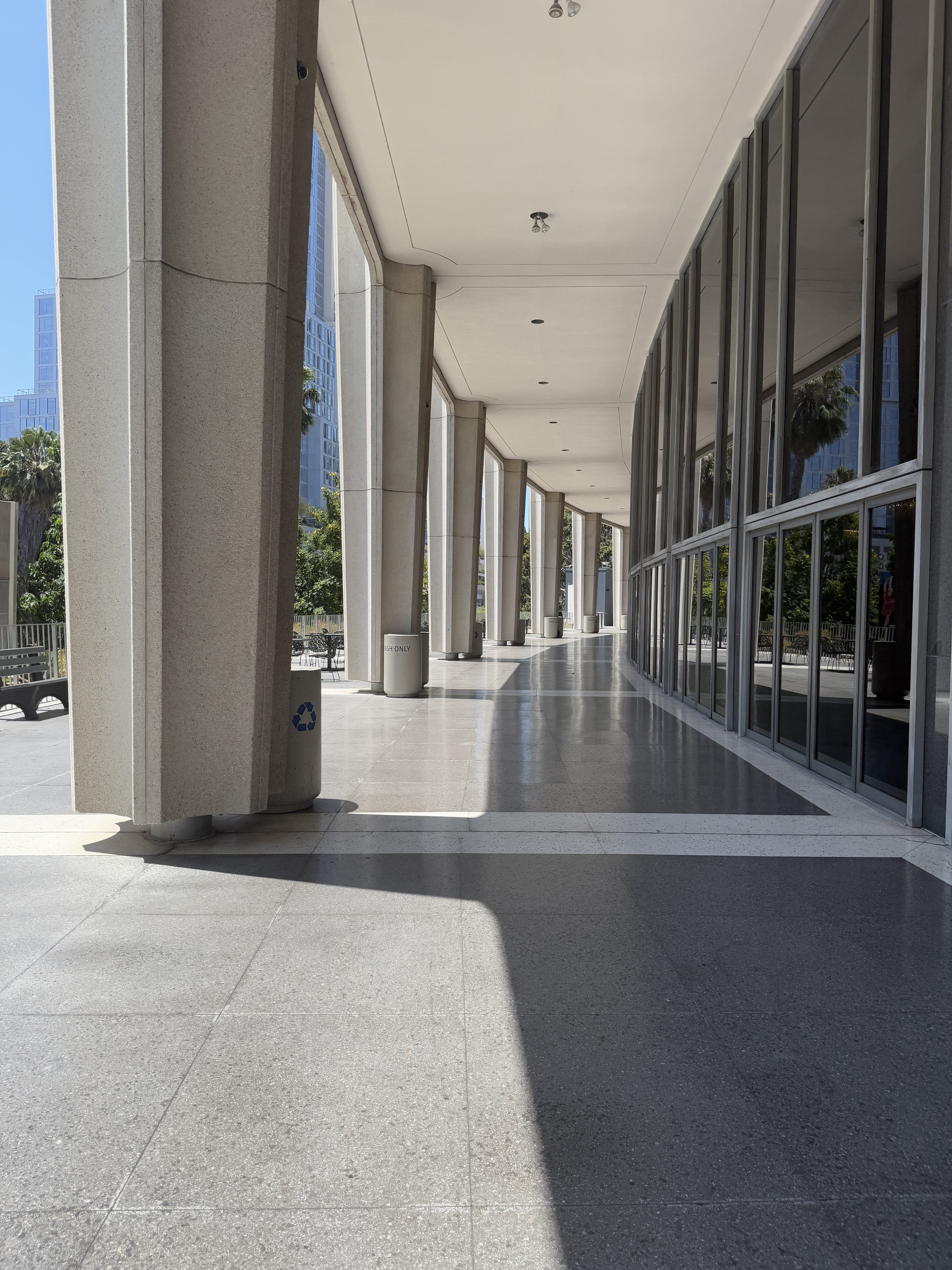
Welton Becket's design establishes its grand presence through marble surfaces, crystal chandeliers, and stately colonnades that frame the building's ceremonial approach. Broad stairs lead visitors up to an elevated plaza composition, creating a sequence of arrival that transforms attendance into both civic participation and glamorous ritual. The building's classical inflections, expressed through its columned facades and formal symmetry, provided modern Los Angeles with a consciously monumental public image that spoke to institutional gravitas rather than entertainment industry flash.