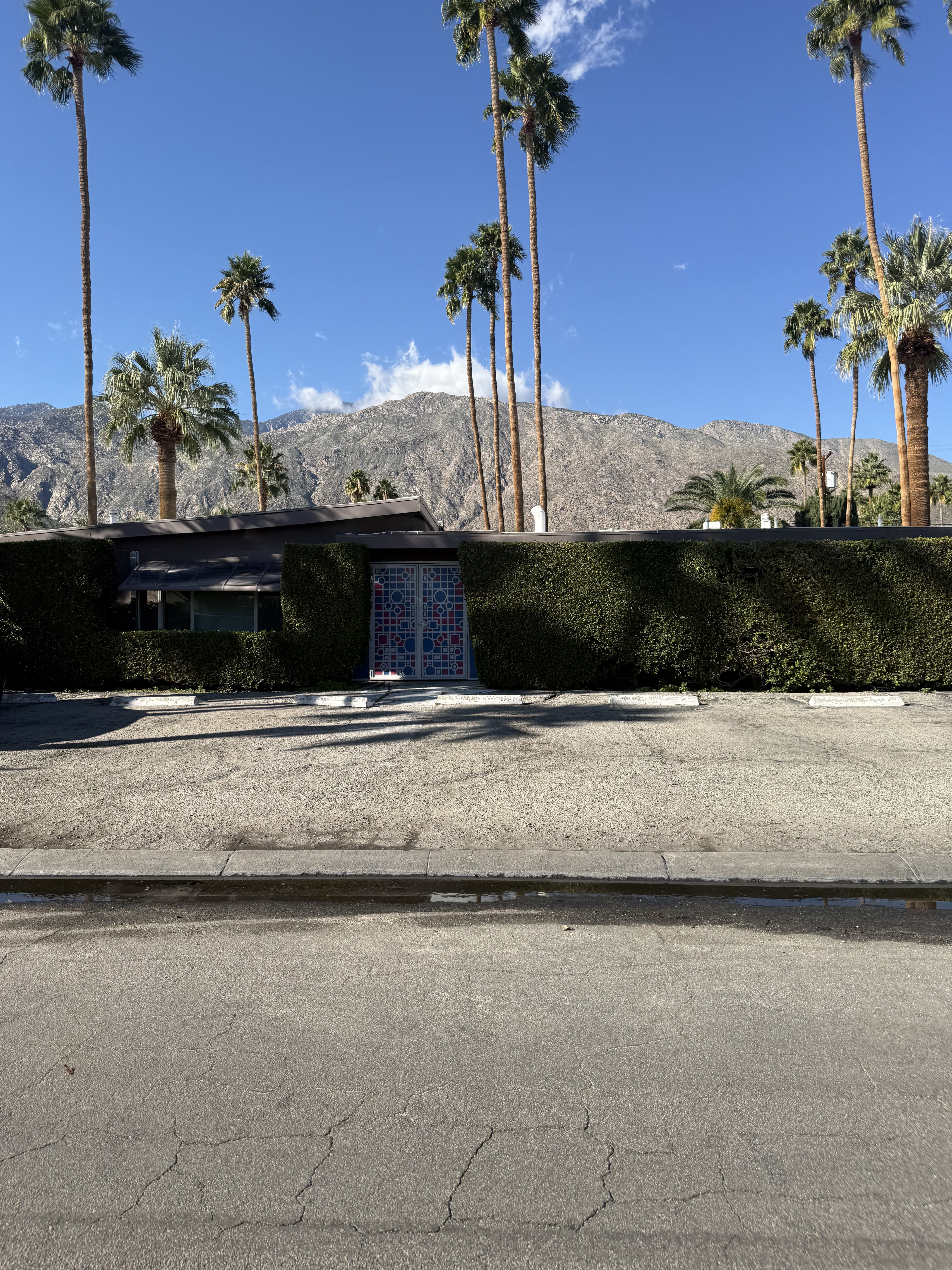
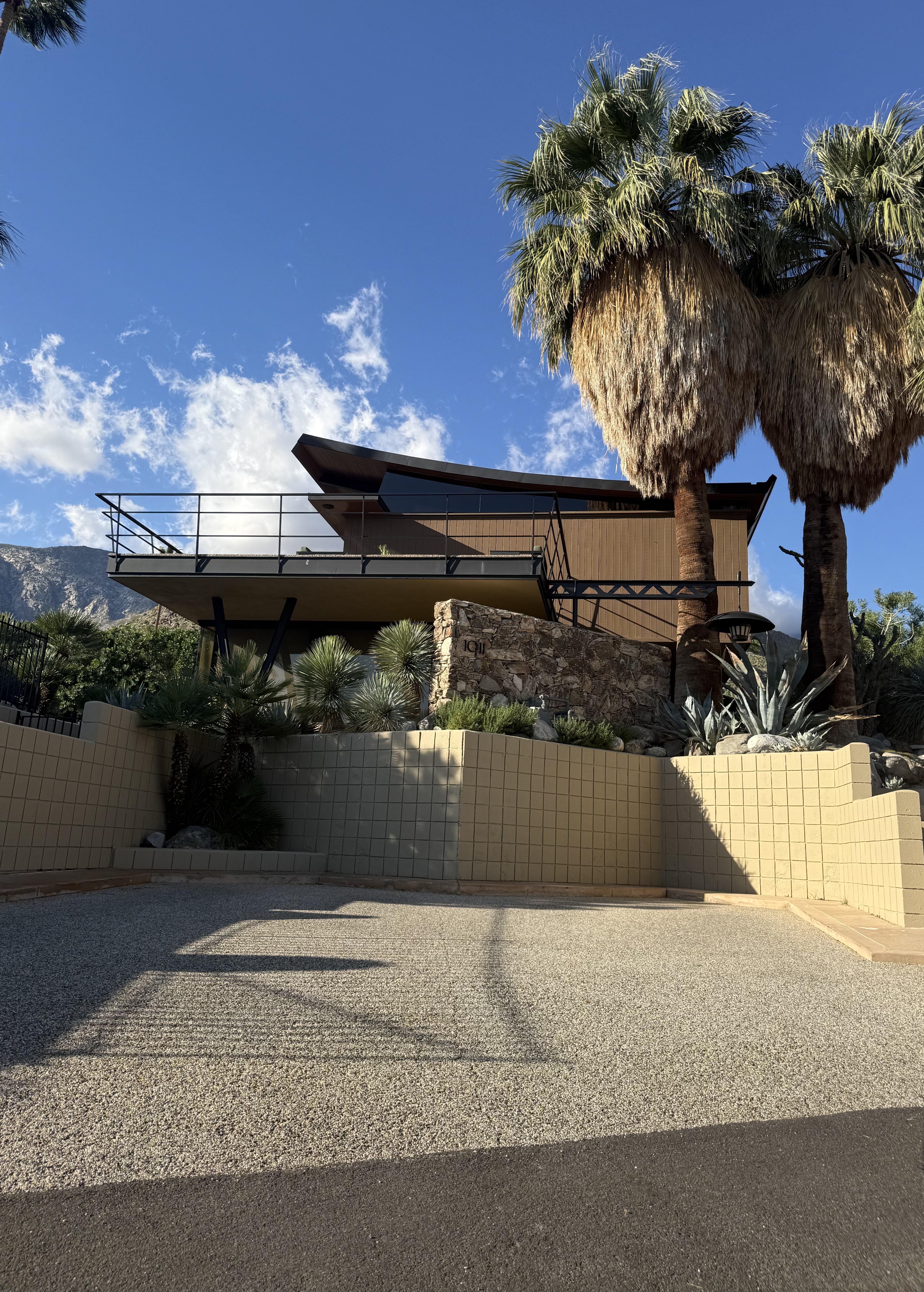
Built in 1955 for Dr. Franz Alexander, the Hungarian-born psychoanalyst who founded the Chicago Institute for Psychoanalysis and pioneered the field of psychosomatic medicine, this hillside residence in Little Tuscany represents a meaningful convergence of client and architect. Alexander belonged to the wave of European Jewish intellectuals who emigrated to Southern California in the 1930s, the same migration that brought figures like Neutra, Schindler, Adorno, and Schoenberg. Walter S. White, trained in the studios of Rudolph Schindler and Harwell Hamilton Harris, designed the house using his signature method of siting and shaping structures around sun angle, prevailing wind patterns, and the specific desert landform. That a house for the founder of psychosomatic medicine was designed by an architect obsessed with how buildings respond to environmental forces on the body suggests intention rather than coincidence.
The roughly 3,200-square-foot residence occupies a hilltop site with sculptural, dynamic forms rather than orthogonal geometries. The main house contains two bedrooms and three baths with an oversized two-car garage, while a separate guest house offers one bedroom, two baths, and a living room, the two structures connected by a shared patio. The interior staircase was designed by Albert Frey, a rare direct collaboration between two major desert modernist figures. White returned to the property in 1983 to remodel and add a garage for a subsequent owner.