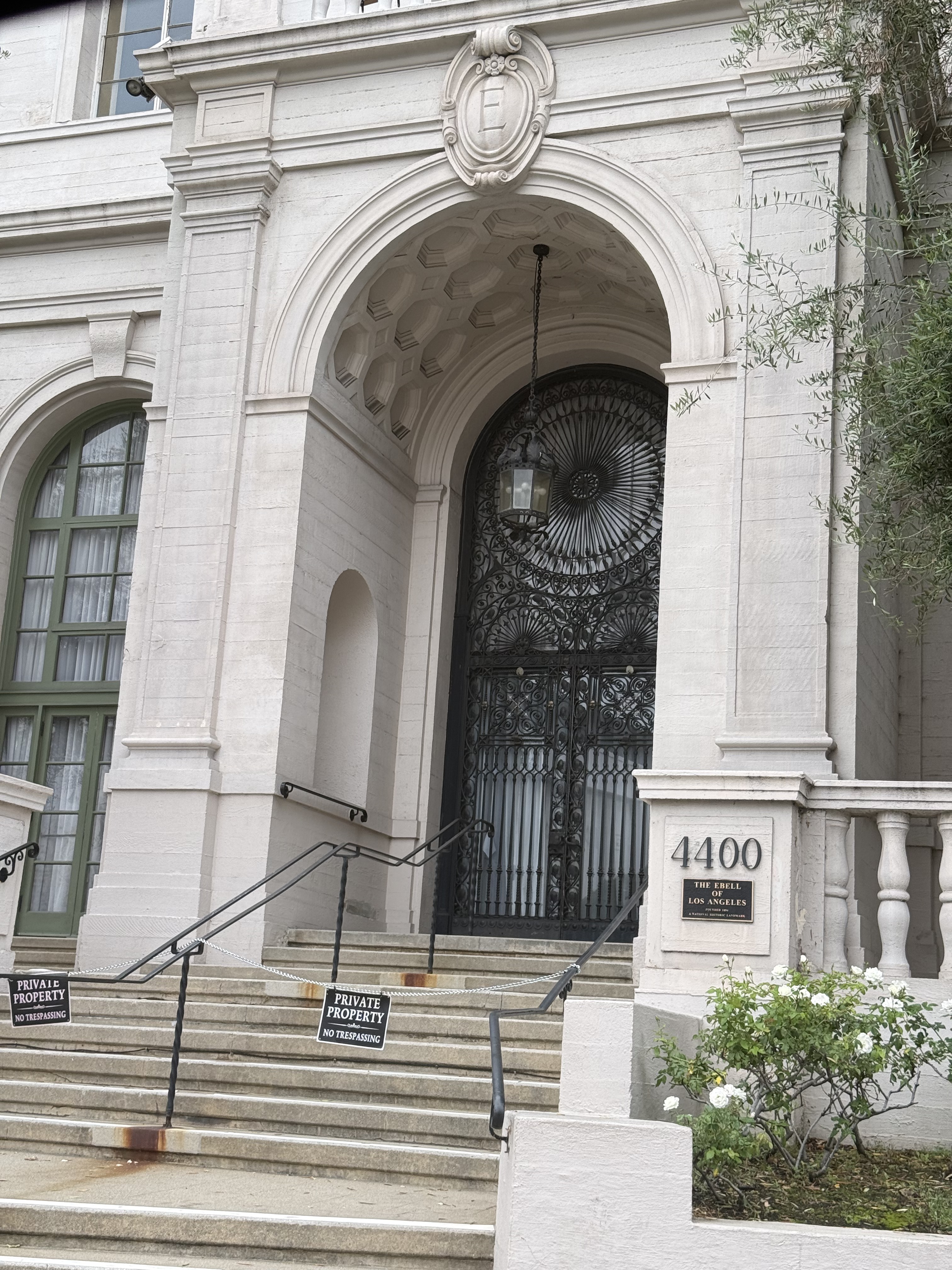
The Ebell of Los Angeles purchased its Wilshire Boulevard site in 1925 for $1,225,000, proceeds from shrewd real estate investments that allowed the women's organization to commission Sumner P. Hunt to design a grand new clubhouse for $700,000. Hunt, who had designed the Ebell's previous Figueroa Street home in 1905, partnered with Silas Reese Burns Jr. to create this ambitious Italian Renaissance complex. The cornerstone was laid in February 1927, and just seven months later the completed building opened with a performance by the Adolph Tandler String Ensemble. The timing carried particular weight: this monument to women's education and cultural advancement opened barely seven years after women gained the right to vote nationally, a physical declaration of the first wave women's club movement's civic ambitions.
The Italian Renaissance clubhouse sprawls across 75,000 square feet of cast-in-place concrete finished with plaster and topped with Italian clay tile roofing. The complex wraps around a central patio measuring 65 by 120 feet, organizing an ambitious program that includes a 1,238-seat theater, library, art salon, solarium, offices, dressing rooms, and a dining room that opens onto a tile-roofed colonnade and fountain. Practical details reveal the building's purpose: cork flooring throughout absorbs the sound of clacking heels, while dining room chairs feature integrated purse hooks. The central Fountain of Honor, featuring classical sculpture by Henry Lion, memorializes relatives of Ebell members who died in World War I. Landscape architects Florence Yoch and Lucille Council, pioneering women professionals whose work was later documented in a 2013 Historic American Landscapes Survey, designed the grounds.