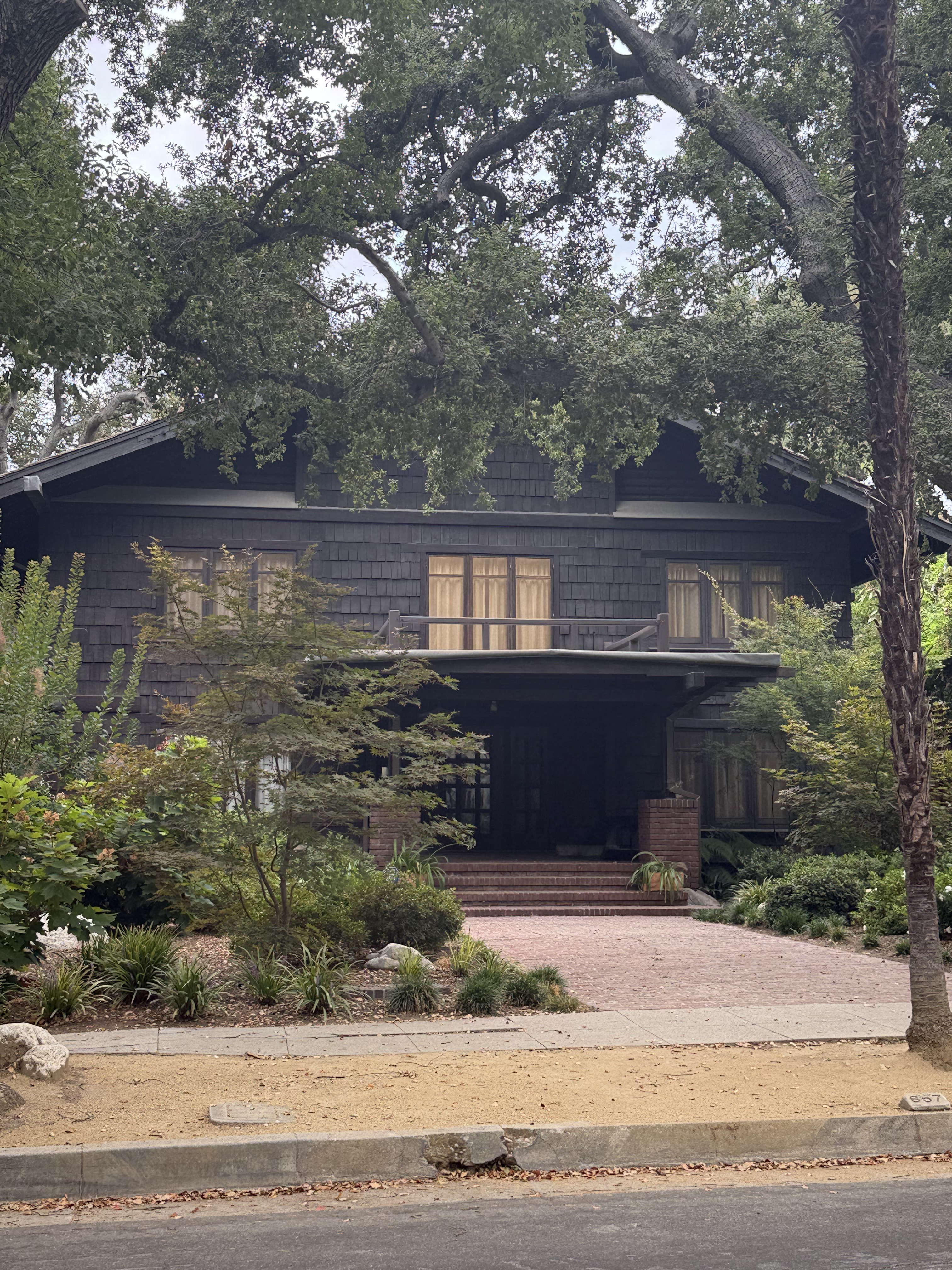
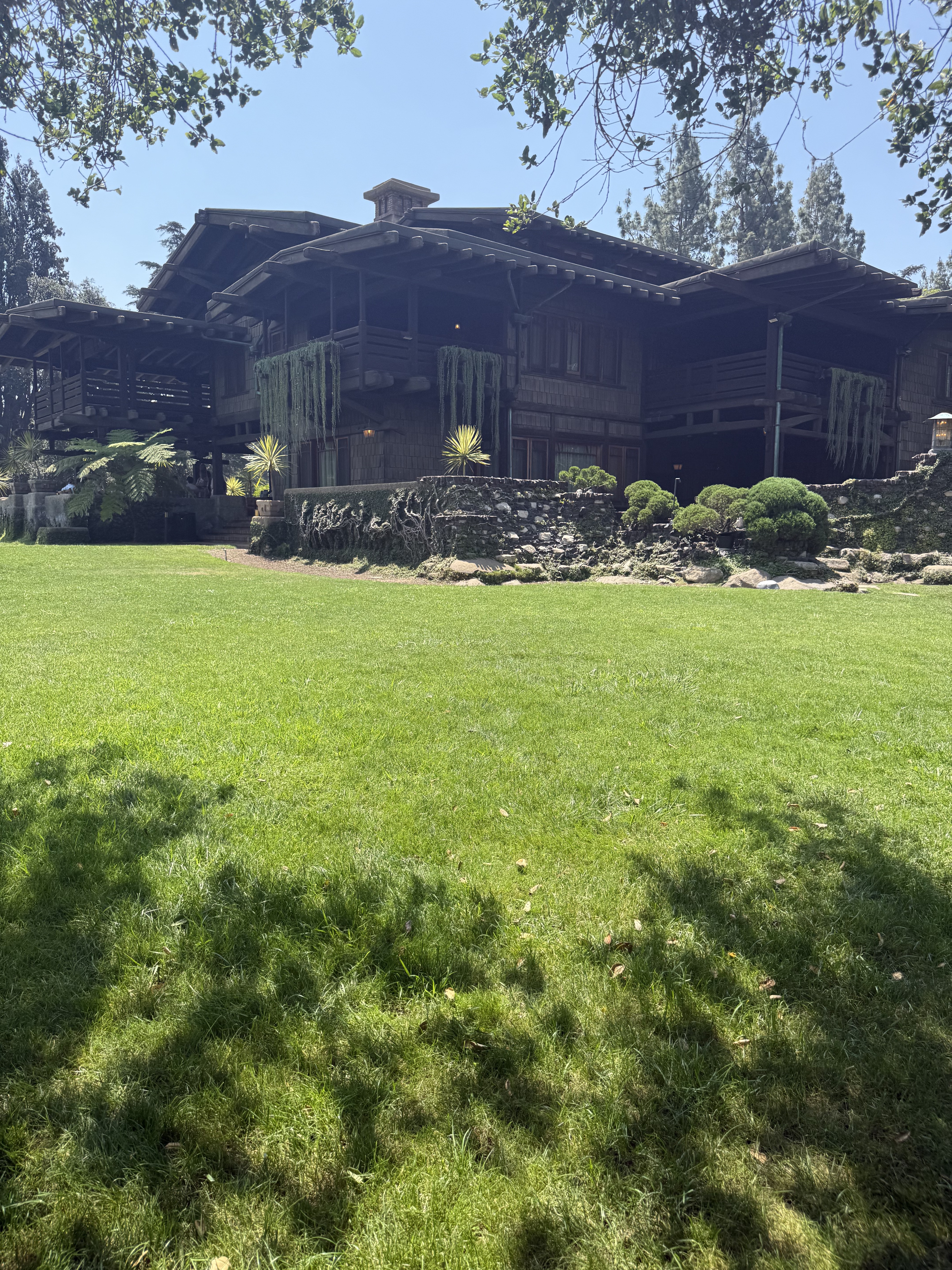
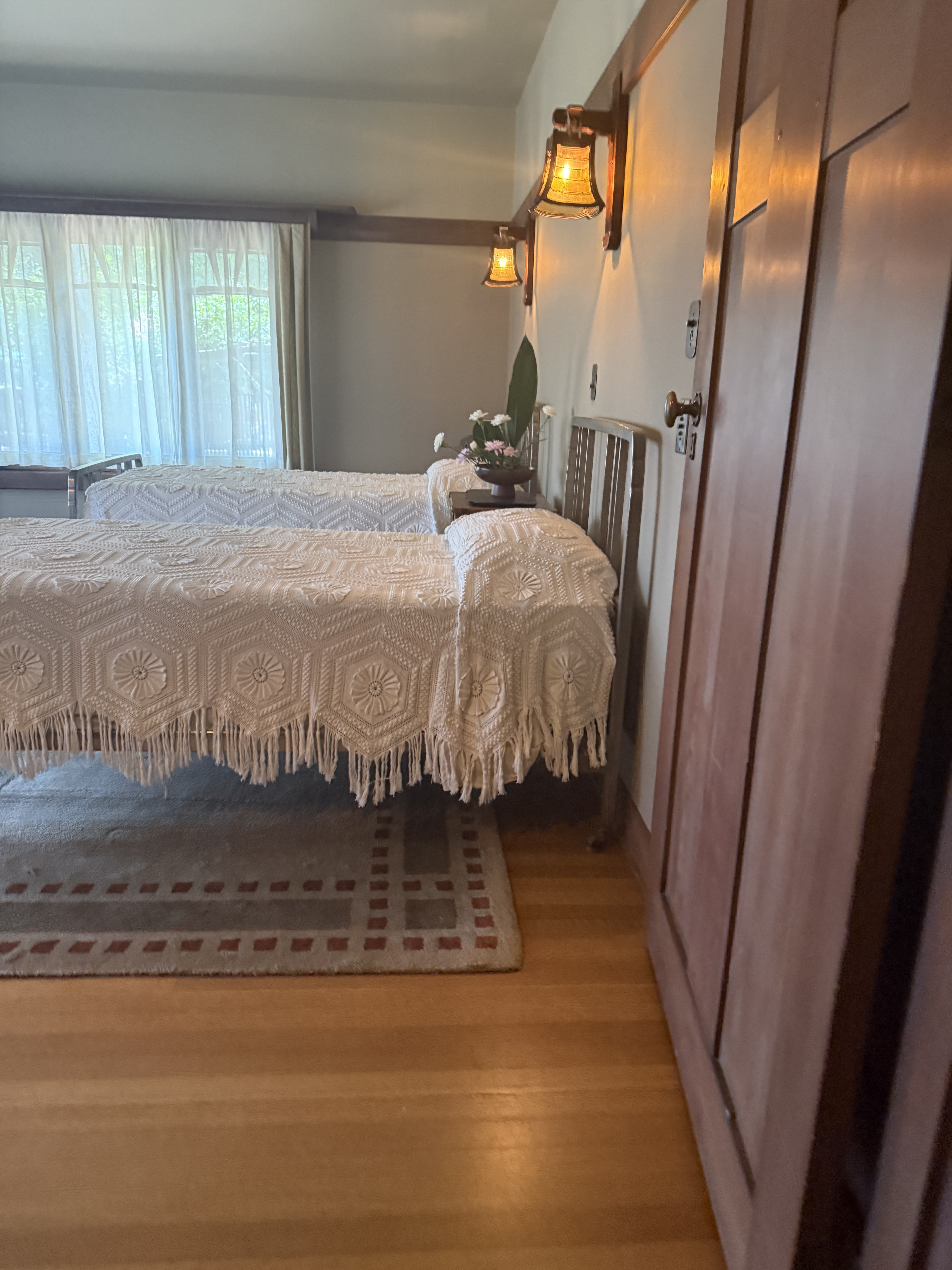
Built in 1908 for David B. Gamble of the Procter & Gamble family and his wife Mary, the Gamble House served as a winter residence in Pasadena, a city that had cultivated a reputation as a healthful and cultured retreat for wealthy eastern and Midwestern industrial families. The commission arrived at a moment when handcrafted domestic environments were imagined as morally and aesthetically corrective responses to industrialization. The house belongs to Pasadena's era as a winter colony for affluent families seeking respite in Southern California's temperate climate. It was conceived not as a year-round home but as a seasonal sanctuary where craft and climate could merge into a refined domestic experience.
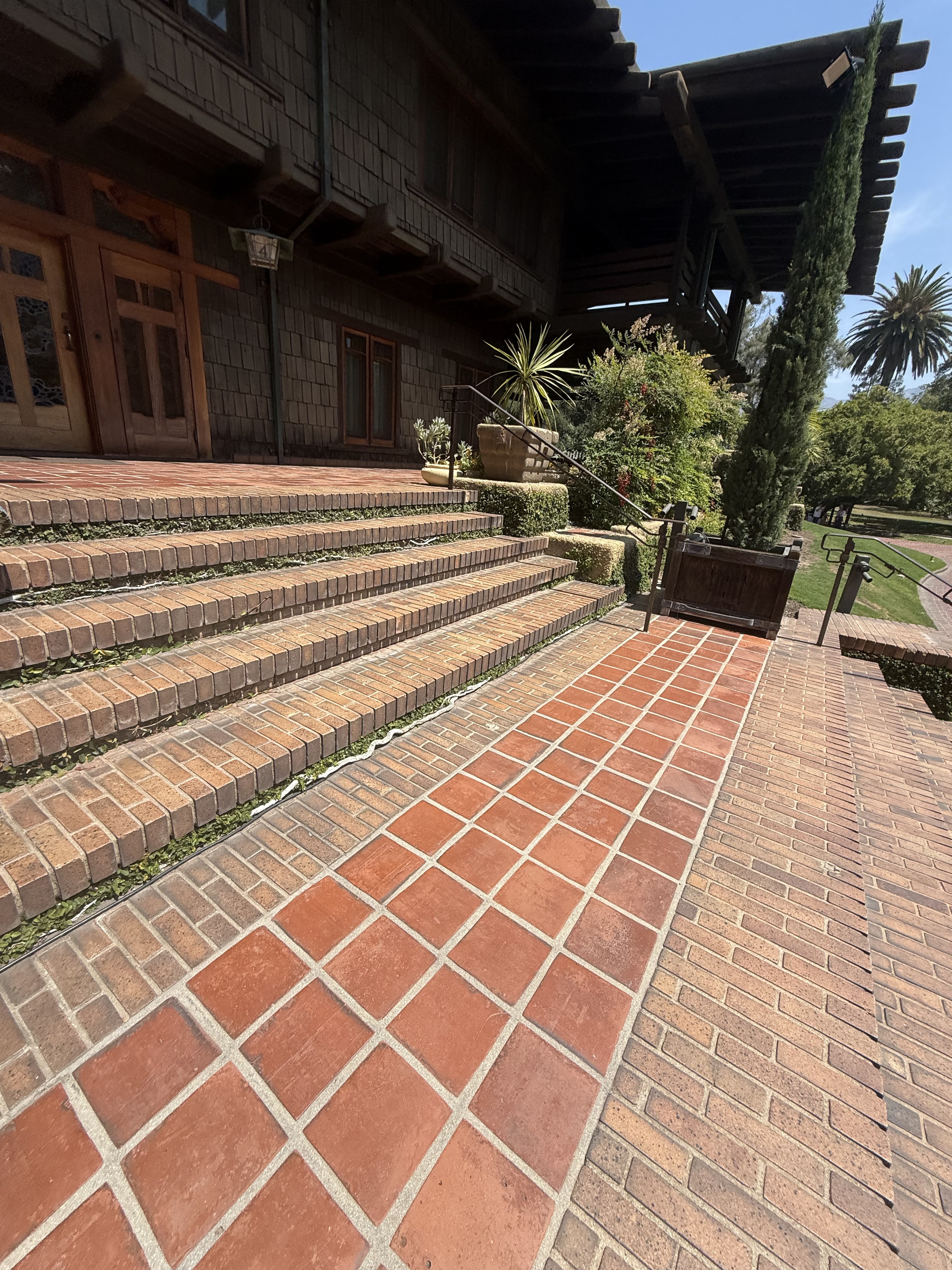
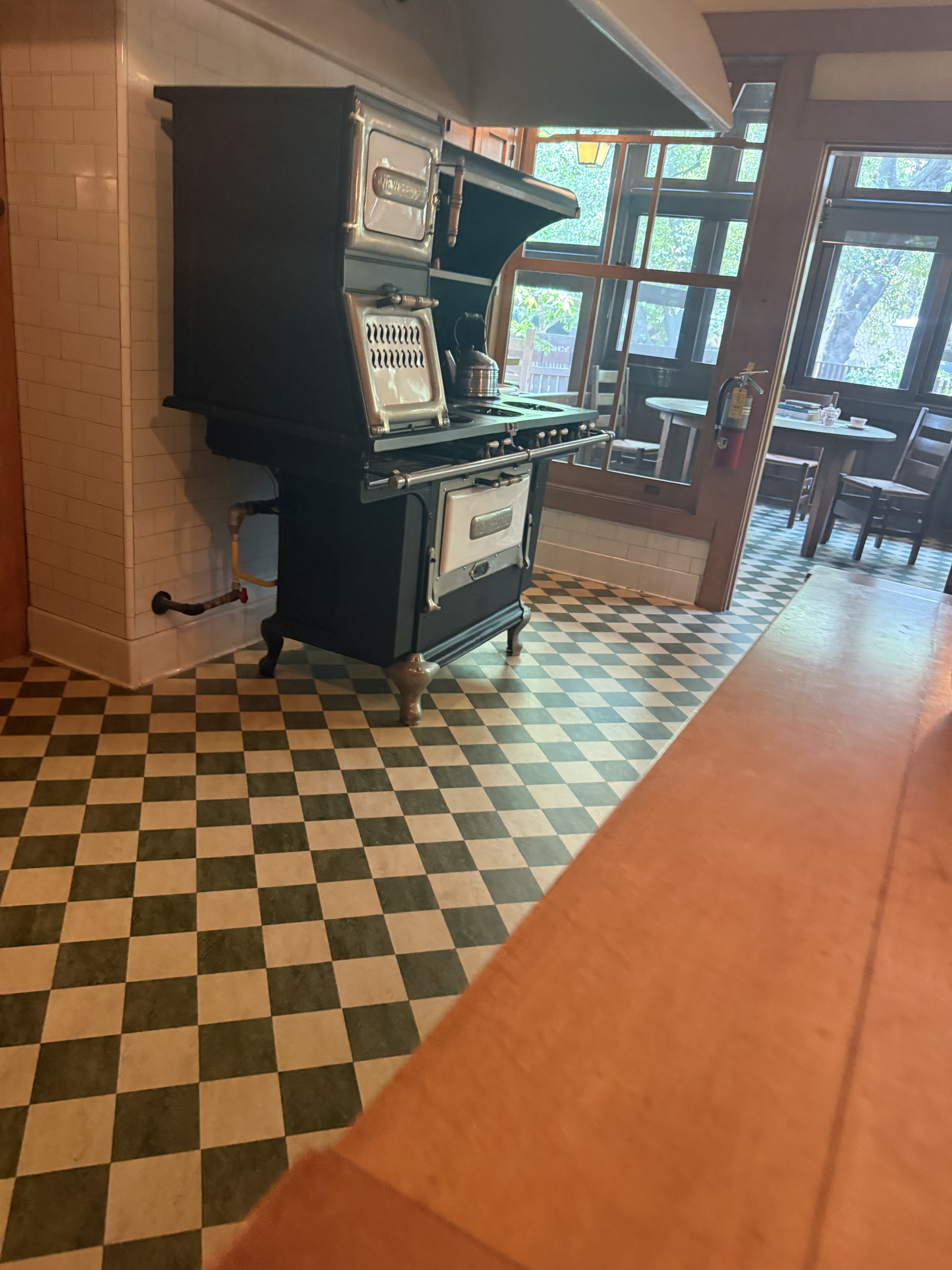
The house is a supreme work of American Arts and Crafts architecture, designed as a total environment in which architecture, furniture, fixtures, joinery, landscape relationship, and sensory atmosphere function as inseparable elements. Teak, cedar, redwood, brick, stone, and leaded glass combine with deeply articulated wood joinery to create a layered domestic experience of shelter, craft, and climatic intelligence. Broad roof planes extend over terraces and sleeping porches, while the low horizontal emphasis and careful transitions between interior and garden respond directly to Southern California weather. Unlike many revival houses of the period, this building is not about historical quotation but about making structure, material, and craft themselves beautiful. The architecture prioritizes the expression of joinery, the texture of natural materials, and the orchestration of light and air through space.