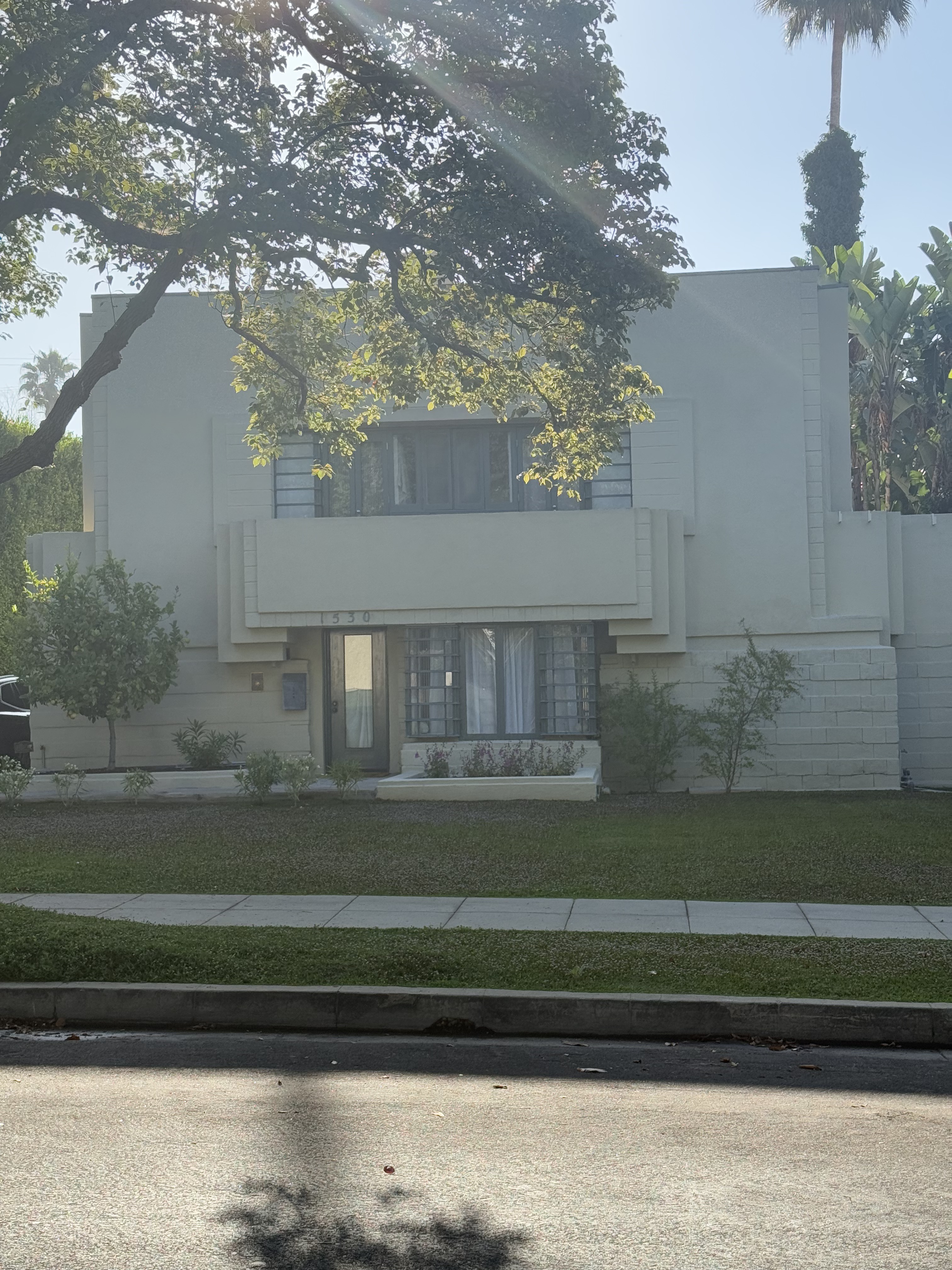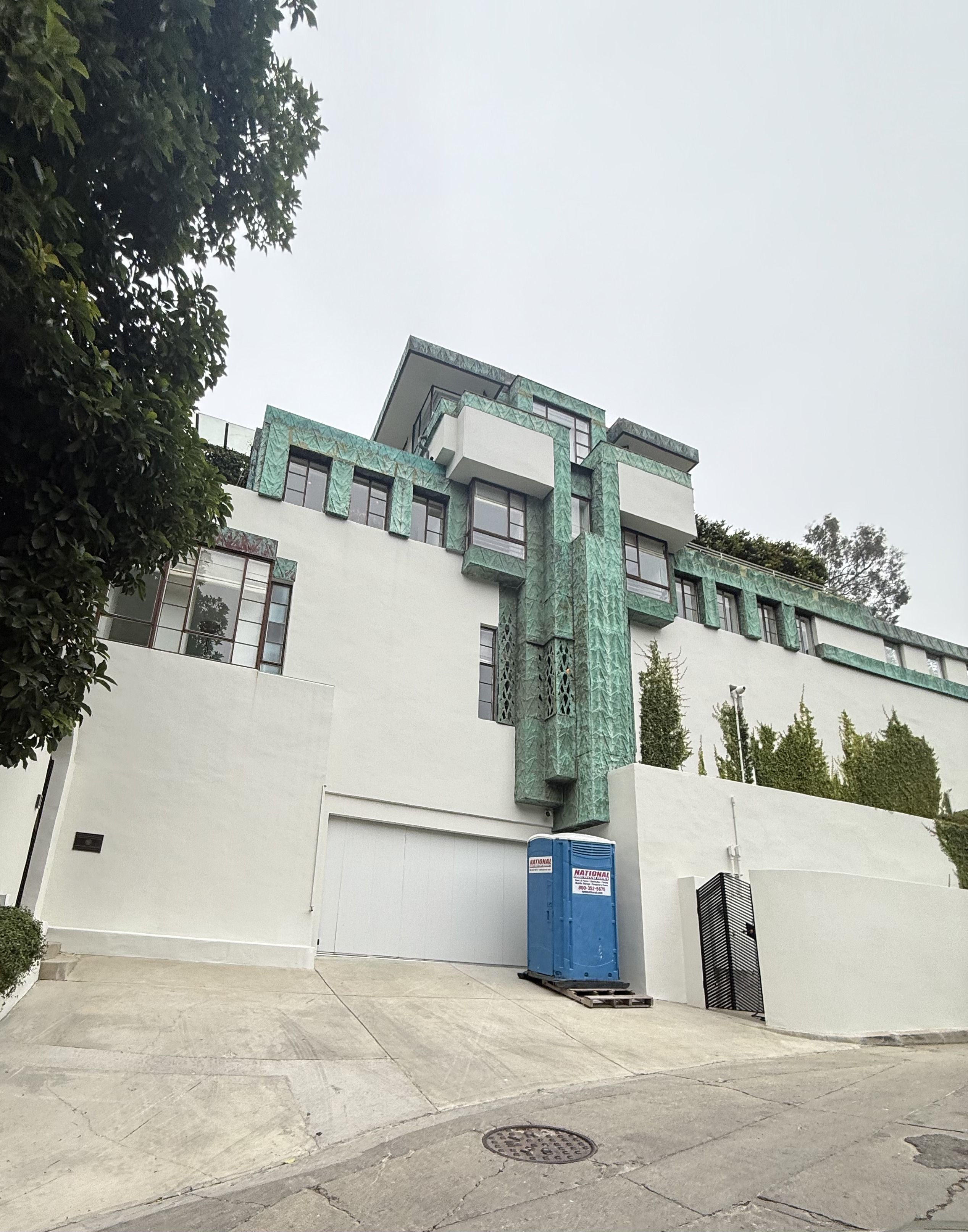
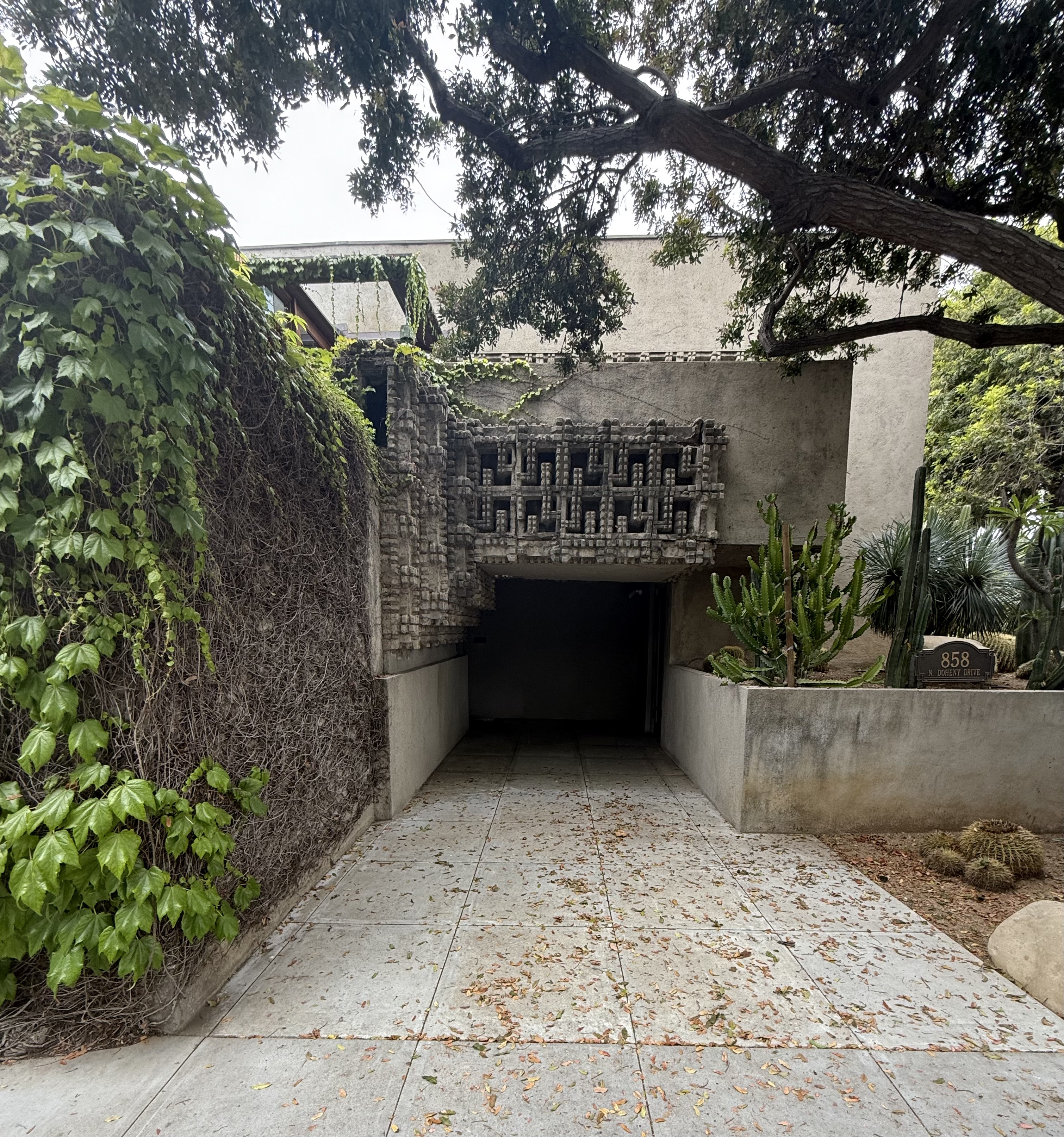
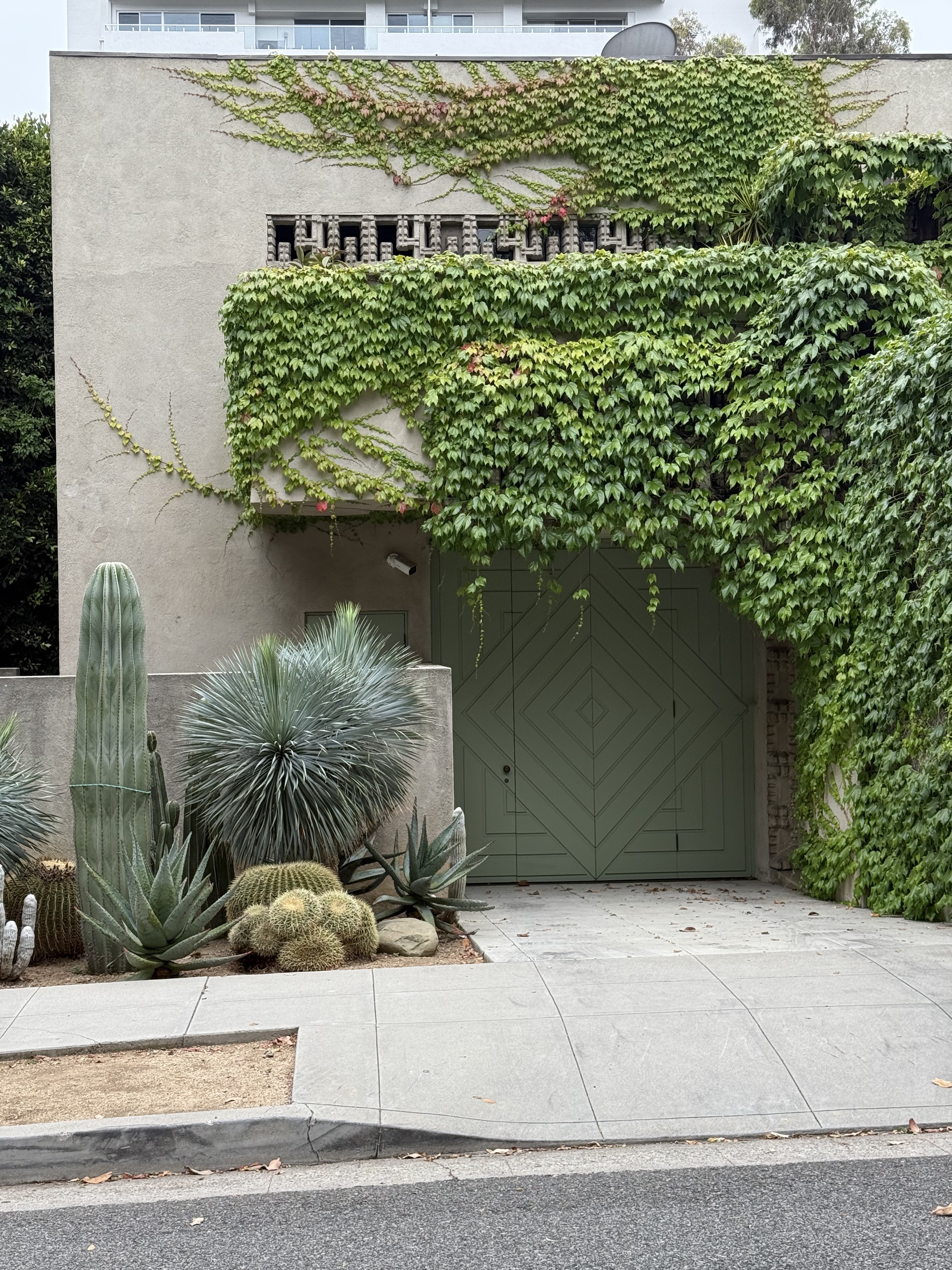
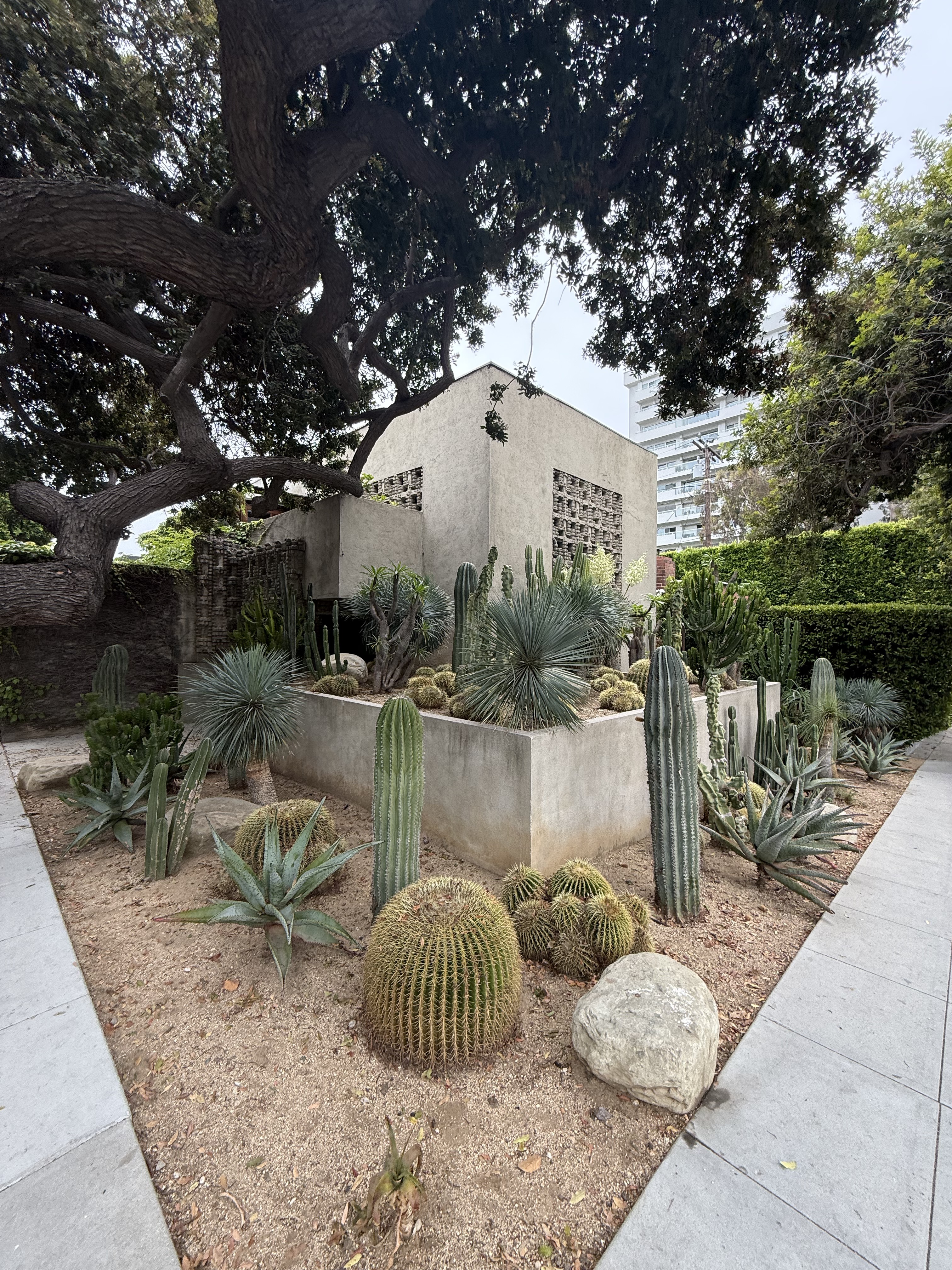
Designed by noted architect Lloyd Wright, built in the 1920s as his personal studio and residence. After opening his Los Angeles practice in 1916, Lloyd needed a space that would serve dual purposes: overseeing the construction projects while developing his own distinctive architectural practice. The studio was conceived as both a working laboratory for Lloyd's design innovations and a showcase for potential clients, featuring a large workroom that opens onto an enclosed patio on the ground floor.
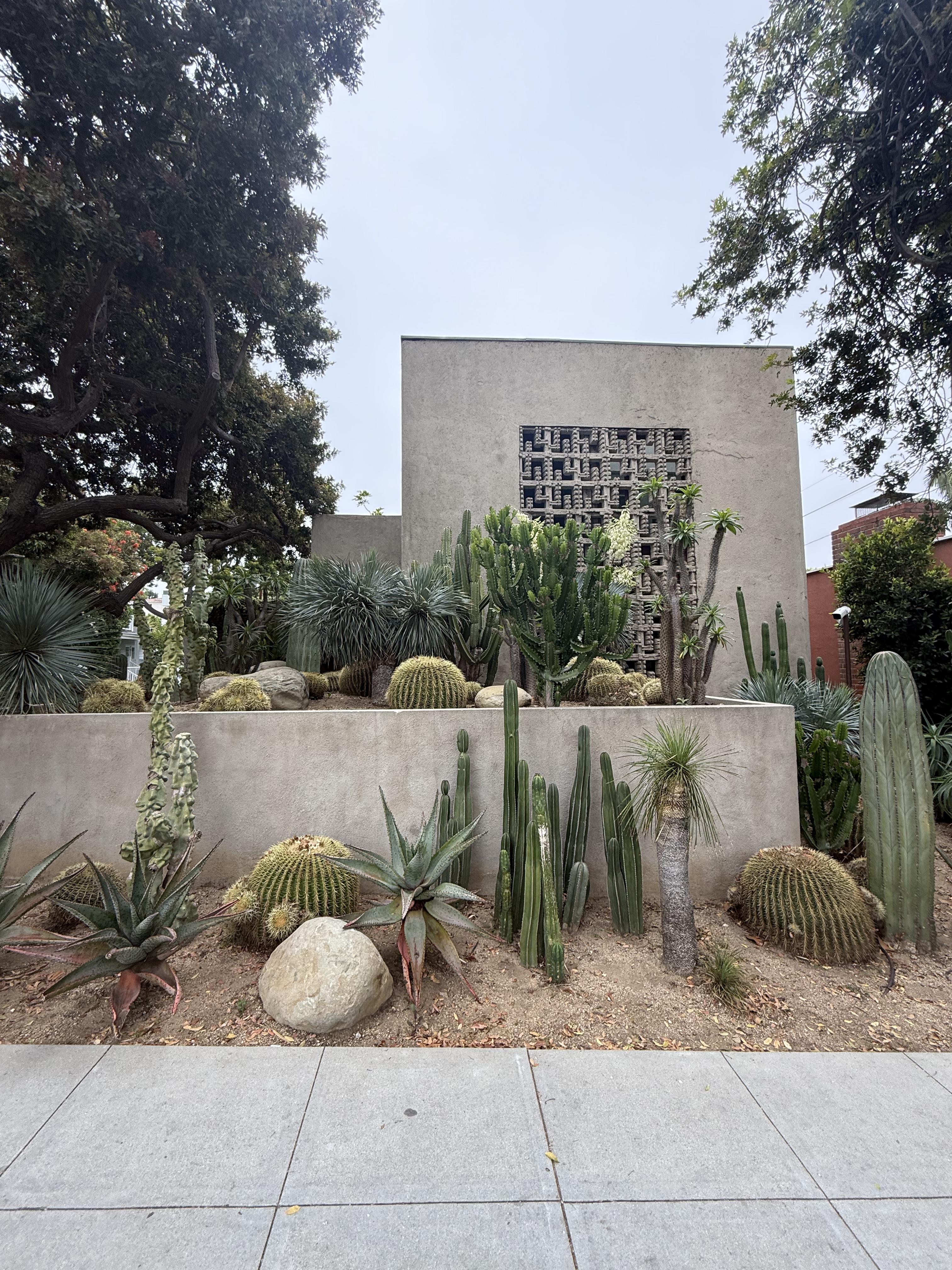
The studio showcases Wright's mastery of textile block construction, incorporating patterned concrete blocks similar to his father's famous 'textile block' houses, on which he had collaborated. The signature design element features an interlocking pattern of stylized Joshua trees, creating a uniquely Californian interpretation of the Wright family's architectural language. The building exemplifies Wrightian principles with its integration of interior and exterior spaces, highlighted by the enclosed patio that extends the studio's workspace outdoors. The compact corner lot design maximizes both privacy and functionality, with the studio's large workroom serving as the heart of the creative space. Listed on the National Register of Historic Places and designated as a local historic property.