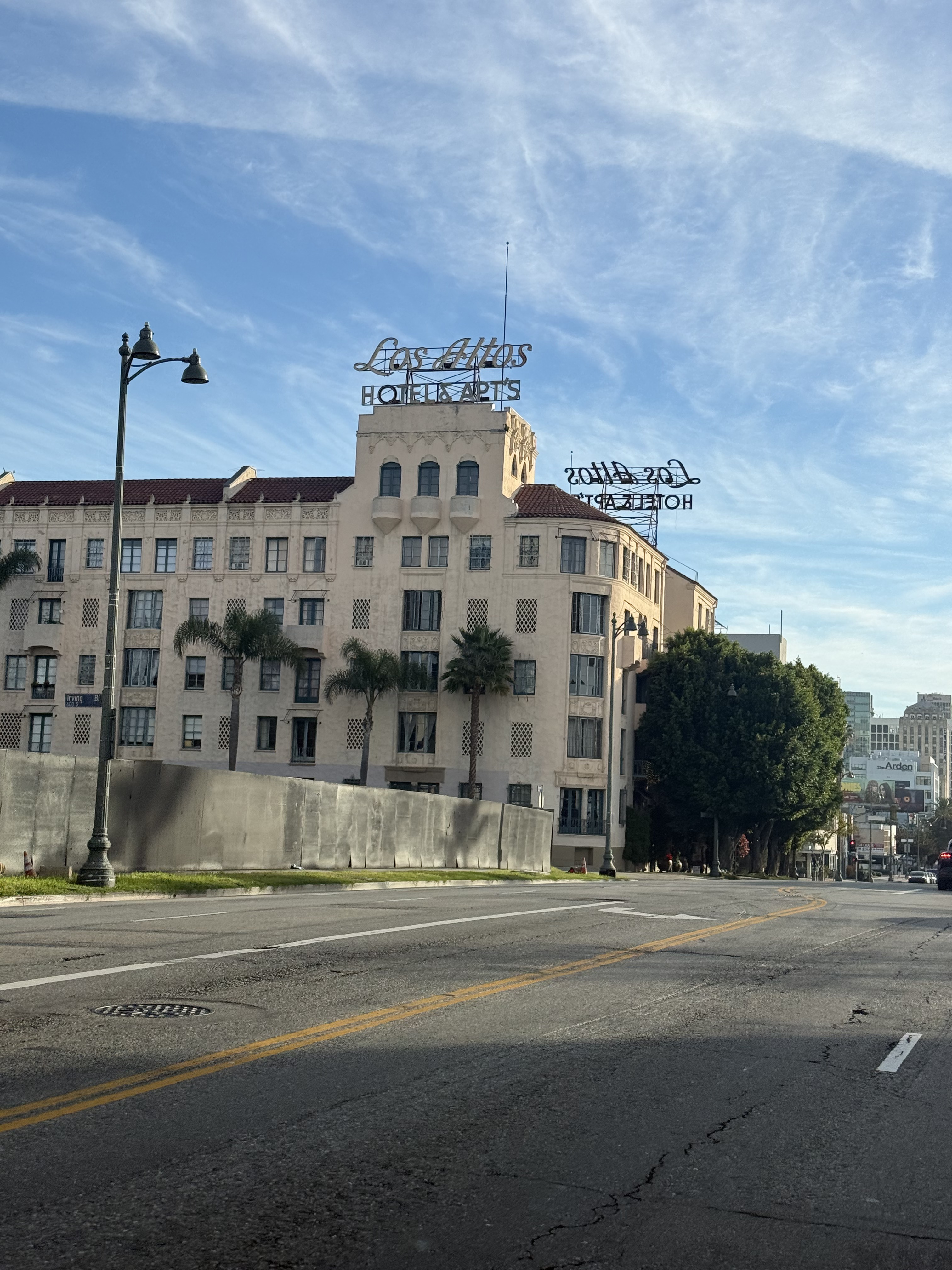
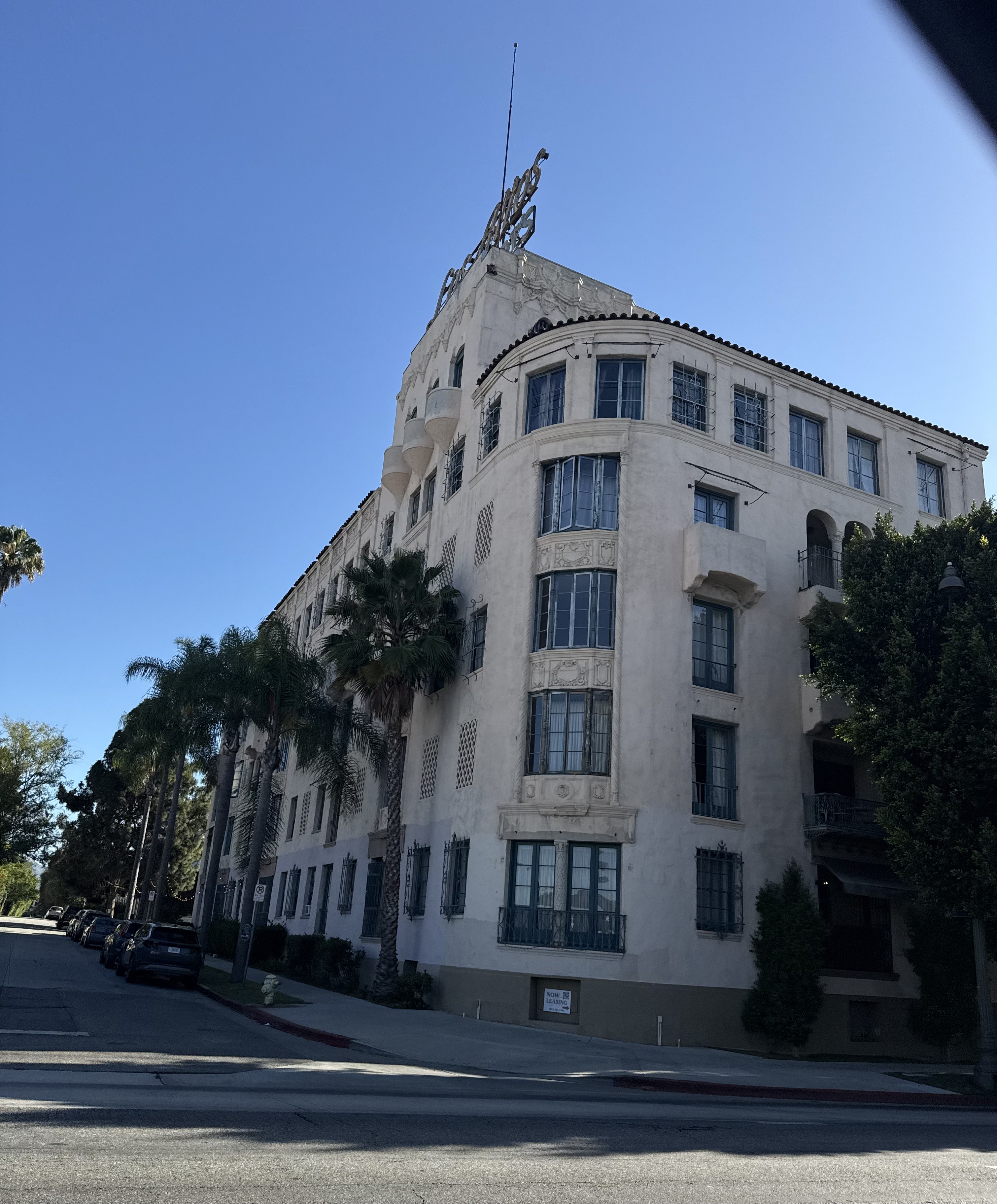
Los Altos Apartments opened in 1926 as a cooperative apartment building, part of the ambitious real estate boom transforming Wilshire Boulevard into one of Los Angeles's most prestigious addresses. The Los Angeles Times hailed it as establishing a new standard of beauty and dignity in Los Angeles apartment house construction. That optimism proved short-lived. Like many speculative 1920s ventures, Los Altos went bankrupt during the Great Depression, its cooperative ownership dream collapsing within just a few years of completion. The building became a small but telling casualty of the 1929 crash that abruptly ended Wilshire Center's jazz age prosperity.
This five story Spanish and Mission Revival composition incorporates Italian influences into a design that the Los Angeles Conservancy recognizes as one of the most instantly recognizable buildings on Wilshire Boulevard. That recognition owes much to the neon rooftop sign that crowns the structure, a beacon visible for blocks in either direction. The building's massing and ornamental vocabulary reflect the Mediterranean eclecticism that dominated high-end Los Angeles residential architecture in the mid-1920s, when Spanish Colonial Revival styling signaled both cultural sophistication and California's imagined connection to an idealized Mediterranean past. Architects Edward B. Rust and Luther Mayo created a composition that balanced decorative richness with the dignified restraint expected of upscale cooperative living.