
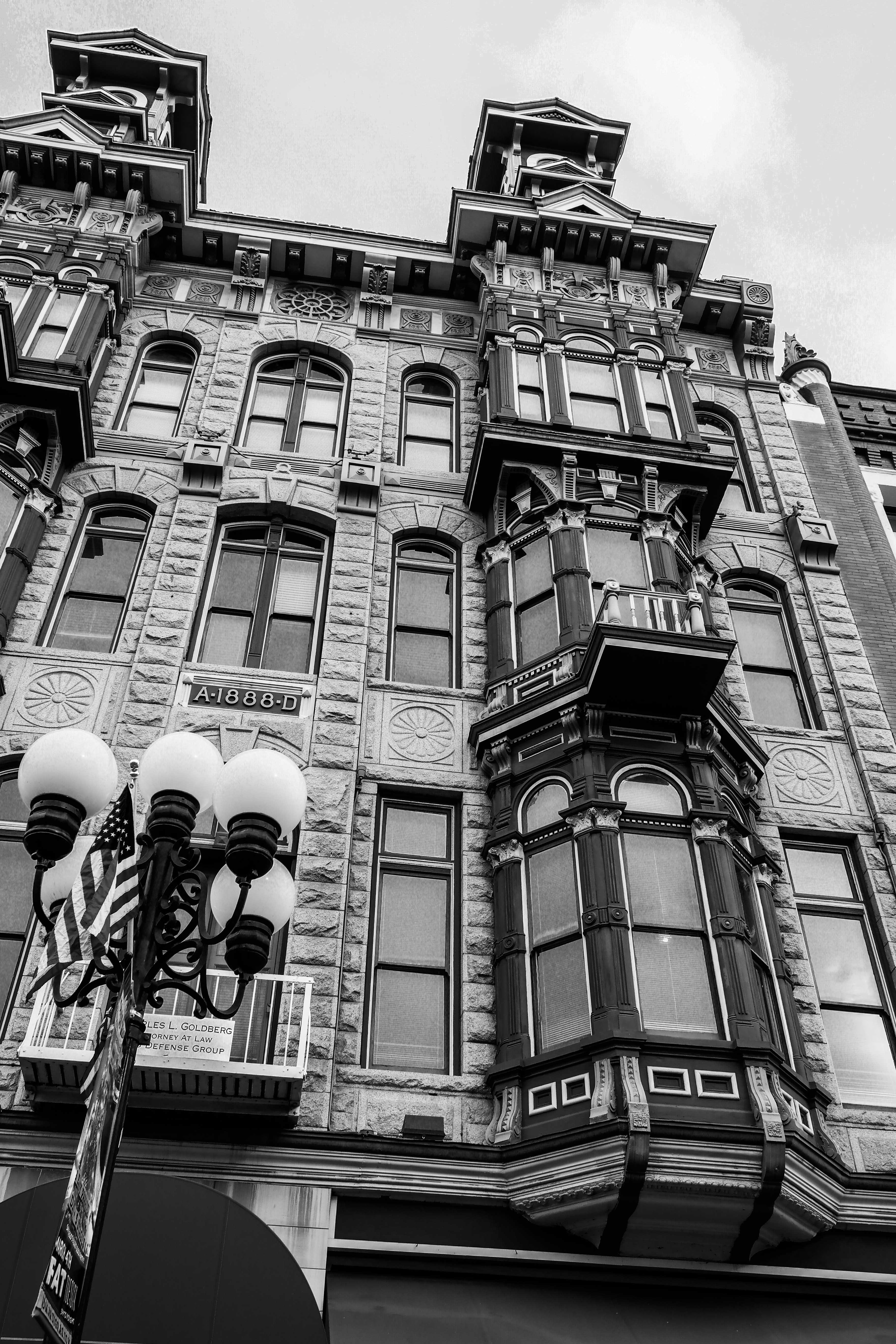
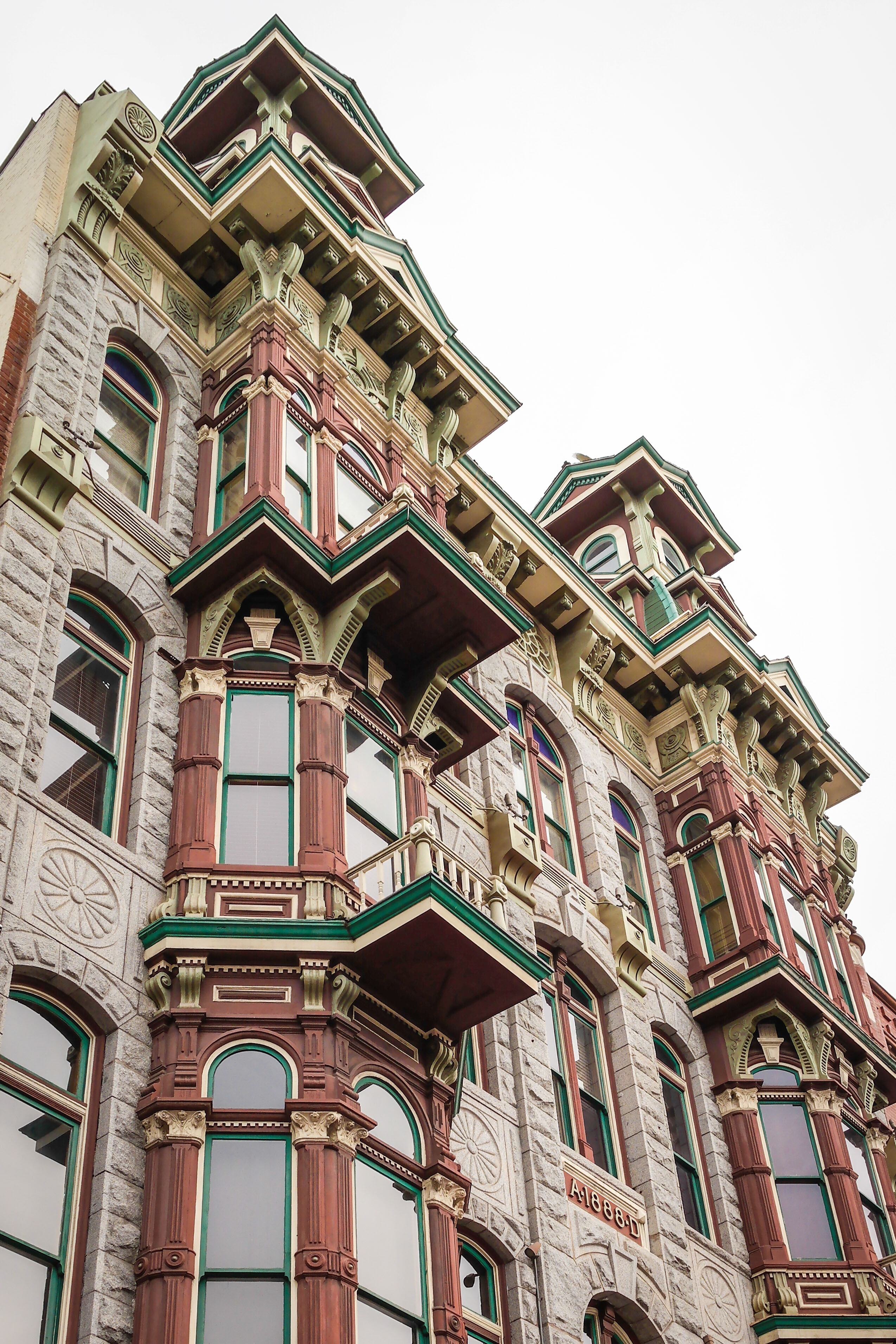
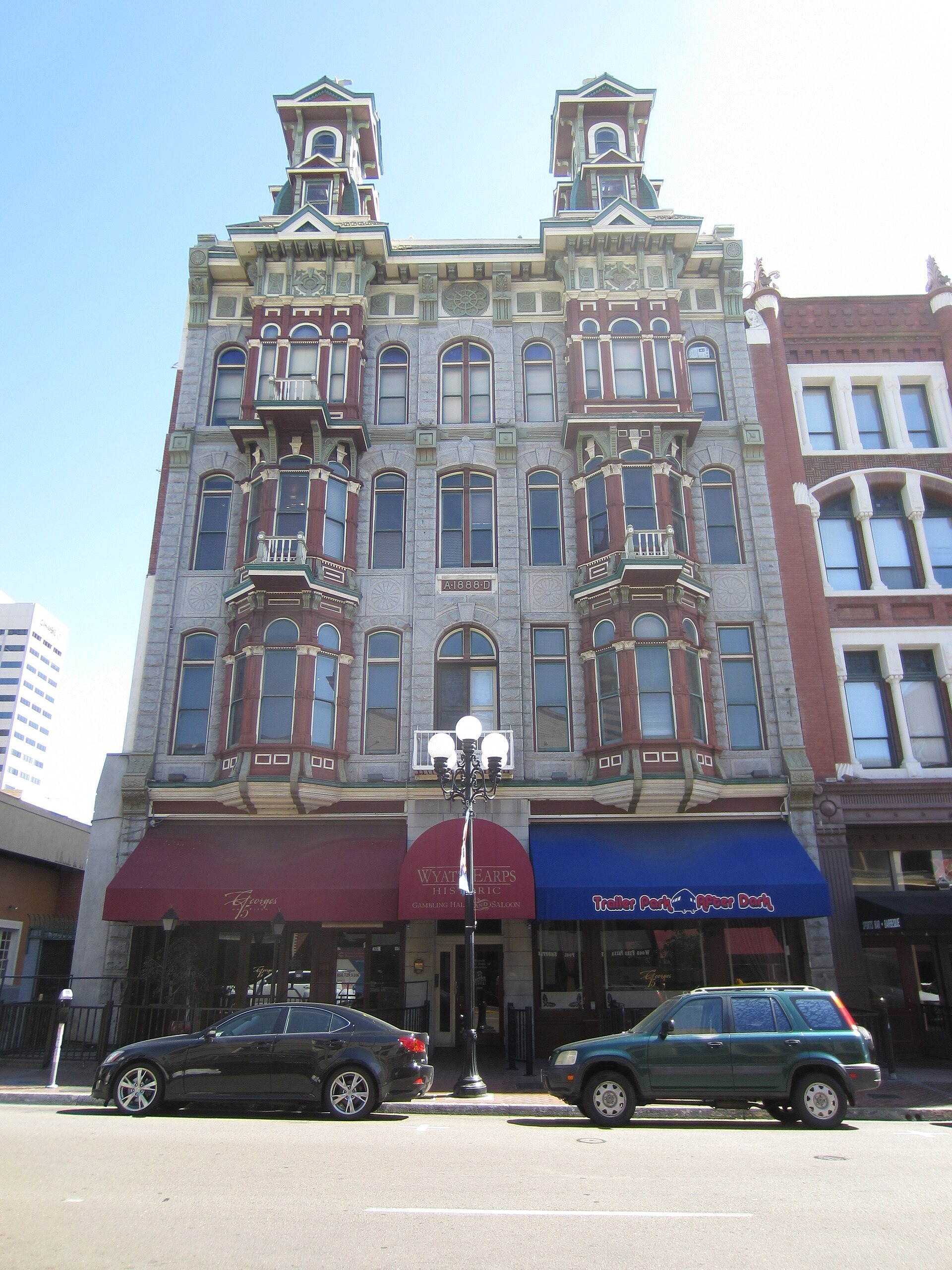
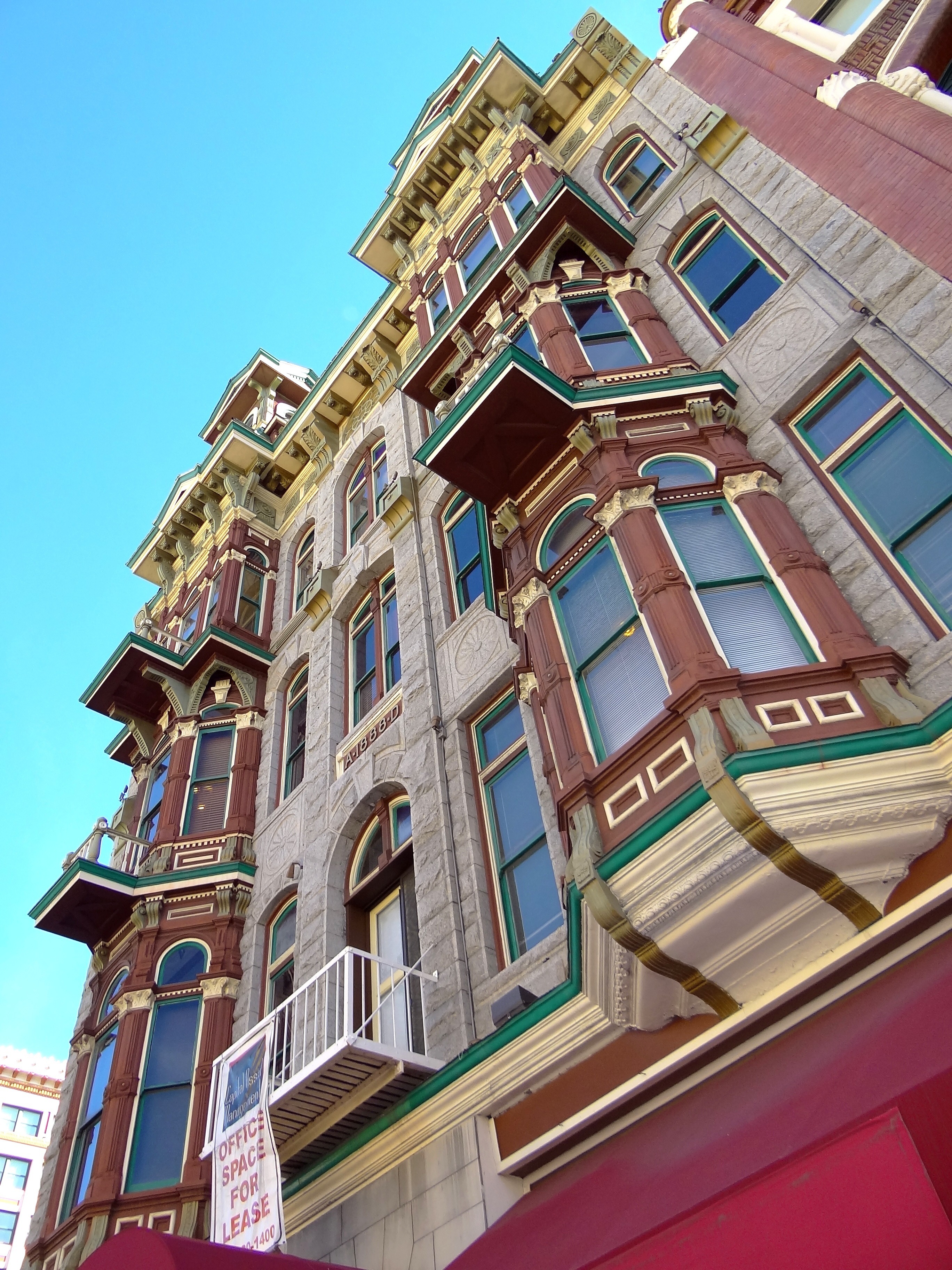
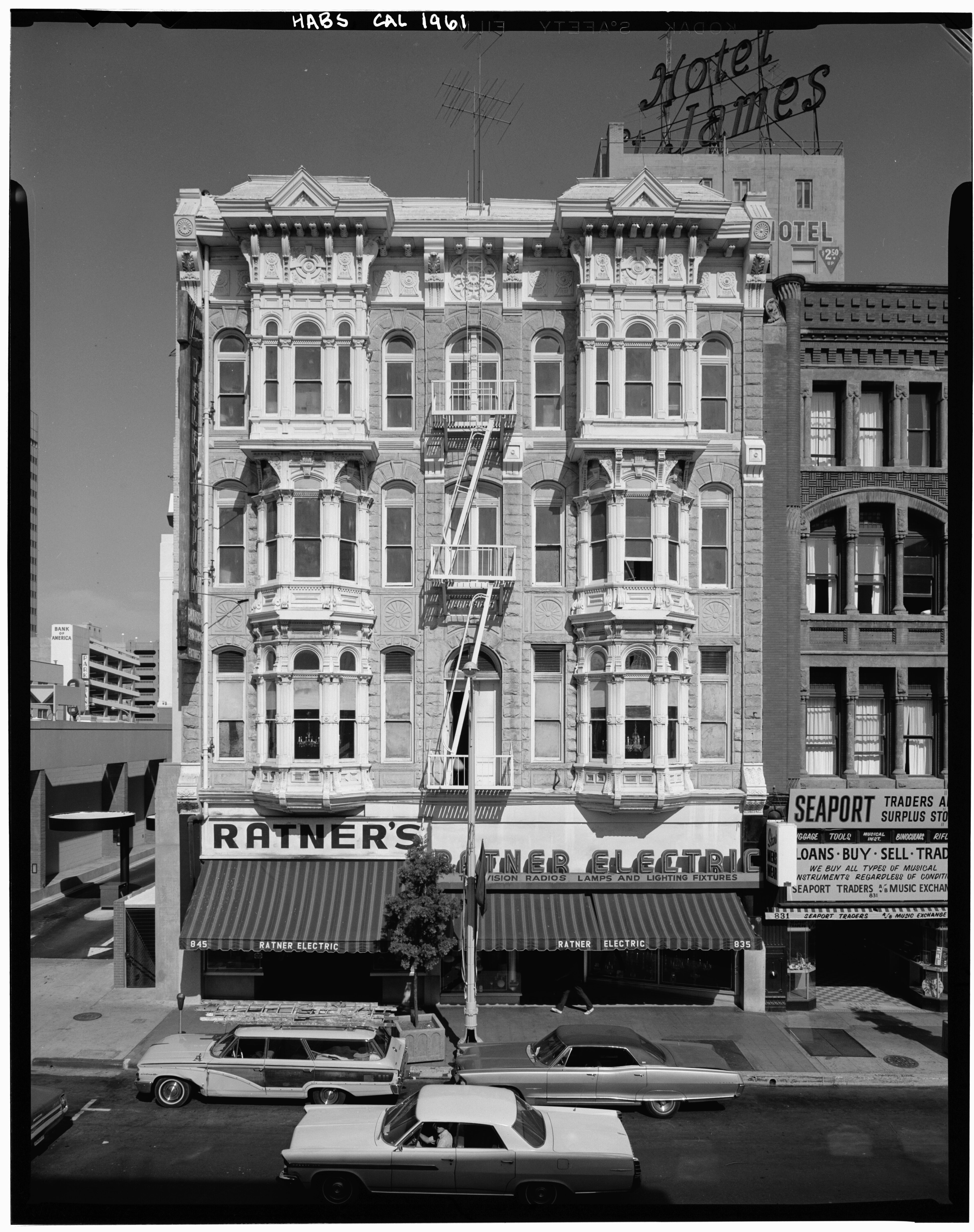
Isadore Louis commissioned this four-story commercial block in 1888 to house his bank and ground-floor retail spaces, hiring the firm of Clements and Stannard to design a building that would signal permanence and capital in a city electrified by the real estate boom. The building opened in the final months of that boom, just as San Diego's population began its collapse from 40,000 back to 16,000. It was the first granite building in San Diego, a pointed departure from the brick-and-cast-iron construction that defined the city's Victorian commercial core. Where other developers used pressed metal ornament shipped by rail, Louis invested in cut stone and skilled masons, likely quarrying from San Diego County's backcountry granite deposits.
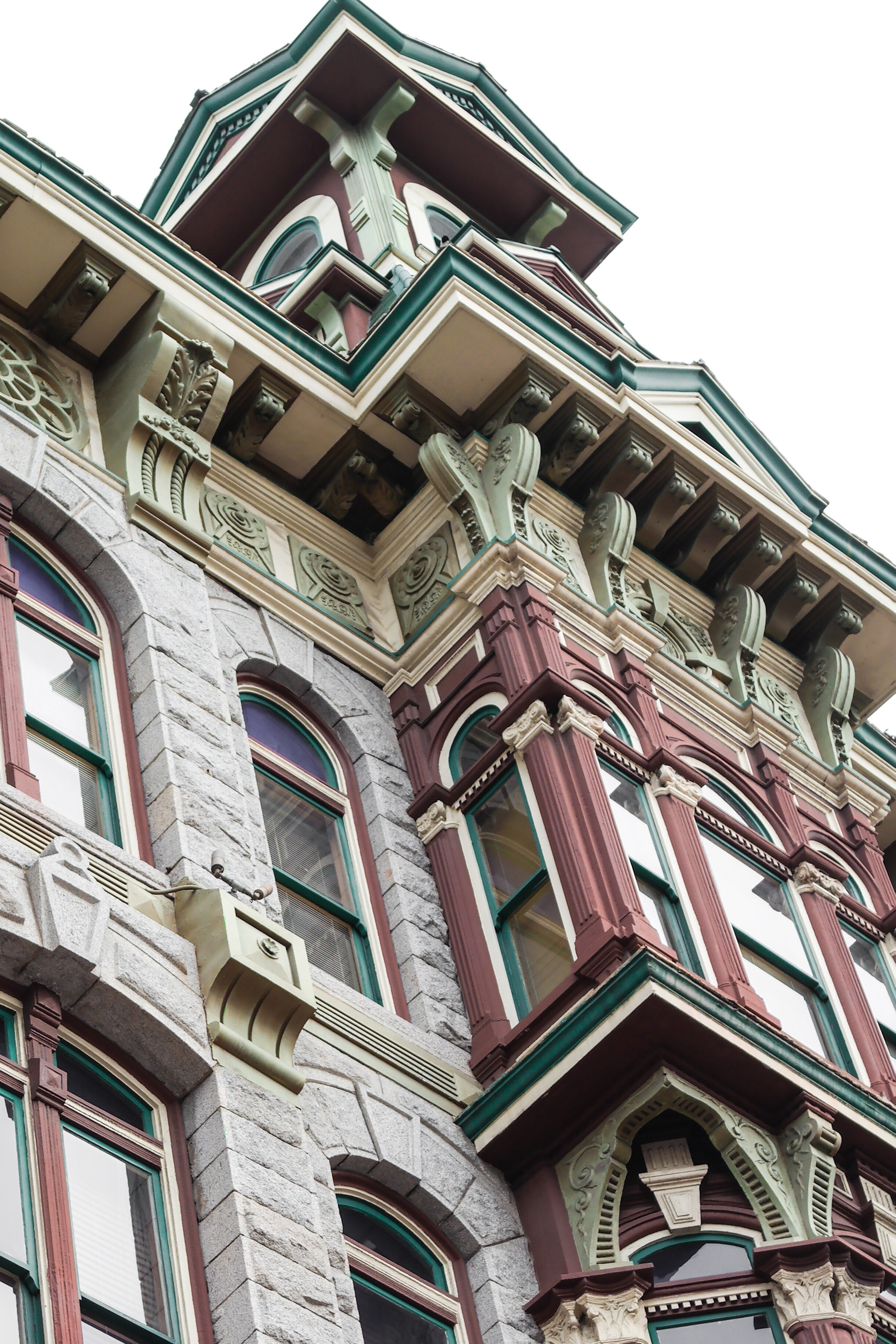
The Baroque Revival facade rises four stories with elaborate bay windows and a heavily modeled surface, but the twin towers at the roofline make the building unmistakable from either direction on Fifth Avenue. The granite cladding required expensive stonecutting and laying, a display of ambition that read differently in 1888 than it did by 1890, when the bank and the boom were both history. Fire damaged the building in 1904 and destroyed the original towers, which were reconstructed during the building's later rehabilitation. The upper floors reportedly housed a brothel while an oyster bar operated at street level, with Wyatt Earp among the claimed patrons during his San Diego years from roughly 1886 to 1893.