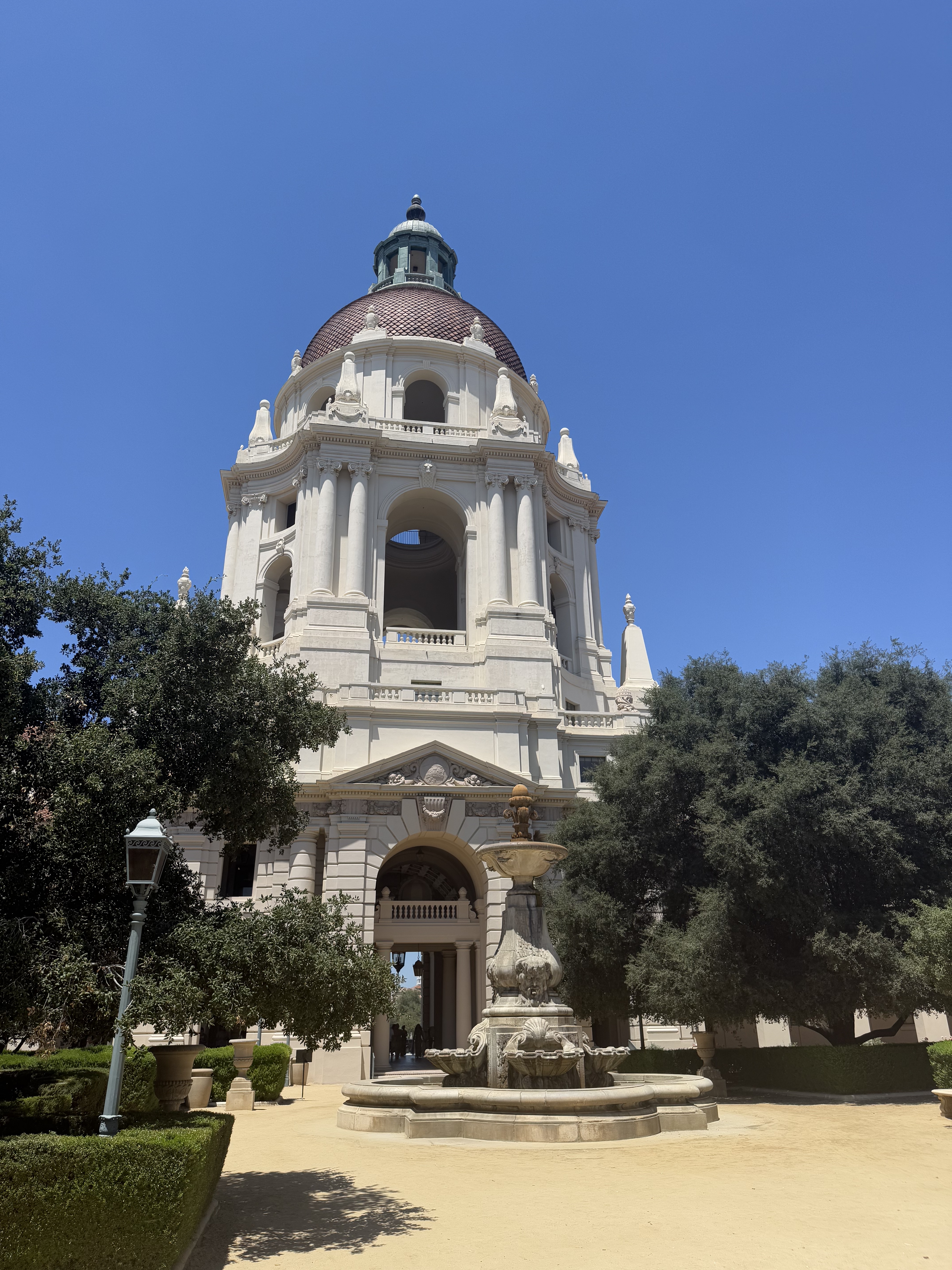
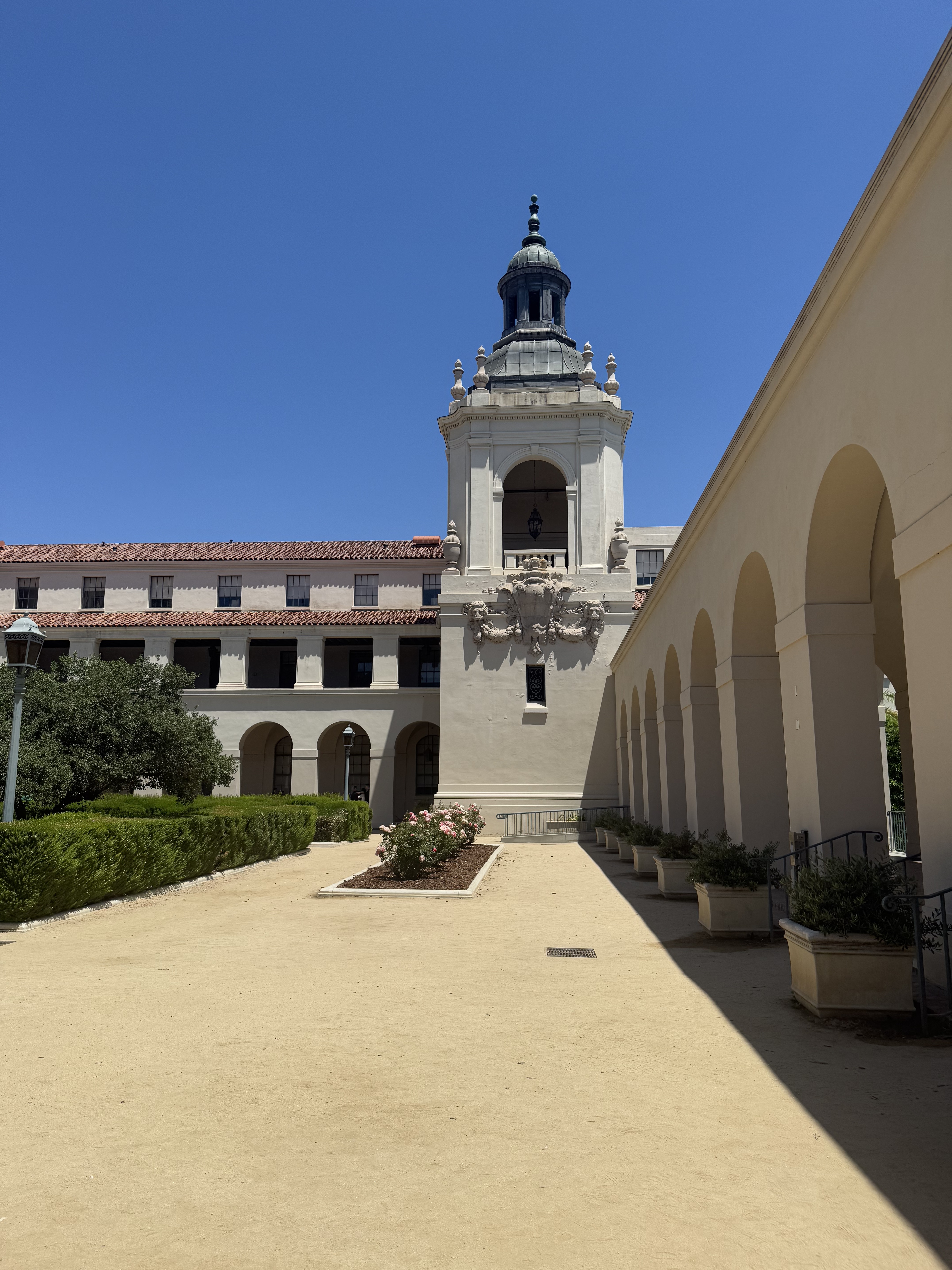
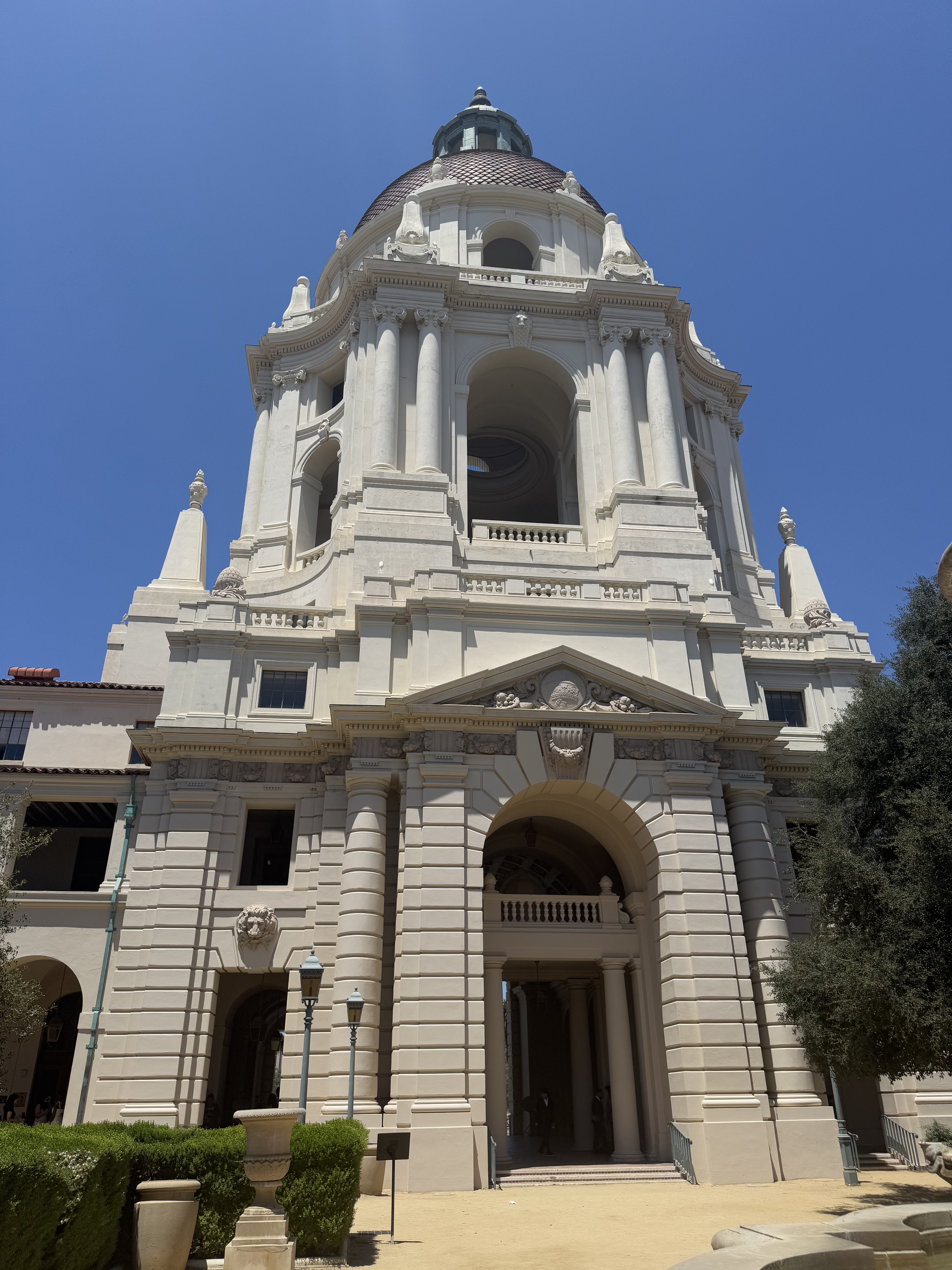
Commissioned by the City of Pasadena at the height of its civic ambition, Pasadena City Hall was completed in the 1920s as the centerpiece of a larger Civic Center plan. The building was intended to house municipal administration while projecting Pasadena's identity as a mature, culturally sophisticated city distinct from its neighbor Los Angeles. Designed by the San Francisco firm Bakewell & Brown, already celebrated for their work on San Francisco City Hall, the building arrived during an era when Southern California cities used monumental architecture to advertise prosperity, order, and refinement. The project reflected both the wealth flowing through Pasadena from winter tourism and the booster-driven image making that shaped the city's social landscape.
The building synthesizes Beaux-Arts planning principles with Mediterranean and Spanish Renaissance imagery, organizing arcaded wings around a large open courtyard and anchoring the composition with a domed tower. Italian precedent informs the ceremonial formality, while the courtyard plan and regional detailing root the building in California. Axial organization and the central court transform municipal functions into civic theater, creating spaces that feel both official and inviting. The ensemble reads as a carefully composed civic palace rather than an isolated monument, with intact relationships between wings, courtyard, and tower that preserve the original urban design intent.