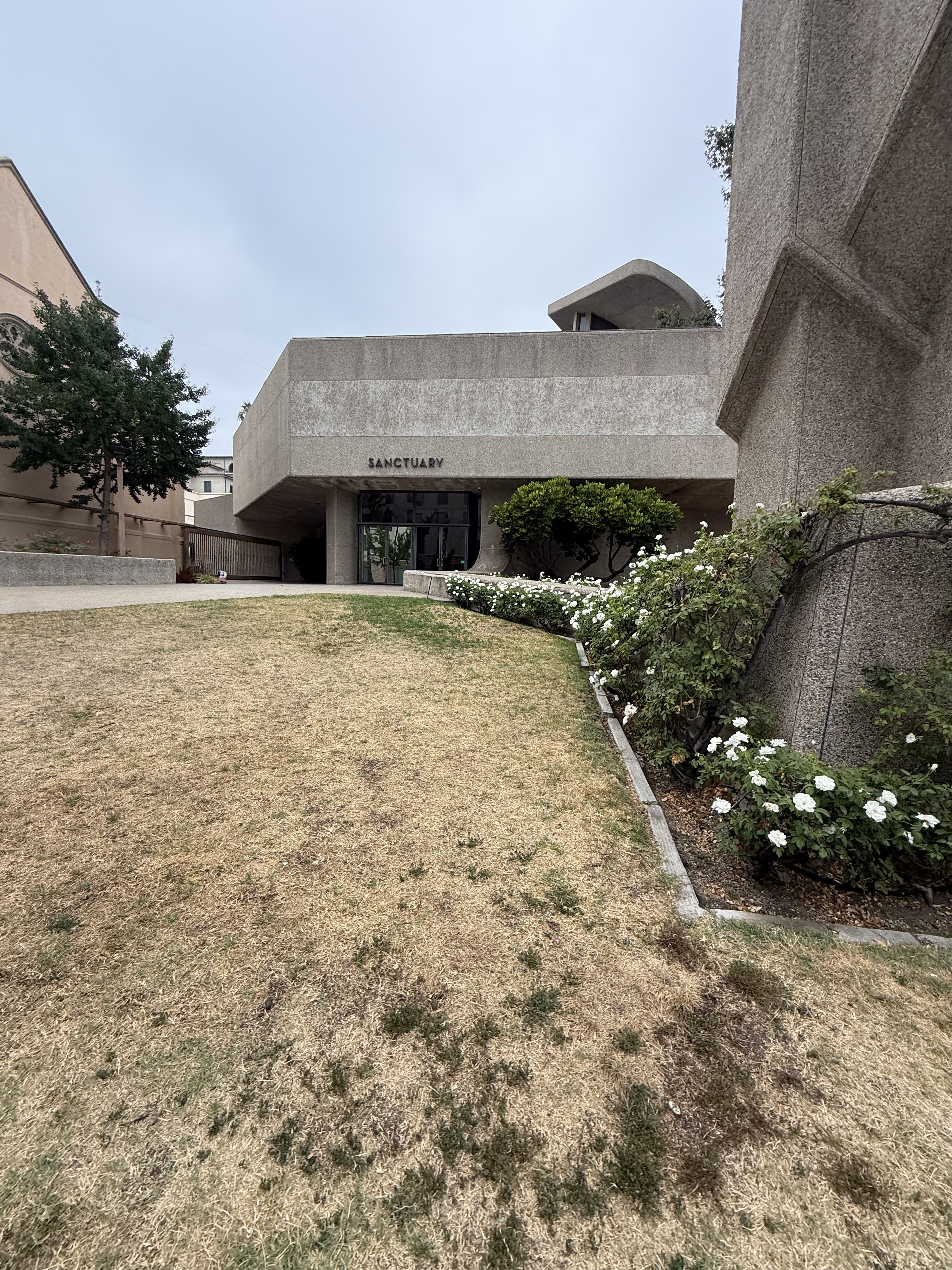
Commissioned by Pasadena Presbyterian Church, one of the city's oldest congregations, this sanctuary was completed in 1976 after the 1971 Sylmar earthquake severely damaged the congregation's earlier building. Rather than replicate what had been lost, the church chose to commission a dramatically modern replacement, reflecting both the post-earthquake moment of structural reckoning and the broader late-20th-century shift in religious architecture toward abstraction and new forms of communal space. The building sits within Pasadena's challenging 1970s period of adaptation, when the city was reshaping itself through contemporary architecture rather than relying on its booster-era historicism.
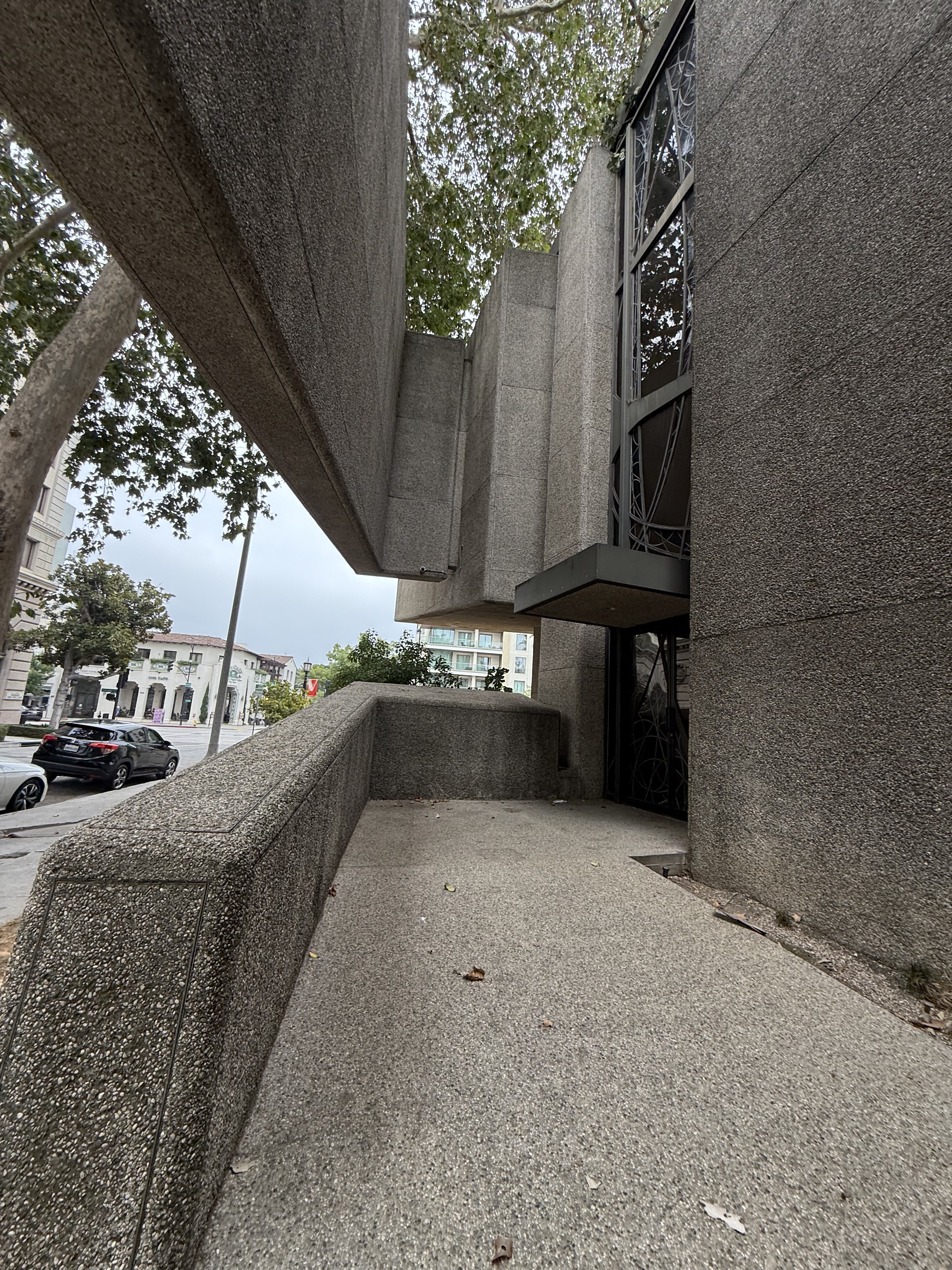
John Gougeon designed a composition often described as Late Modern or Brutalist-leaning, centered on a largely plain, fortress-like main volume paired with a dramatic multi-tier bell tower that incorporates bells salvaged from the earlier sanctuary. The architecture rejects picturesque ecclesiastical nostalgia in favor of austere massing, exposed concrete, monumental surfaces, and urban frontality along Colorado Boulevard. For many visitors, the surprise is simply recognizing this as a church at all. It reads more like a late-modern civic structure, with an abstract vocabulary that prioritizes material directness and bold geometric forms over traditional religious iconography.