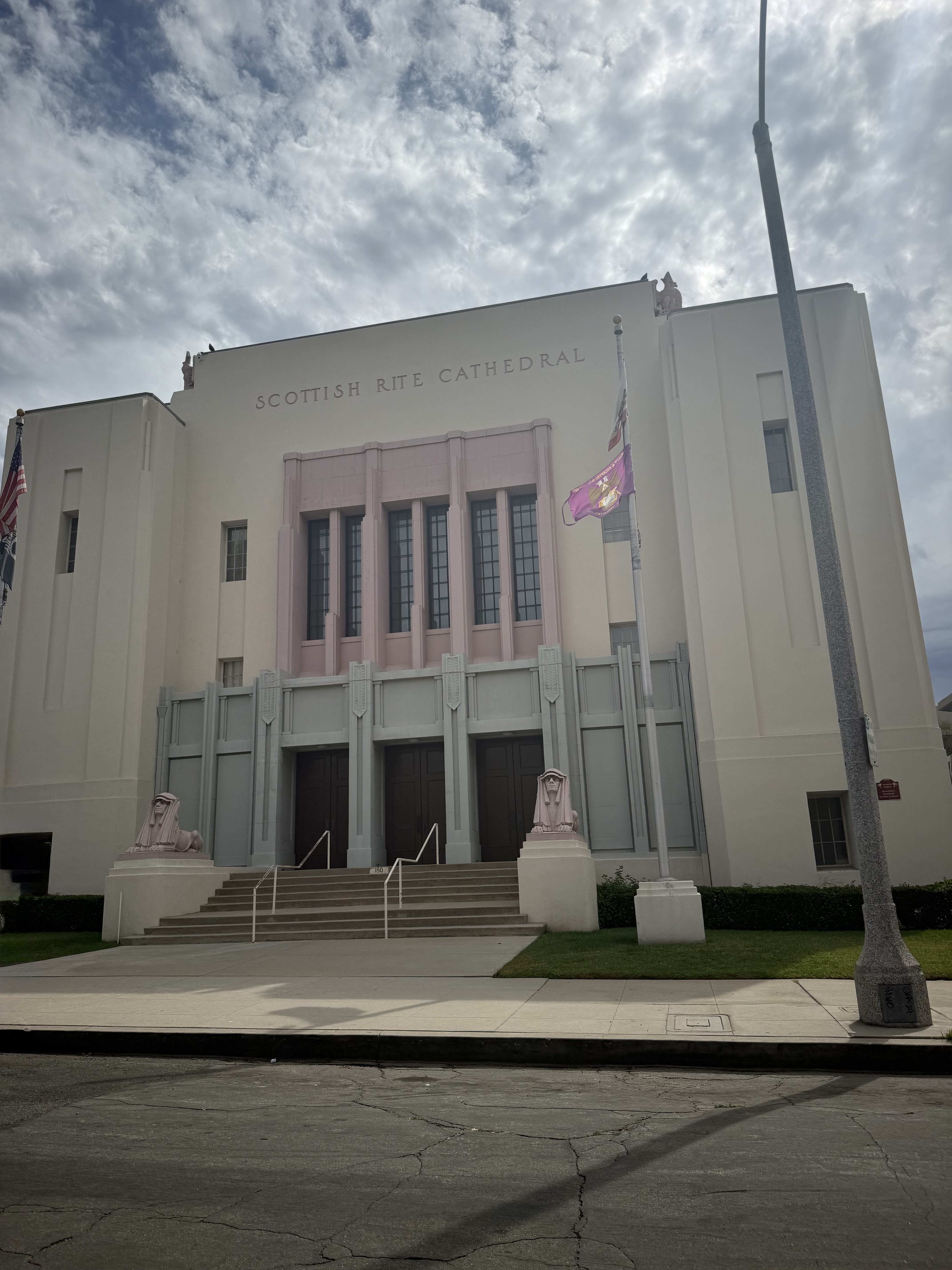
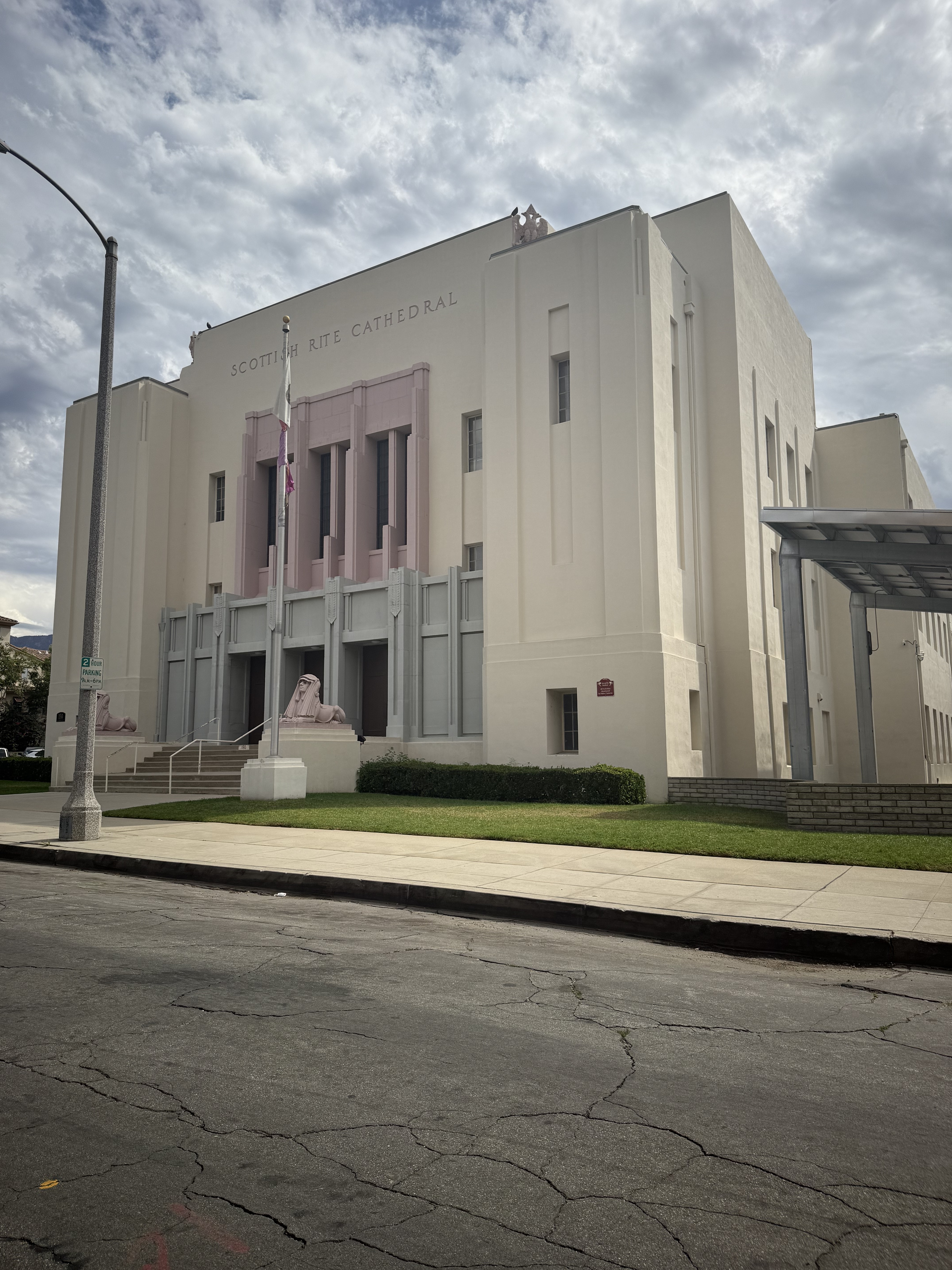
Commissioned by the Pasadena Scottish Rite bodies during the early 1920s and completed in 1925, this fraternal cathedral reflects the extraordinary social power of Masonic organizations in interwar American civic life. Designed by Joseph J. Blick in collaboration with W. C. Crowell, the building served ceremonial and ritual functions for a membership that numbered in the thousands. The dedication drew approximately 1,700 members and their families, underscoring the institution's scale and influence in shaping public urban form through semi-private patronage. Unlike churches or government buildings, this structure represents a distinctive architecture of male associational culture and fraternal ritual.
The cathedral's architectural character resists easy classification, straddling stripped classicism and the geometric stylization of emerging Zigzag Moderne. This ambiguity has led scholars to describe it variously as Moderne or as a precocious Classical Moderne hybrid that anticipates later PWA aesthetics. Monumental massing defines the exterior composition, while the famous pair of guardian sphinxes flanking the entrance creates a striking threshold between street and sanctuary. Interior spaces prioritize ceremonial procession and symbolic program, with ritual chambers designed to support the elaborate theatrical performances central to Scottish Rite practice.