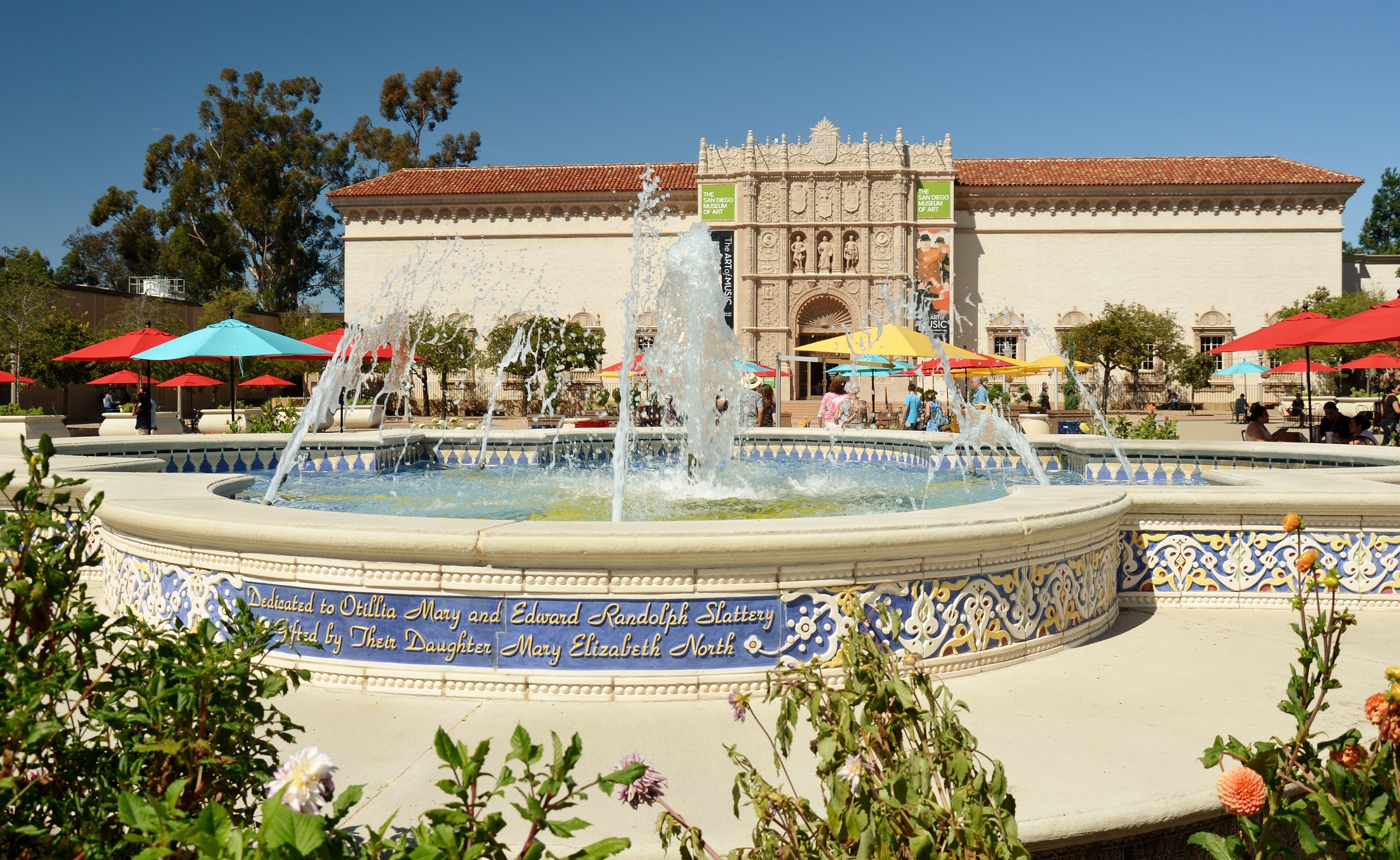
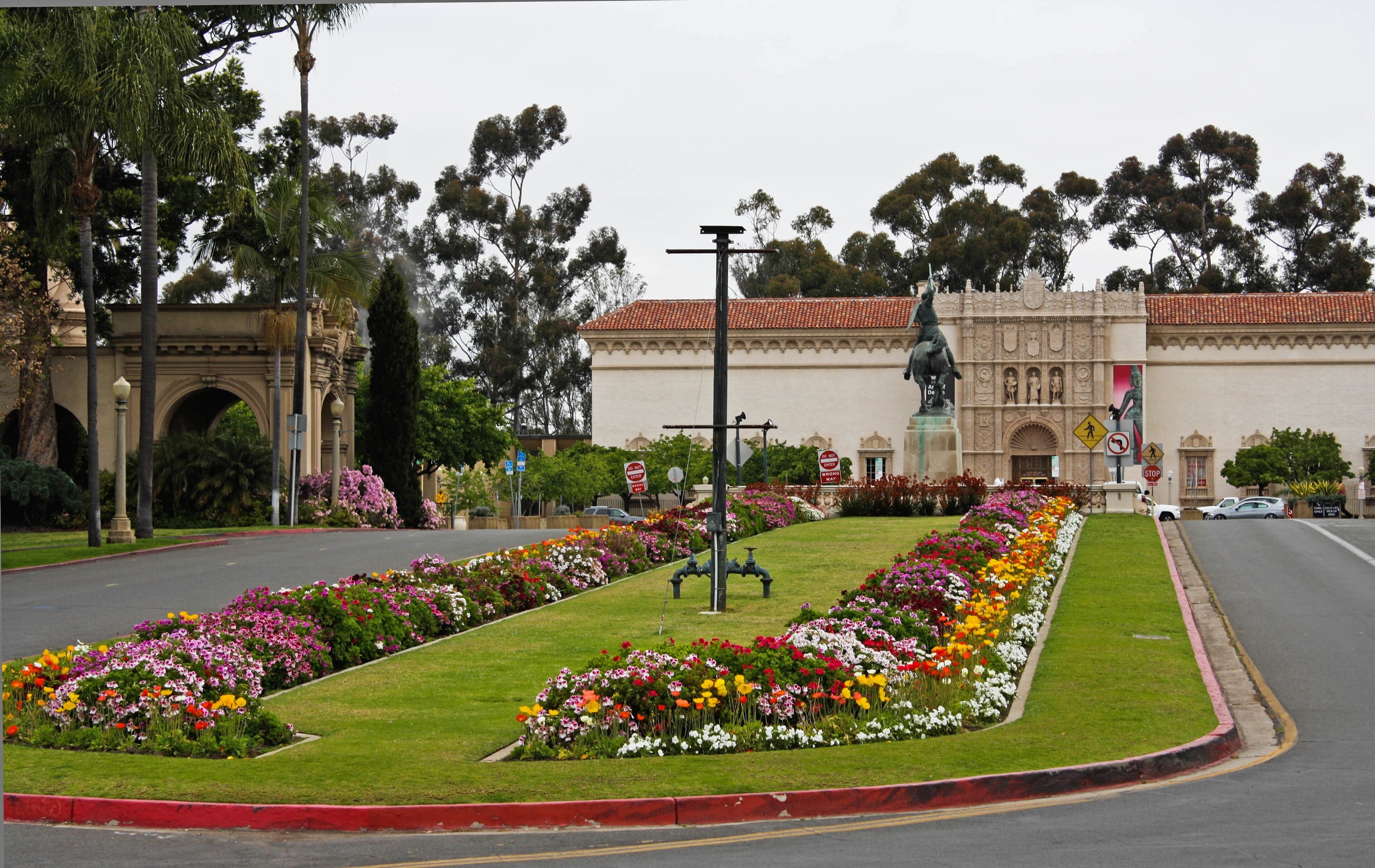
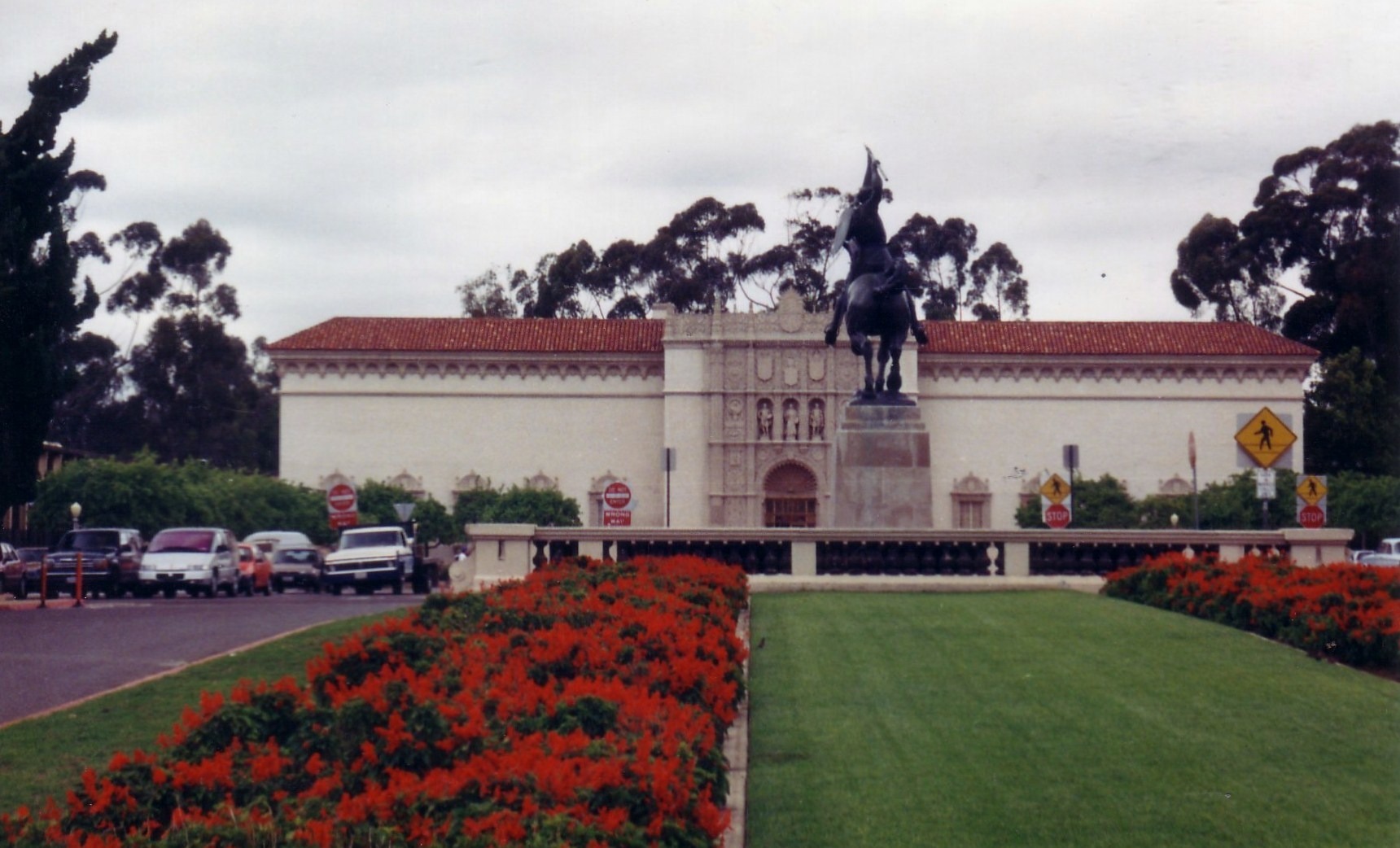
The Fine Arts Gallery of San Diego opened in 1926, funded substantially by Appleton S. Bridges and Amelia Bridges, who gave the building itself to the Fine Arts Society of San Diego. The museum arrived eleven years after the Panama-California Exposition had established Spanish Colonial Revival as the city's official architectural language, and William Templeton Johnson's design demonstrates how completely that language had won. The institution was renamed the San Diego Museum of Art in 1978.
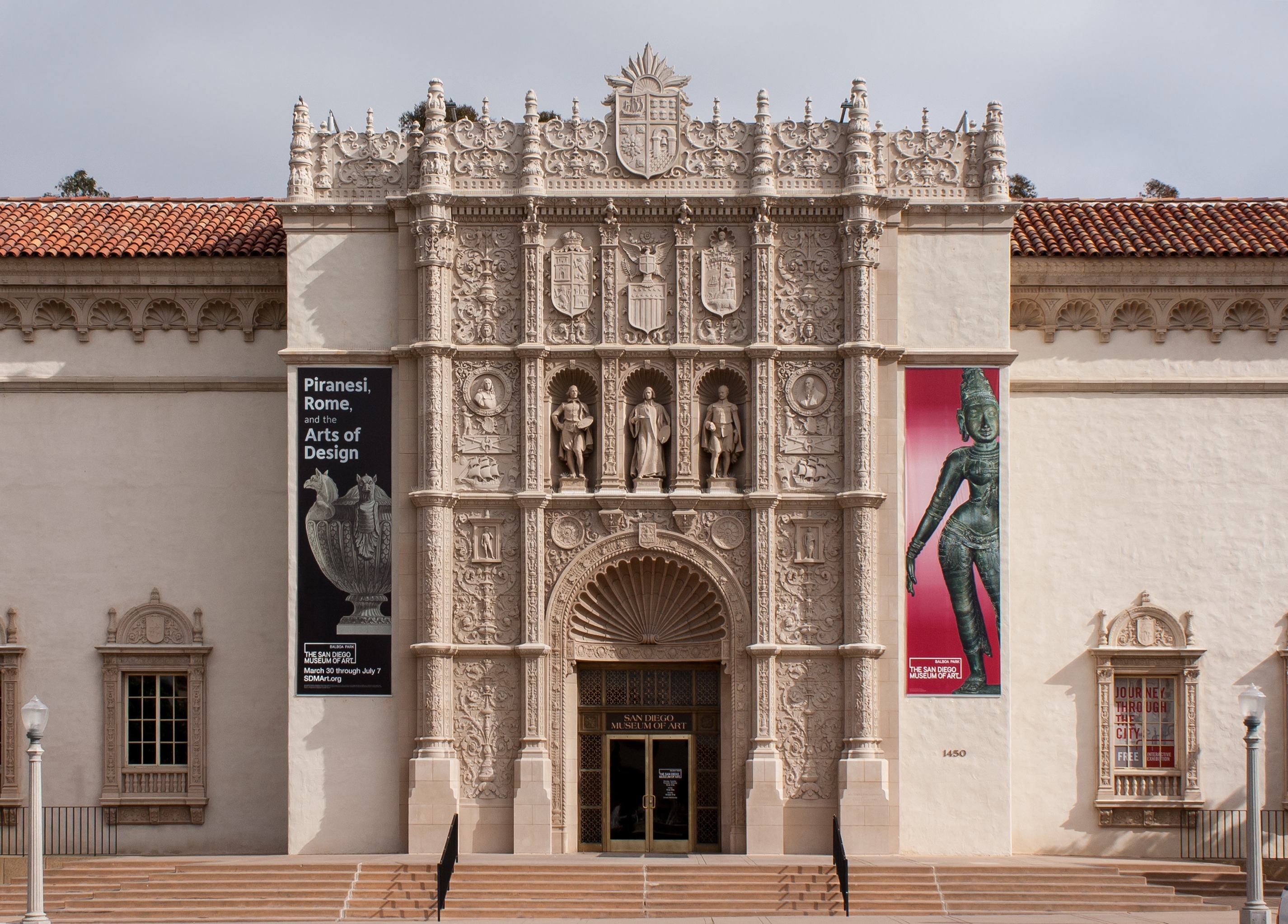
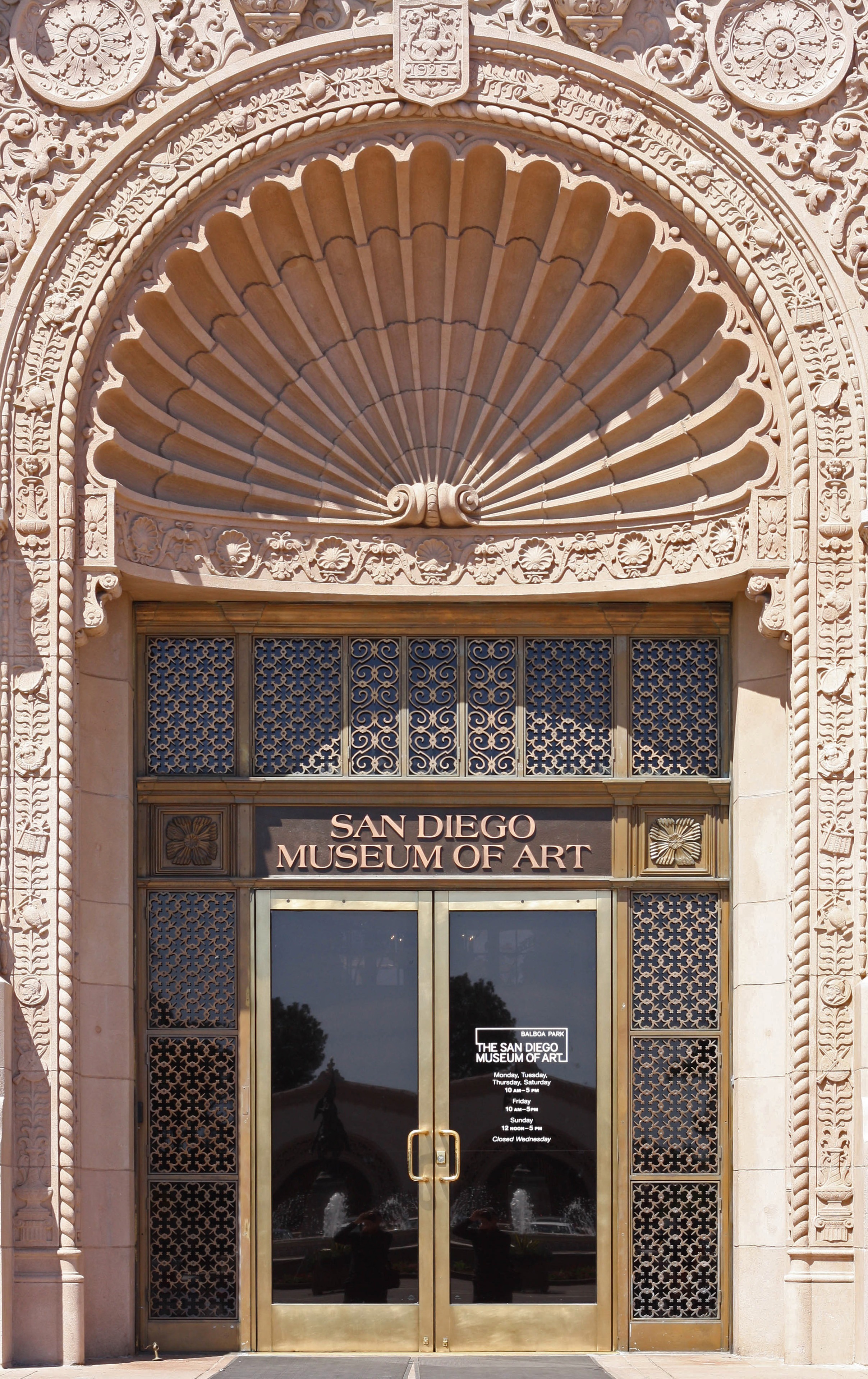
The entrance facade is a direct quotation of the sixteenth century University of Salamanca, one of the canonical works of Plateresque, the early Spanish Renaissance style whose name derives from platero, silversmith, because the carving resembles worked silver. Johnson executed the facade as a dense, flat, intricately carved panel in cast stone set against plain wall, with portrait figures of Spanish painters Bartolome Esteban Murillo, Francisco de Zurbaran, and Diego Velazquez occupying niches alongside additional heraldic and figurative carving. Behind this ornate front, the building follows a conventional Beaux-Arts museum plan with a central rotunda and top-lit galleries radiating from it. Additions in 1966 and 1974 expanded gallery space to the rear in a modern idiom that does not compete with the historic facade. A sculpture garden occupies the adjacent grounds.