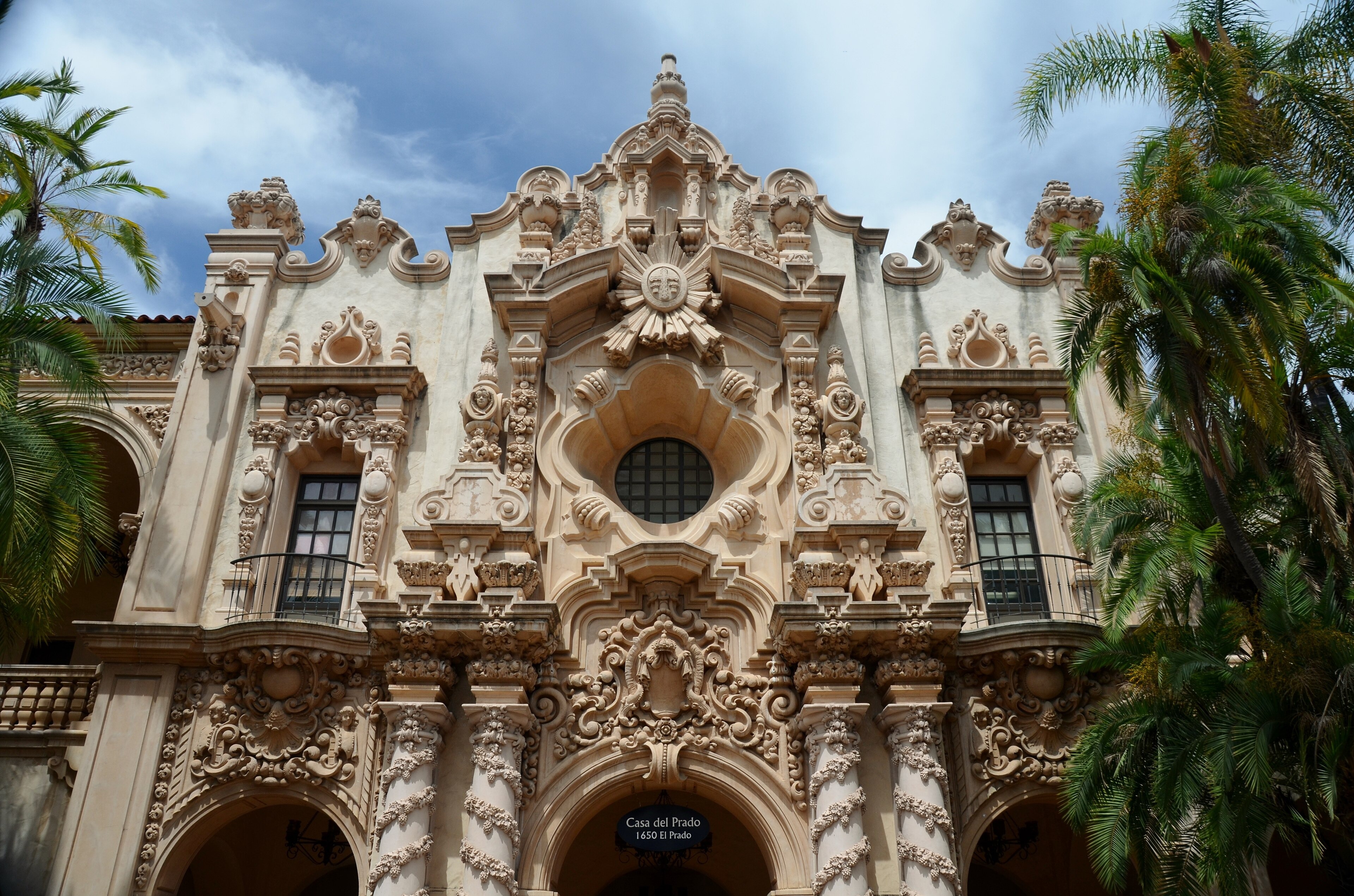
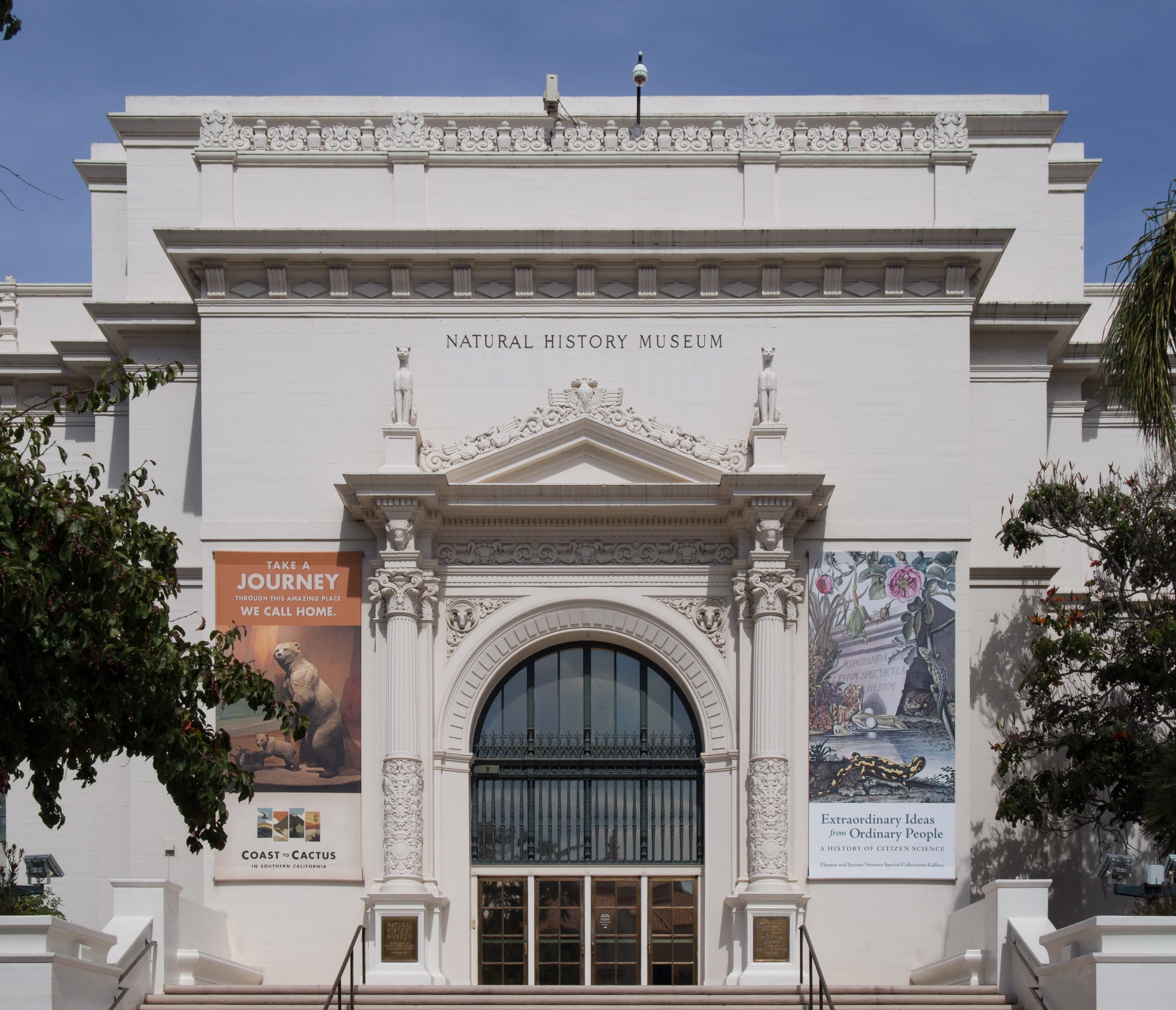
The San Diego Society of Natural History, founded in 1874 and the oldest scientific institution in Southern California, commissioned William Templeton Johnson to design this building at the east end of El Prado. The museum opened in 1933, in the depths of the Depression and two years before the California Pacific International Exposition, with construction itself serving as an economic and civic statement. Ellen Browning Scripps, the La Jolla philanthropist, provided significant funding to the Society's development. The institution's founding date, six years after the land was set aside as City Park and four years before San Diego had a population worth mentioning, reflects the Victorian scientific-society phenomenon of amateur naturalists organizing to collect, classify, and publish.
This is a stripped, monumental museum building and the clearest demonstration of how far Johnson could move in seven years. Compared with his San Diego Museum of Art of 1926, four blocks west, the design is austere. The Plateresque facade quotation is gone. What remains is a symmetrical, planar composition in cast stone and stucco with a monumental arched entrance, restrained classical detail, and large expanses of unbroken wall. It reads as a transitional building between Beaux-Arts monumentality and the stripped classicism that dominated 1930s American public architecture. Buildings begun after 1929 got simpler because ornament cost money, and a national stripped-classical idiom ran from Washington's Federal Triangle to thousands of post offices and courthouses. The interior is organized around a central atrium with galleries on multiple levels, and the atrium is the building's best space.