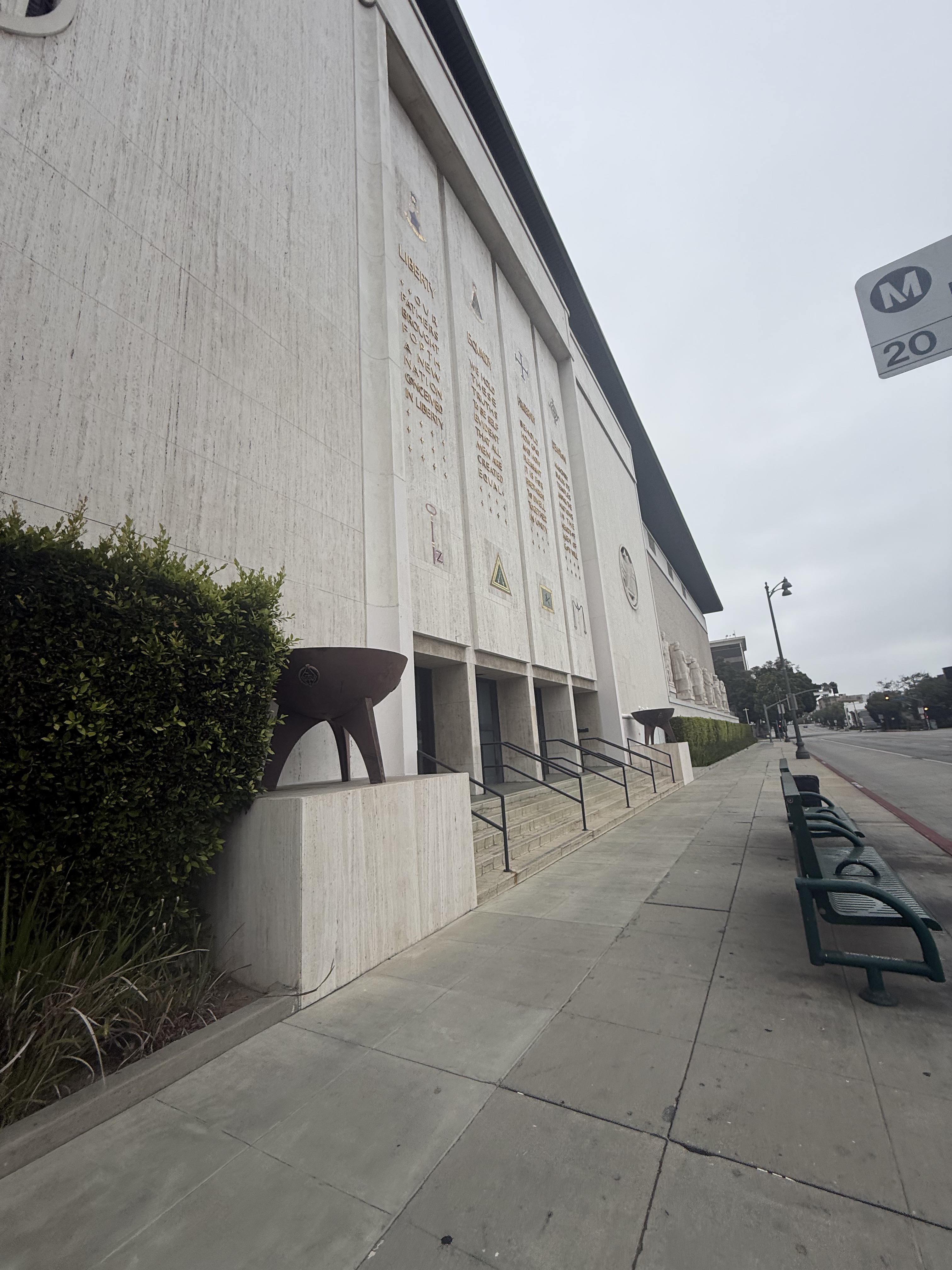
Commissioned by the Archdiocese of Los Angeles under Cardinal James Francis McIntyre and announced by Monsignor Henry W. Gross in August 1965, St. Basil Catholic Church replaced an earlier 1920 church building on the same site that had been damaged by fire in 1943. The roughly 40,000 square foot complex, completed in 1969 at a cost of approximately three million dollars, became an immediate flashpoint in Los Angeles civil rights politics when Chicano Movement activists staged protests arguing the funds should have supported anti-poverty programs rather than monumental architecture. The building's controversial dedication reflected broader national tensions between institutional Catholic wealth and the economic needs of the Church's Latino parishioners during the War on Poverty years. Designed by A.C. Martin and Associates under Albert C. Martin Jr., the parish church was reportedly among his personal favorites, and his memorial service was held there upon his death in 2002.
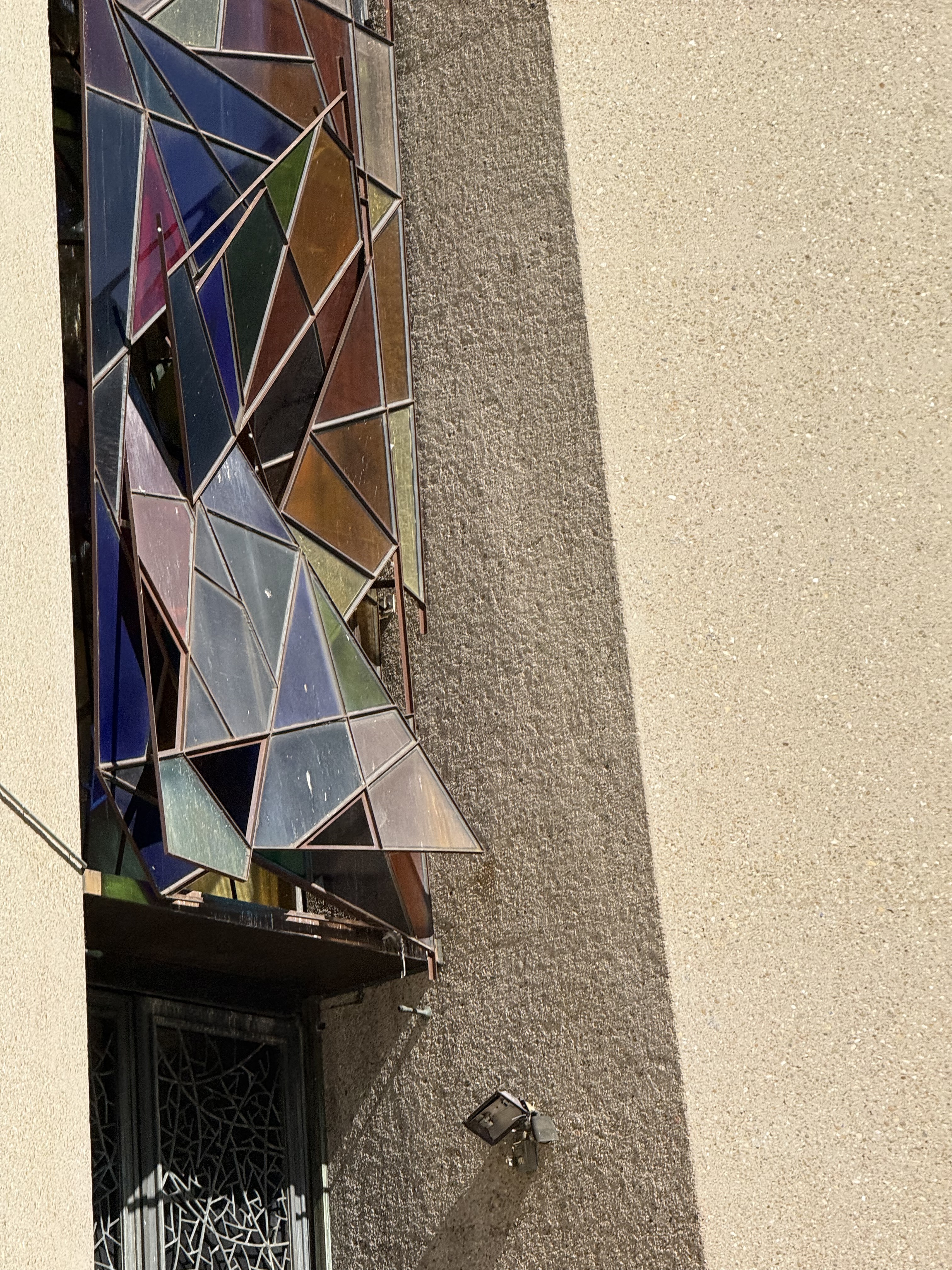
The building presents a confidently Brutalist interpretation of early Christian monasticism through twelve angular, irregular concrete towers of rough finished, exposed aggregate that represent the twelve apostles. These sculptural volumes, laced together by extraordinary three dimensional stained glass and ornamental iron screens designed by artist Claire Falkenstein in what the New York Times called her most important American commission, create a fortress-like exterior that belies the complex spatial relationships within. The 40,000 square foot interior contains a nave with seating for 1,000, sanctuary, narthex, sacristies, choir and organ lofts, baptistry, and an integrated carillon tower. Falkenstein's radical glass work, approved only after Cardinal McIntyre directly questioned whether the avant garde artist was religious, introduces brilliant color and light between the brutalist concrete masses.