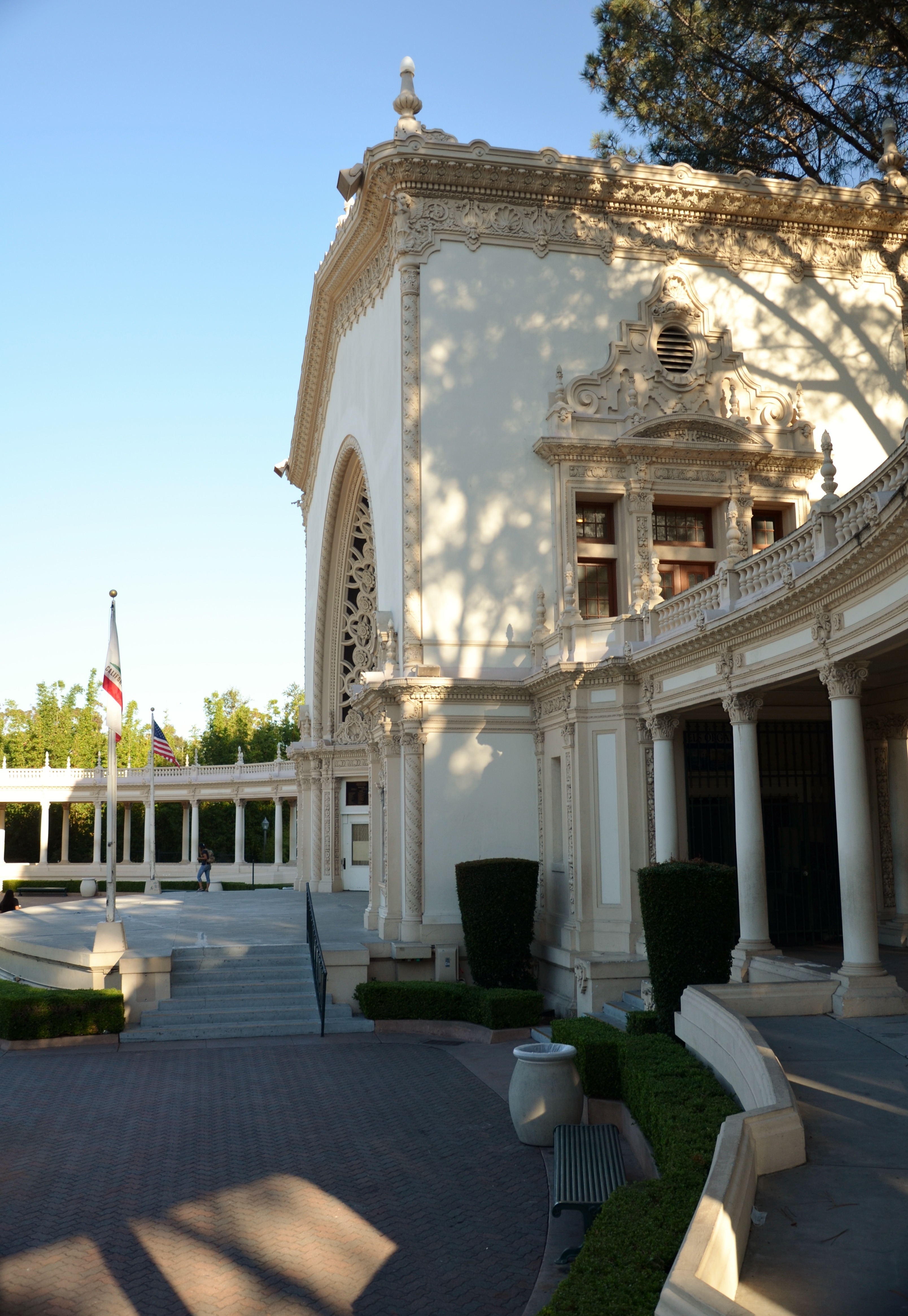
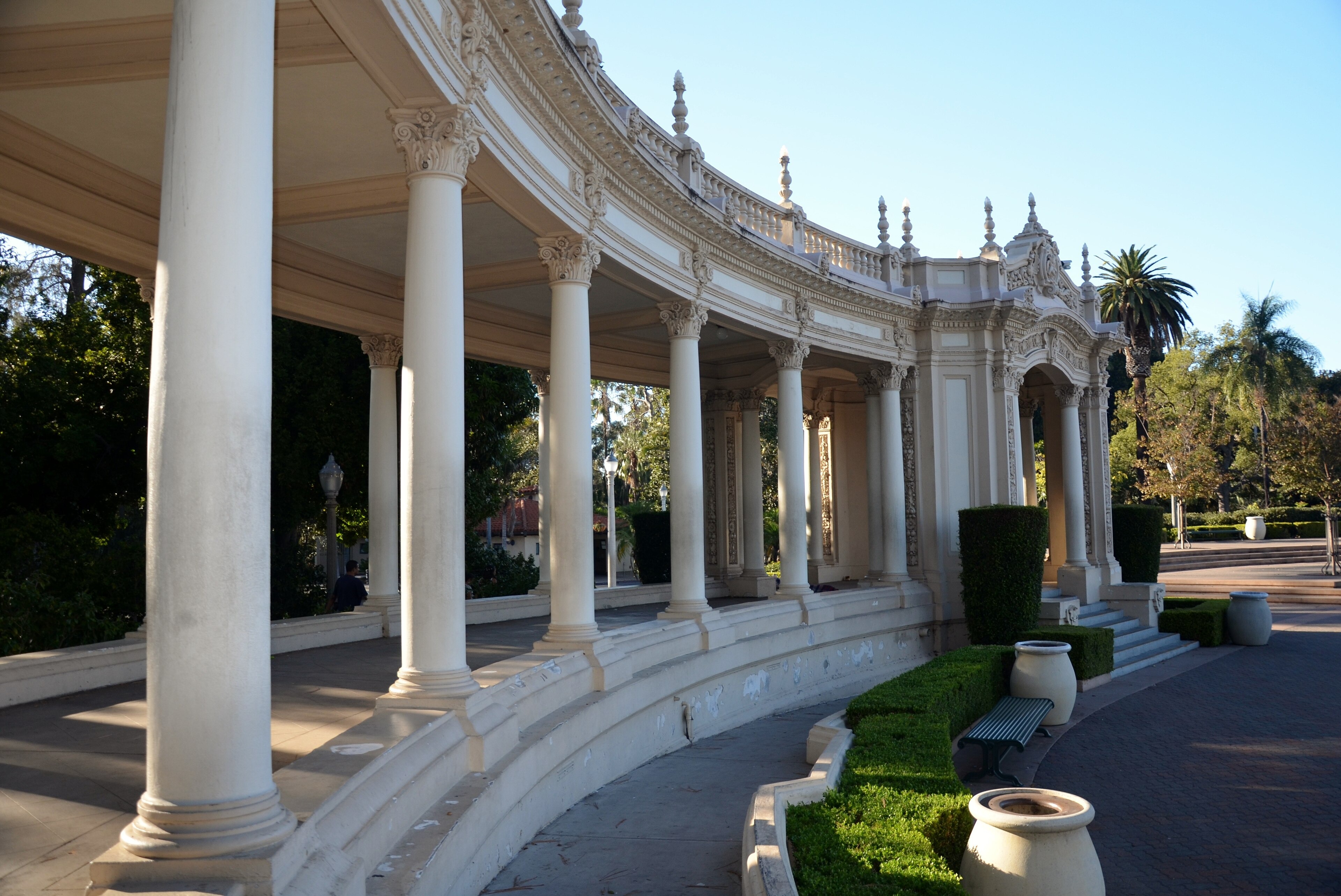
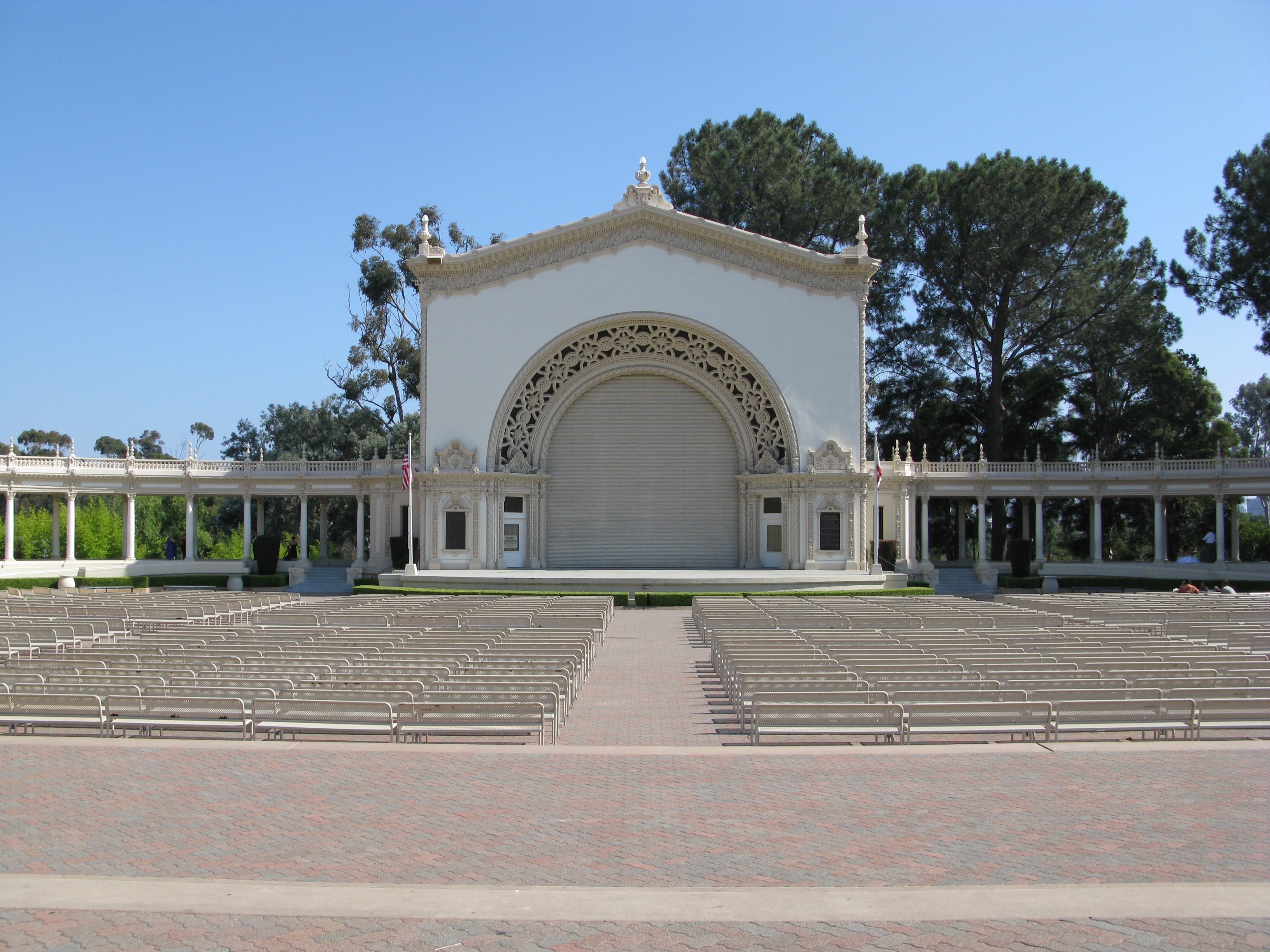
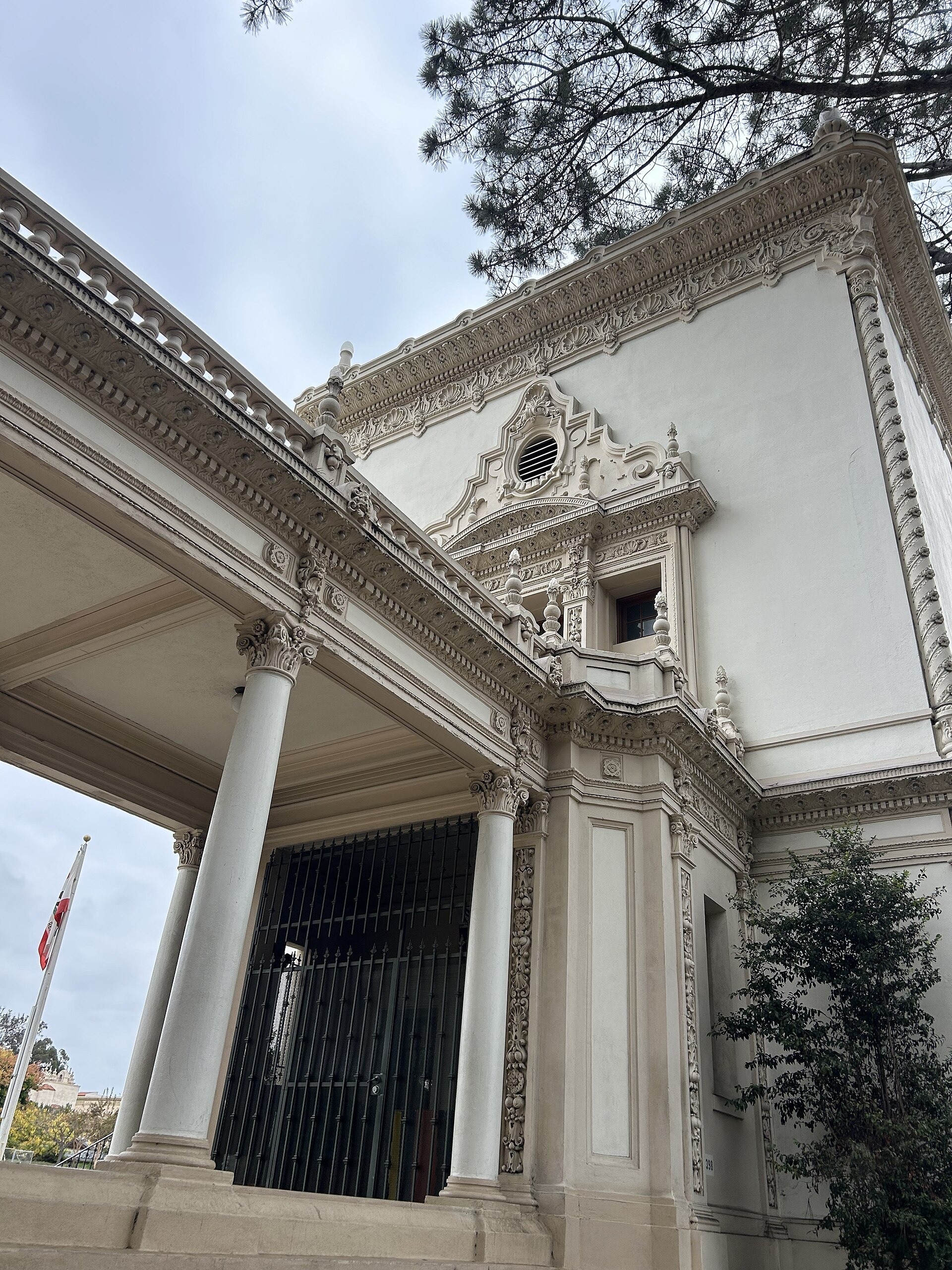
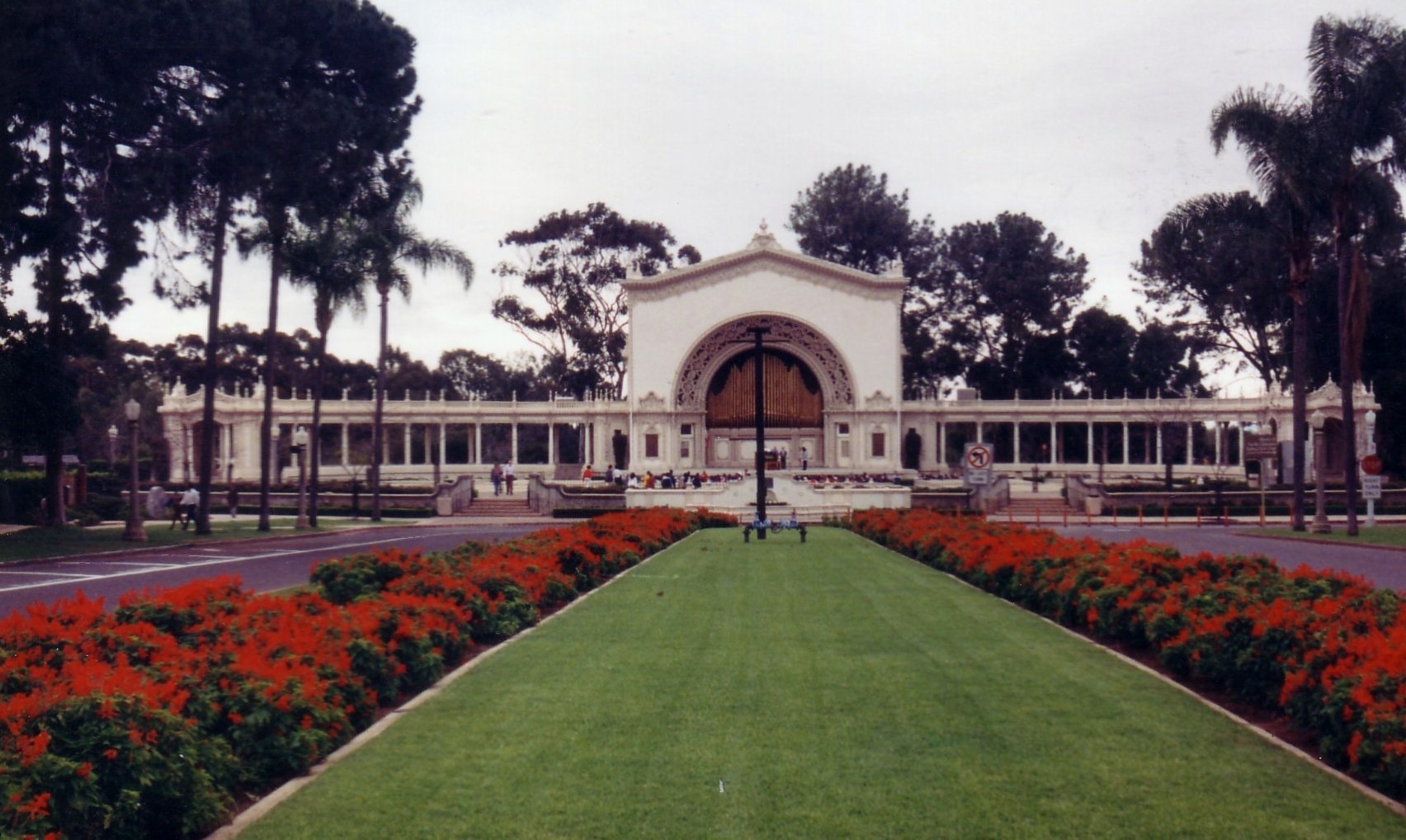

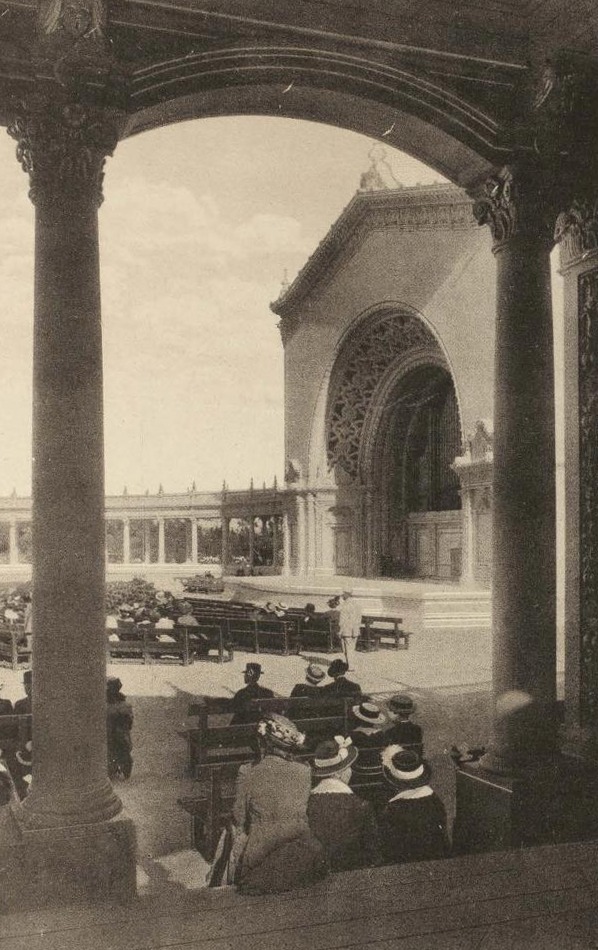
John D. Spreckels and his brother Adolph gave the organ and pavilion to the City of San Diego, dedicating it on December 31, 1914, on the eve of the Panama-California Exposition. The gift was characteristic of John D. Spreckels, whose philanthropy and commercial interests were inseparable. At his peak he owned roughly ten percent of assessed property value in San Diego County, including both daily newspapers, the streetcar line that brought audiences to the park, the Hotel del Coronado, and the San Diego and Arizona Railway. The pavilion was designed by Harrison Albright, a reinforced concrete specialist who served as Spreckels's preferred architect and had already designed the U.S. Grant Hotel and the Spreckels Theatre downtown.
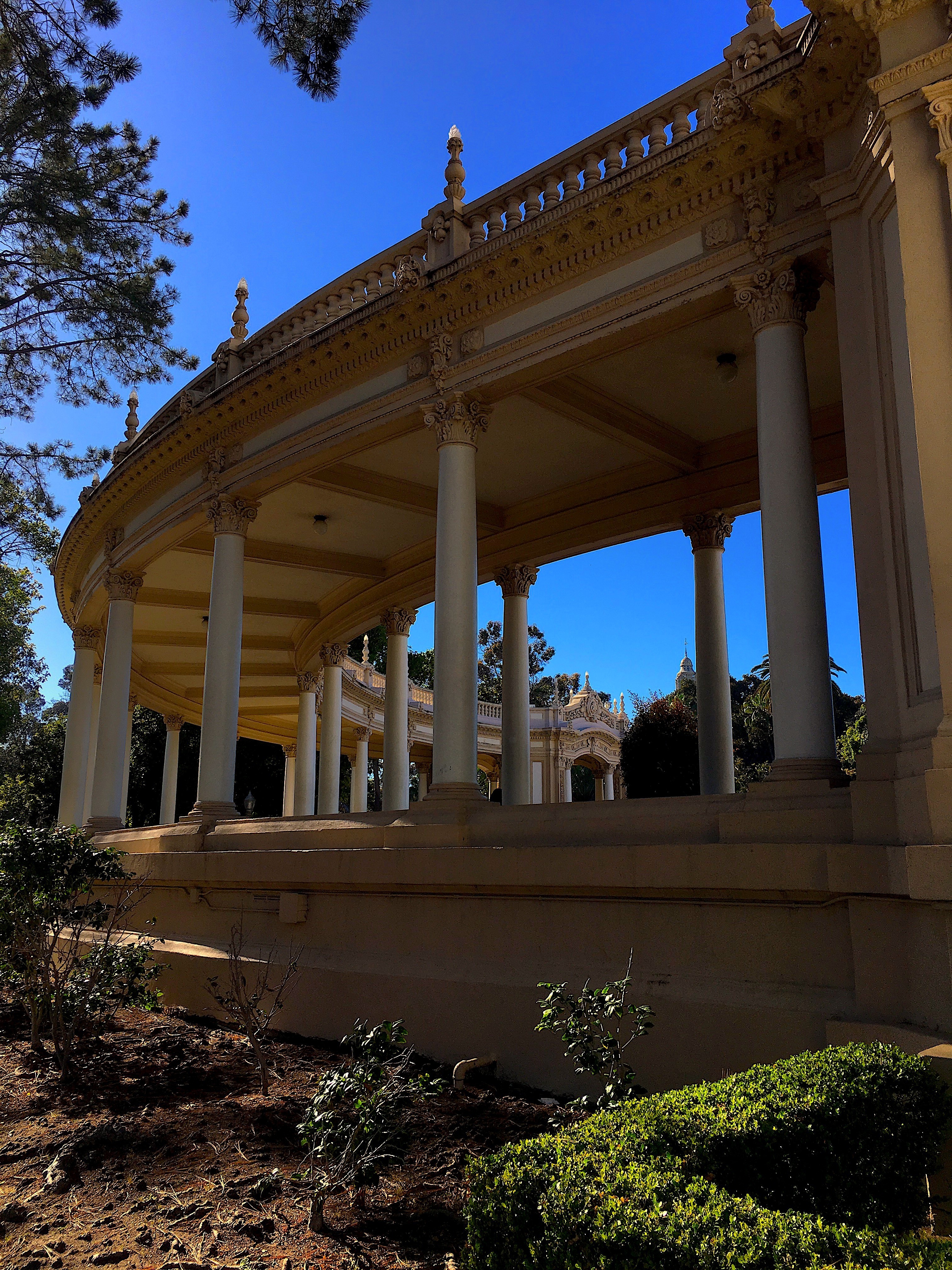
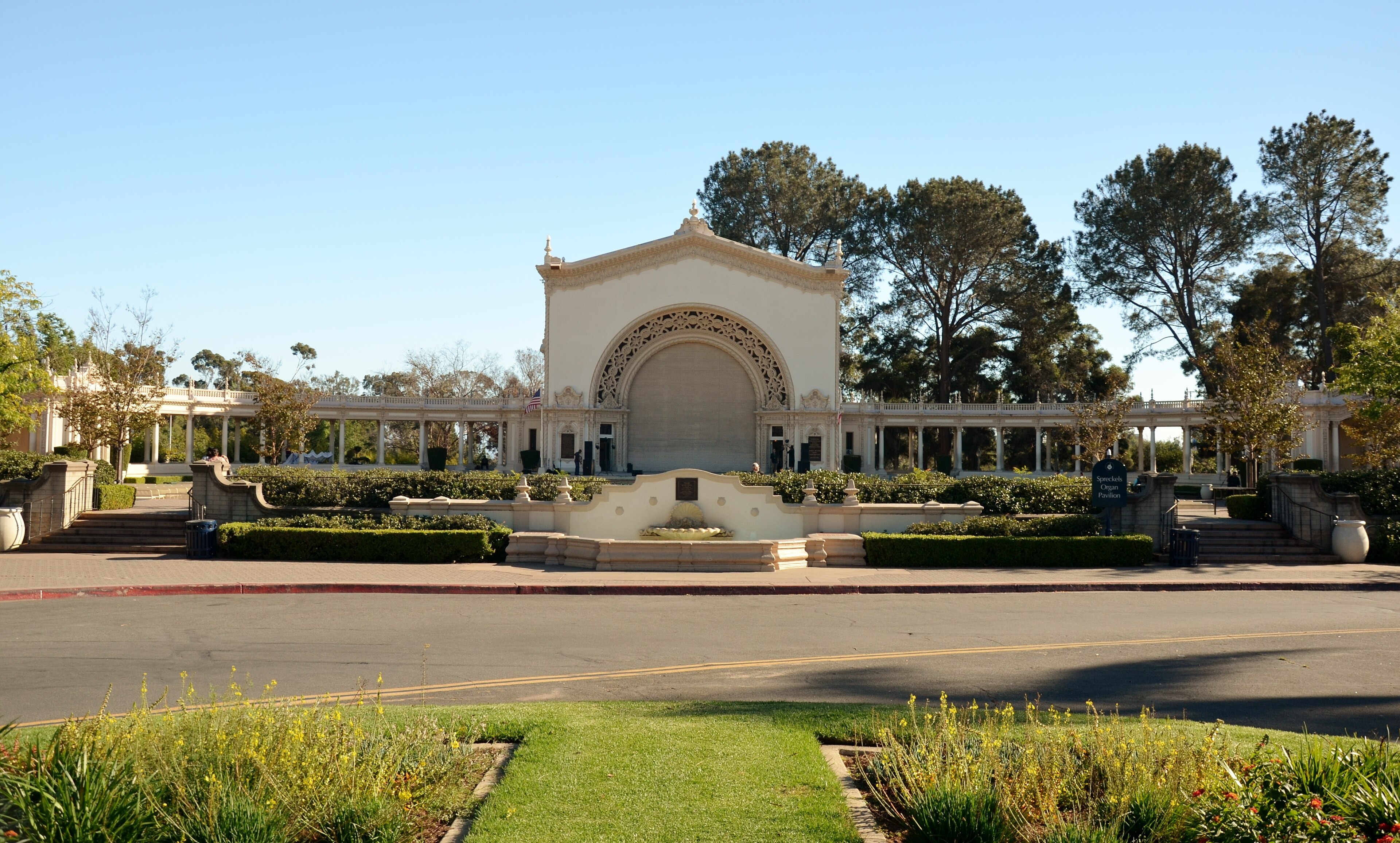
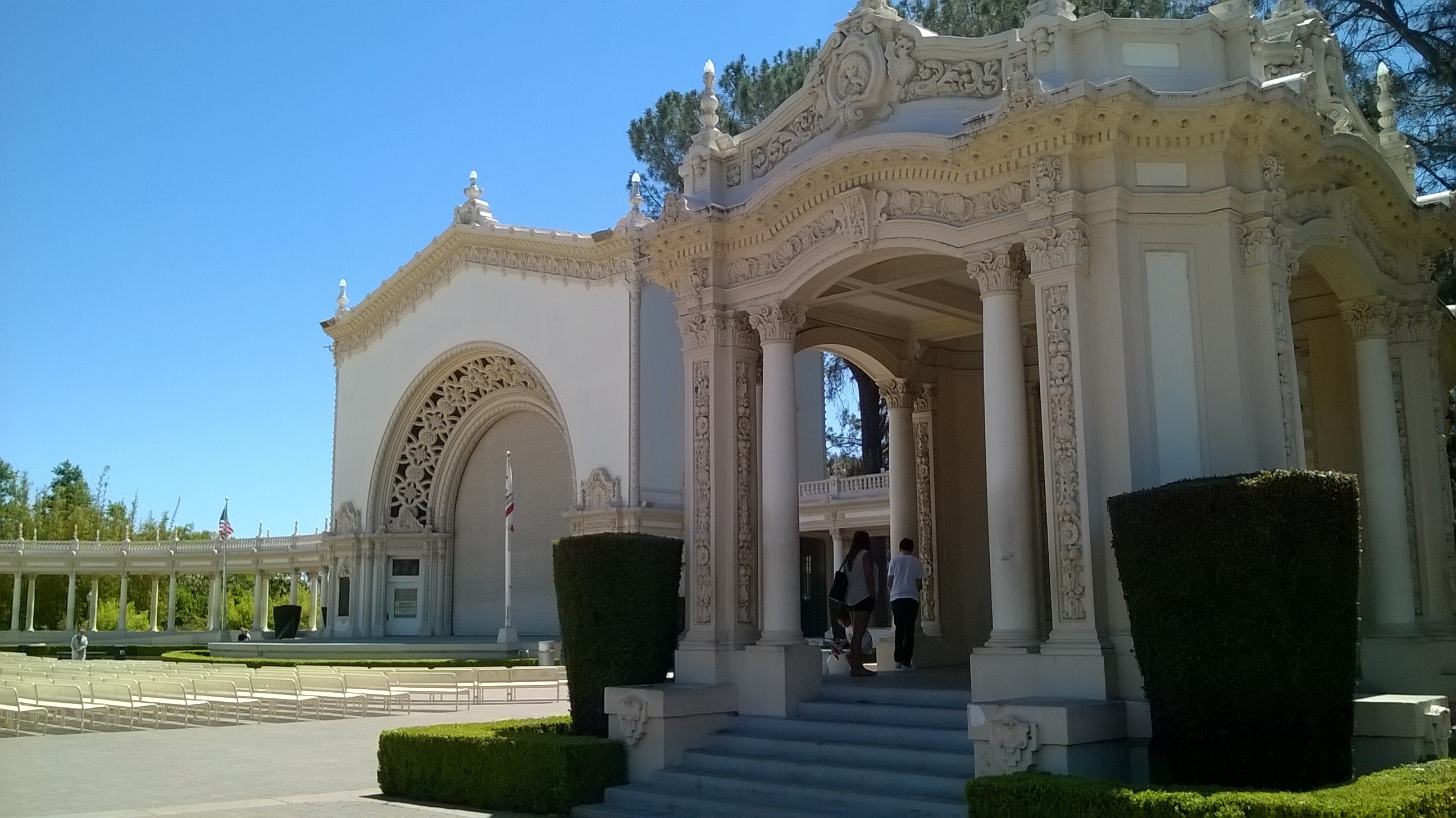
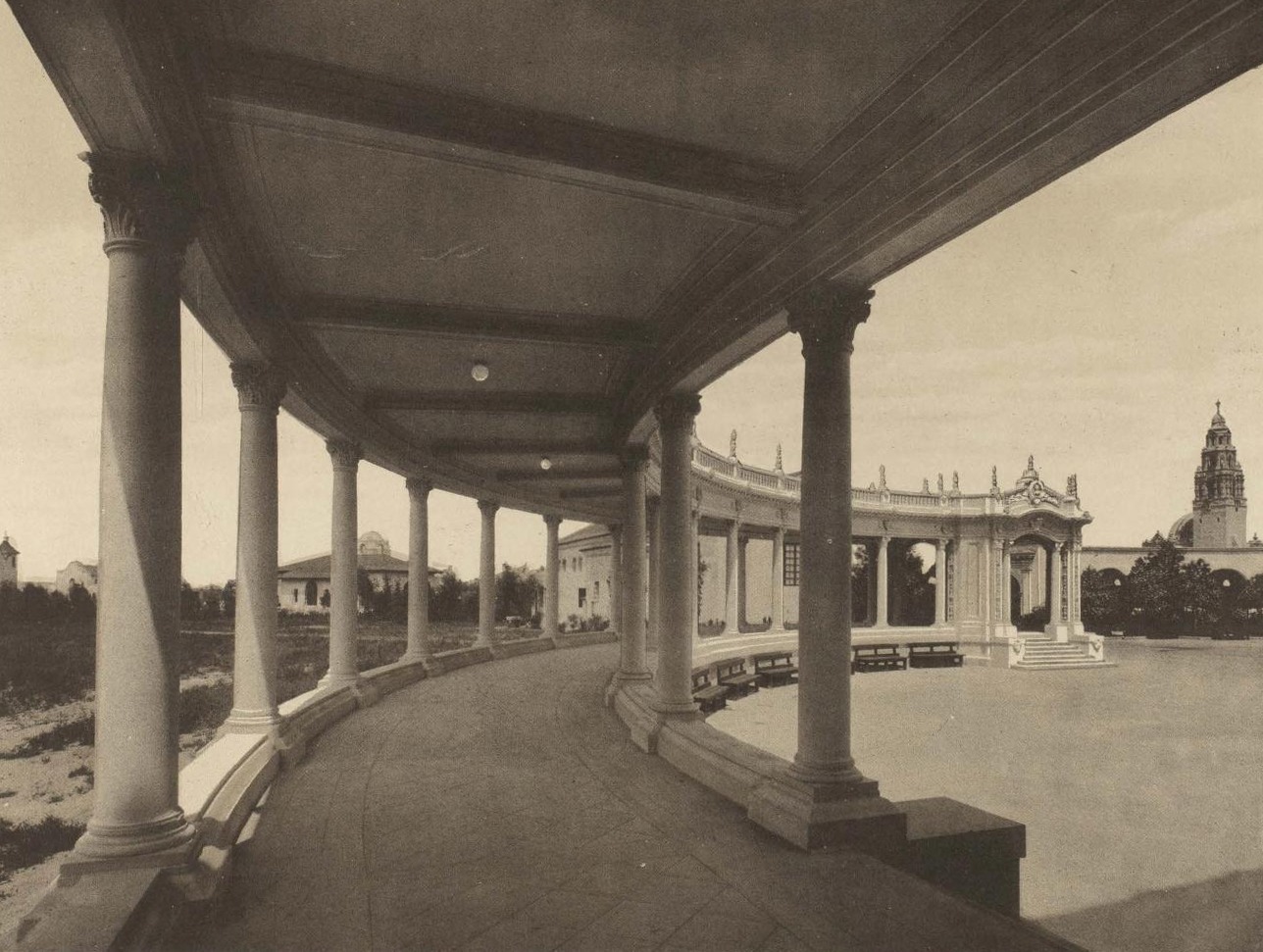
The pavilion is a curved, classically detailed structure in reinforced concrete: a central arched proscenium with a copper-domed roof, flanked by sweeping colonnaded peristyles that curve forward to embrace seating for roughly 2,400. The style is Italian Renaissance and Beaux-Arts rather than Spanish, making it an outlier at a fair otherwise devoted to Churrigueresque. The organ chamber behind the proscenium is closed by enormous hinged metal doors weighing several tons each, and the opening of those doors at the start of a concert is genuinely theatrical. The instrument, built by the Austin Organ Company of Hartford, Connecticut, began with 3,400 pipes and has been expanded repeatedly to more than 5,000 pipes across more than 80 ranks, making it the largest outdoor pipe organ in the world. Because it sits outdoors and unheated, exposed to marine air, temperature swings, and pests, its survival for 111 years represents a maintenance achievement of a high order.