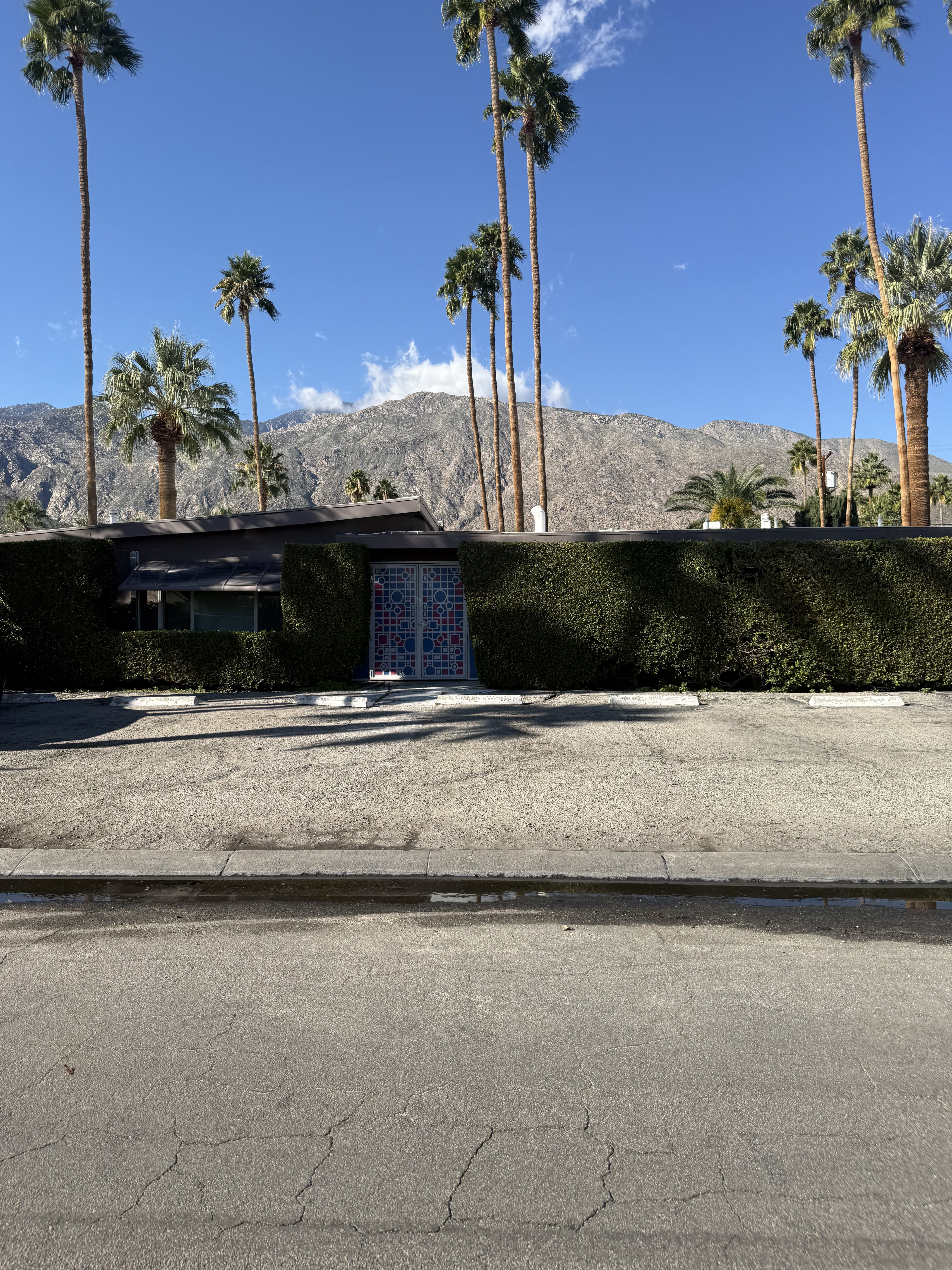
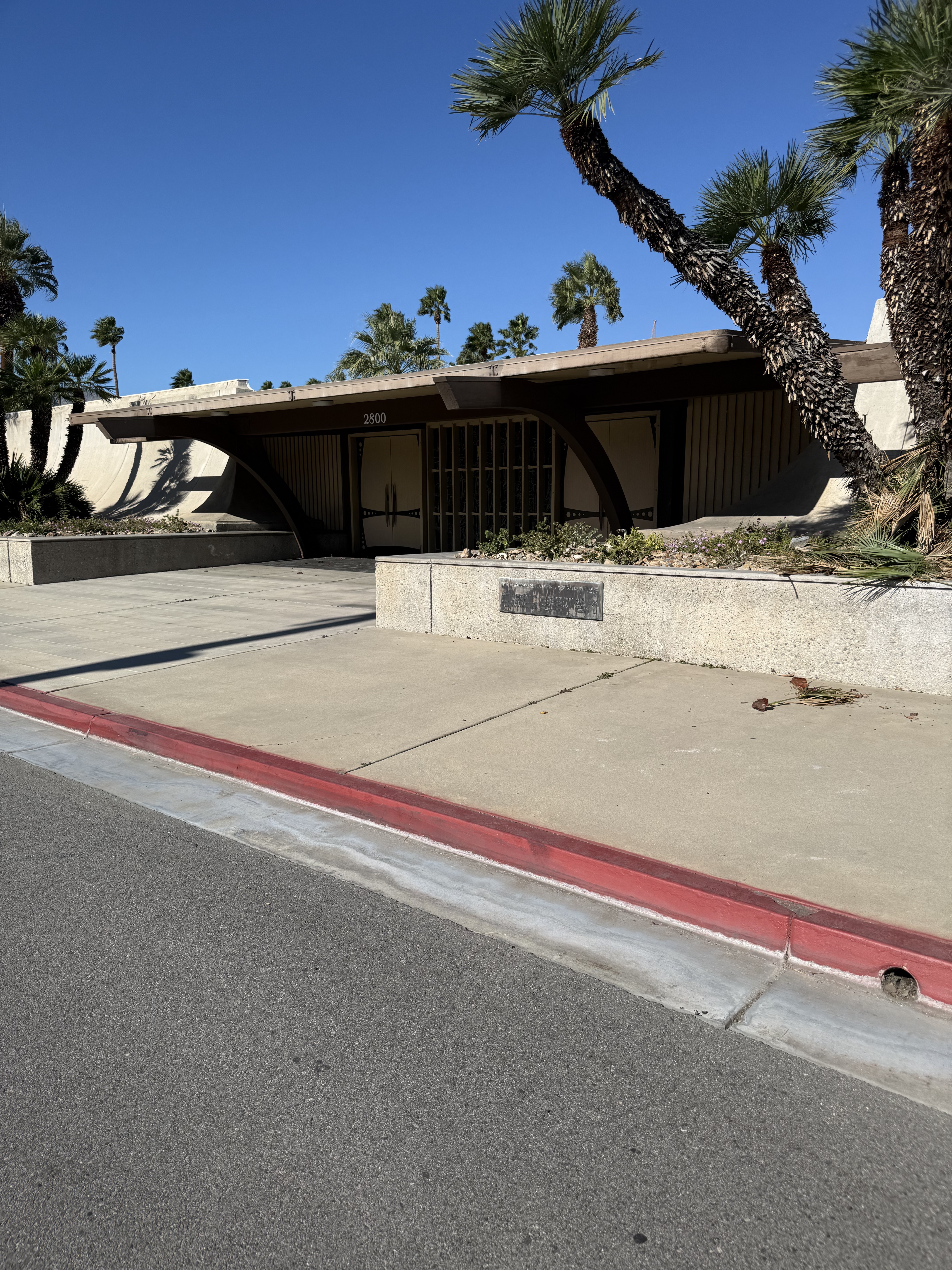
Commissioned under Reverend Michael Nolan and completed in 1968, St. Theresa Catholic Church arrived at a pivotal moment in Catholic architecture. Three years after the close of the Second Vatican Council, the building embodies the liturgical reforms that fundamentally reordered Catholic worship, moving altars toward congregations and opening sanctuaries into fan or in-the-round plans that replaced the traditional long nave. William F. Cody, the most theatrical of the desert modernists, found in this large congregational commission the ideal canvas for his signature moves: impossibly thin roof slabs, dramatic structural cantilevers, and a showman's sense of arrival sequence.
The church is flagged as potentially eligible for historic designation and appears on the city survey. It stands as a direct architectural record of post-conciliar reform, offering a sharp contrast to Our Lady of Solitude, Palm Springs' older Catholic parish built in 1930 and altered in 1964, where pre-conciliar and post-conciliar spatial strategies meet in a single building. Cody's design represents one of his final major works before a 1973 stroke ended his practice.