
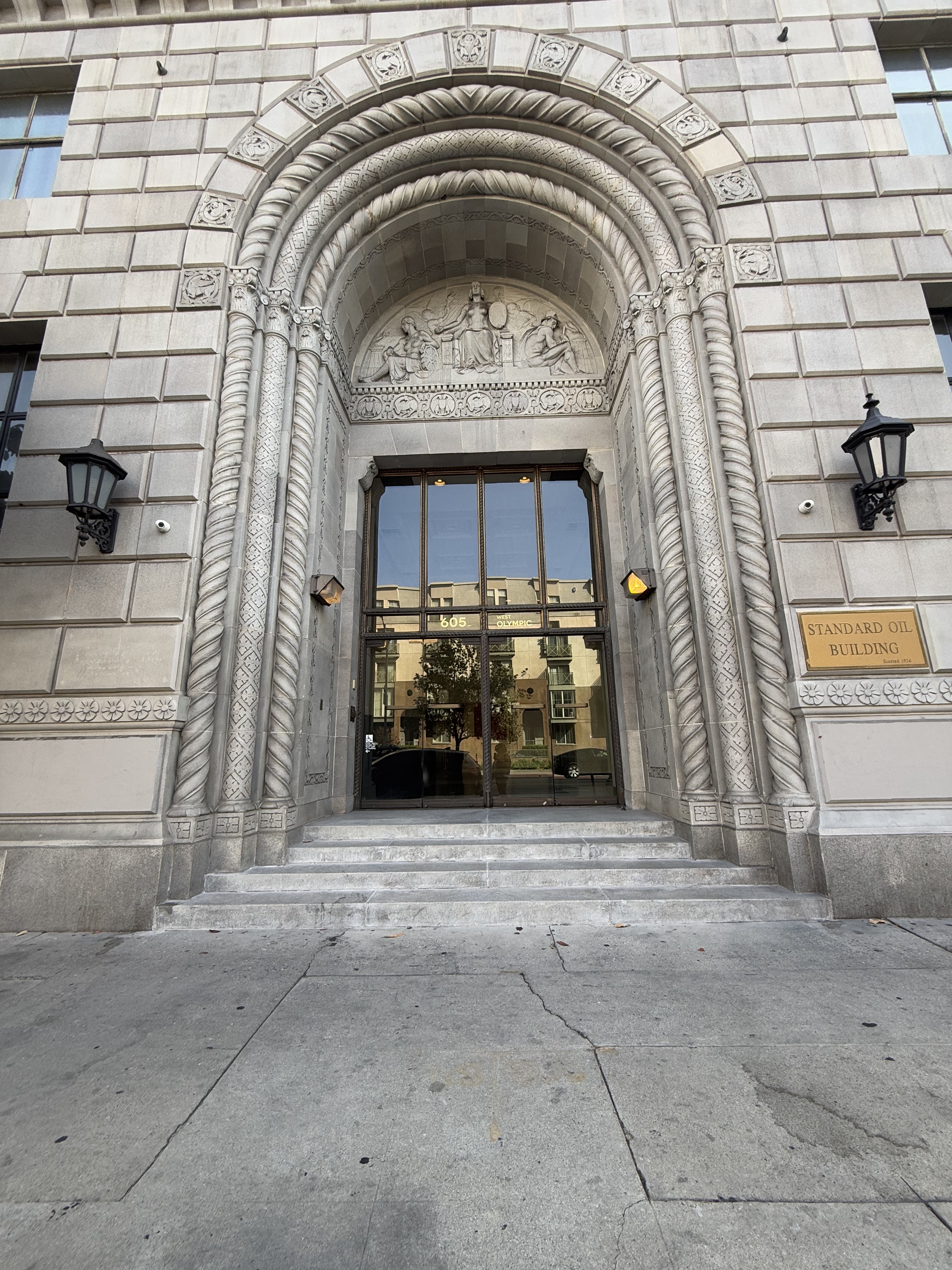
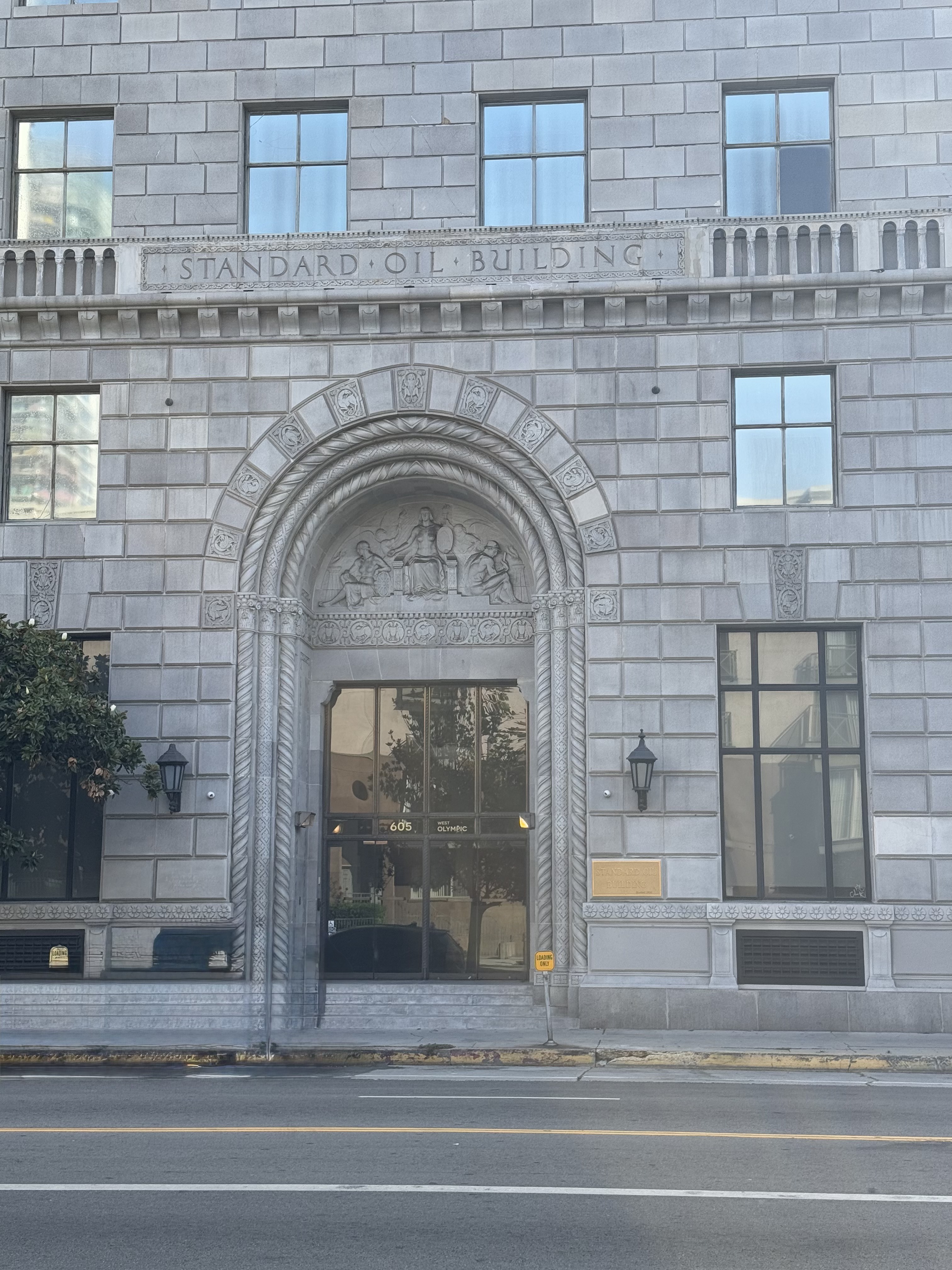
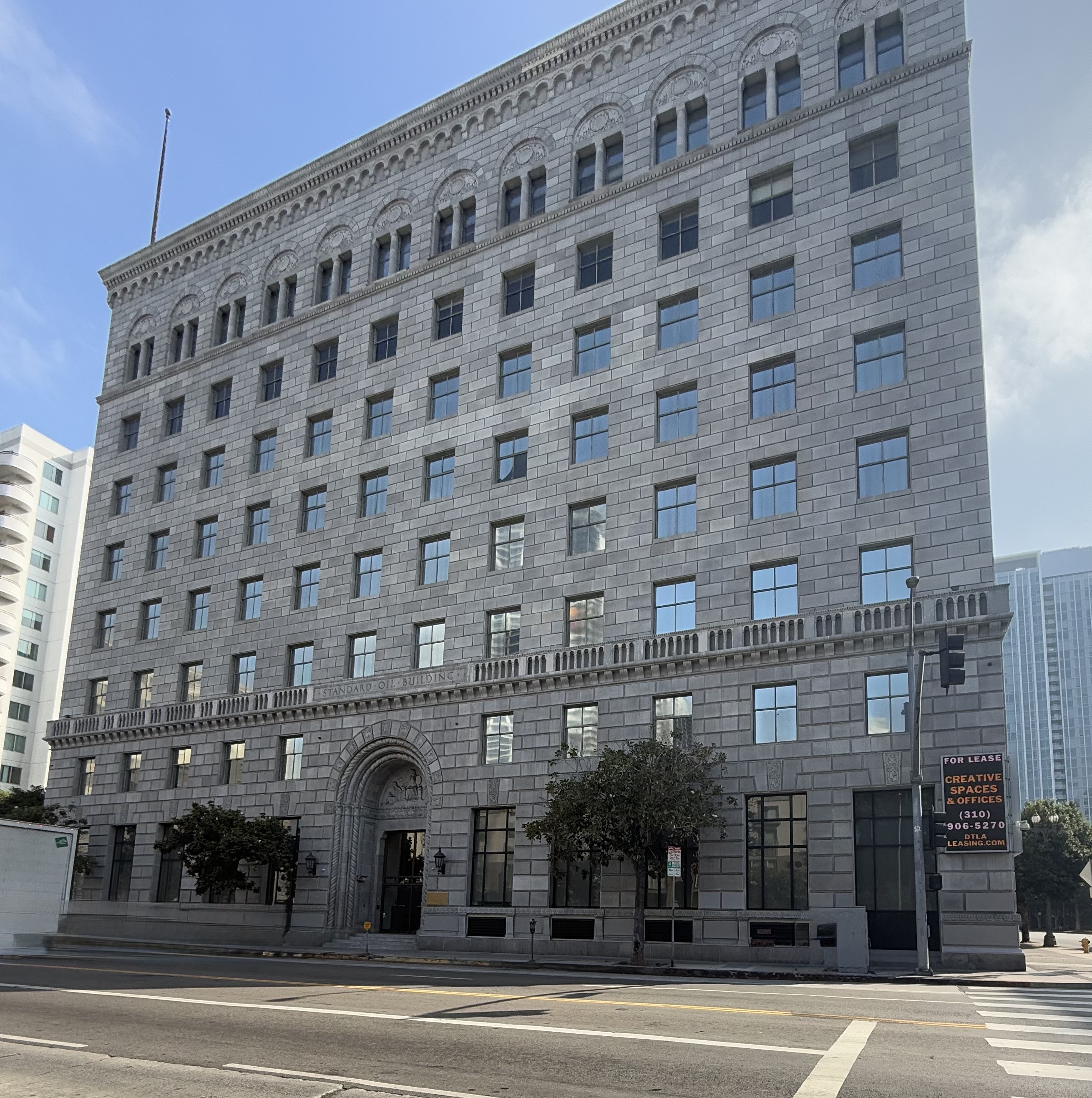
Standard Oil Company of California commissioned this compact corporate palazzo in 1923, seeking to translate petroleum wealth into architectural gravitas at the southern edge of old downtown Los Angeles. George W. Kelham designed the eight-story office block as a direct expression of the oil economy that underwrote much of the city's 1920s expansion. The building served as headquarters for a corporation whose operations were fundamentally reshaping Southern California through extraction, automotive culture, and suburban development. Rather than celebrating mechanical innovation, the design projected trustworthiness and cultural legitimacy for an industry seeking public acceptance.
The building's rusticated lower stories and disciplined classical ordering deliberately evoke a late 15th-century northern Italian palazzo, suppressing skyscraper flamboyance in favor of Renaissance composure. Despite its modern steel-frame construction, the stone-faced exterior emphasizes solidity and authority over vertical drama. The carefully proportioned facade maintains classical hierarchy, with each floor contributing to an overall composition that reads as monument rather than mere office space. This architectural restraint transforms corporate power into a language of cultured respectability.