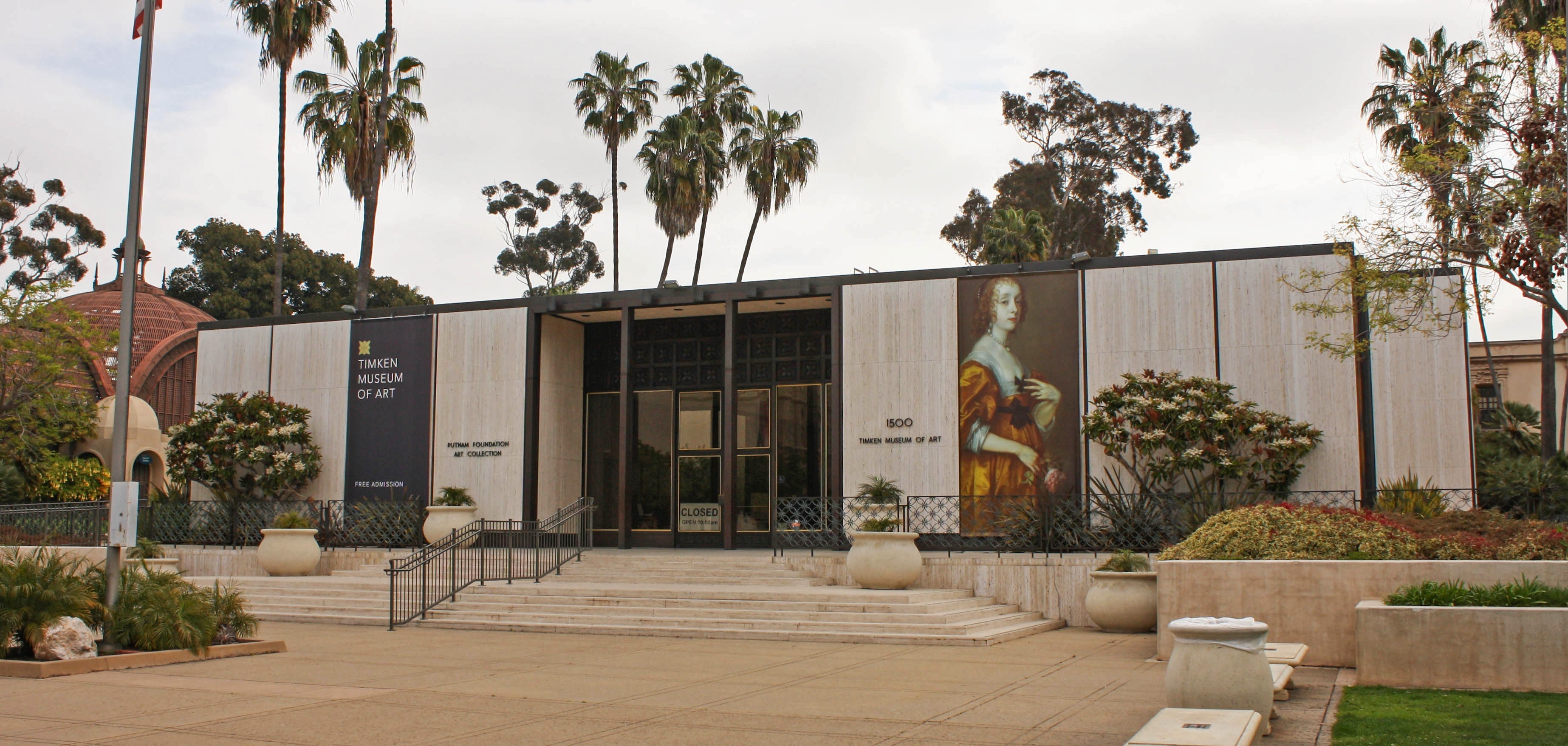
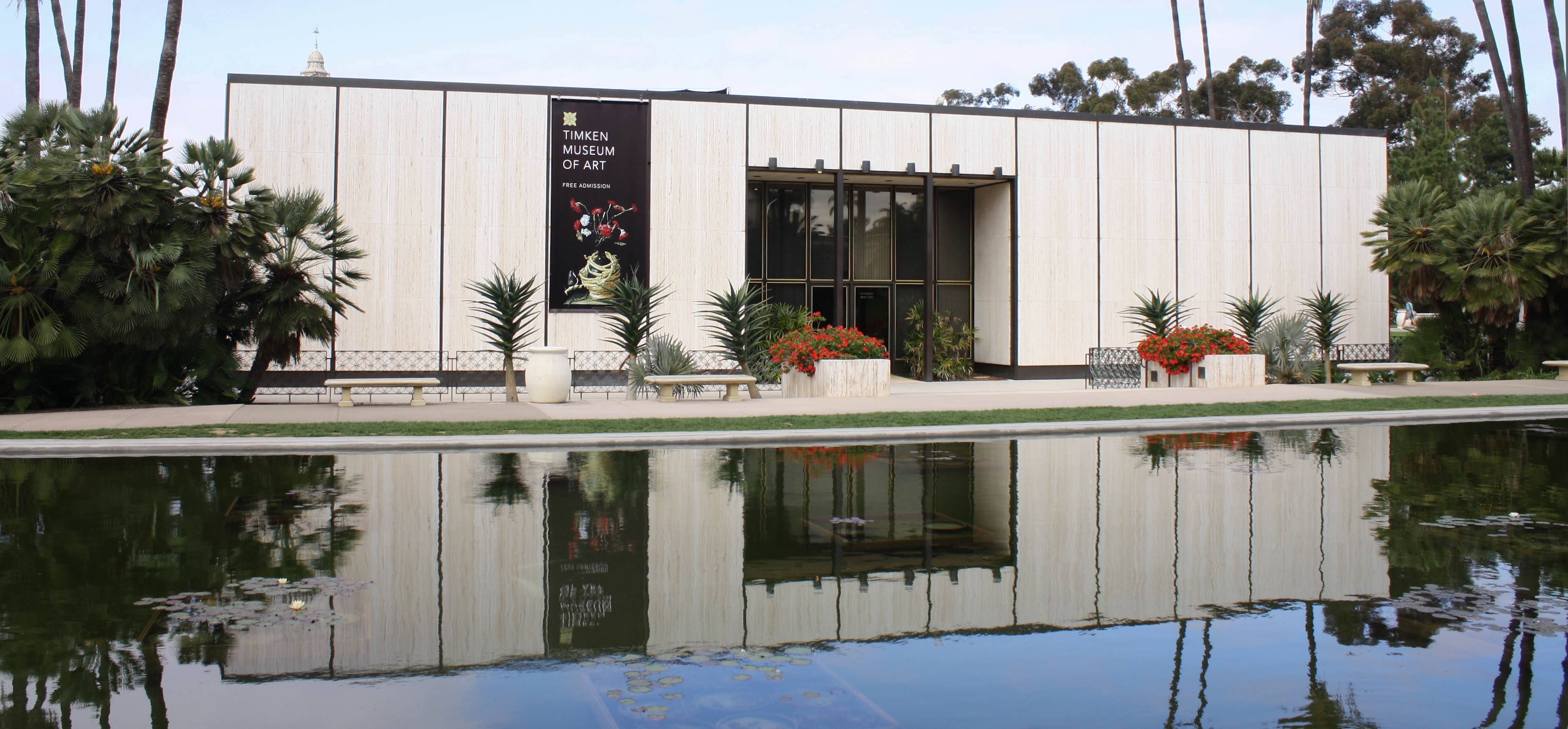
The Putnam Foundation built the Timken Museum of Art in 1965 to house the exceptional collection of European old master and American paintings assembled by Anne R. Putnam and Amy Putnam, two reclusive San Diego sisters who bought carefully and at the highest level. The museum was named for the Timken family, whose funds supported the building's construction. Frank L. Hope and Associates designed a modernist pavilion that was fiercely controversial from the start, a travertine and bronze box on El Prado that refused to defer to the Spanish Colonial architecture surrounding it. The reaction was so strong that two years later, in 1967, Bea Evenson founded the Committee of 100 expressly to preserve the park's Spanish Colonial character, making this building both the exception and the cause of the preservation rule that has governed Balboa Park ever since.
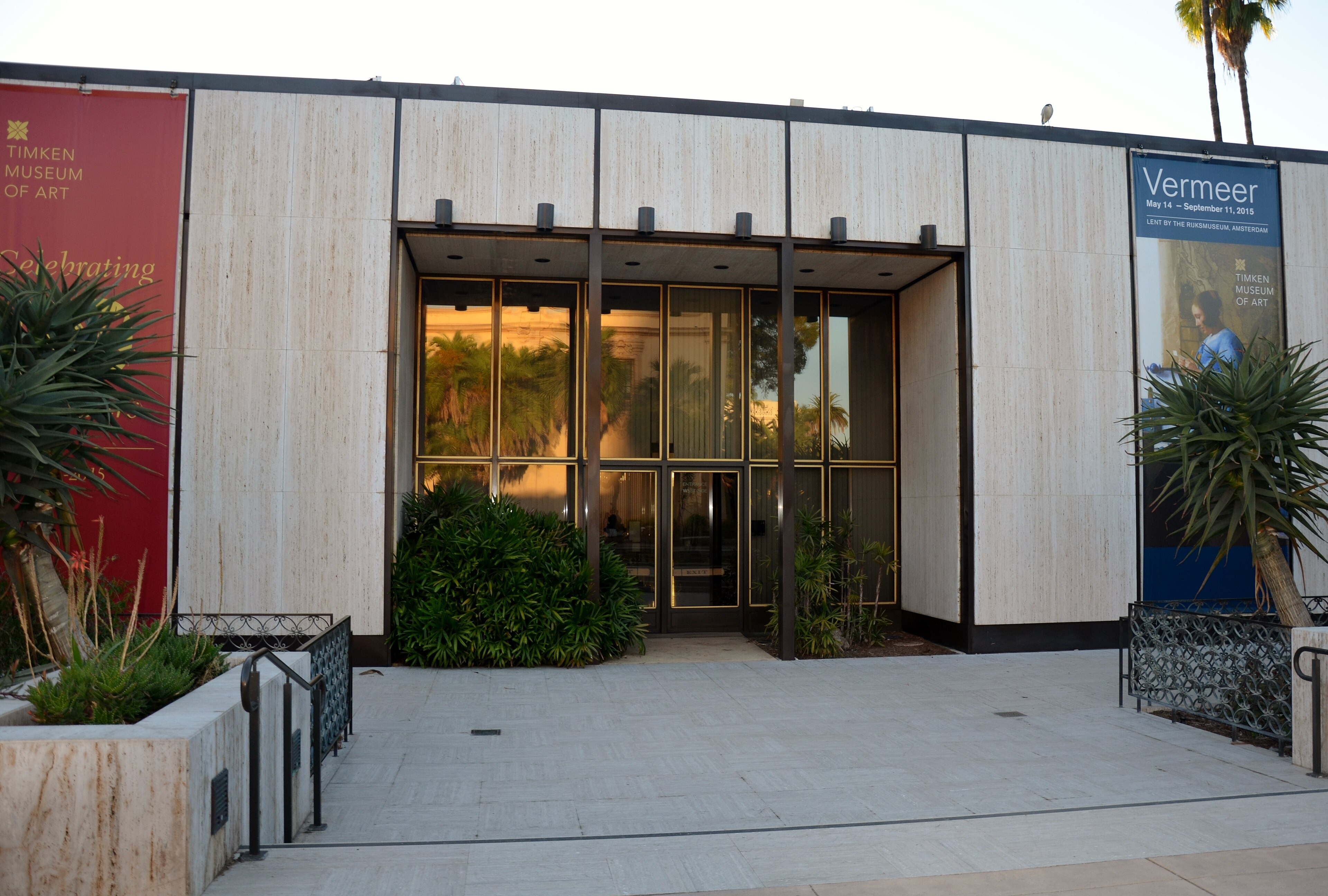
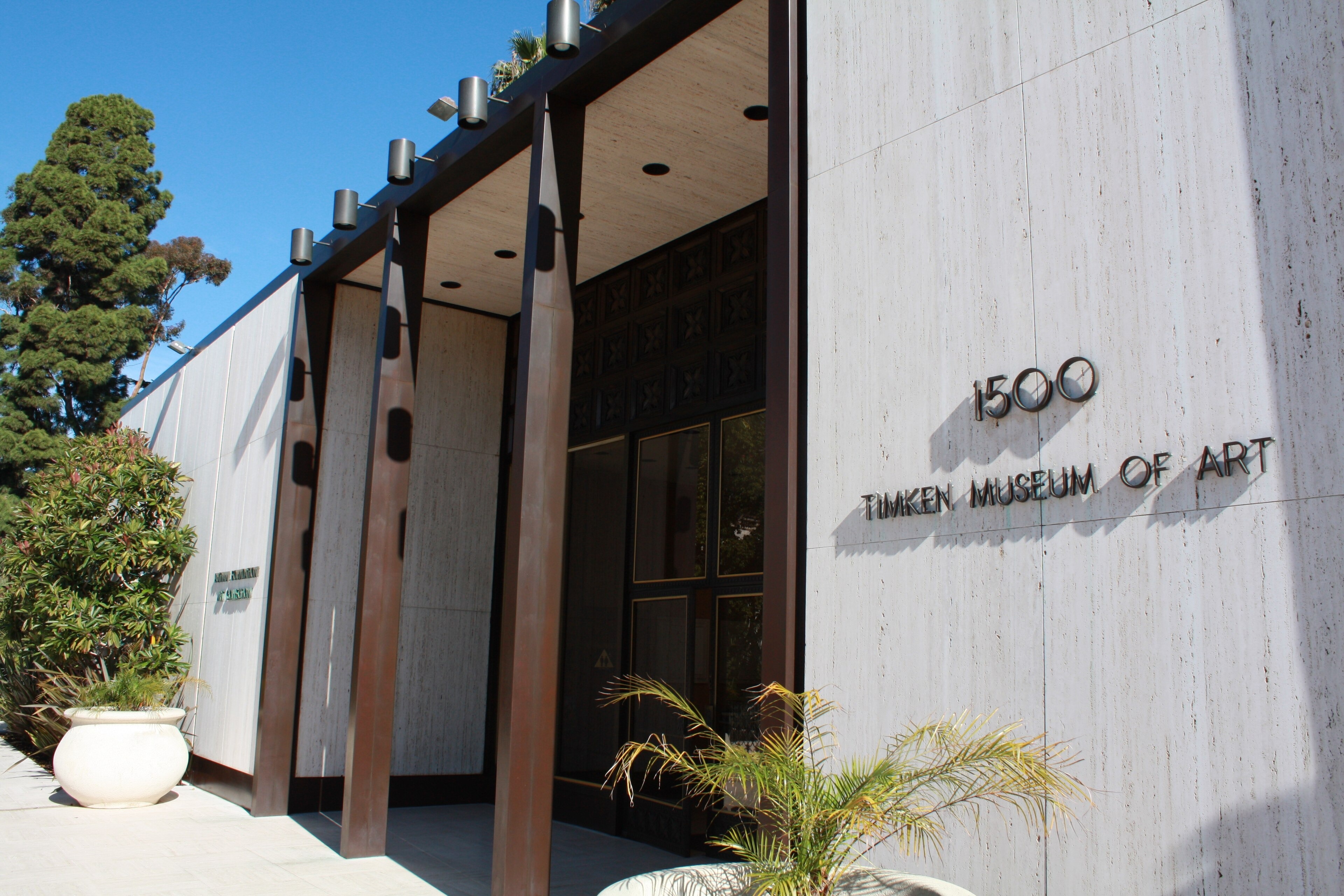
The building is a low, single-story rectangular pavilion organized as panels of Italian travertine framed in bronze, with a flat roof and deeply recessed entrance. It is Miesian in discipline, a composition of restraint and precision that sits unapologetically between the Plateresque San Diego Museum of Art and the Spanish Colonial ensemble of El Prado. The interior is a compact sequence of top-lit and side-lit galleries arranged around a central space, scaled for intimate viewing rather than crowds. The daylighting is unusually well handled, and the rooms are among the most pleasant in which to look at old master painting anywhere in California.