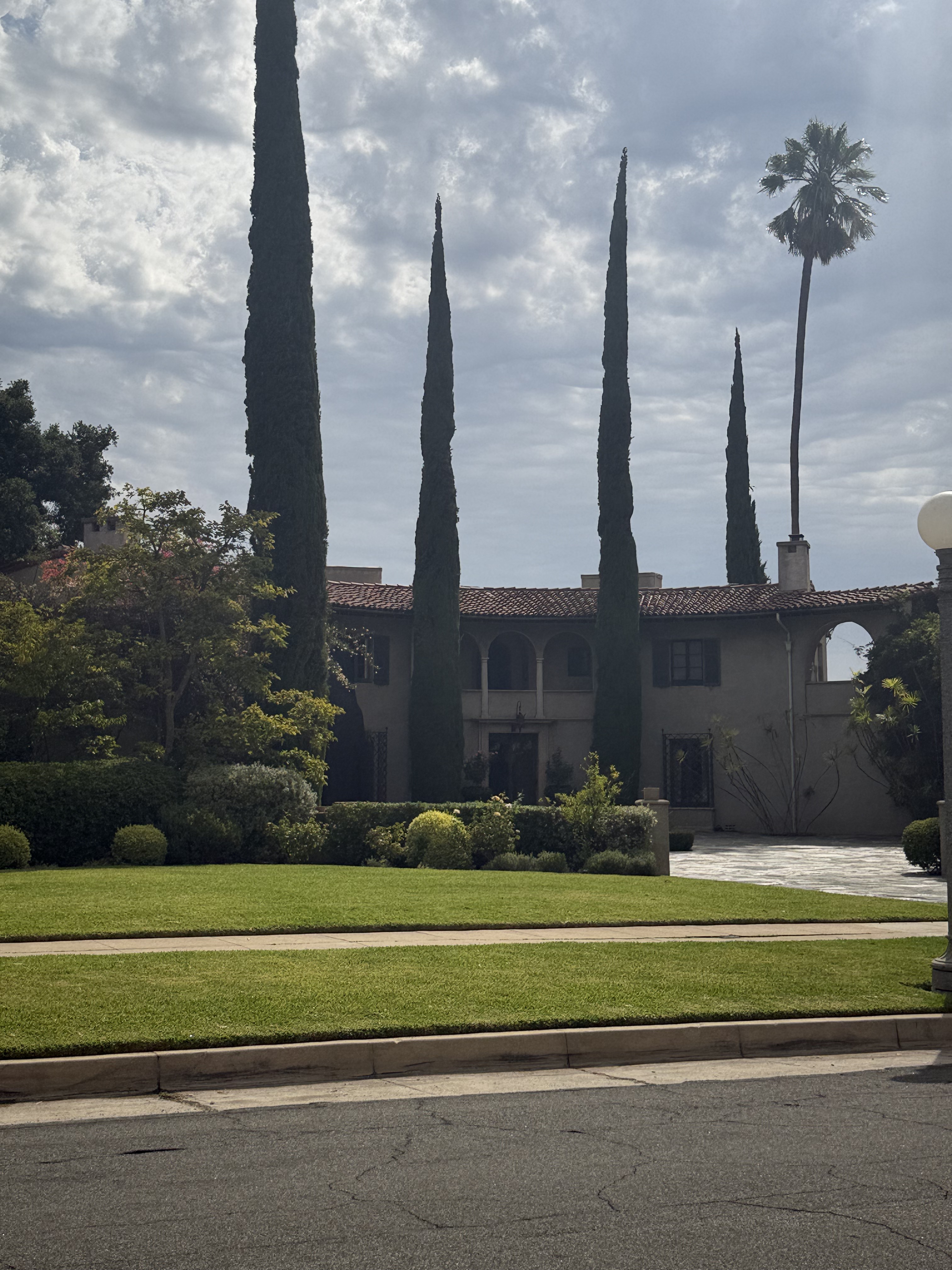
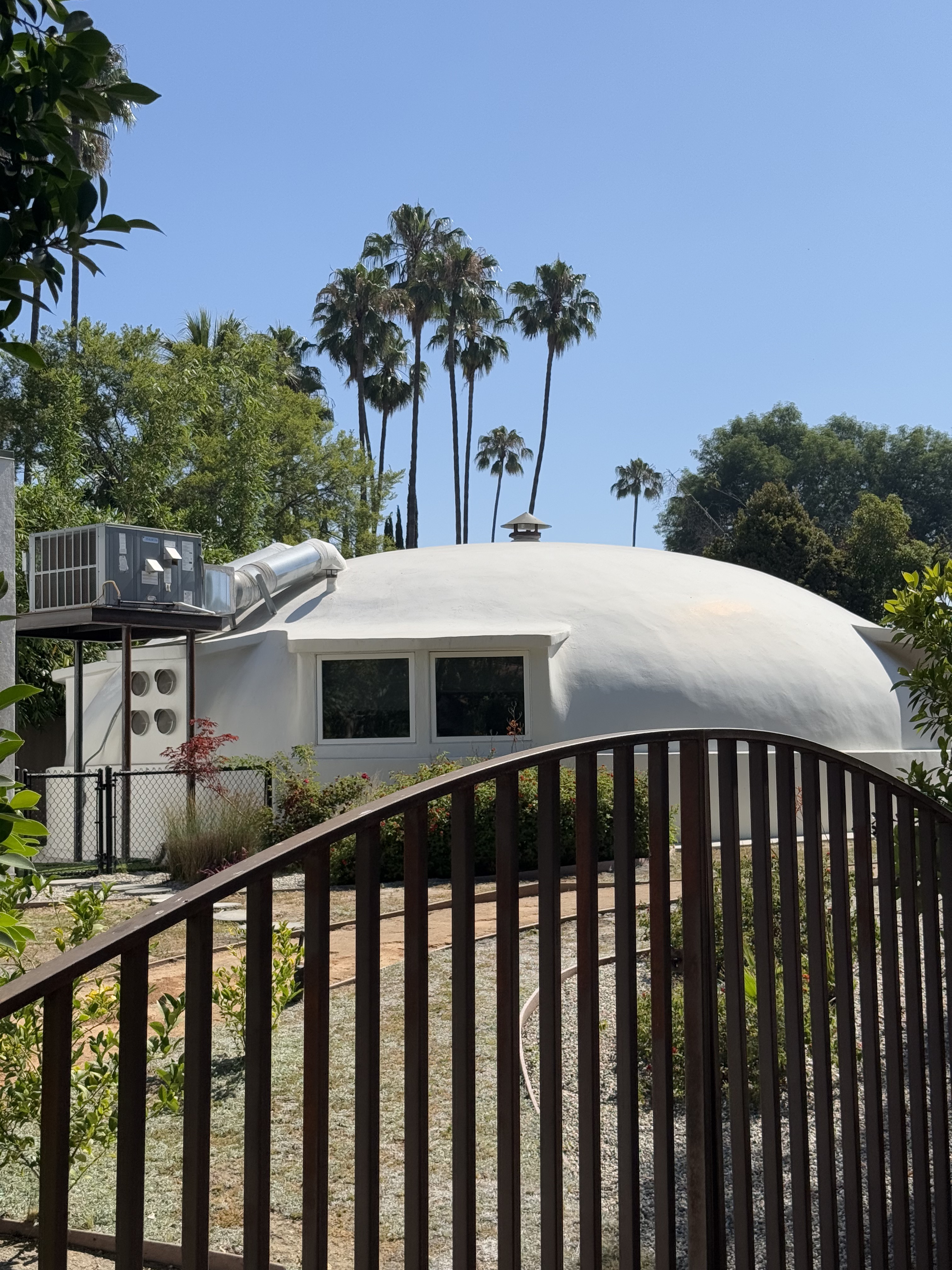
In 1946, Wallace Neff convinced his own mother to finance an experimental dome house at the corner of Los Robles Avenue and Wallis Street in Pasadena, creating what would become the last surviving Airform "Bubble House" in the United States. The project emerged from postwar America's acute housing crisis, as millions of returning veterans desperately needed shelter and Neff campaigned tirelessly for government adoption of his revolutionary construction method. While he was simultaneously designing grand estates for the Anheuser-Busch family and Hollywood stars, this modest 1,350-square-foot gunite dome represented his attempt to solve mass housing through radical efficiency. The Pasadena neighbors were reportedly unreceptive, feeling the elliptical structure clashed with the Period Revival character of the surrounding blocks.
The dome-shaped structure was built using Neff's patented Airform method: two workers inflated a rubberized nylon balloon over a round foundation, covered it with chicken wire, then sprayed it with gunite (sand, water, and cement applied through a high-pressure hose, creating a material more than twice as strong as regular concrete). Once the shell dried, workers deflated the balloon and dragged it out the front door for reuse on the next project, completing the entire structure in under 48 hours. The interior features 7-foot ceilings rising to 12 feet at the dome's center, with thick concrete walls that keep the space cool during Pasadena summers. An annex contains a laundry room and a WWII-era bomb shelter, also constructed using the Airform technique, while a curved sectional couch original to Neff remains inside, covered in red wool vintage upholstery.