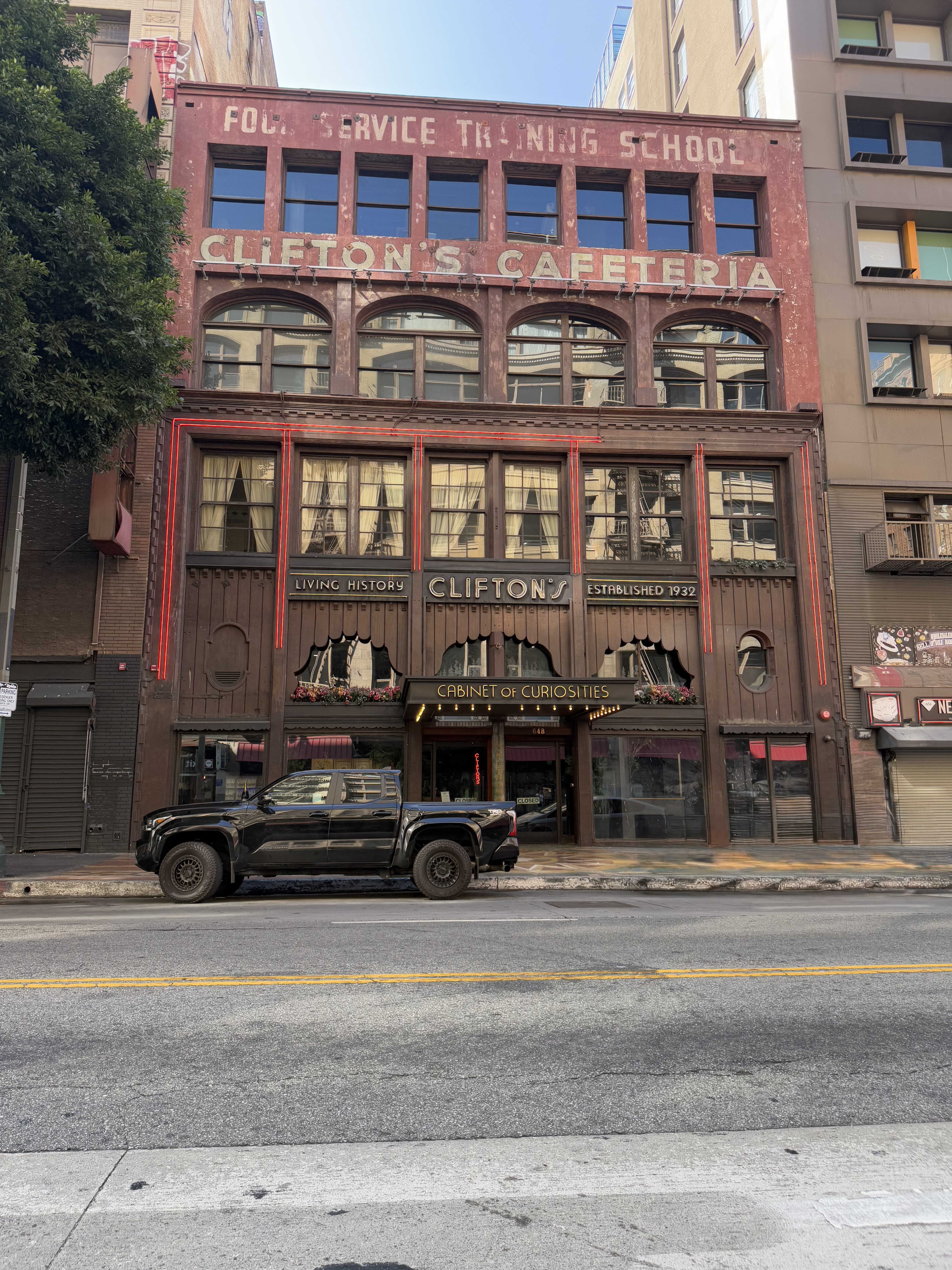
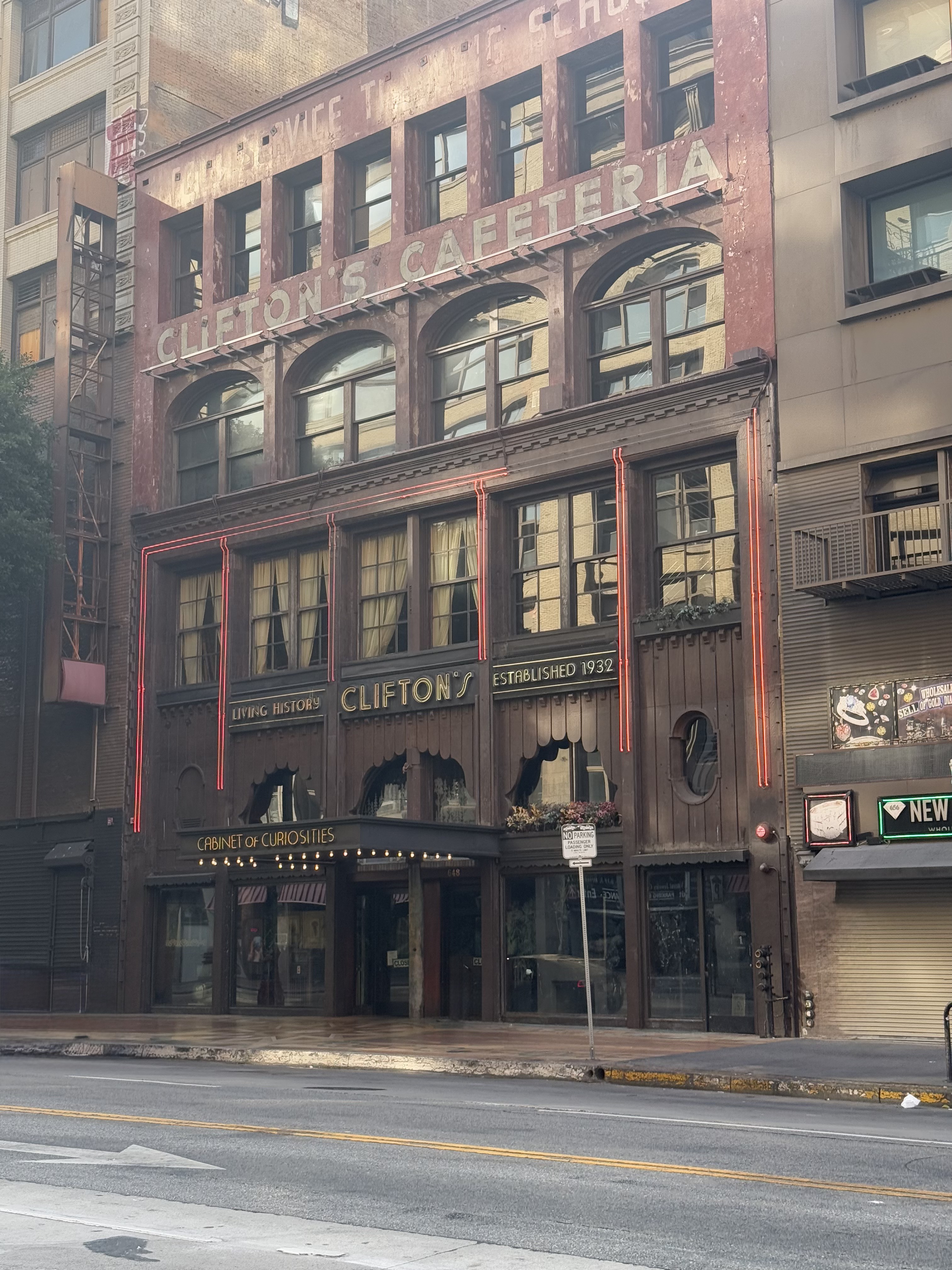
In the depths of the Great Depression, restaurateur Clifford Clinton transformed a failed 1916 commercial building into something unprecedented: a populist paradise where paying customers and the hungry could share the same fantastical environment. Clinton and his wife Nelda took over the former Boos Brothers' Cafeteria in the mid-1930s, commissioning Wurdeman & Becket to create an immersive theatrical interior that would remove the stigma of charity dining through spectacular escapism. The resulting Brookdale cafeteria operated on Clinton's revolutionary "pay what you wish" principle, turning a downtown commercial shell into architecture of social compassion disguised as entertainment. This was Broadway's most democratic fantasy environment, accessible to office workers, shoppers, tourists, and the poor alike without the ticket threshold that governed the district's movie palaces.
The building's true architecture exists almost entirely as interior theater, where Wurdeman & Becket collaborated with artist Einar Petersen to create an artificial wilderness within the commercial frame. Living redwood trees rise through multiple levels, their trunks integrated with hand-sculpted rock formations, bridges, and grottos that house hidden murals and neon installations. A functioning waterfall cascades down fabricated stone cliffs while a meandering stream winds between dining areas, creating the acoustic backdrop for what Clinton marketed as a mountain lodge experience. The original 1916 facade disappeared behind a 1963 aluminum covering, but the 2010s restoration stripped away these later additions to reveal buried decorative elements while seismically upgrading the underlying structure. The space operates as pure set design made permanent, where architectural elements, signage, and social choreography become inseparable.