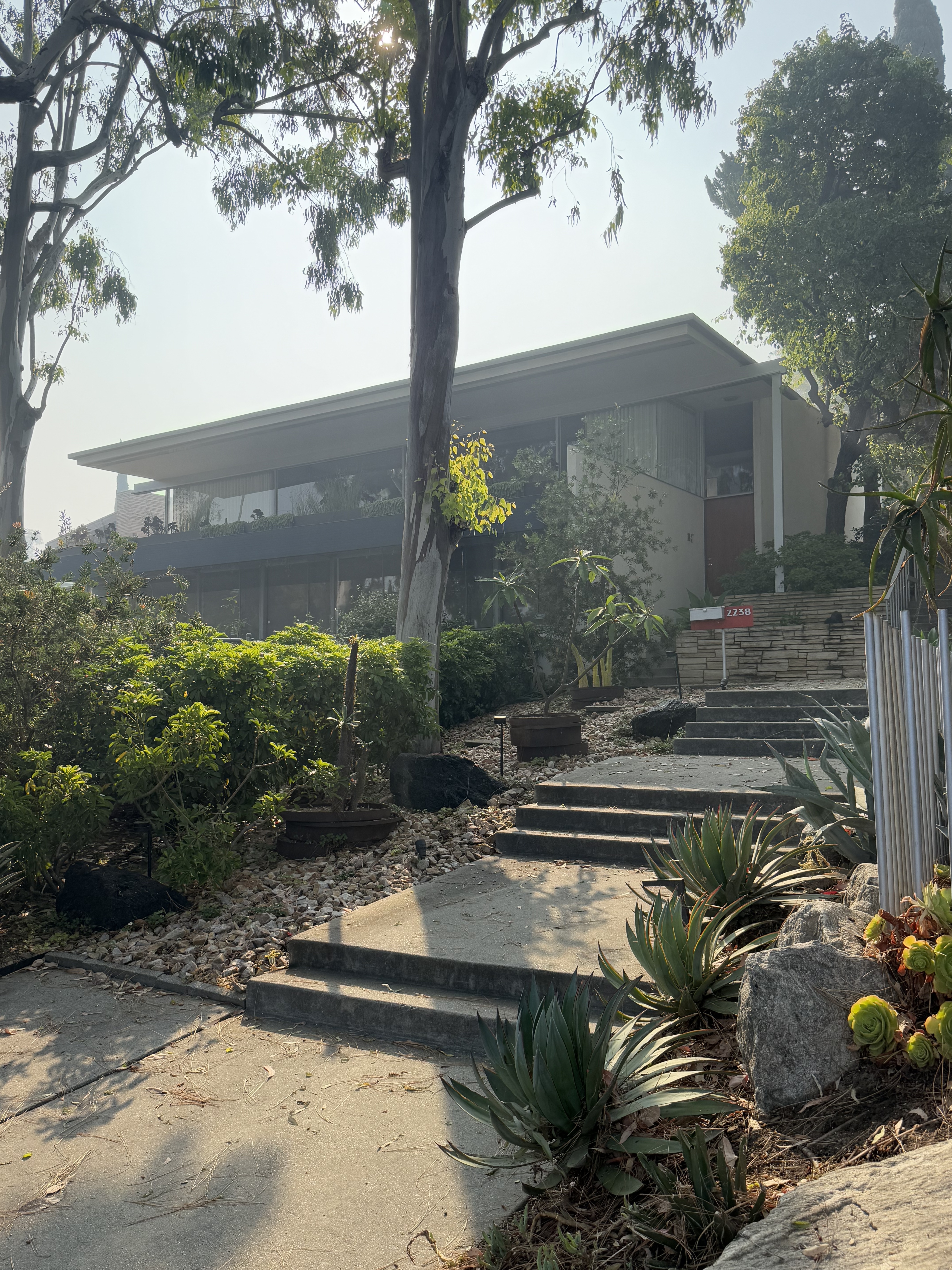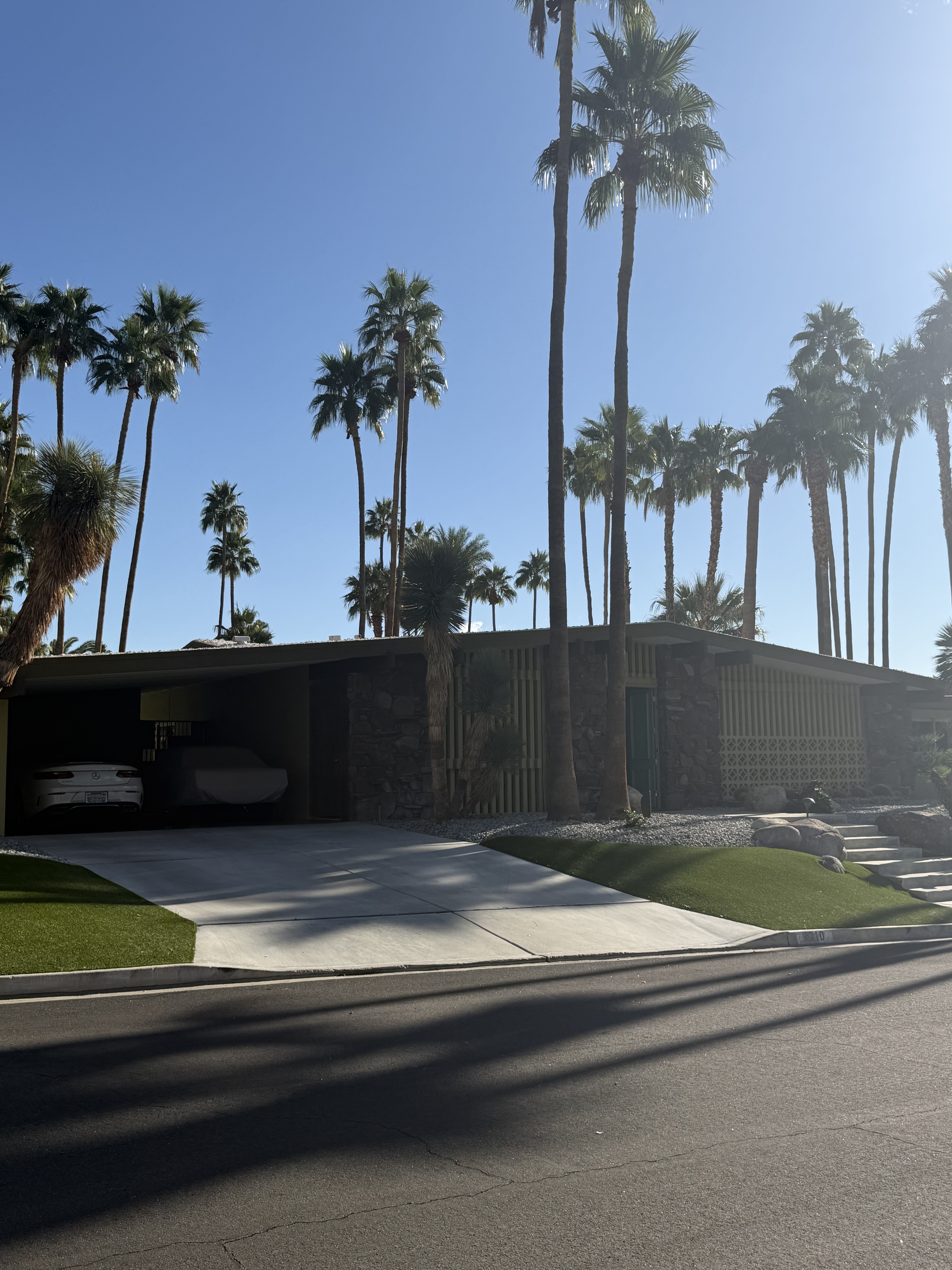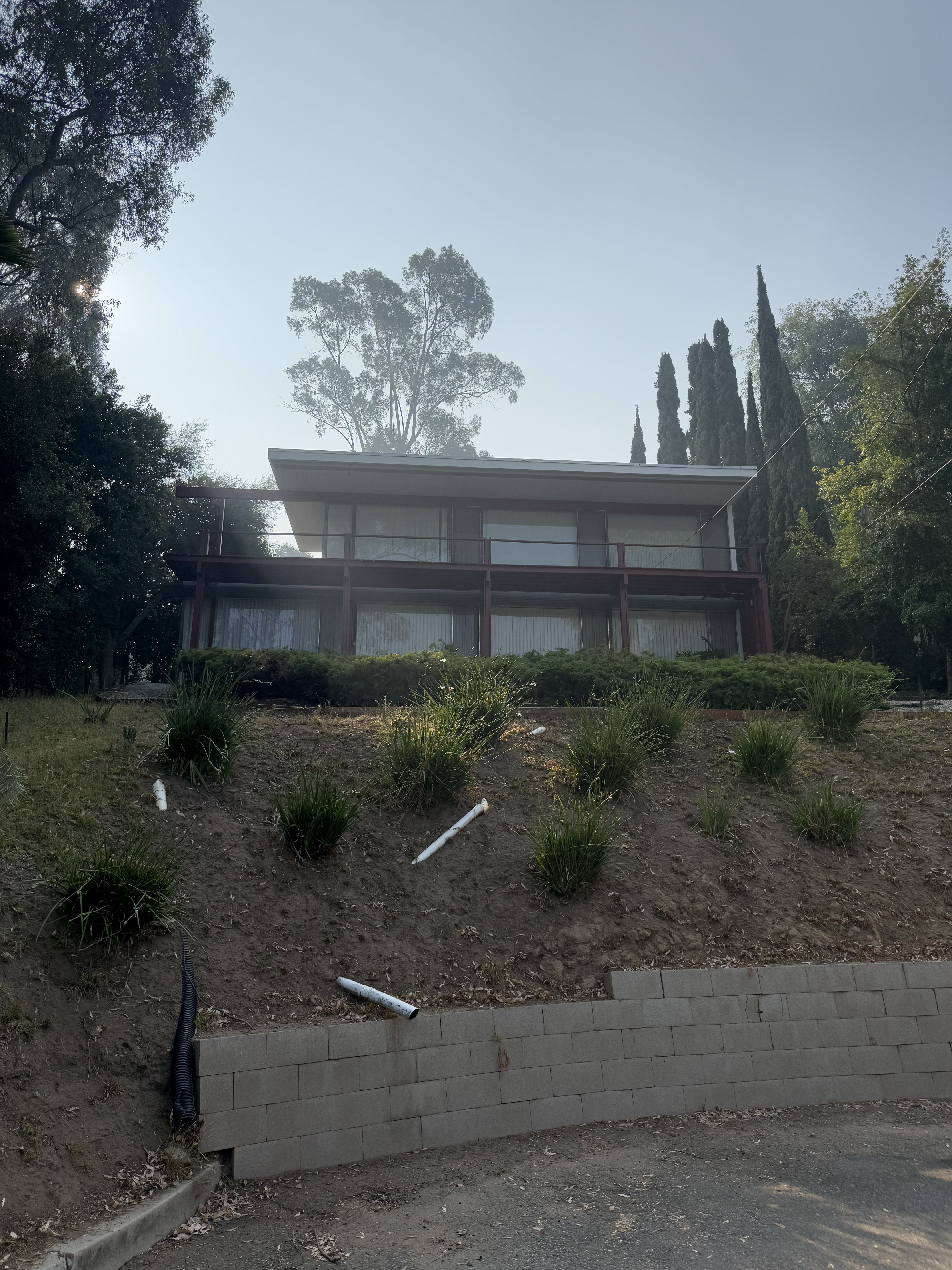
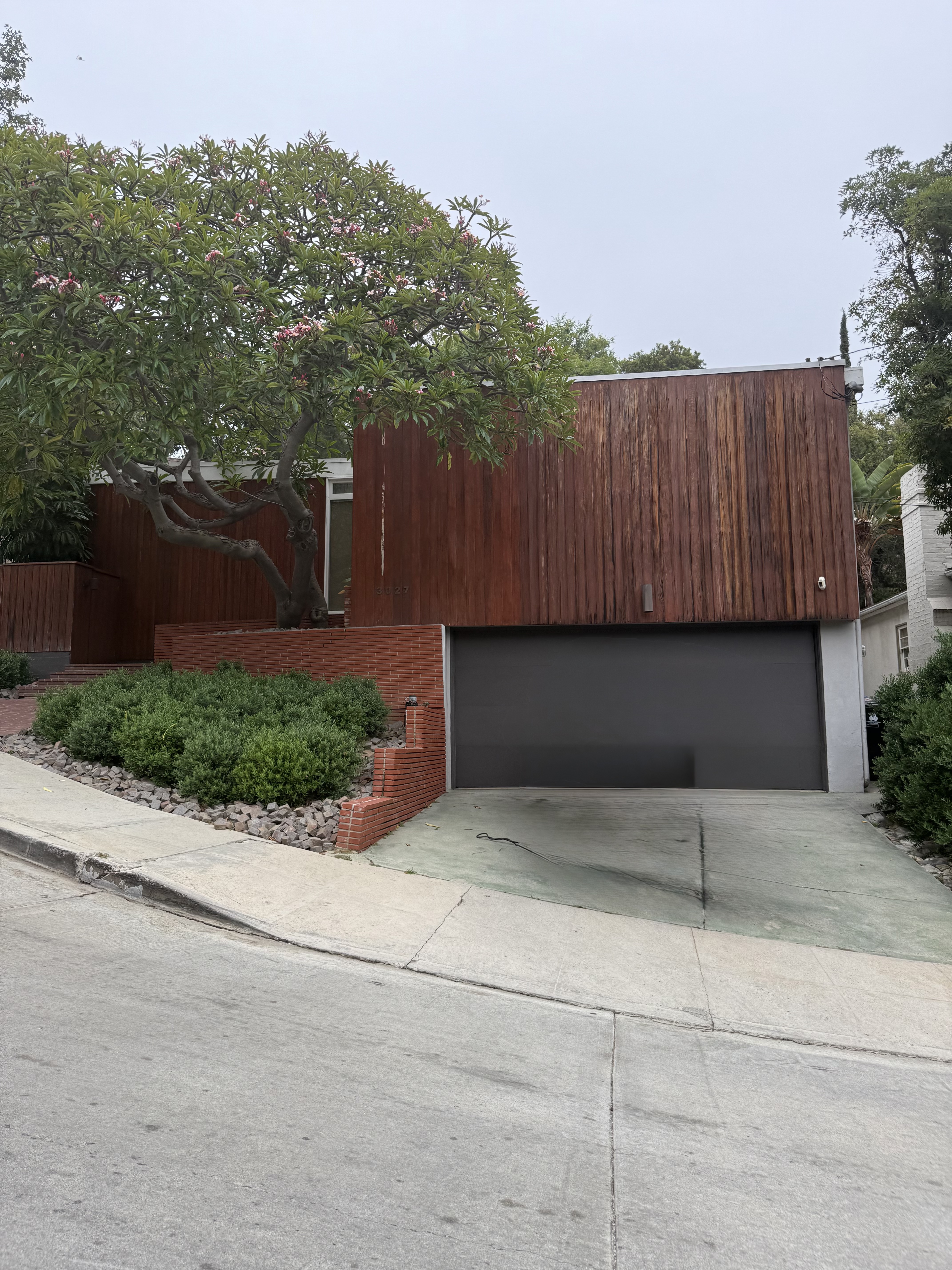
Eugene Kinn Choy designed and built this mid-century modern residence on Castle Street as his family home in 1949, making it both an architectural statement and an act of civil rights assertion. The project came at a pivotal moment following the Supreme Court's 1948 Shelley v. Kraemer decision that made racial housing covenants unenforceable, though informal restrictions persisted throughout Silver Lake's hillside neighborhoods. Choy had to build the house before securing financing, as no bank would lend to a Chinese-American purchasing in the area, effectively integrating the Primrose Hill neighborhood through architectural courage. The residence served as the foundation for what would become a remarkable family architectural compound spanning multiple generations.
The house exemplifies the mid-century modernist vocabulary that Choy developed throughout his Silver Lake commissions, featuring flat and low-pitched roofs that respond to the sloping Primrose Hill topography. Horizontal lines emphasize the integration of indoor and outdoor spaces, a hallmark of the California modernist movement that Choy helped advance. The design demonstrates his sophisticated understanding of site-specific modernism, with the structure carefully positioned to take advantage of the neighborhood's dramatic terrain and views. Clean geometric forms and expansive glazing create the seamless indoor-outdoor living that defined progressive Los Angeles architecture of the era.