
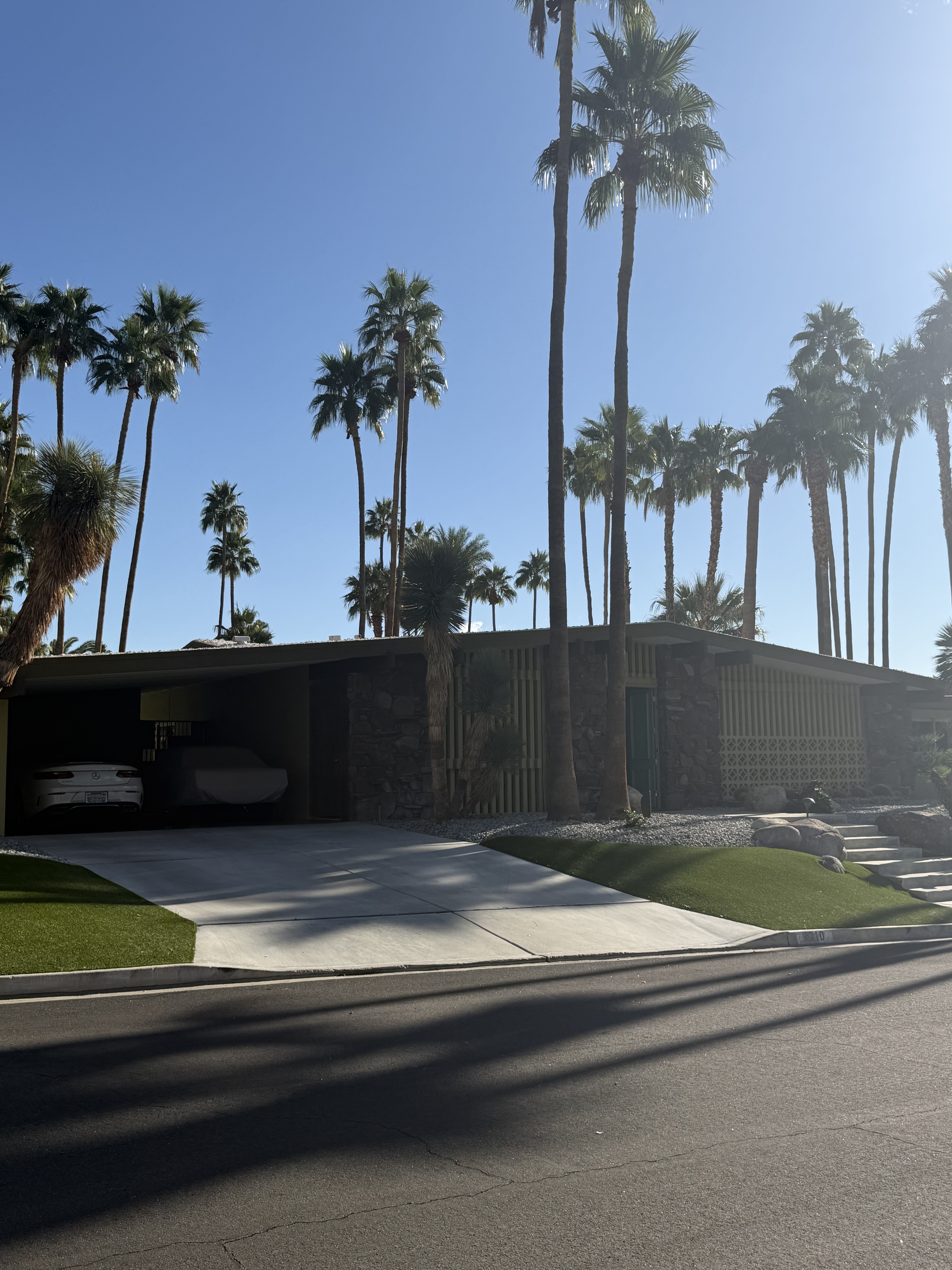
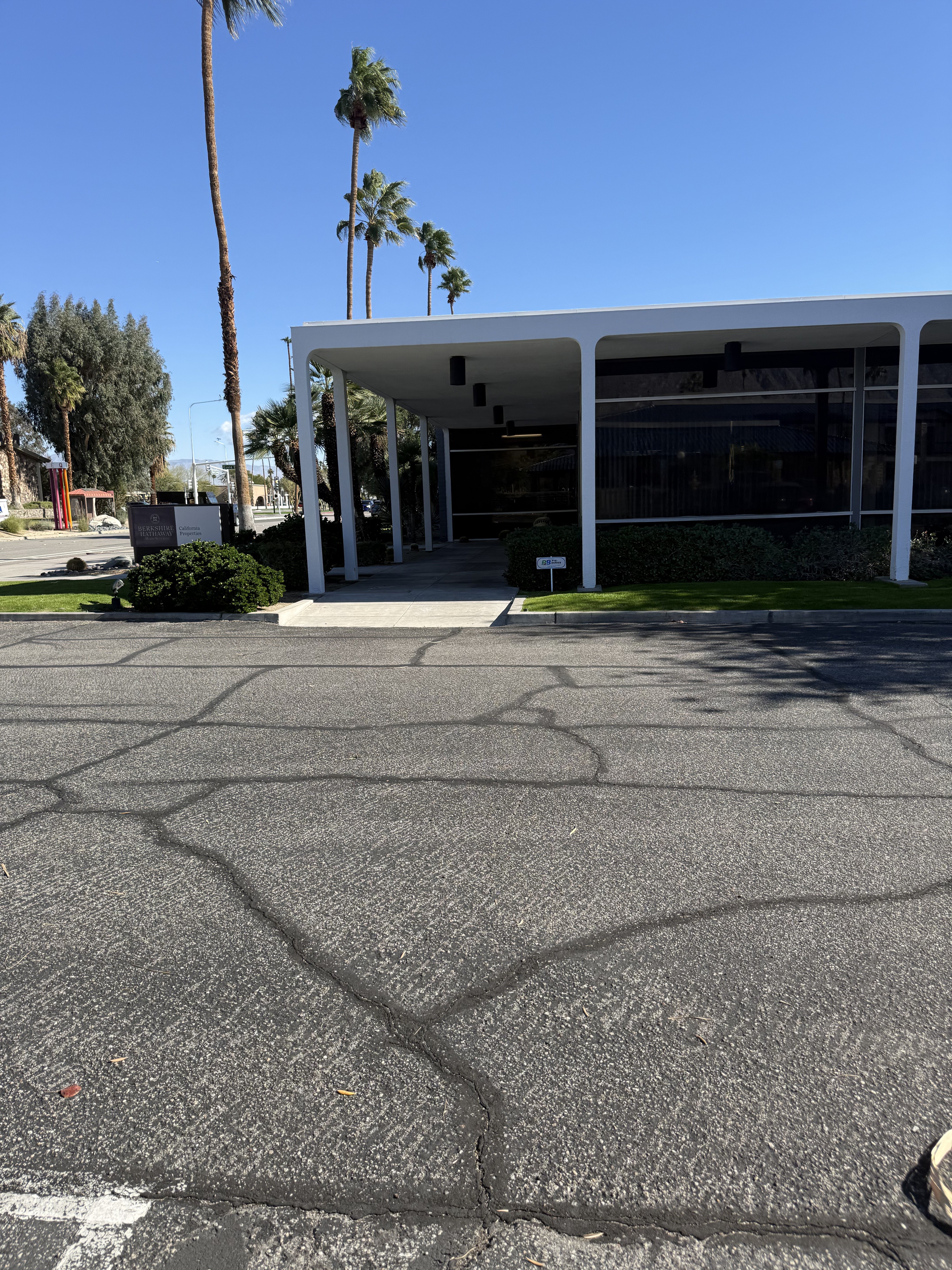
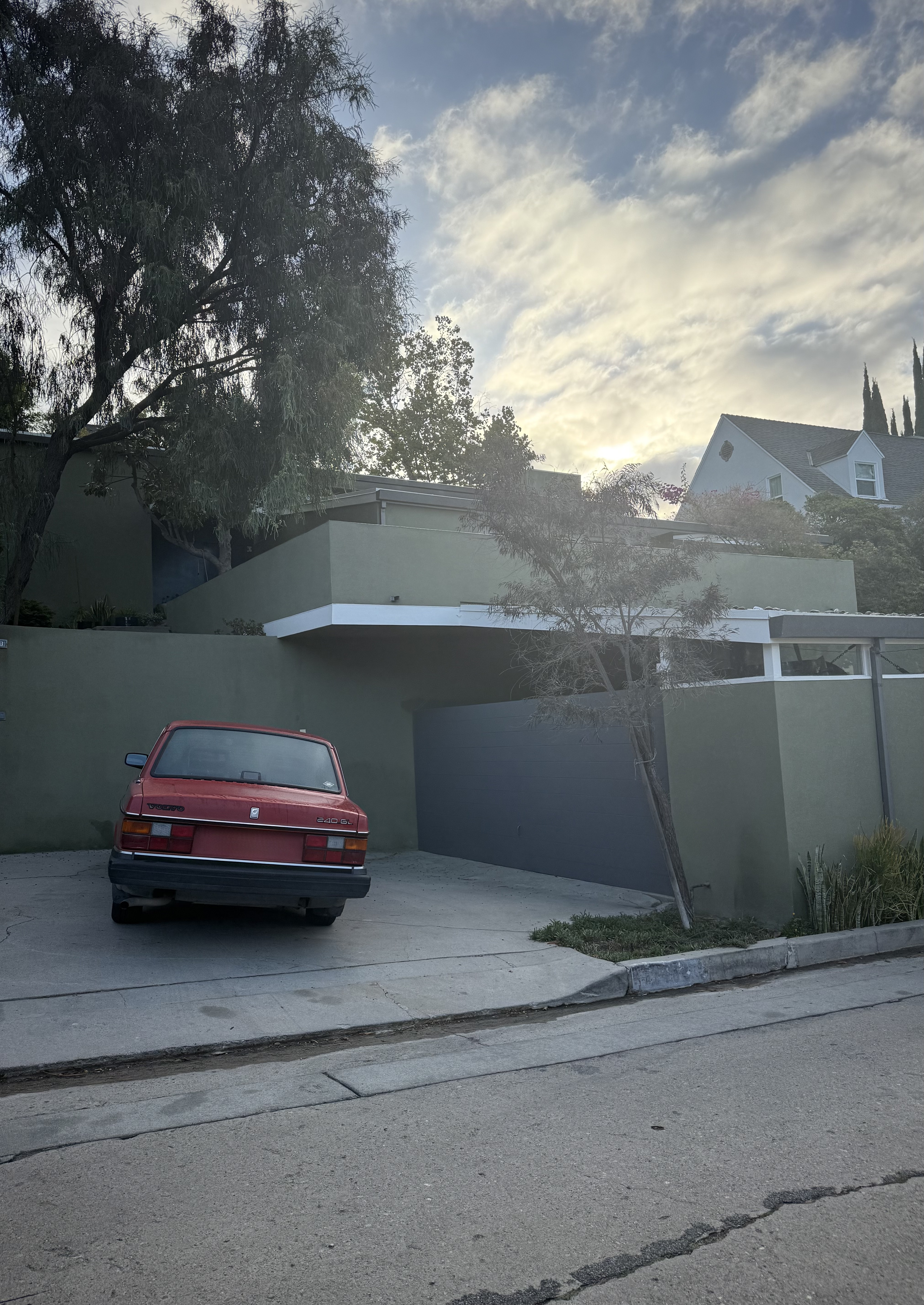
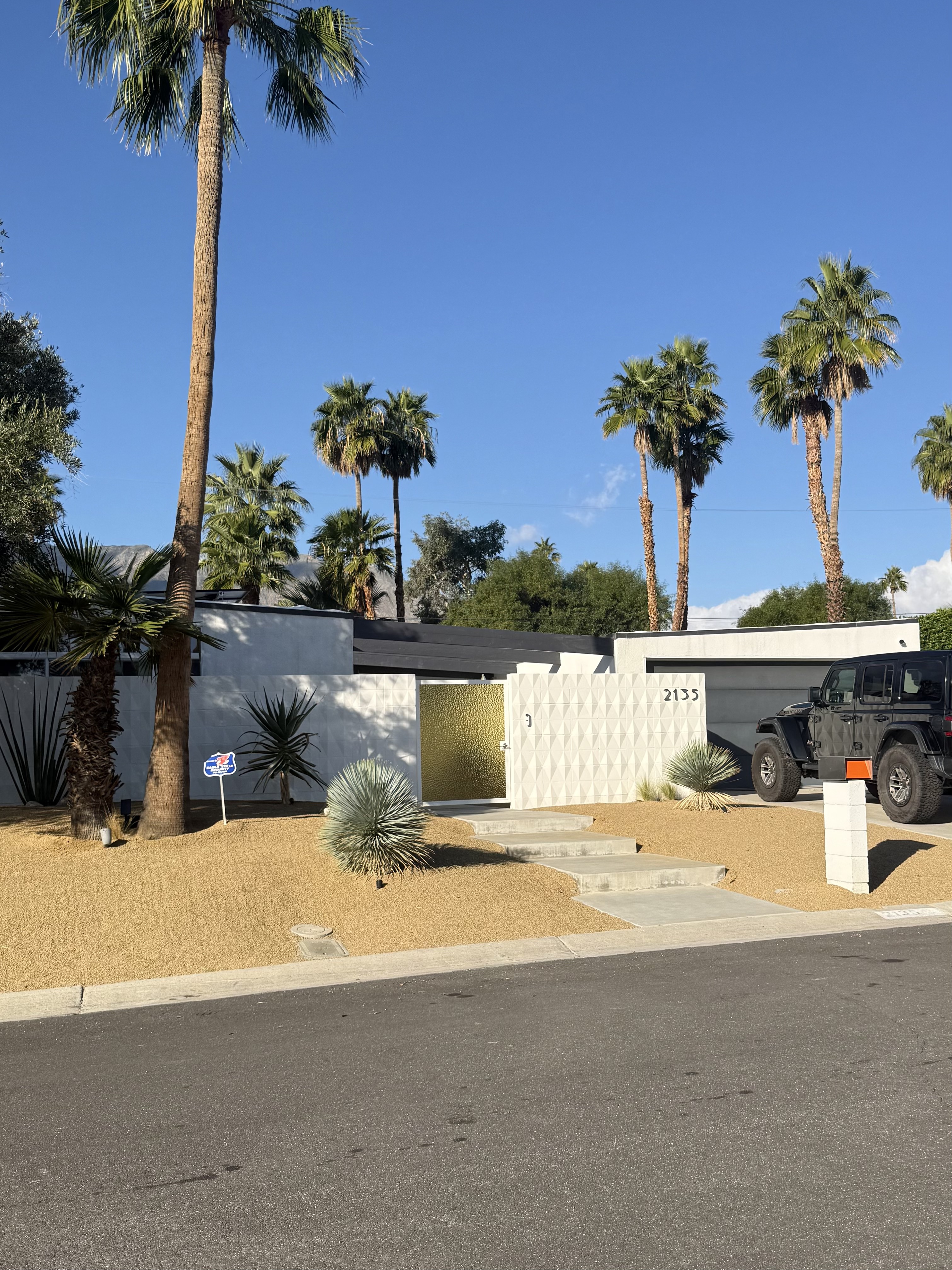
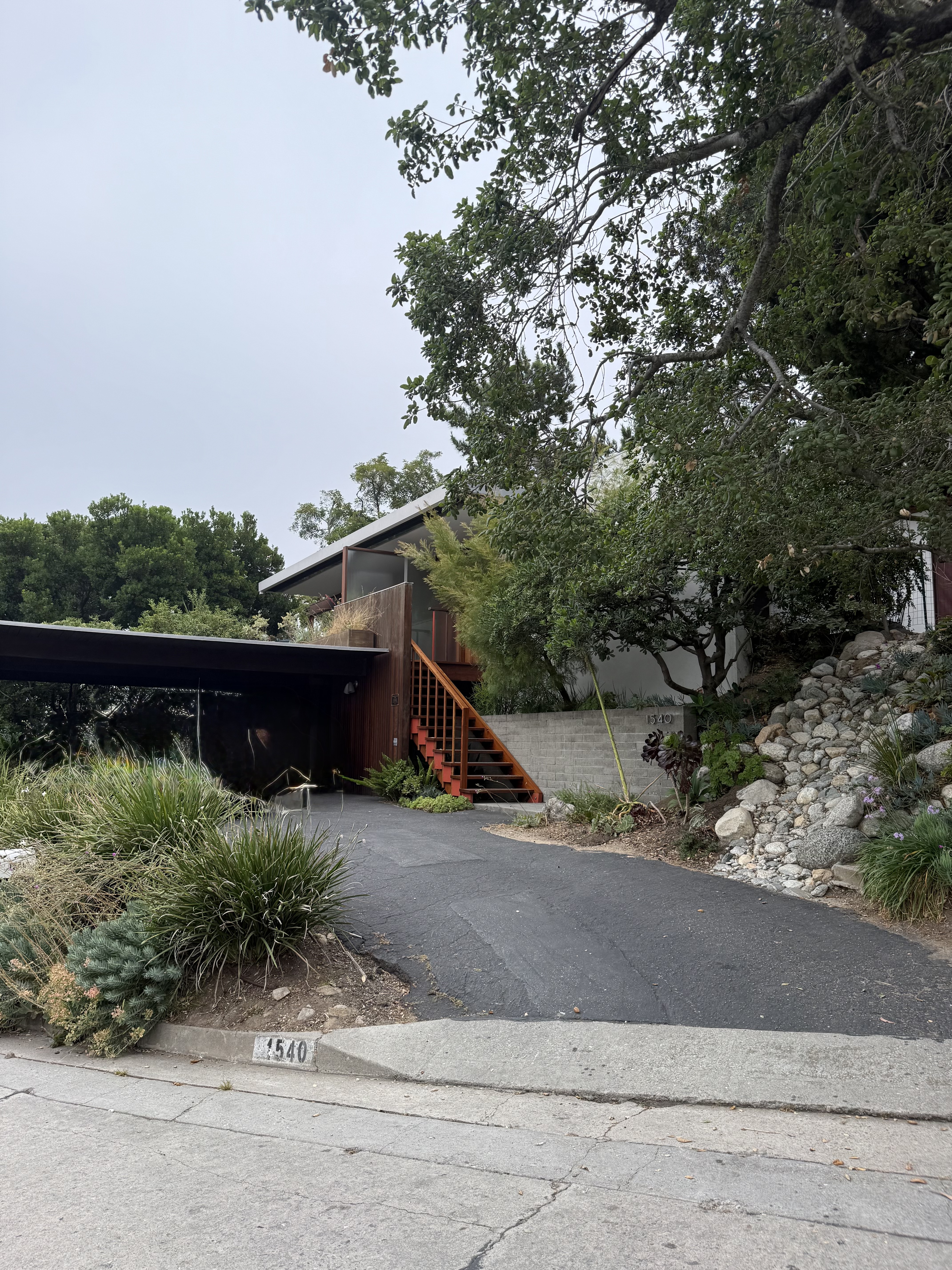
Mid-Century Modern emerged as America's optimistic response to post-war housing needs, rejecting ornate traditional styles in favor of clean, honest simplicity that celebrated both function and form. This revolutionary design movement centered on bringing the outdoors in through seamless indoor-outdoor living, reflecting the era's sense of freedom and possibility. The experimental Case Study Houses program (1945-1966) sponsored by Arts & Architecture magazine refined the residential approach through innovative prototypes, commissioning architects to design modern houses using industrial materials adaptable to mass production. Post-and-beam construction enabled development on Southern California's steep hillside lots previously considered unbuildable, using minimal foundation points while cantilevering volumes over canyons. The style represented democratization of modernist principles, making clean-lined modern design available through tract developments. The style extends beyond architecture into furniture design, representing an entire lifestyle philosophy of casual living and optimistic modernism. After declining in the 1970s-80s, it experienced a major revival beginning in the late 1990s that continues today.
ELEMENTS
- Floor-to-ceiling windows that dissolve barriers between interior and exterior spaces
- Flat or low-pitched roofs with clean horizontal lines
- Post-and-beam construction enabling large expanses of glass
- Open floor plans that encourage flow and movement
- Wide overhanging eaves providing sun protection and dramatic shadow lines
- Horizontal emphasis throughout the design
- Exposed structural elements as decorative features
- Built-in furniture and storage solutions
- Clean geometric lines with minimal ornamentation
Mid-Century Modern buildings
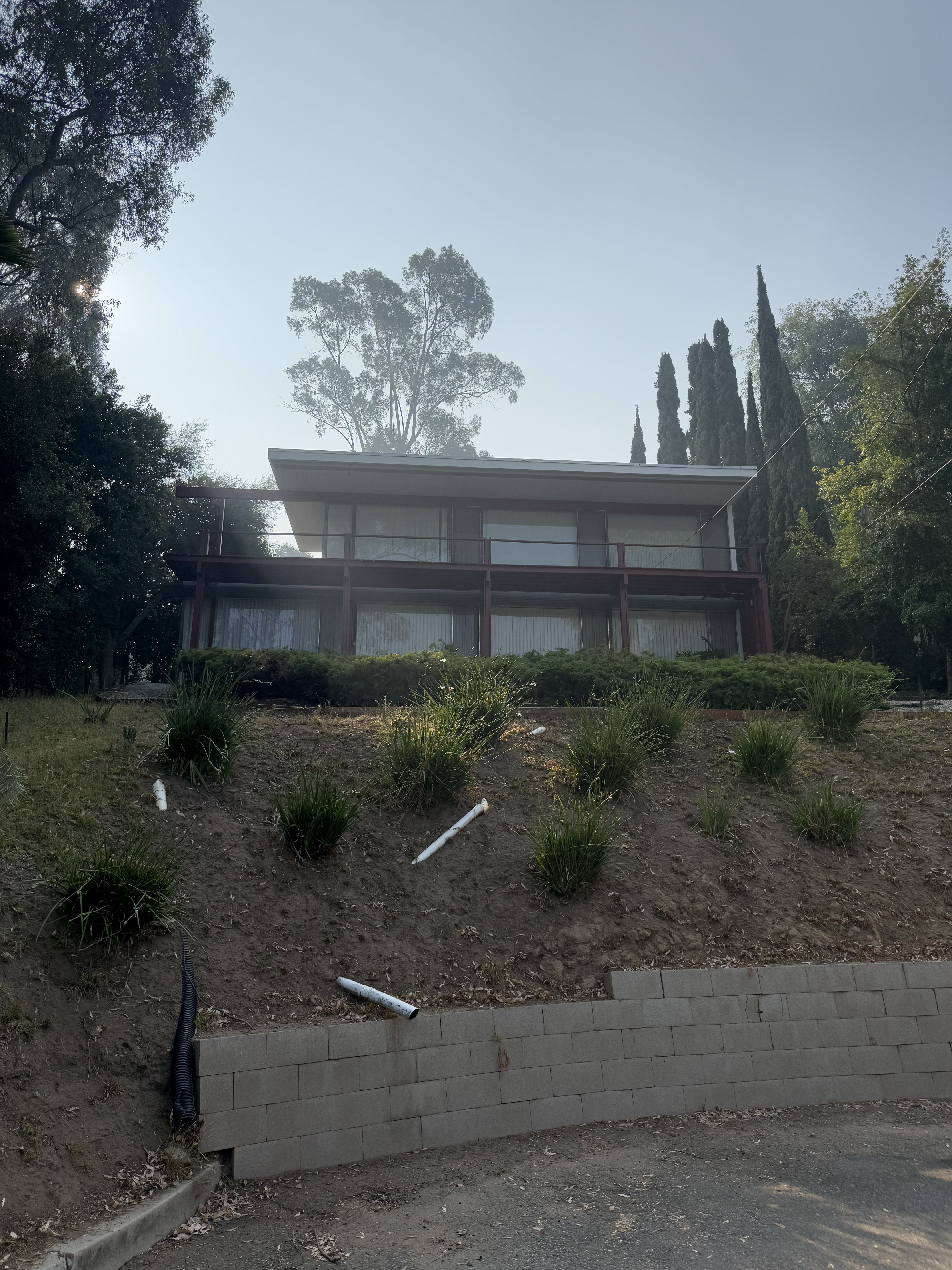 Akai House
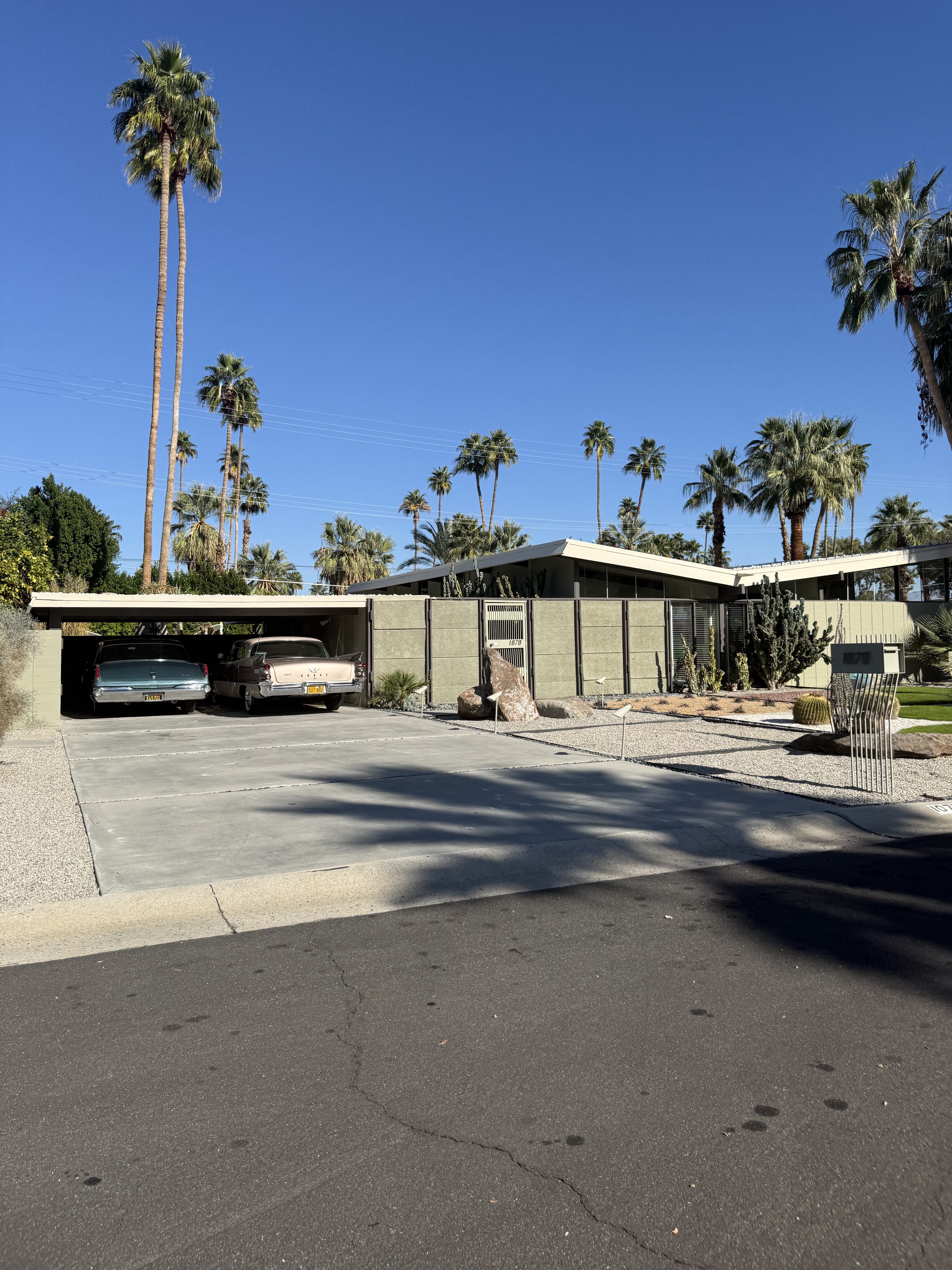 Alexander House
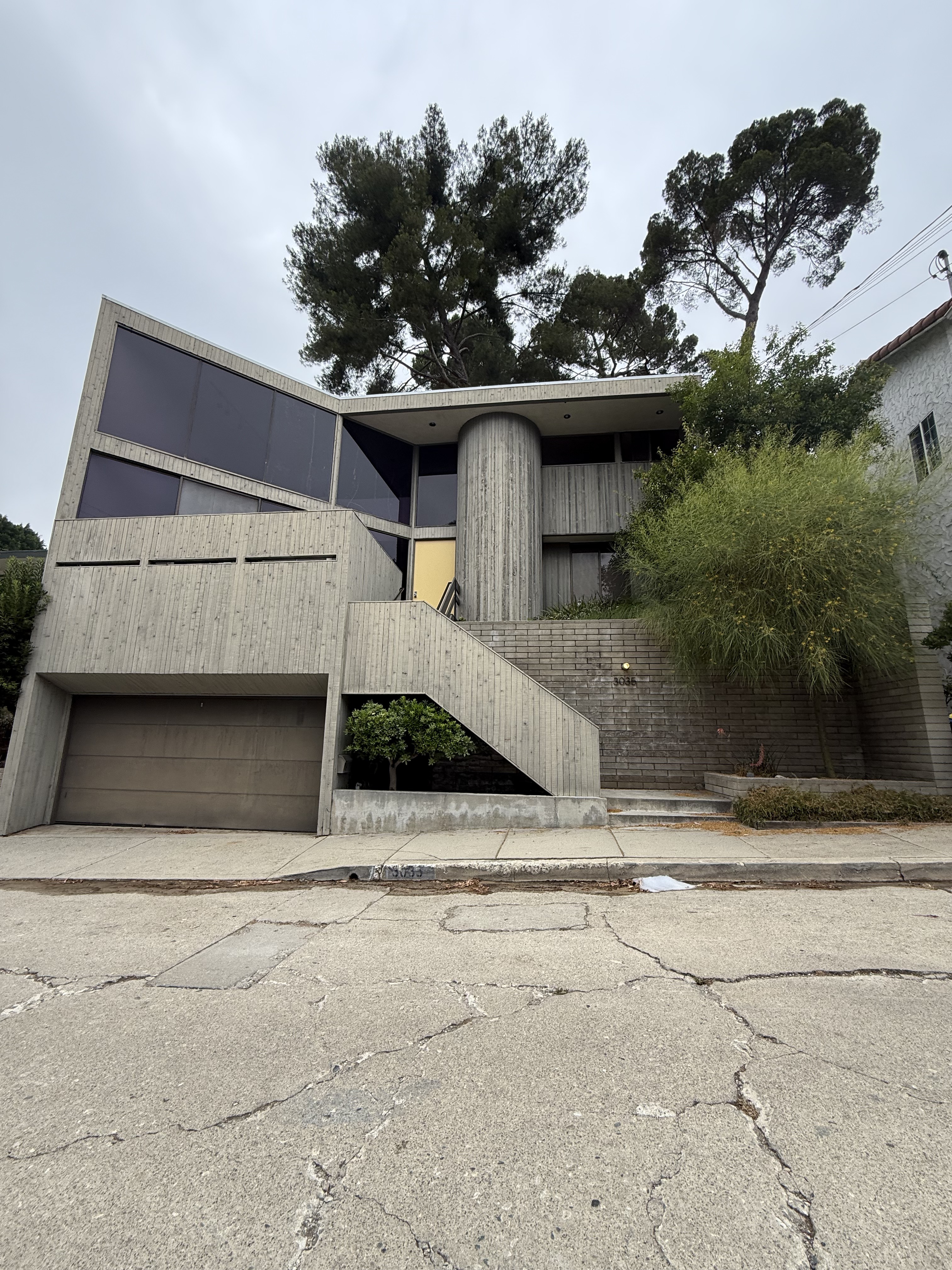 Barton Choy
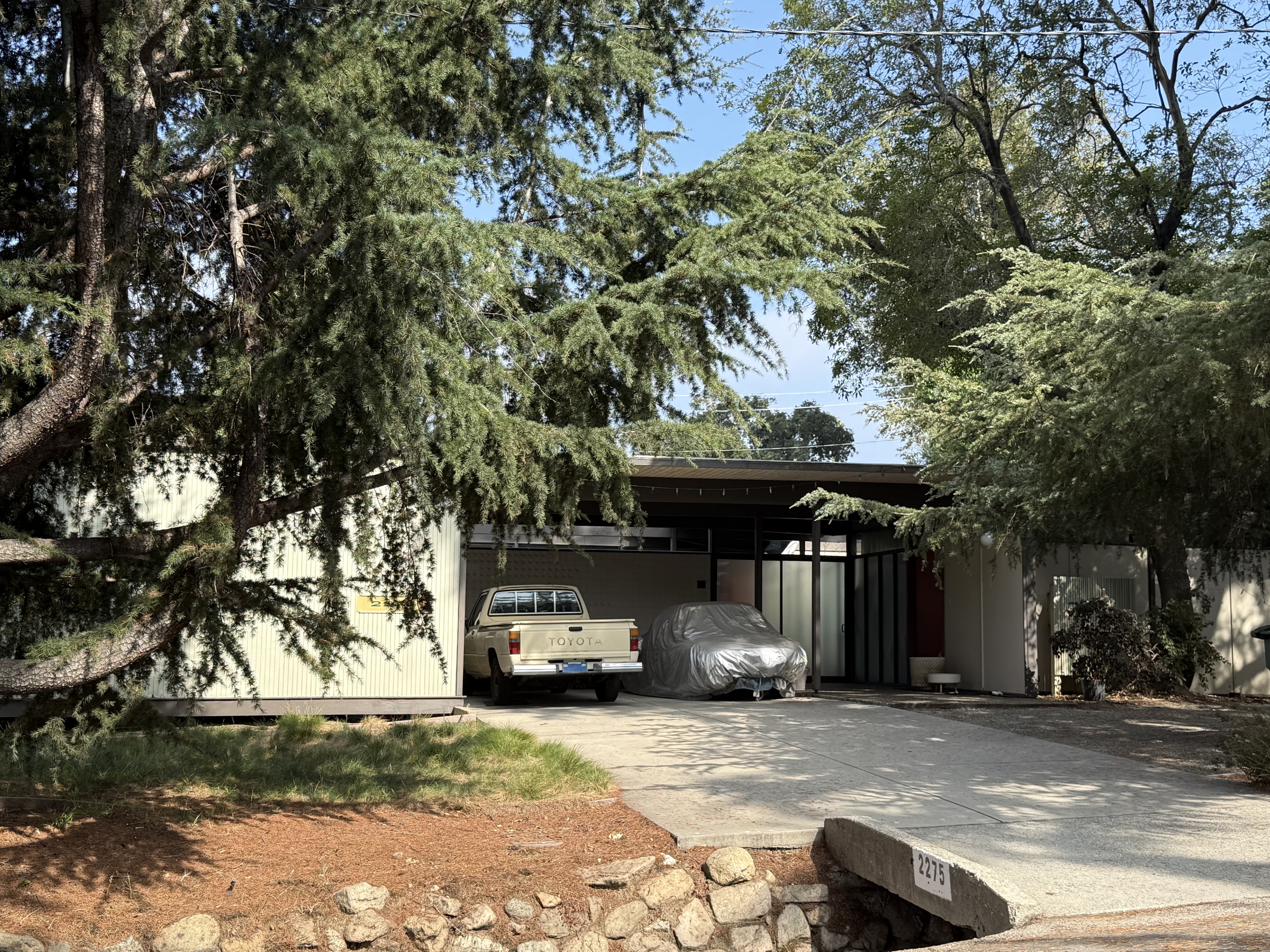 Bass House CSH#20 - S2
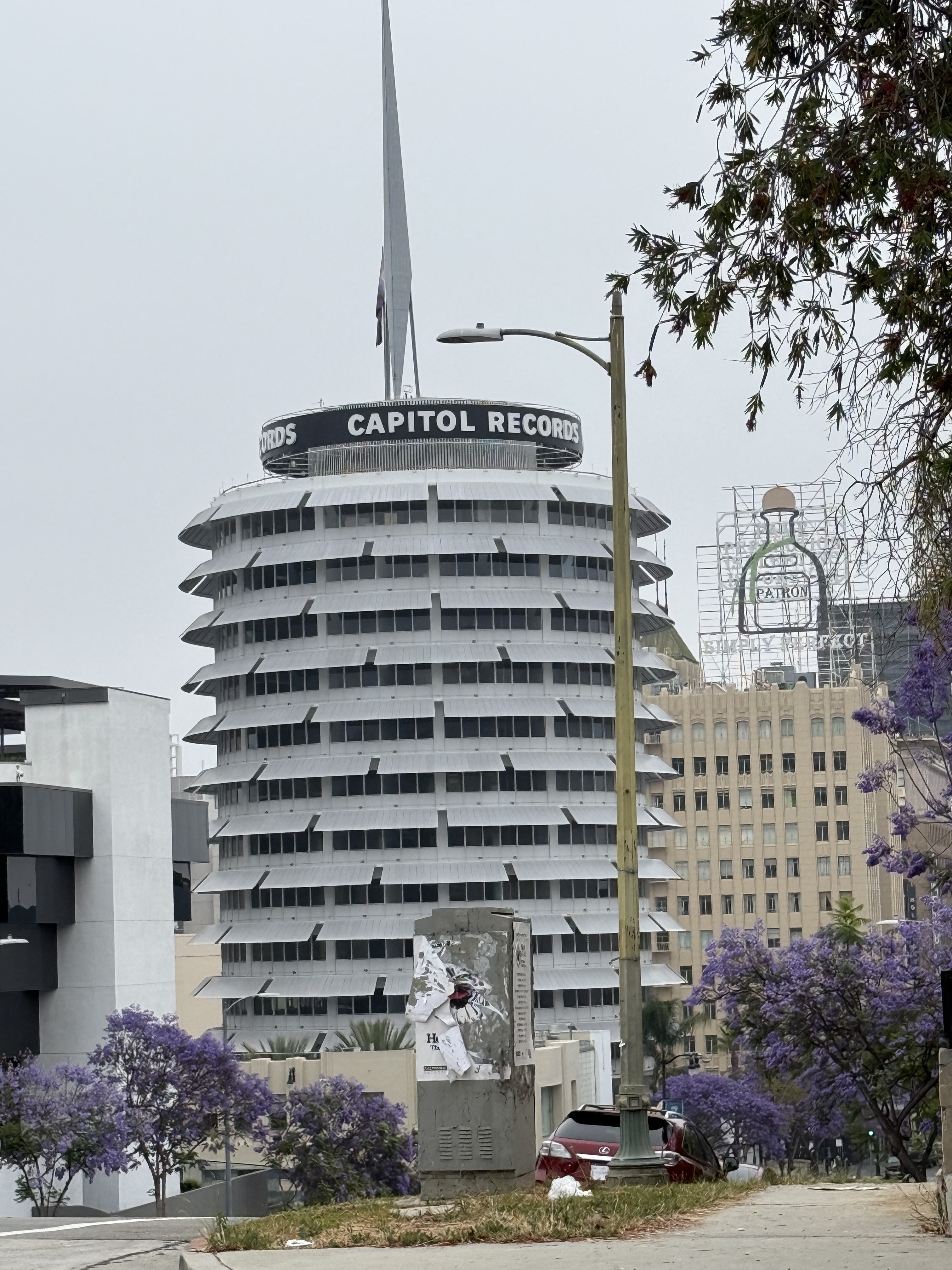 Capitol Records Building
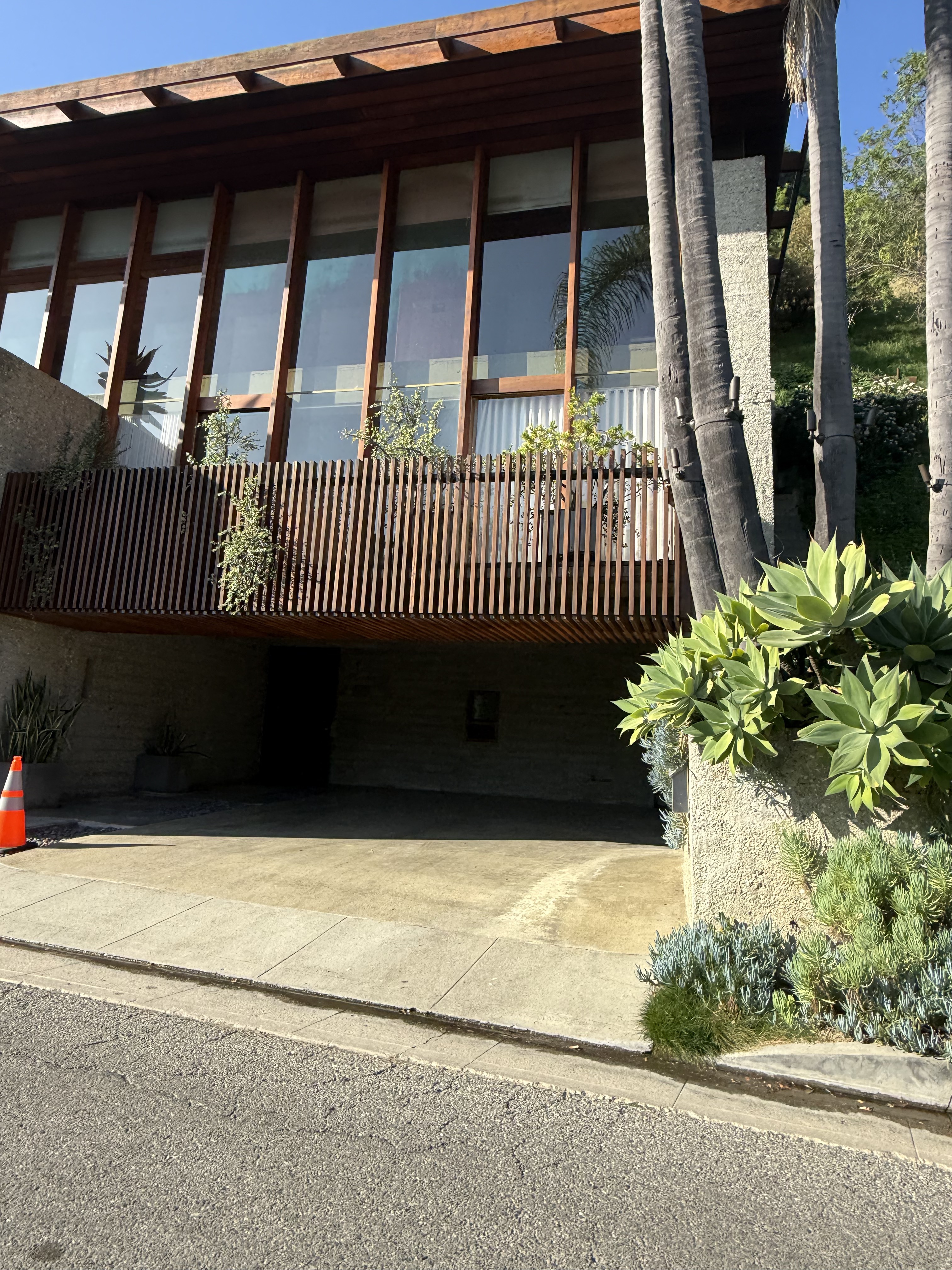 Carl Maston House
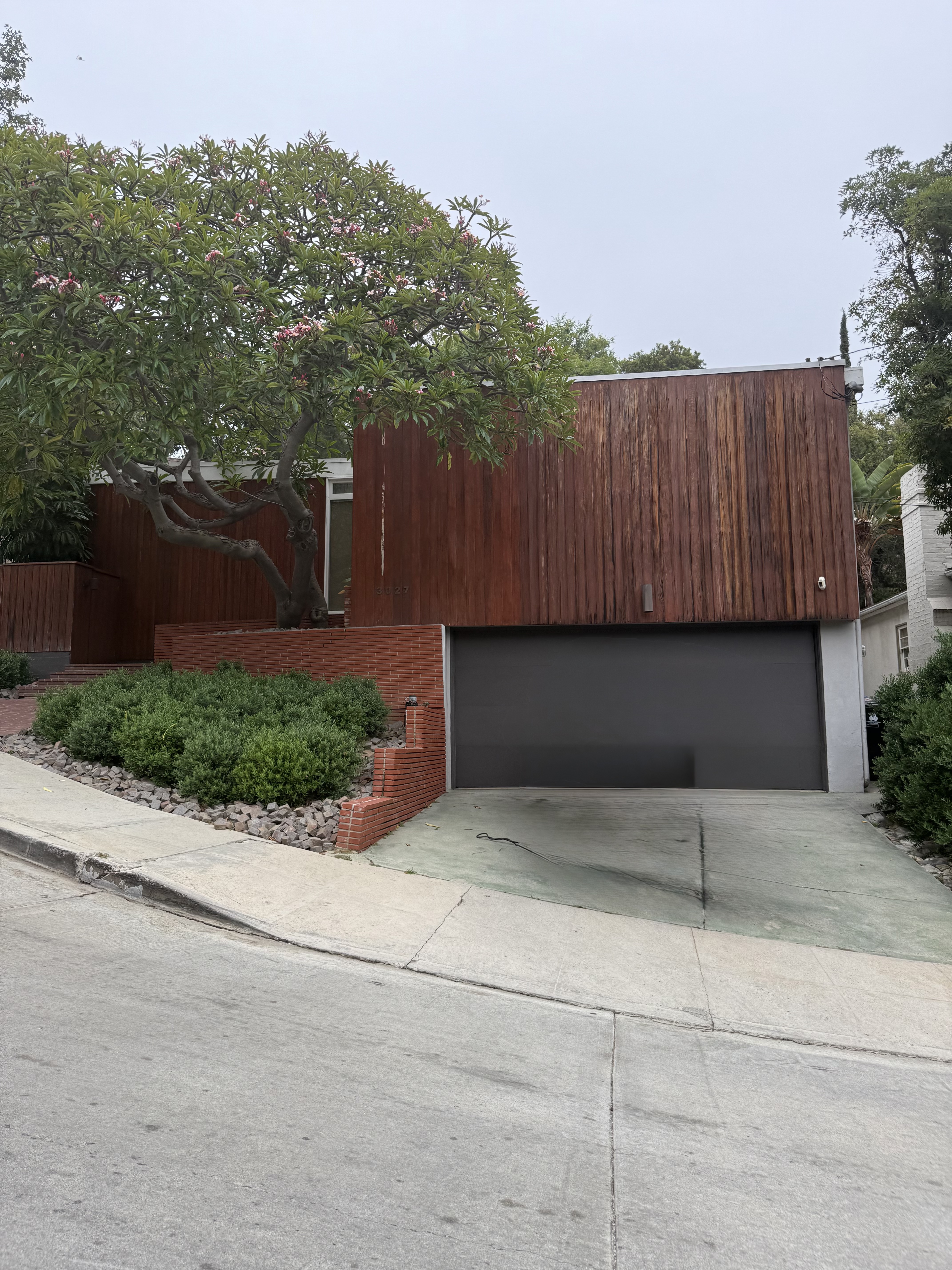 Choy Family Residence
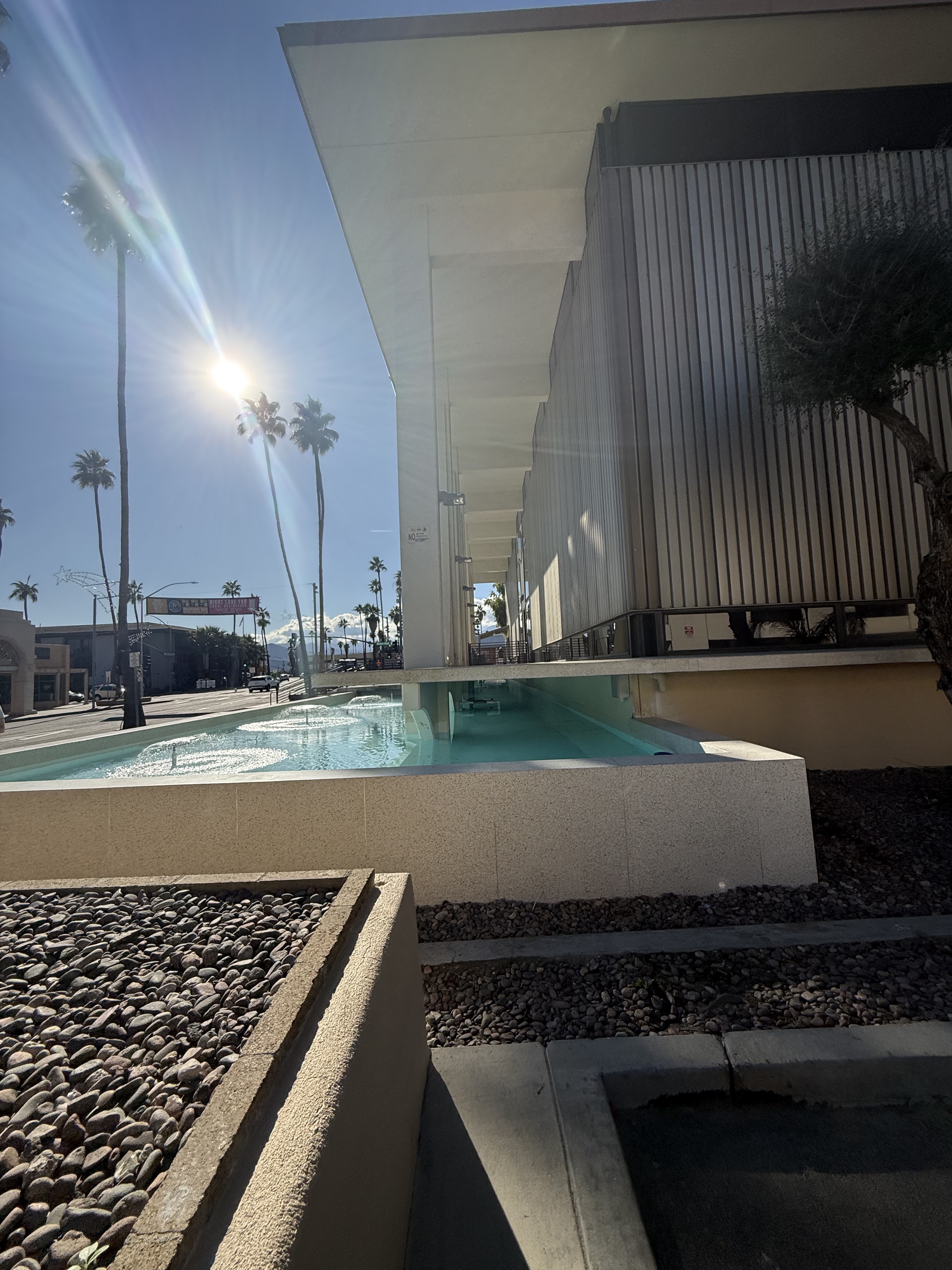 Coachella Valley Savings No. 1
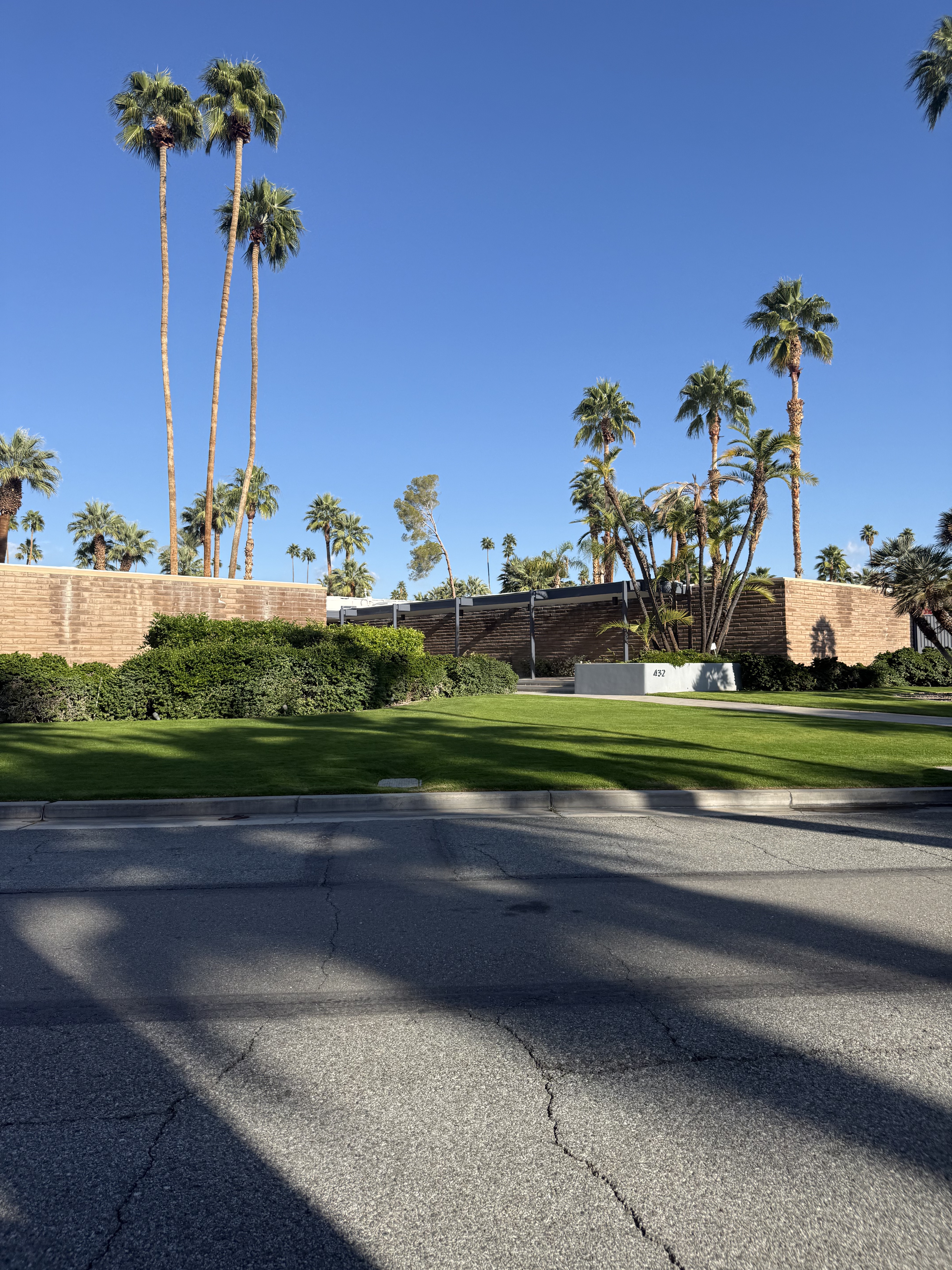 Dinah Shore Estate
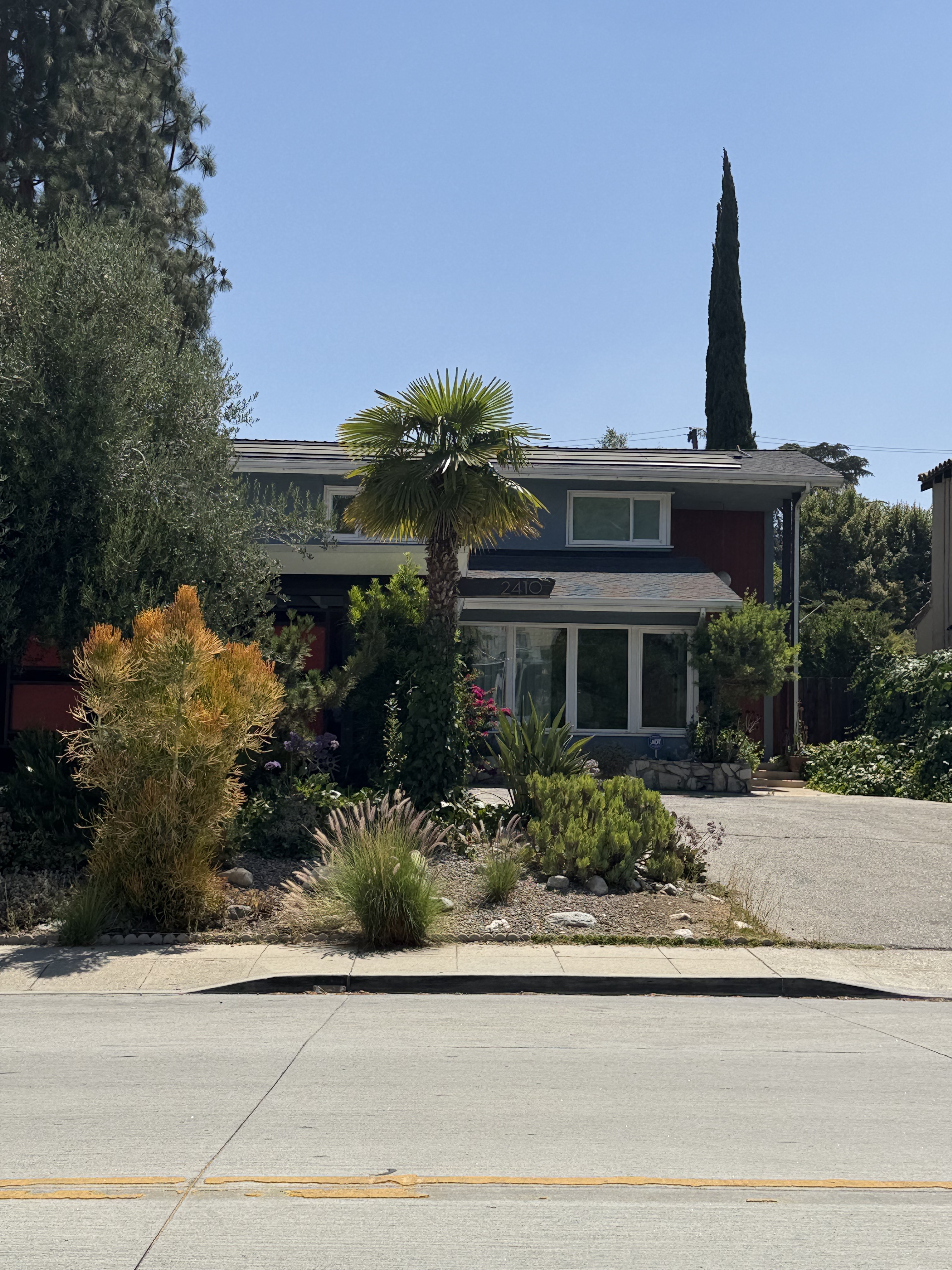 Dr. Lee Residence
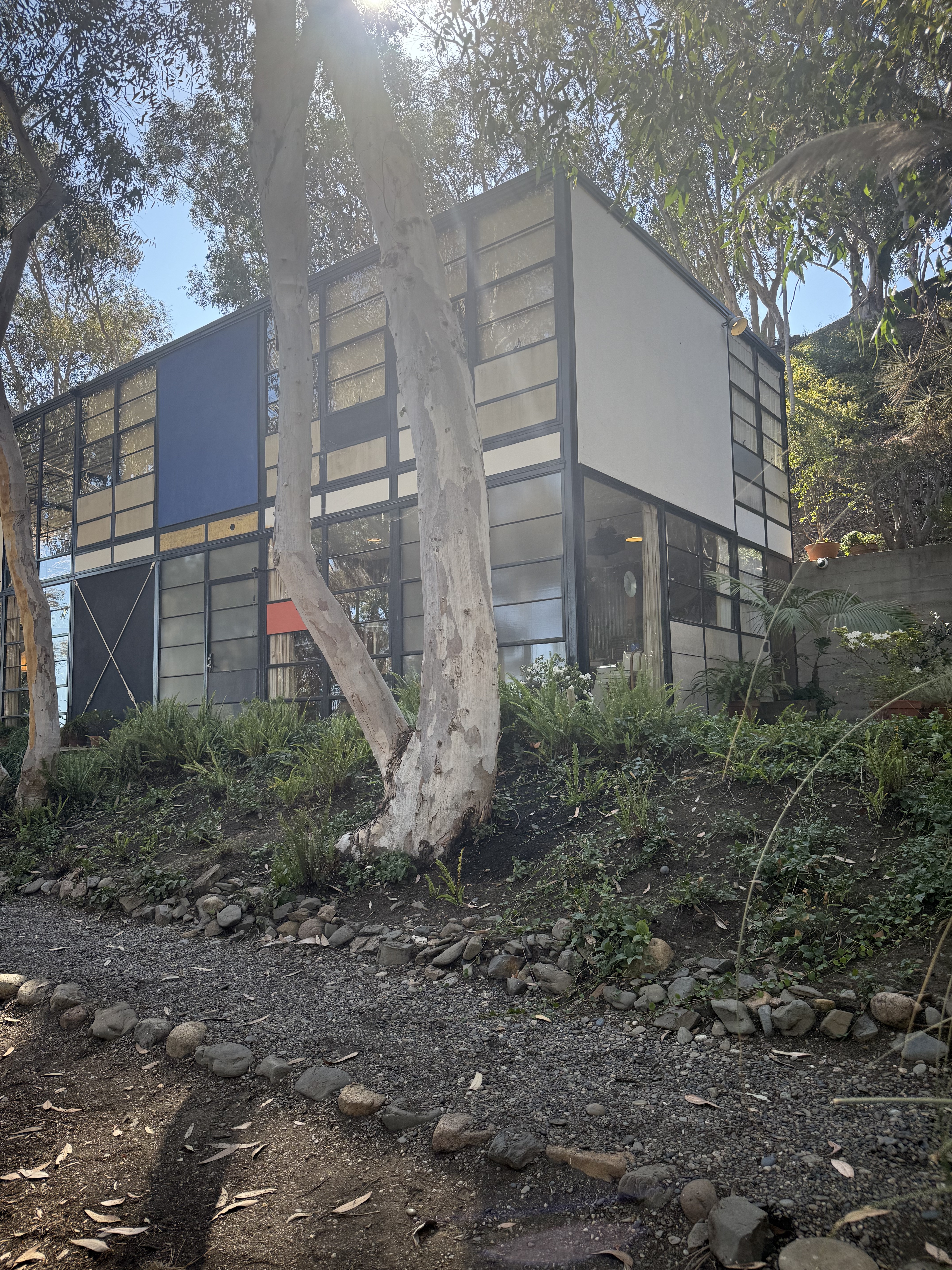 Eames House CSH #8
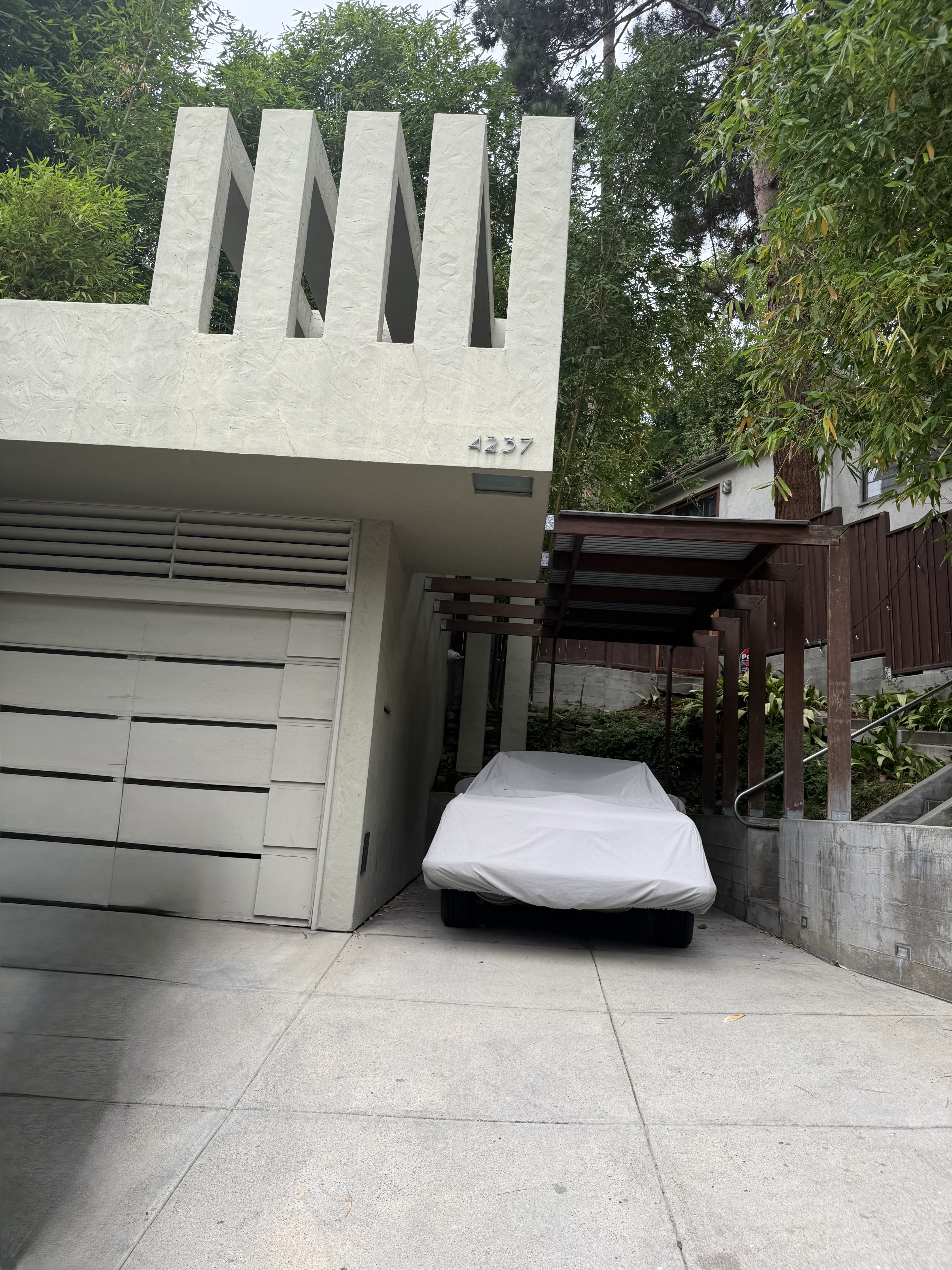 Elliot House
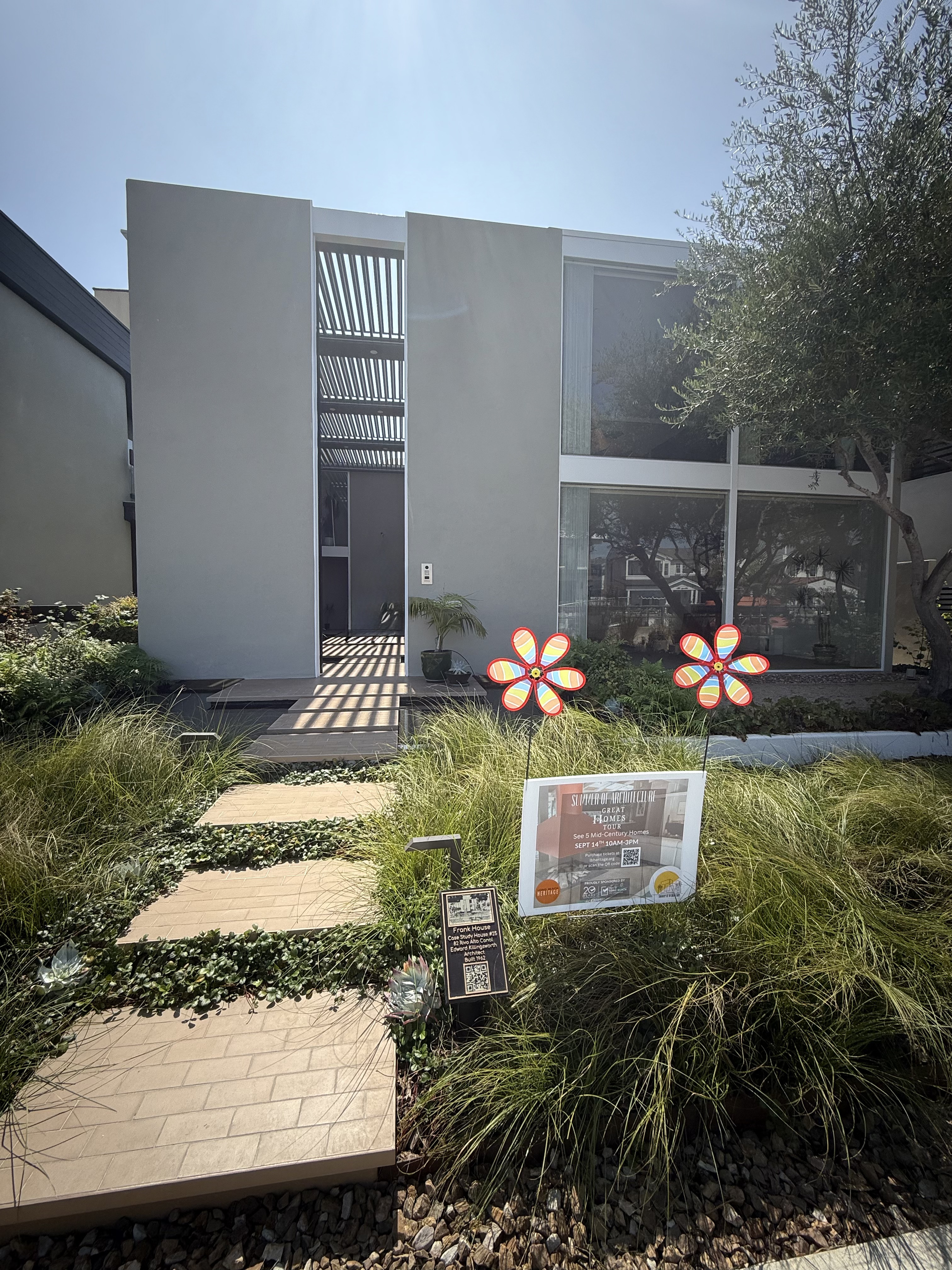 Frank House CSH #25
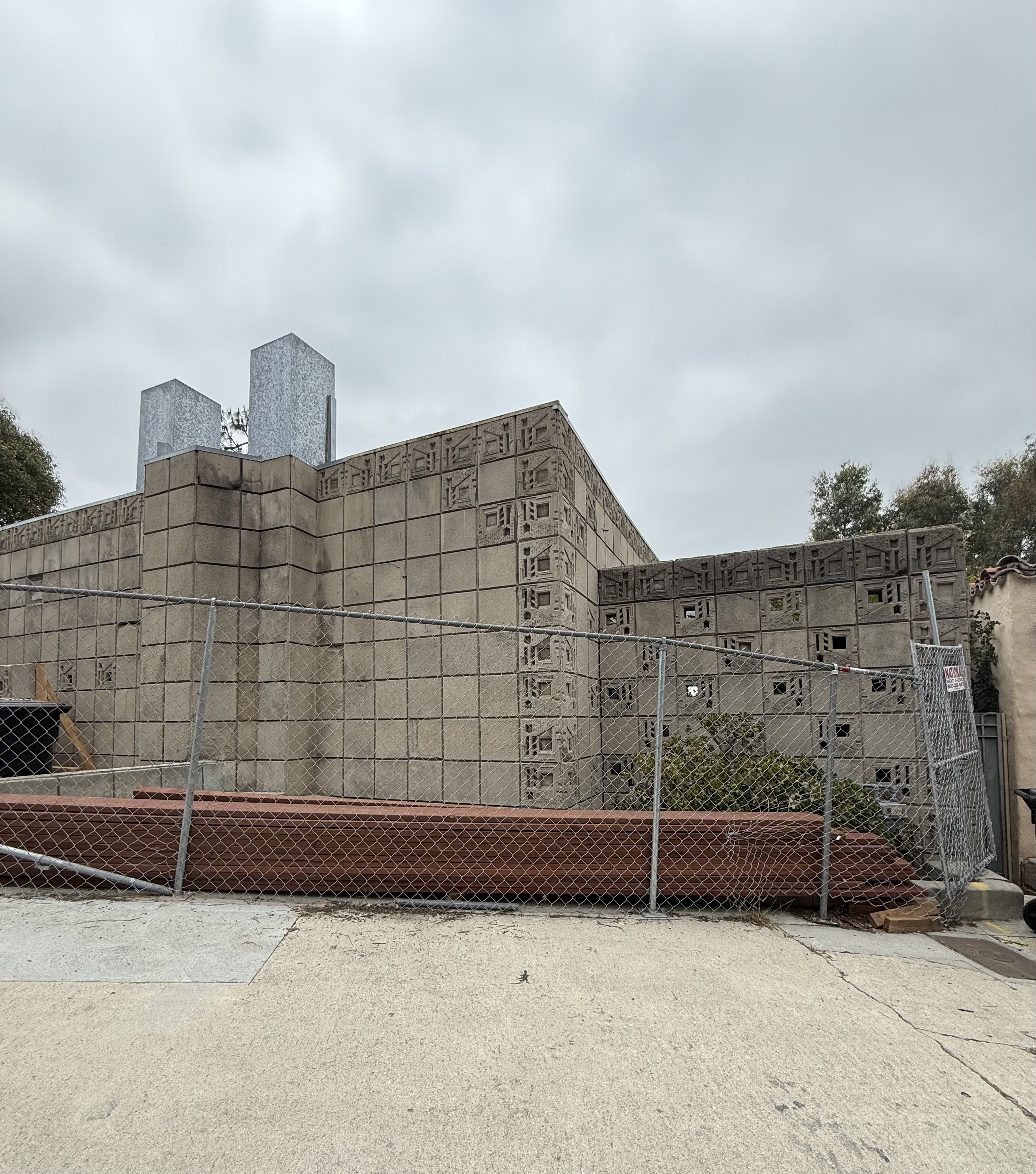 Freeman House
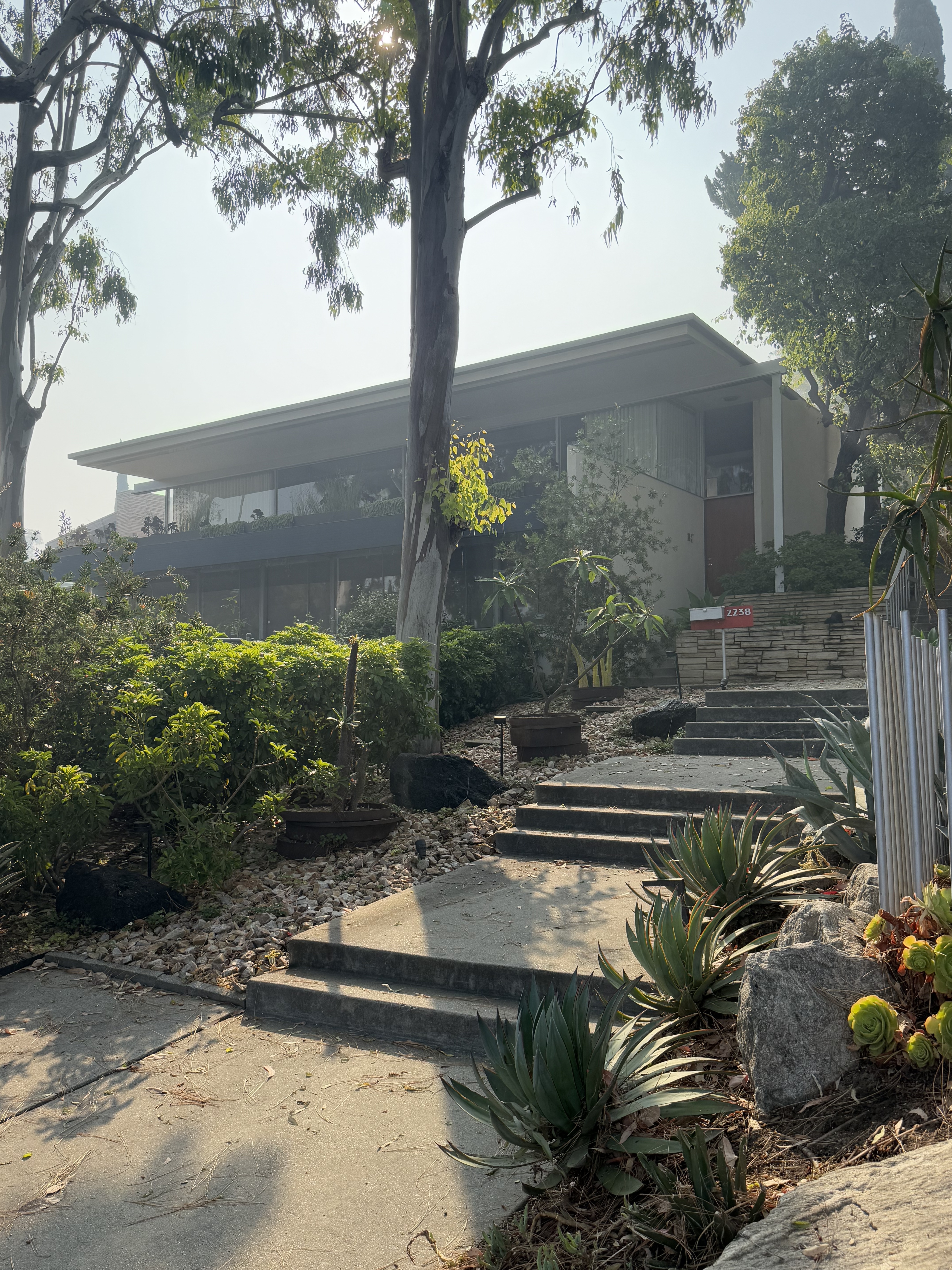 Inadomi House
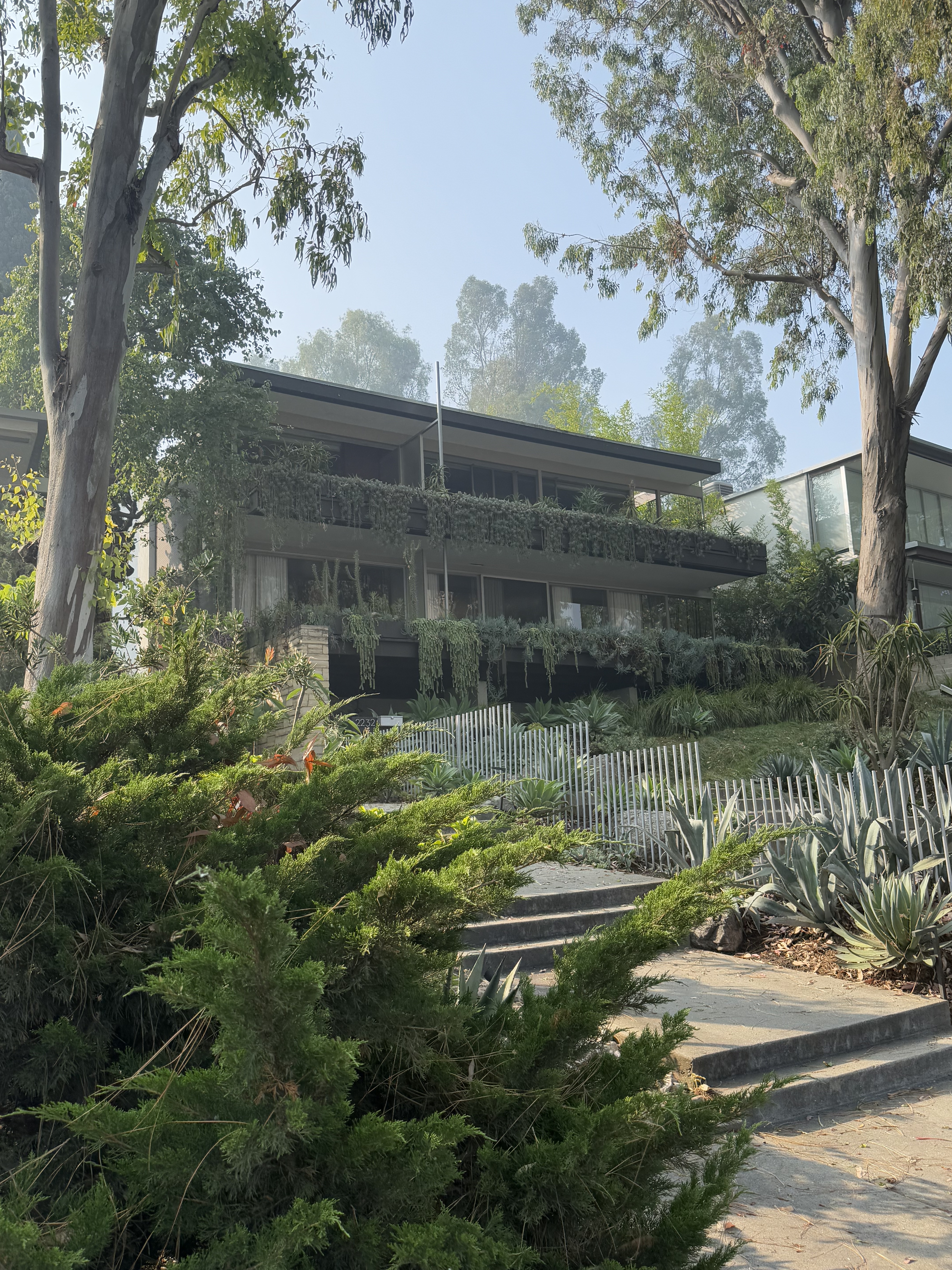 Kambara House
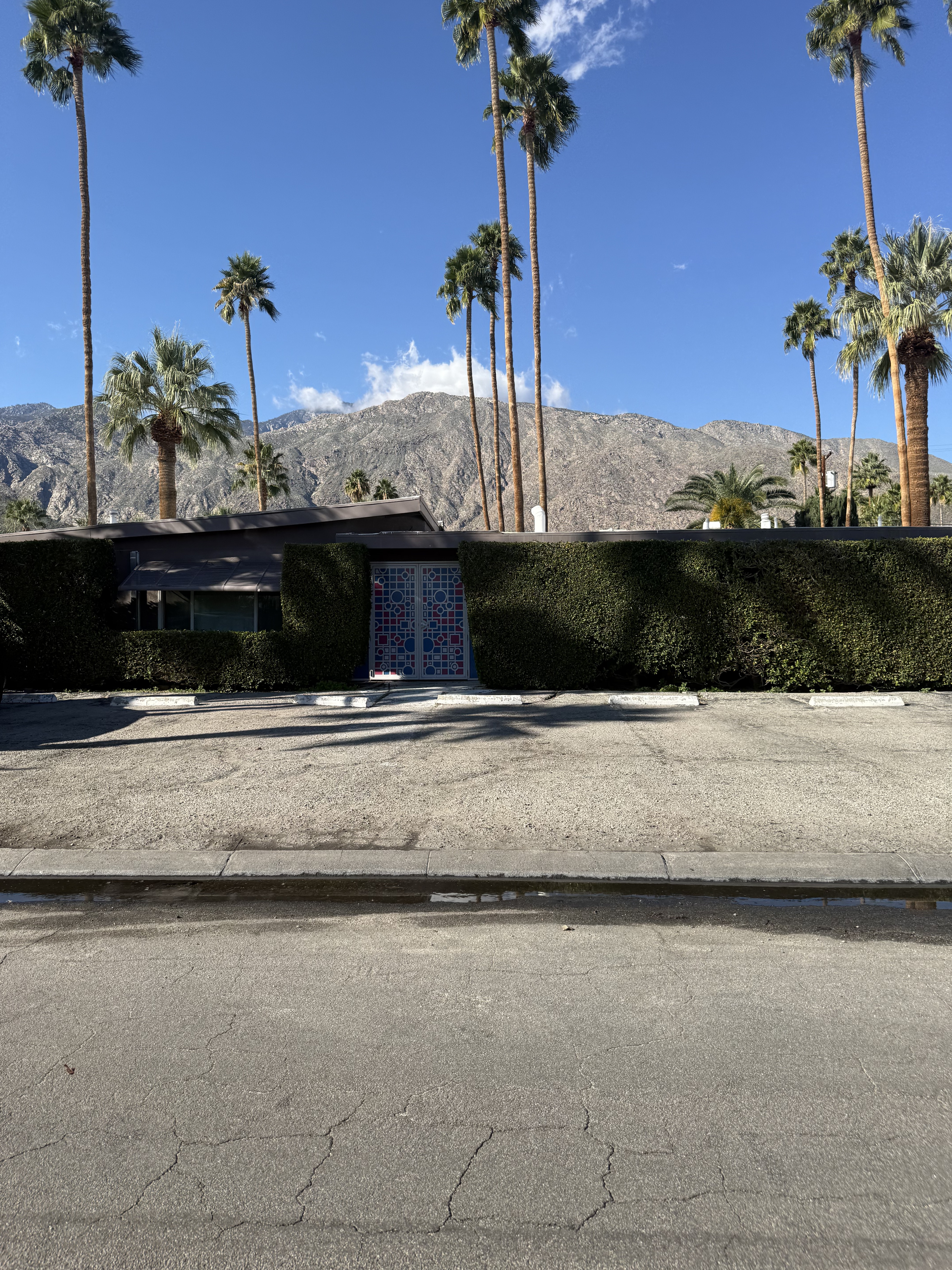 Kauai ApartmentsLas Palmas Summit
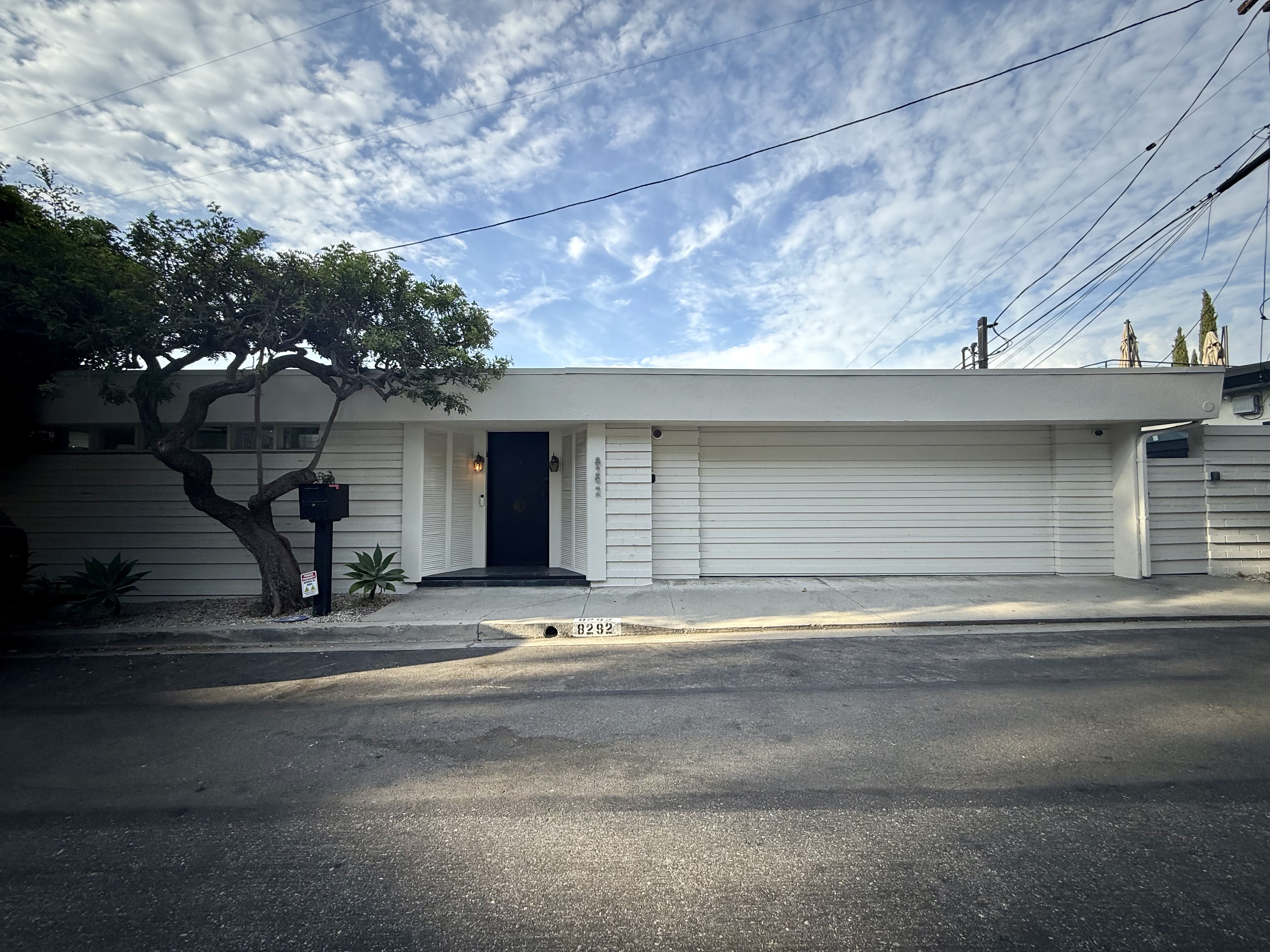 Mace House
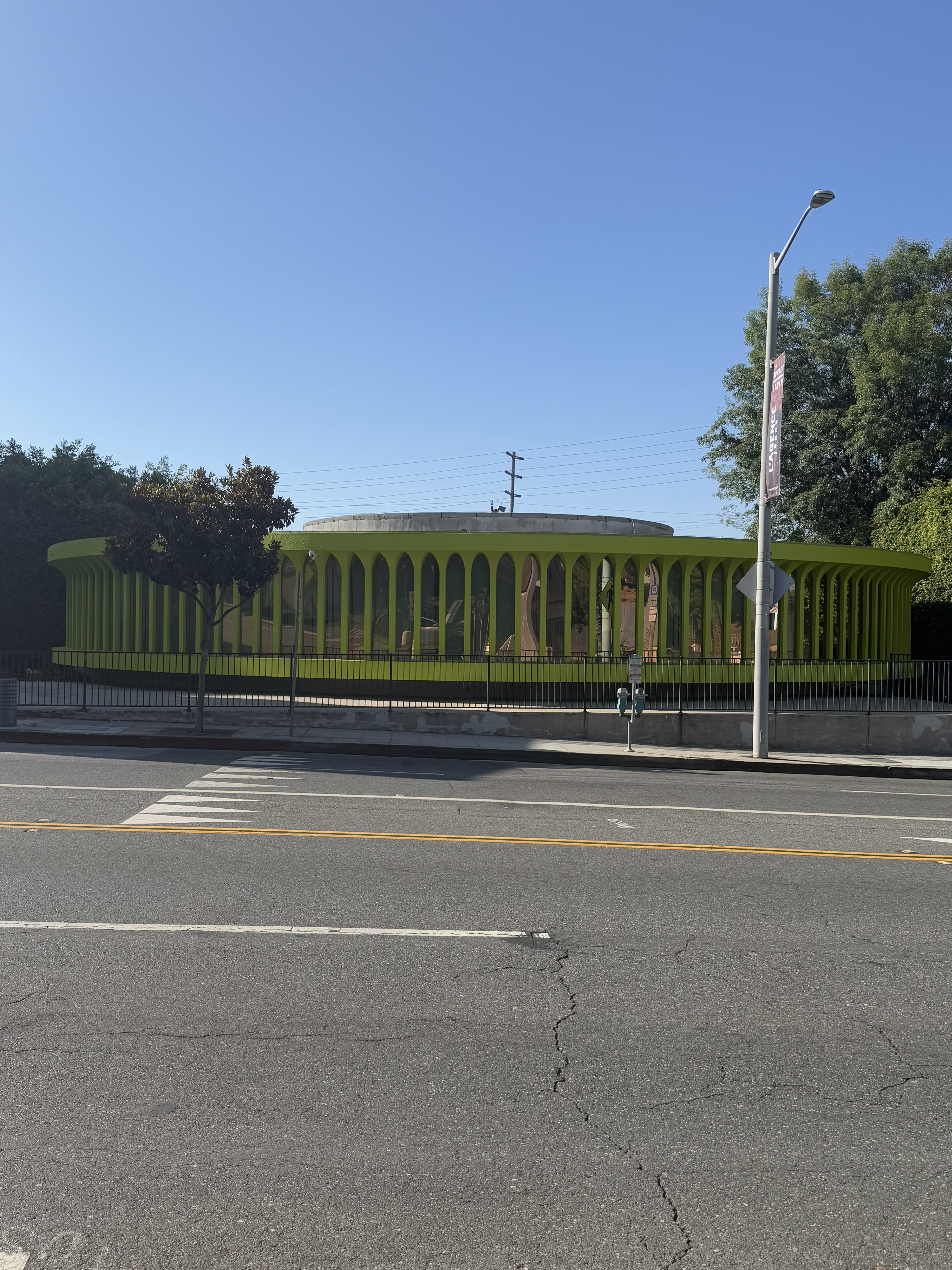 Mutato MuzikaOrans House
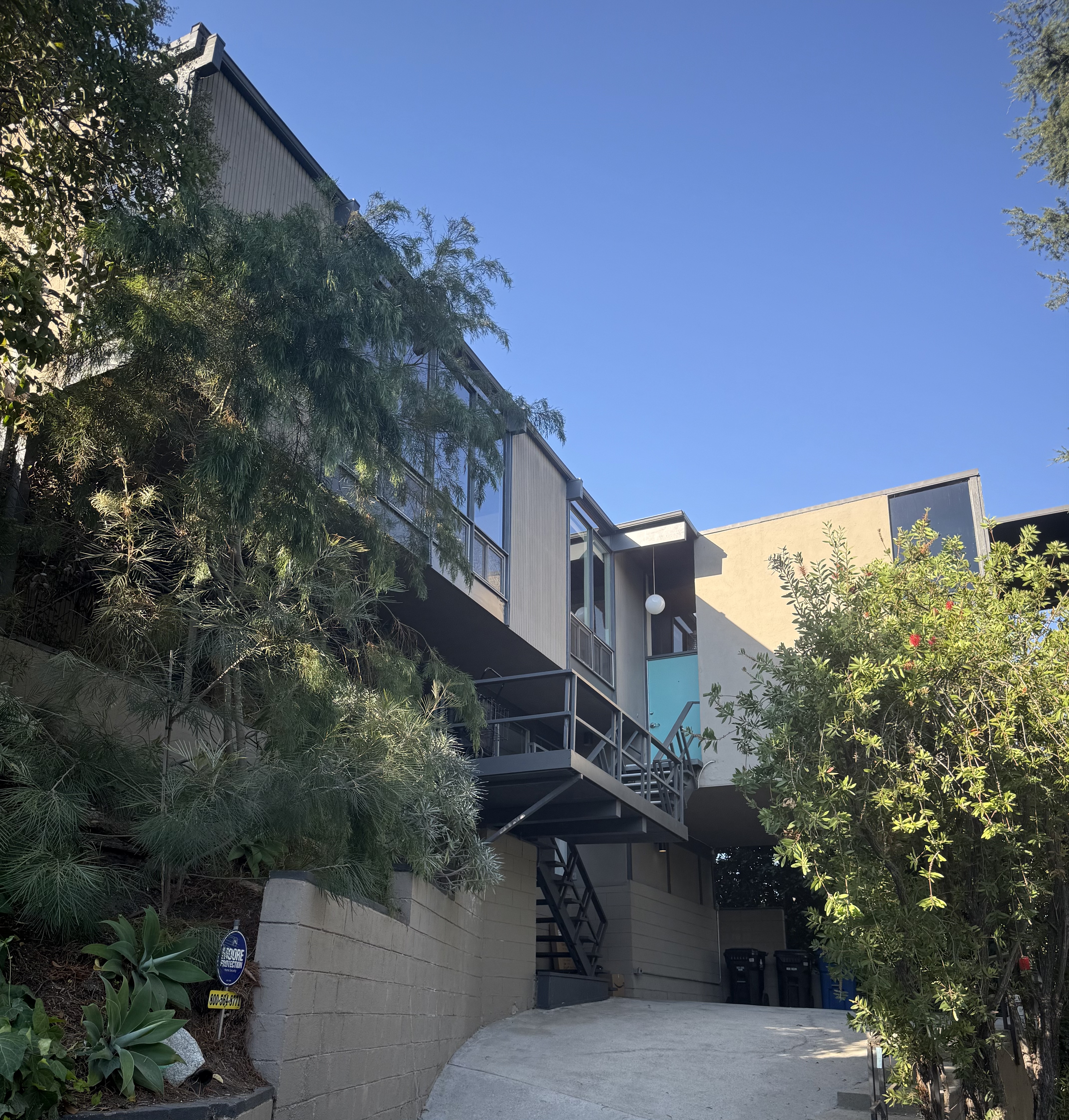 Otero Residence
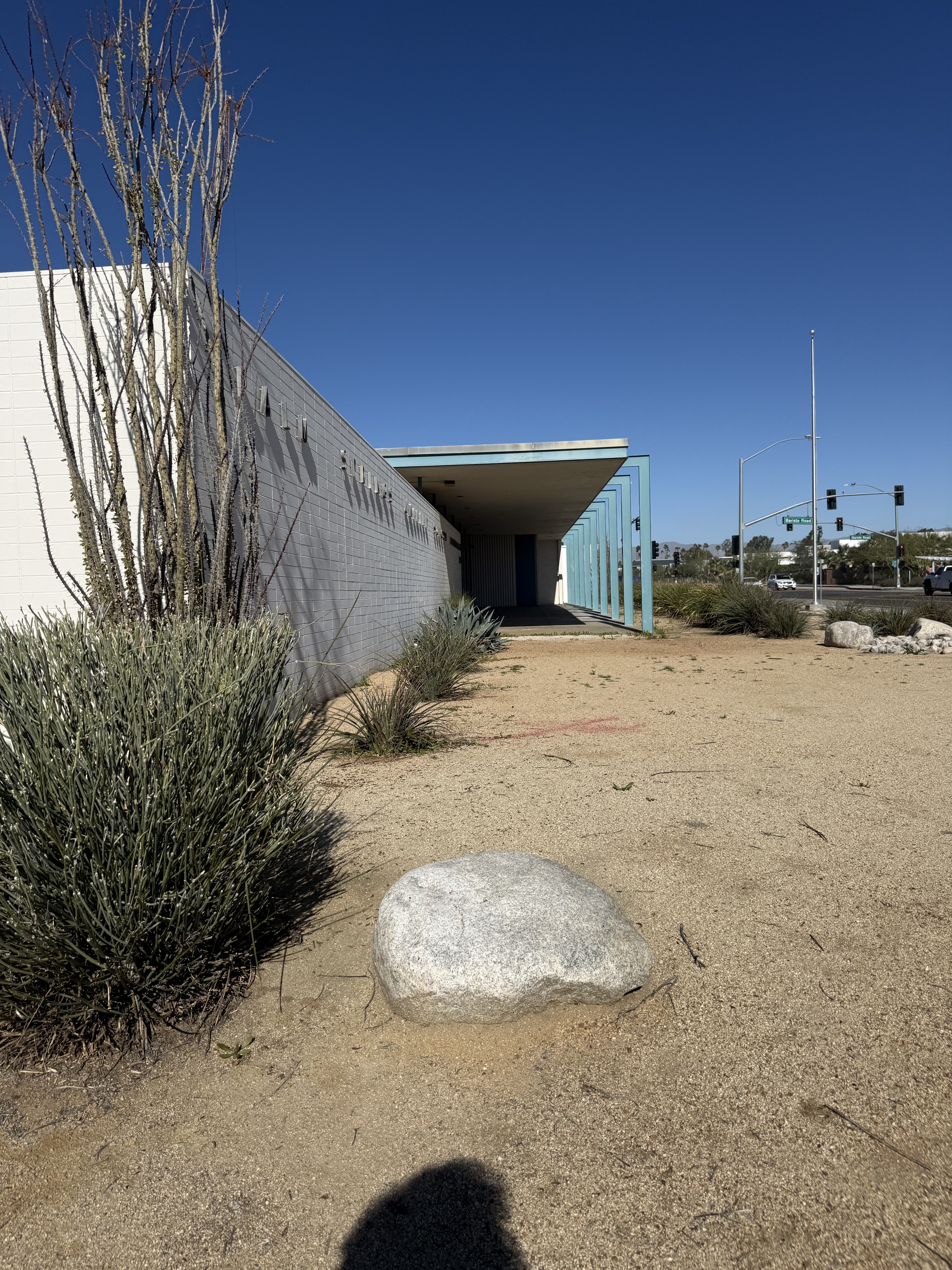 Palm Springs Unified School District
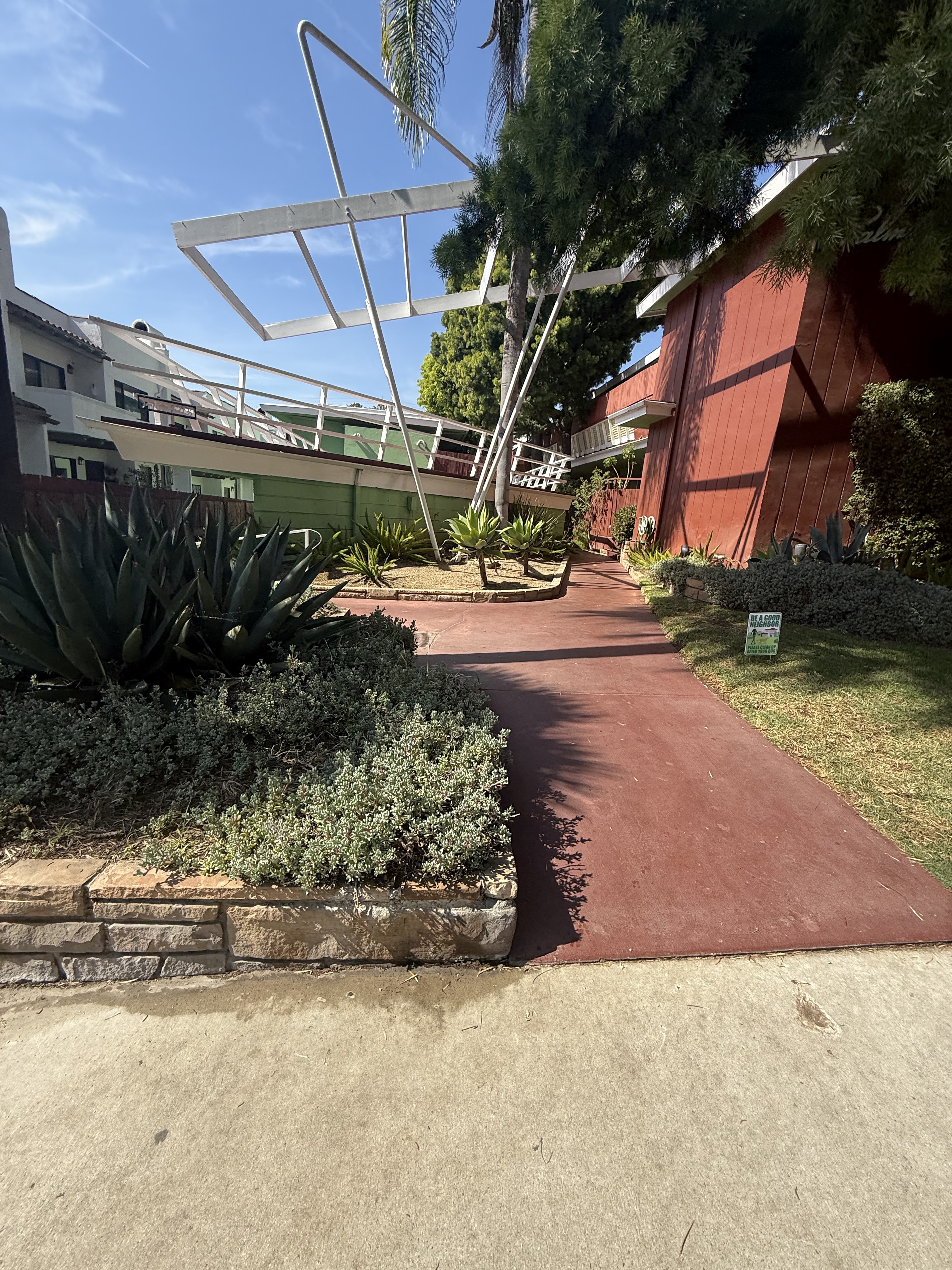 Palmdale HousePerkins Residence
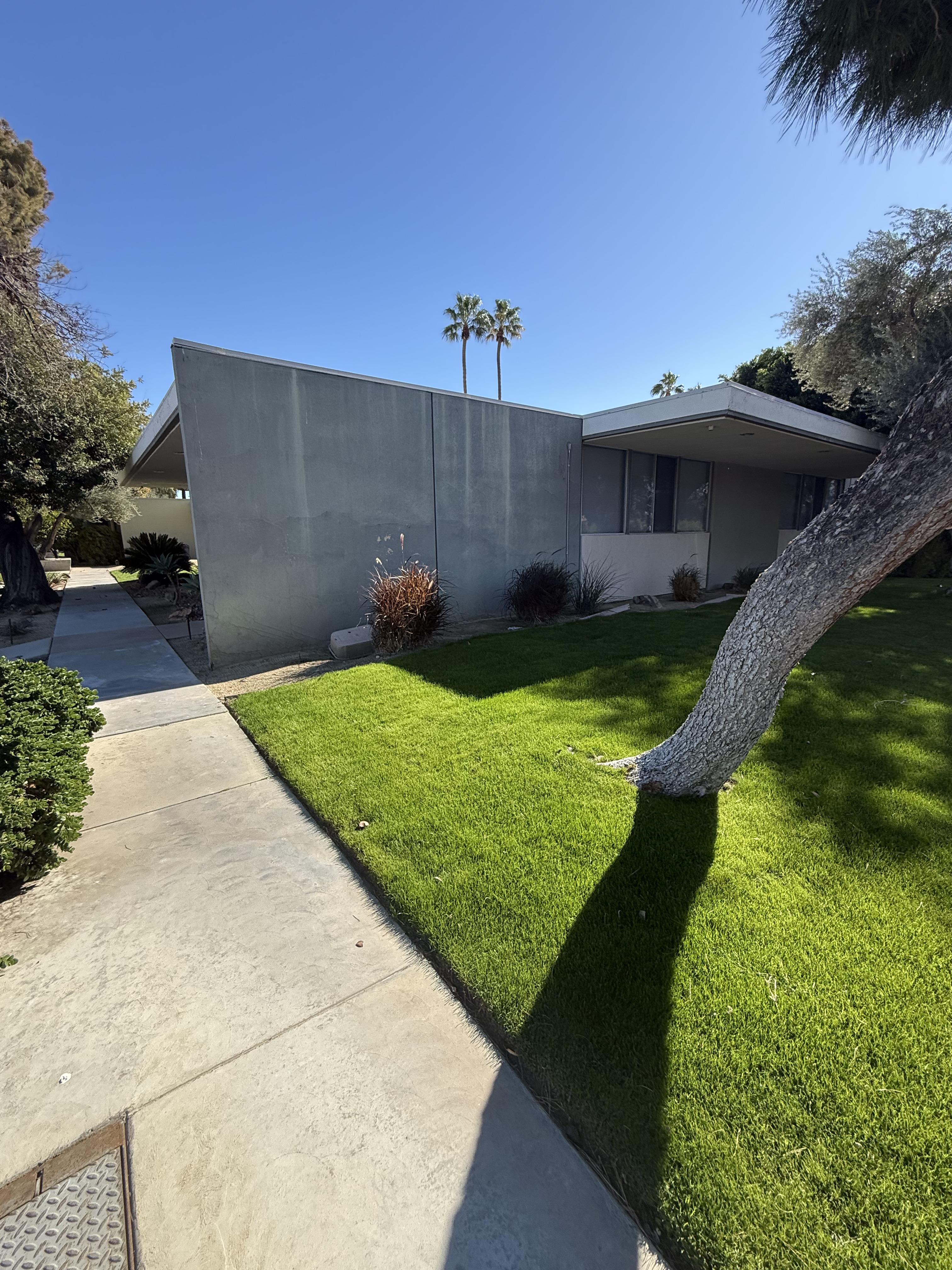 Professional ParkPrudential Building
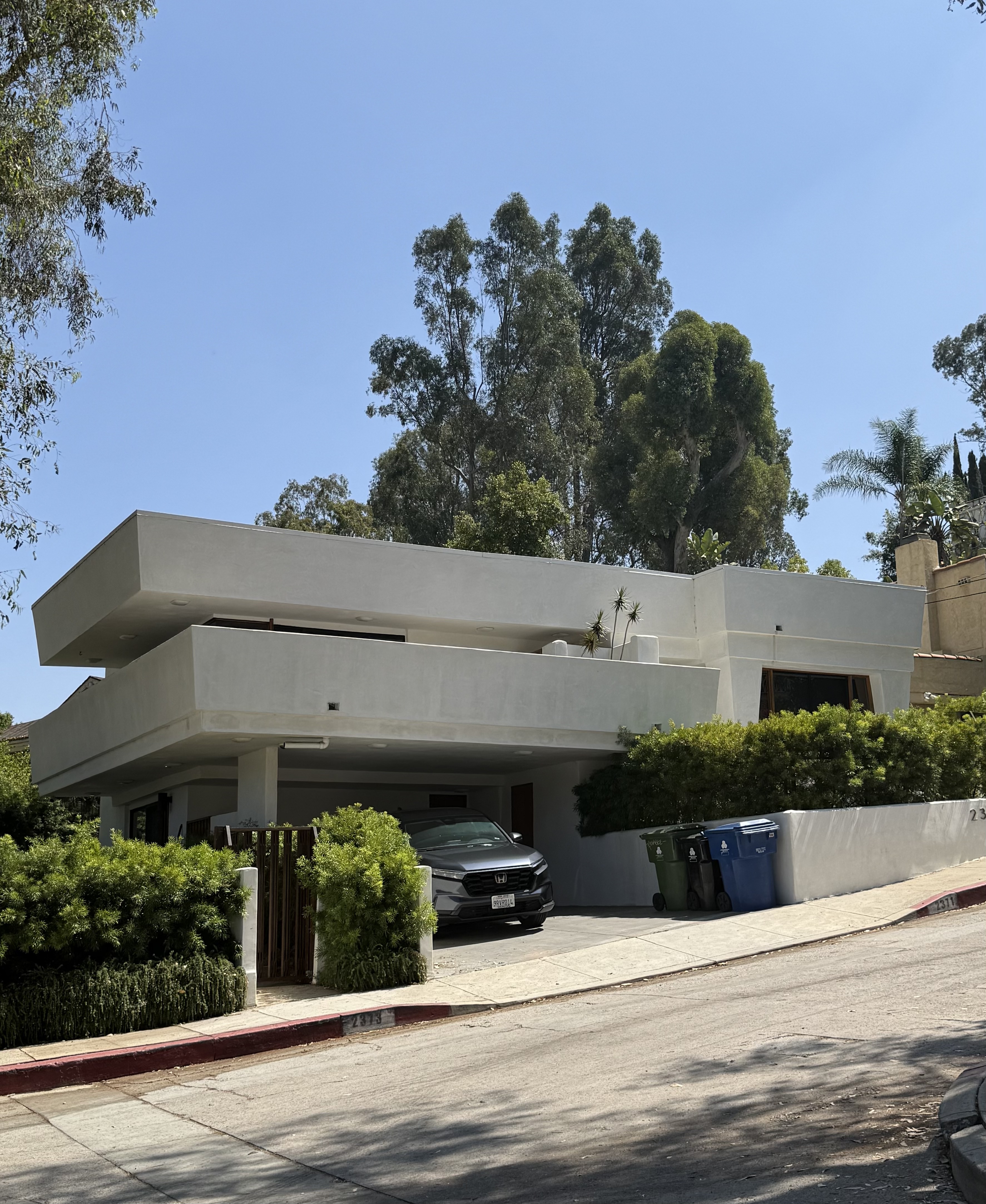 Ross House
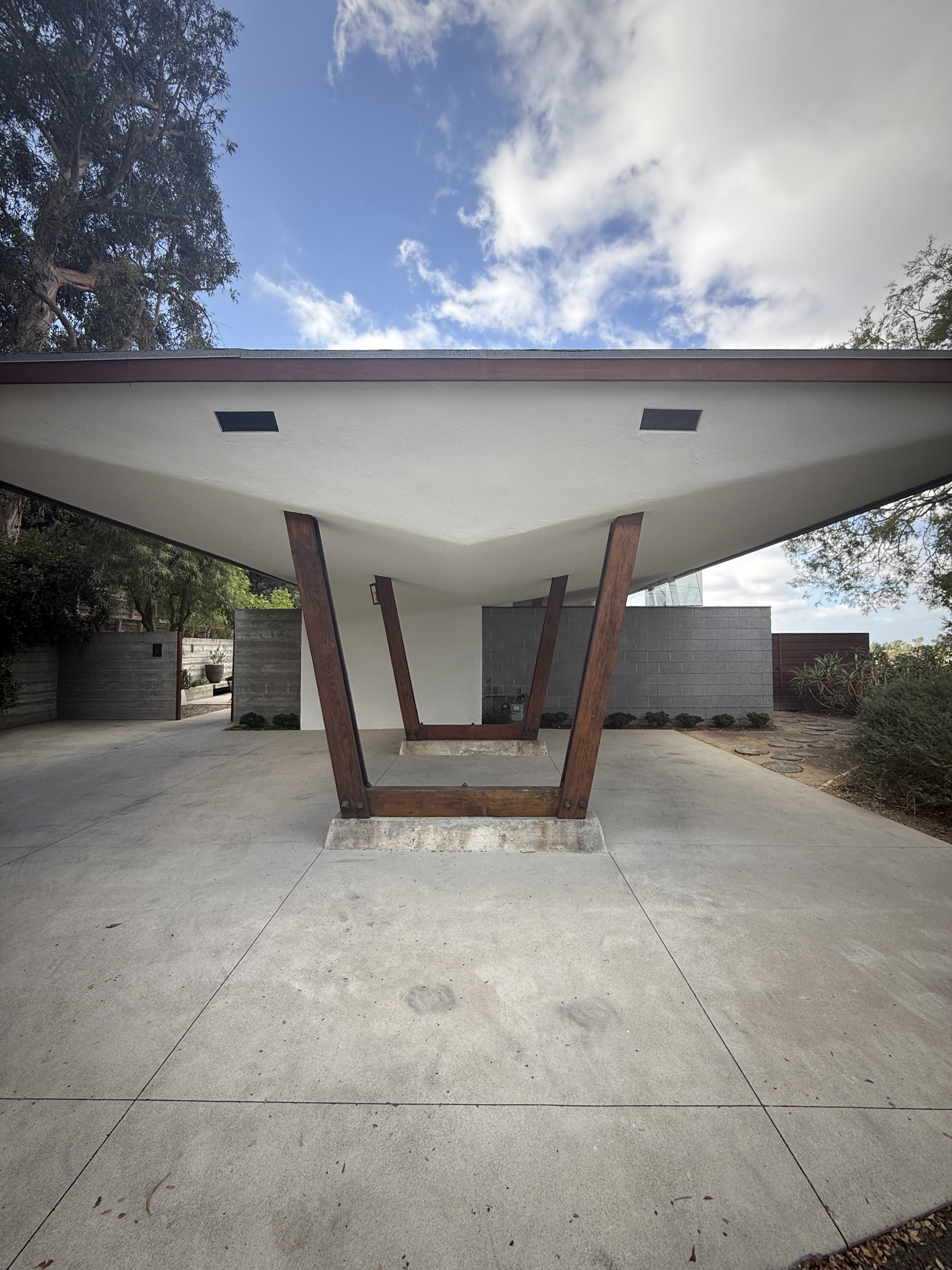 Salkin House
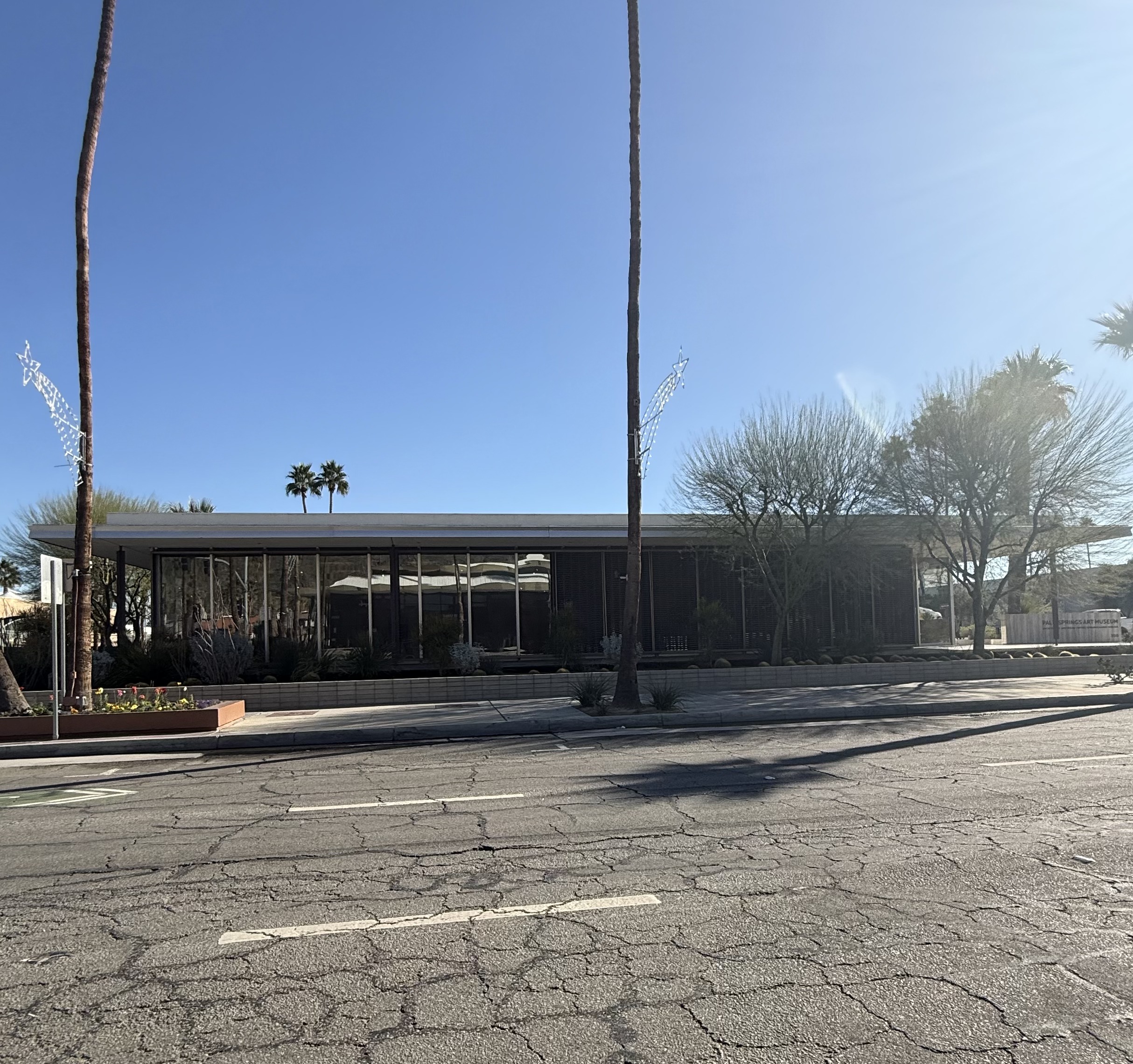 Santa Fe Federal Savings
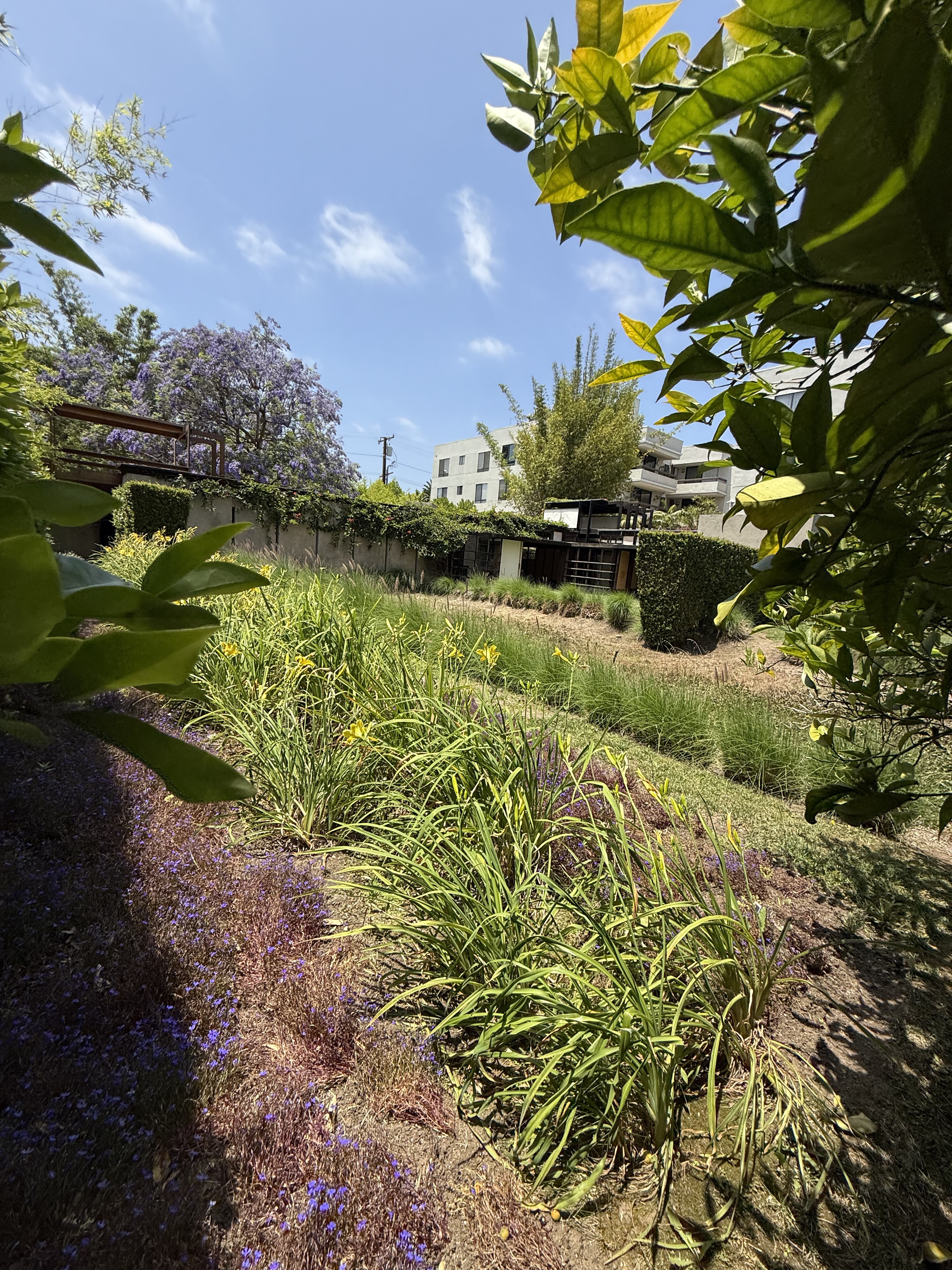 Schindler House
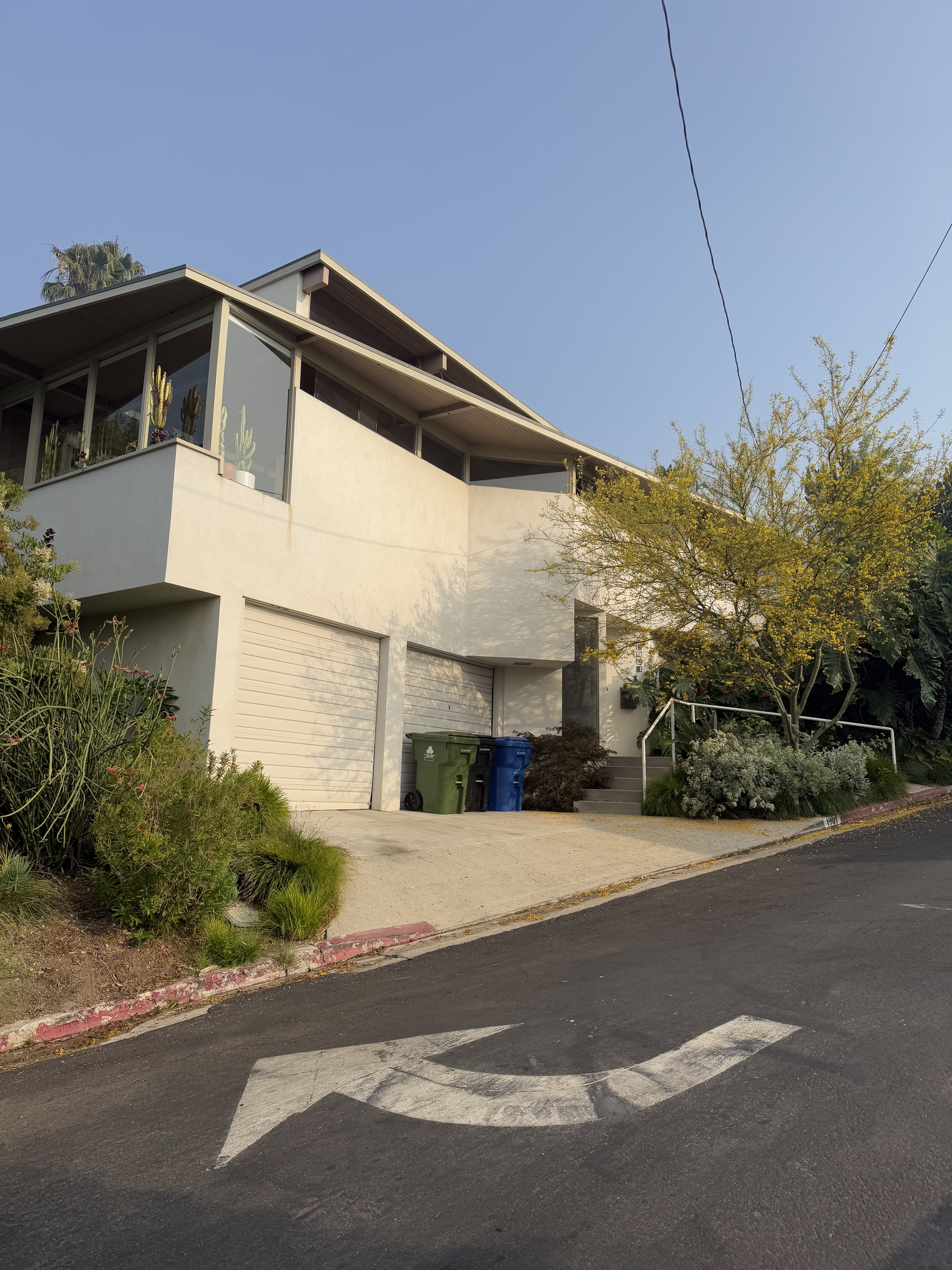 Schlessinger House
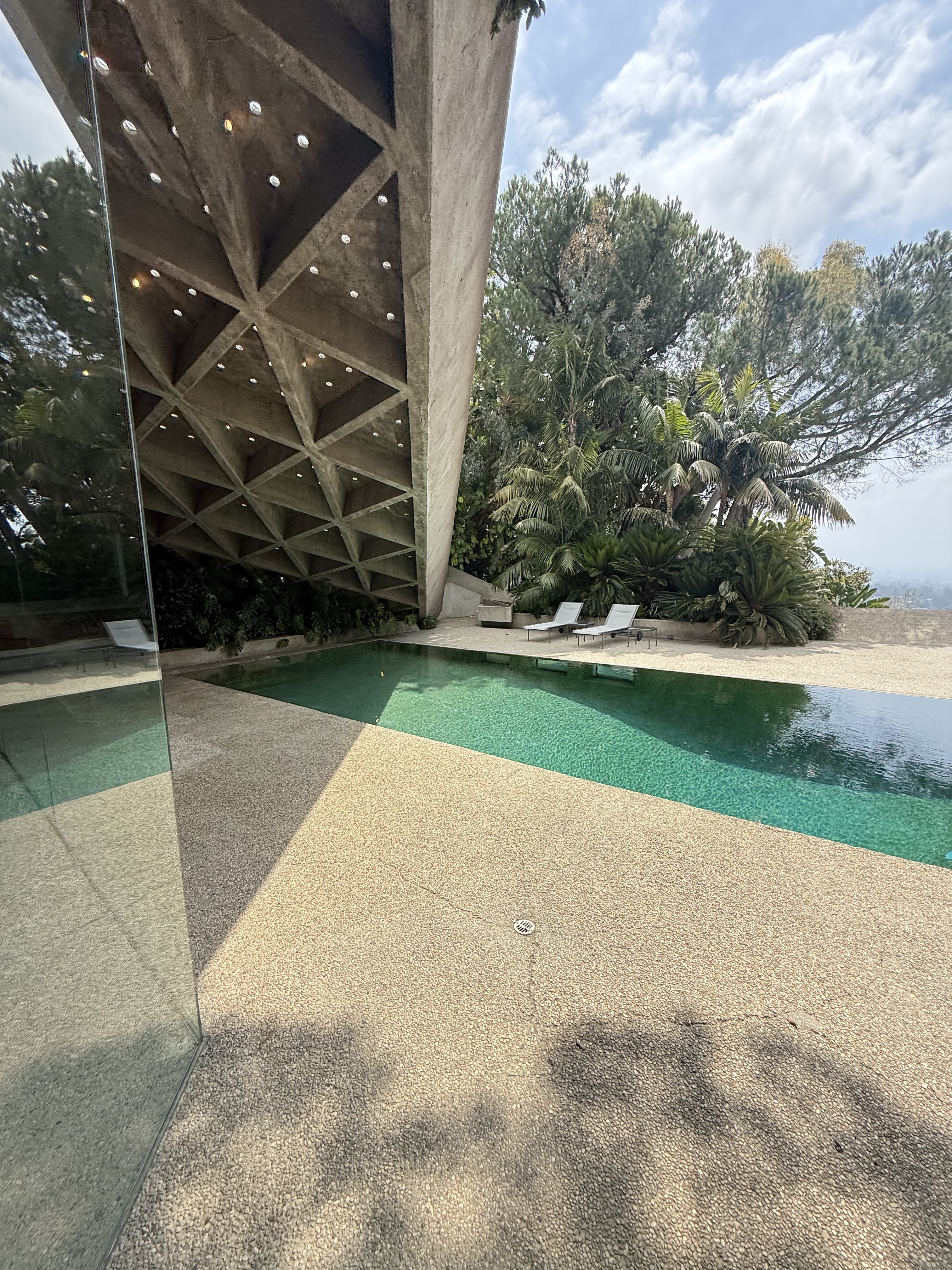 Sheats- Goldstein House
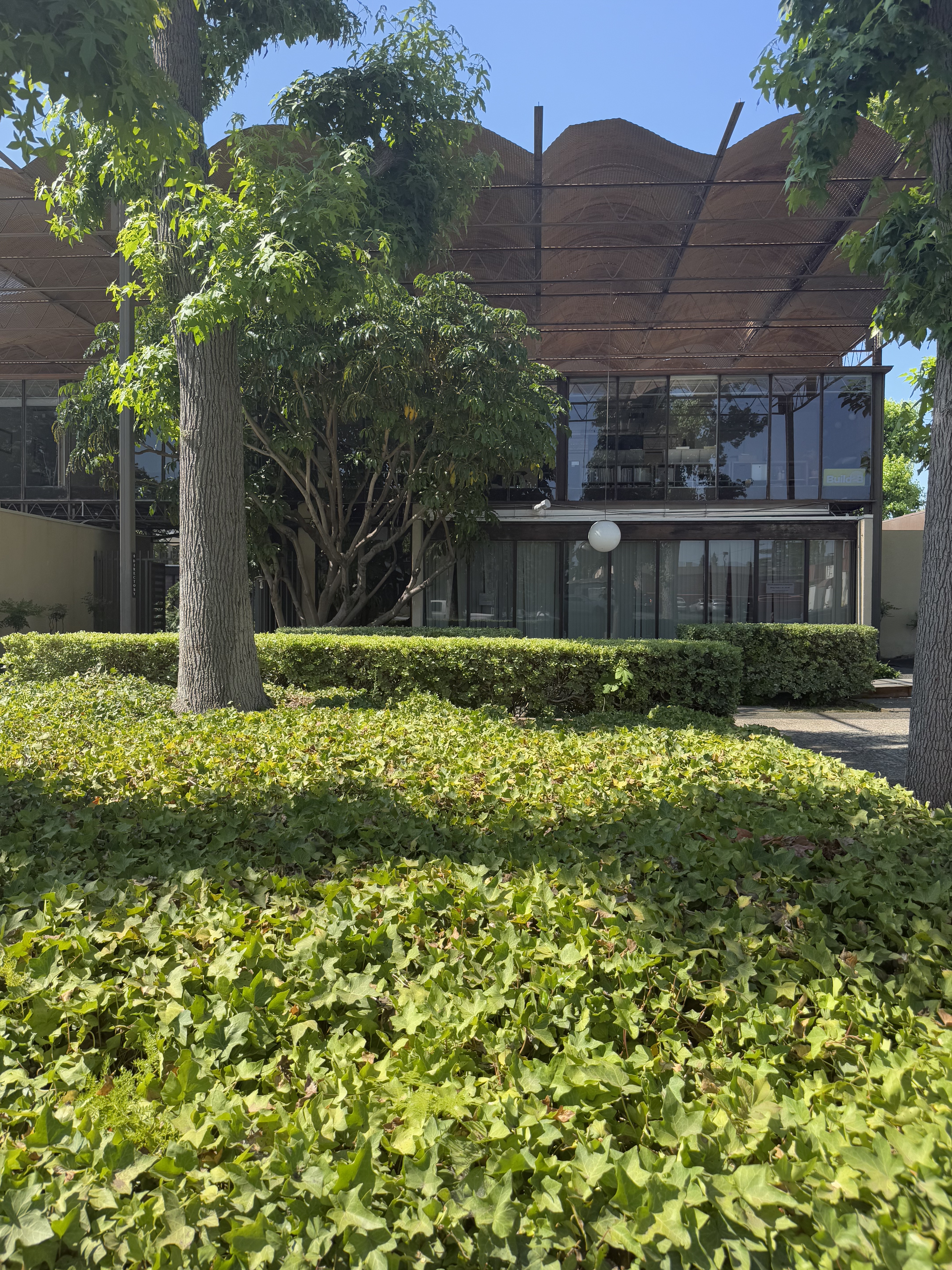 Smith & Williams
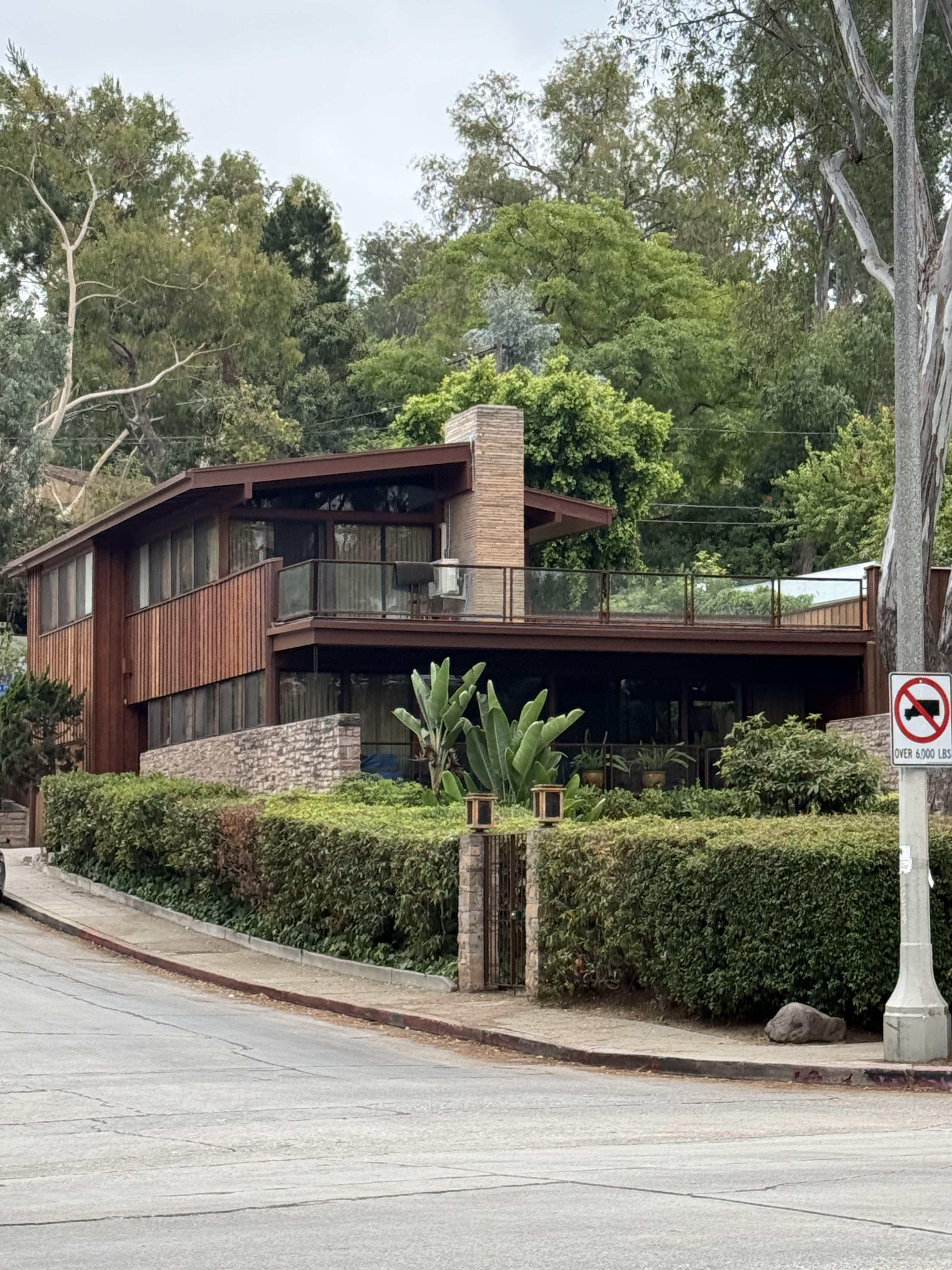 Sokol House
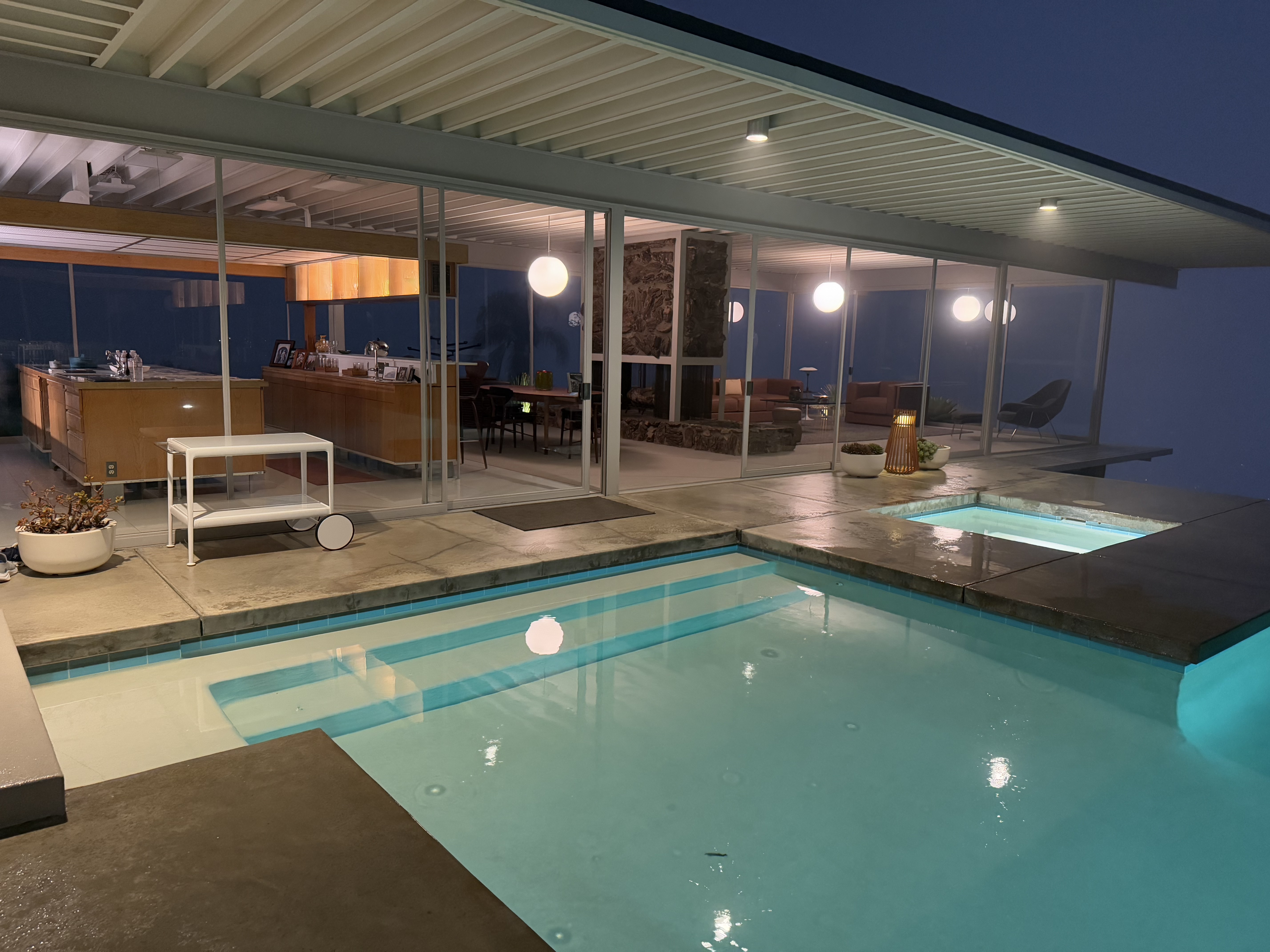 Stahl House CSH #22
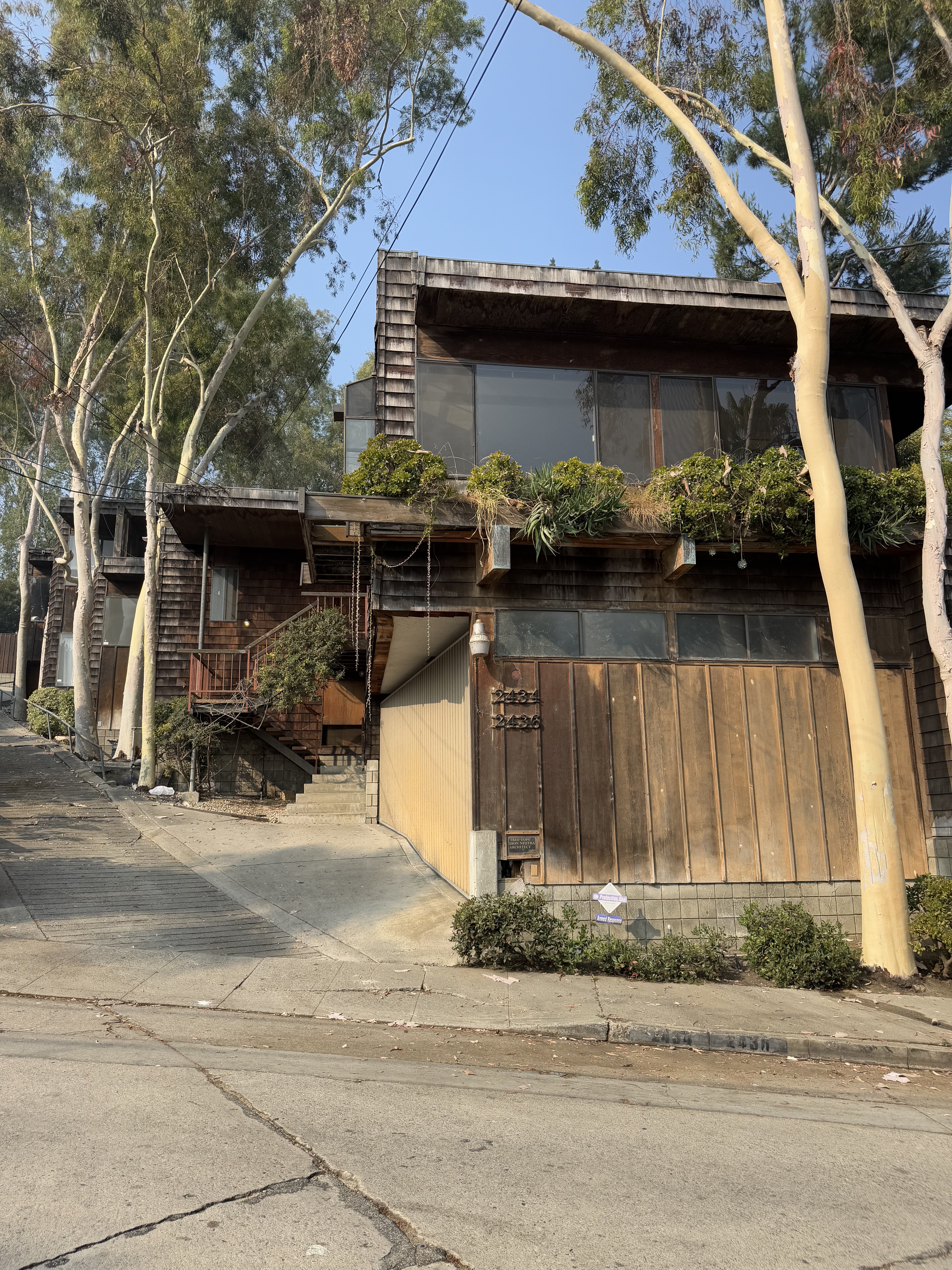 Treetops ApartmentsTwin Palms Estates
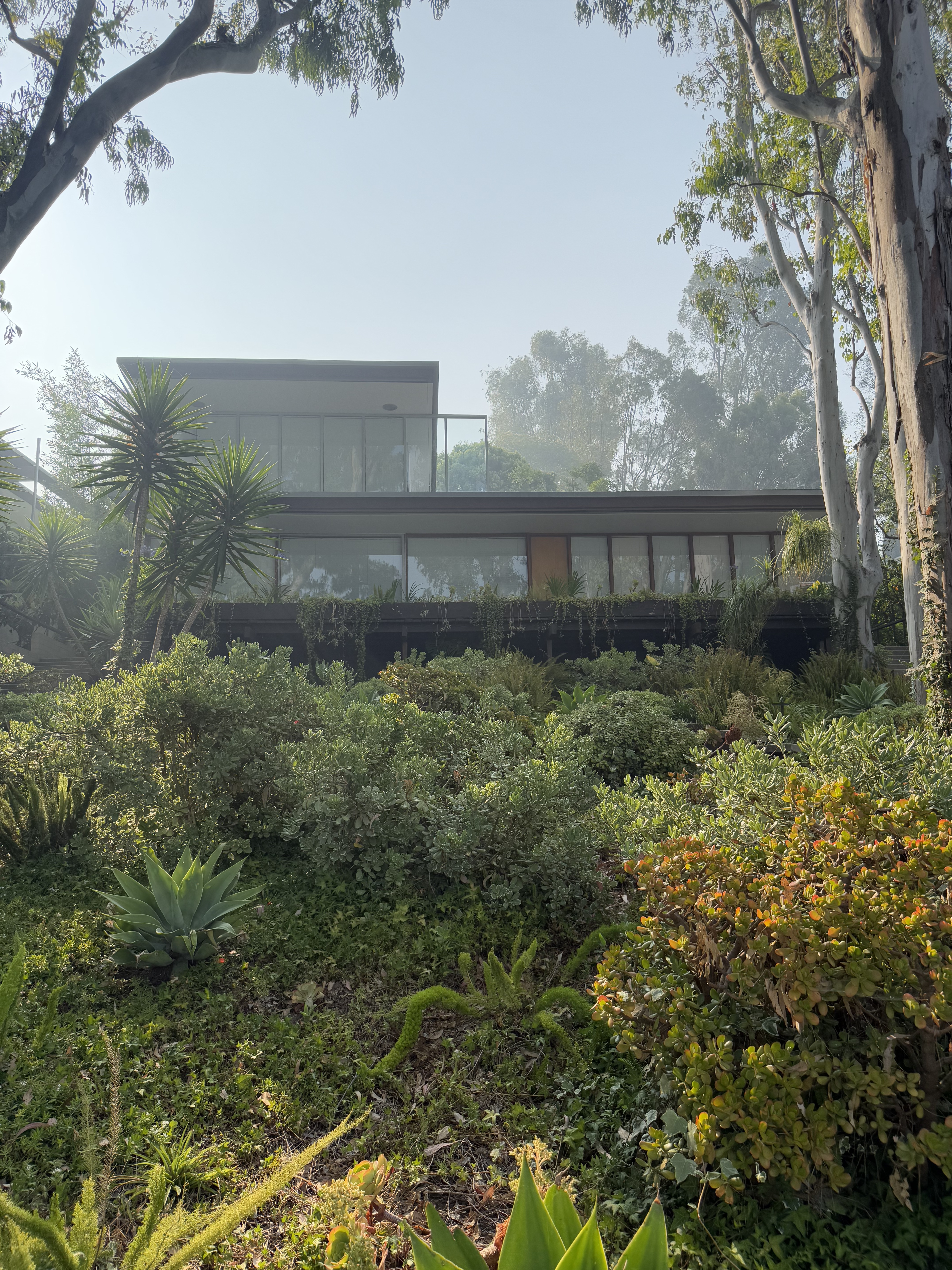 Yew House