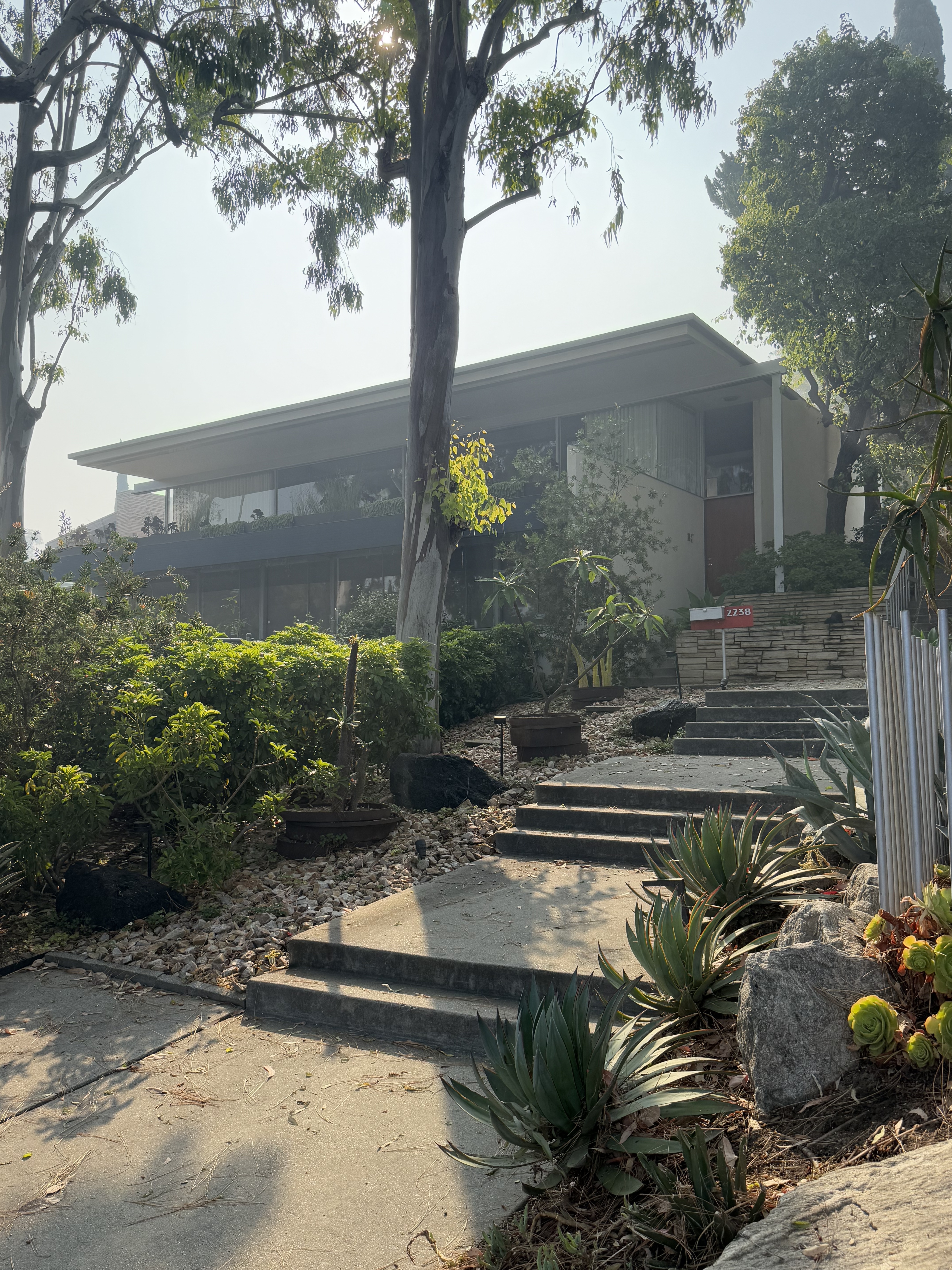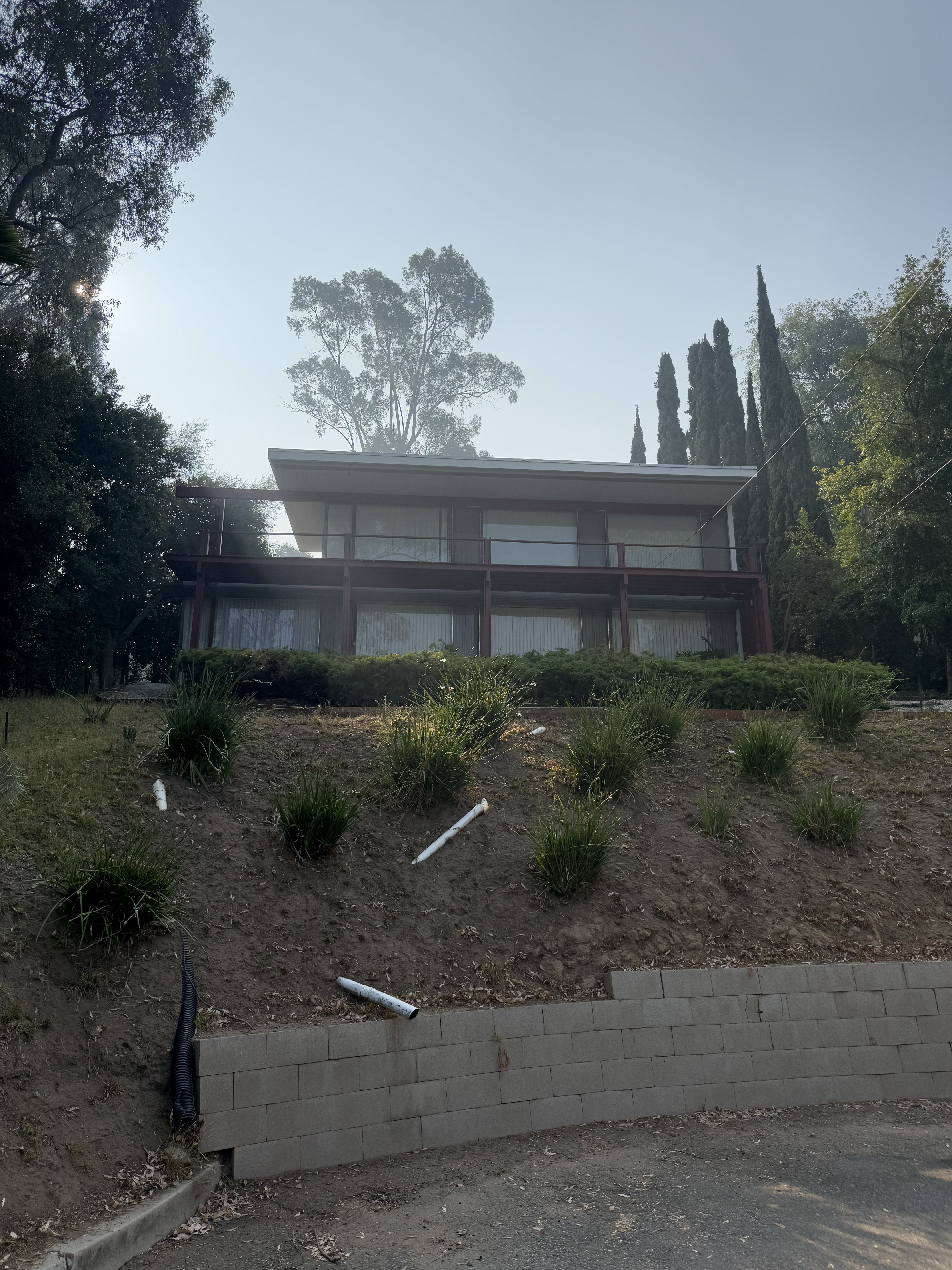
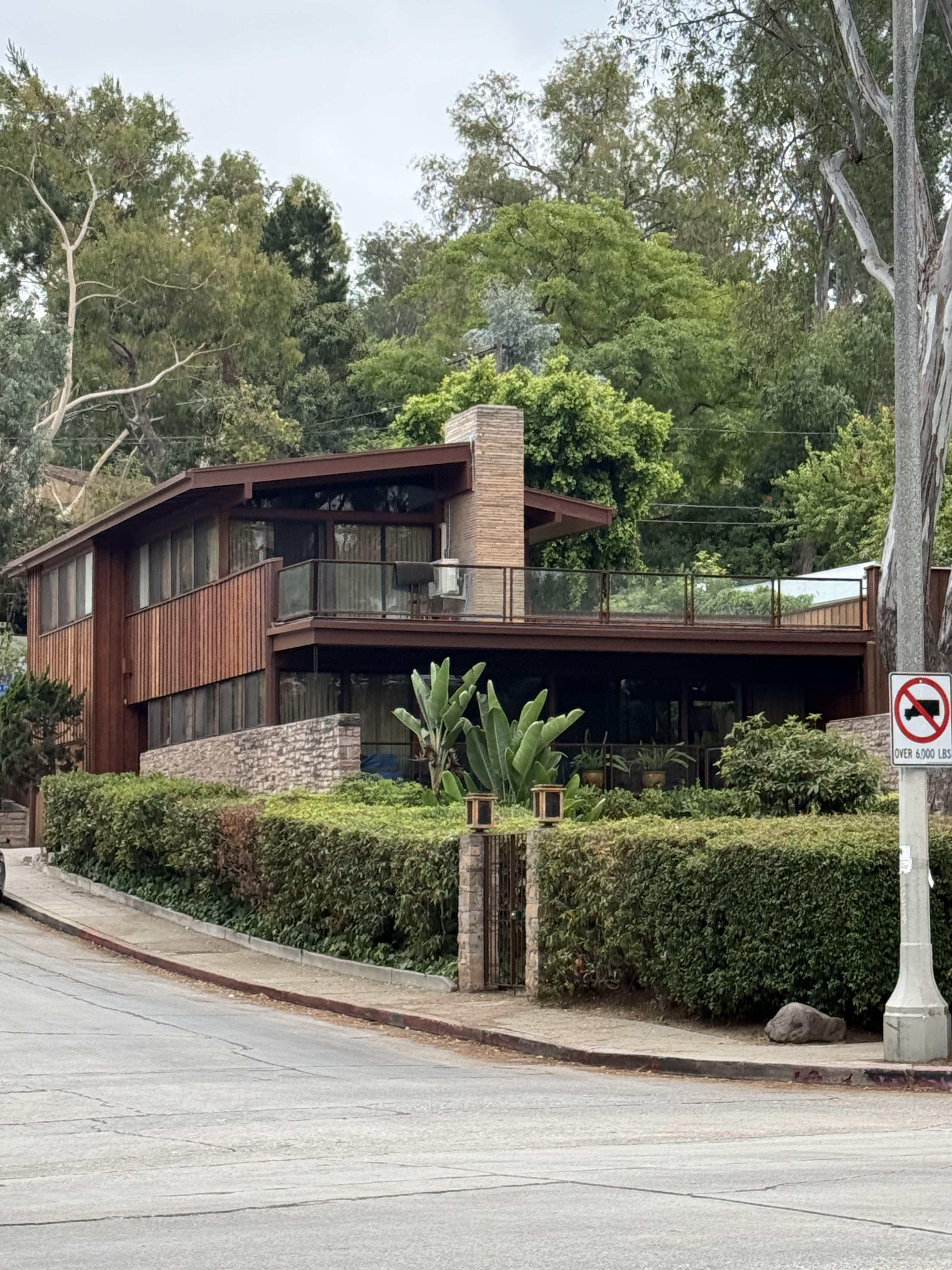
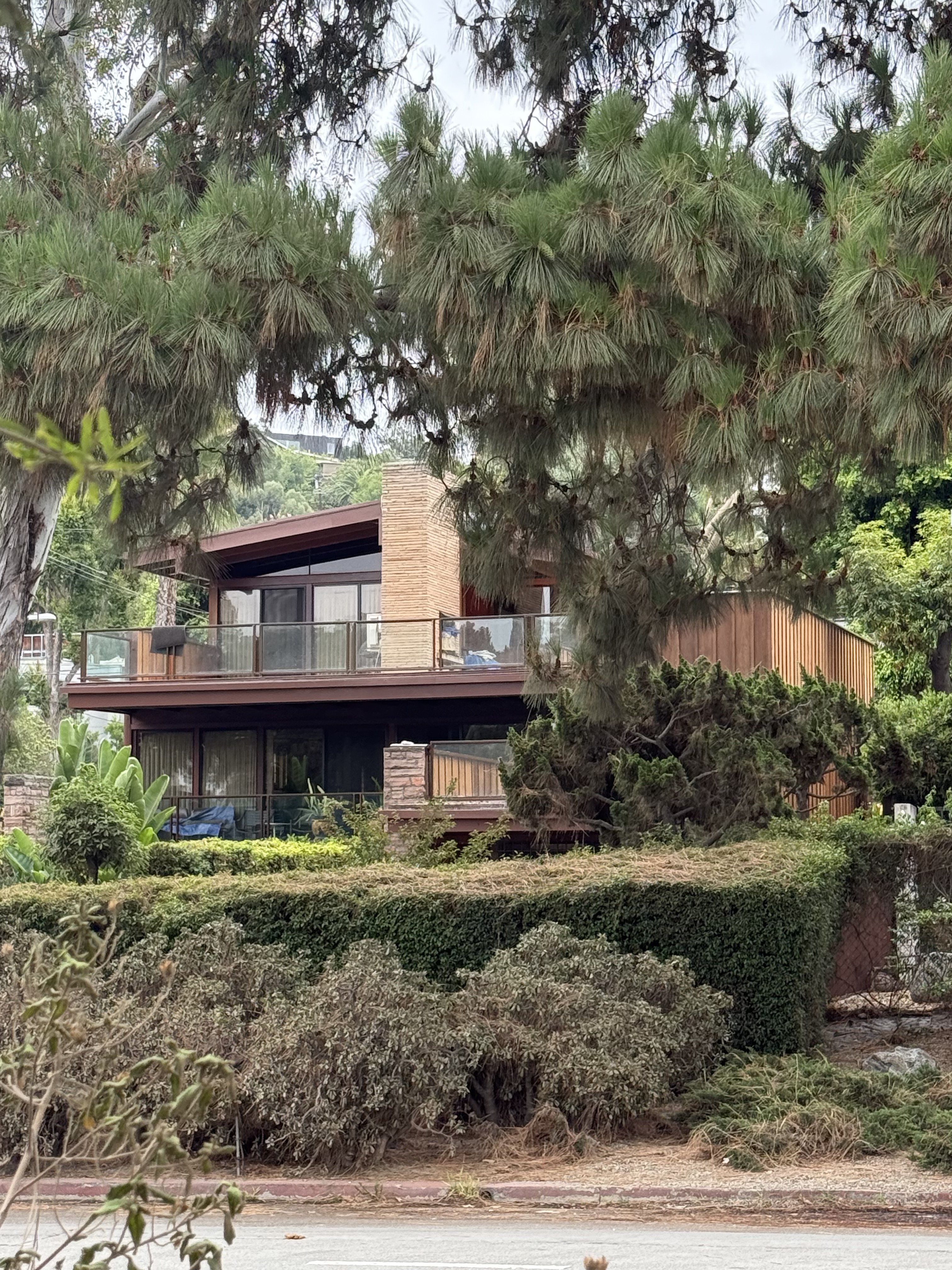
In 1948, Richard Neutra launched his ambitious Silver Lake Colony experiment with two co-founding houses, including the Sokol residence that would anchor the entire 14-year development. Commissioned by the Sokol family during the postwar building boom, this 2,382-square-foot house claimed prime reservoir-grade real estate on Silver Lake Boulevard in a neighborhood already known for its progressive artists and screenwriters. The timing proved fortuitous, as the Supreme Court had just struck down racial covenants in Shelley v. Kraemer, opening new possibilities for integrated modernist communities. Neutra envisioned the Colony as "a grouping of a team in cooperative action, where each individual posture complements the others and no soulless, mere side-by-side prevails."
The Sokol House displays a distinctive board-and-batten siding system rendered in warm tawny tones with crisp silver trim, a palette Neutra would later reference in his Kambara House interior. Post-and-beam wood framing creates the structural logic for the residence, which architectural historian Michael Locke describes as "distinctively different from the others" in the Colony's eventual 12-house roster. At nearly 2,400 square feet, the house ranks among the Colony's most generous in scale, its horizontal massing carefully calibrated to complement the sloping terrain. The natural wood cladding and restrained color scheme demonstrate Neutra's commitment to what he called "accomplished sophistication rendered simply by mature hands."