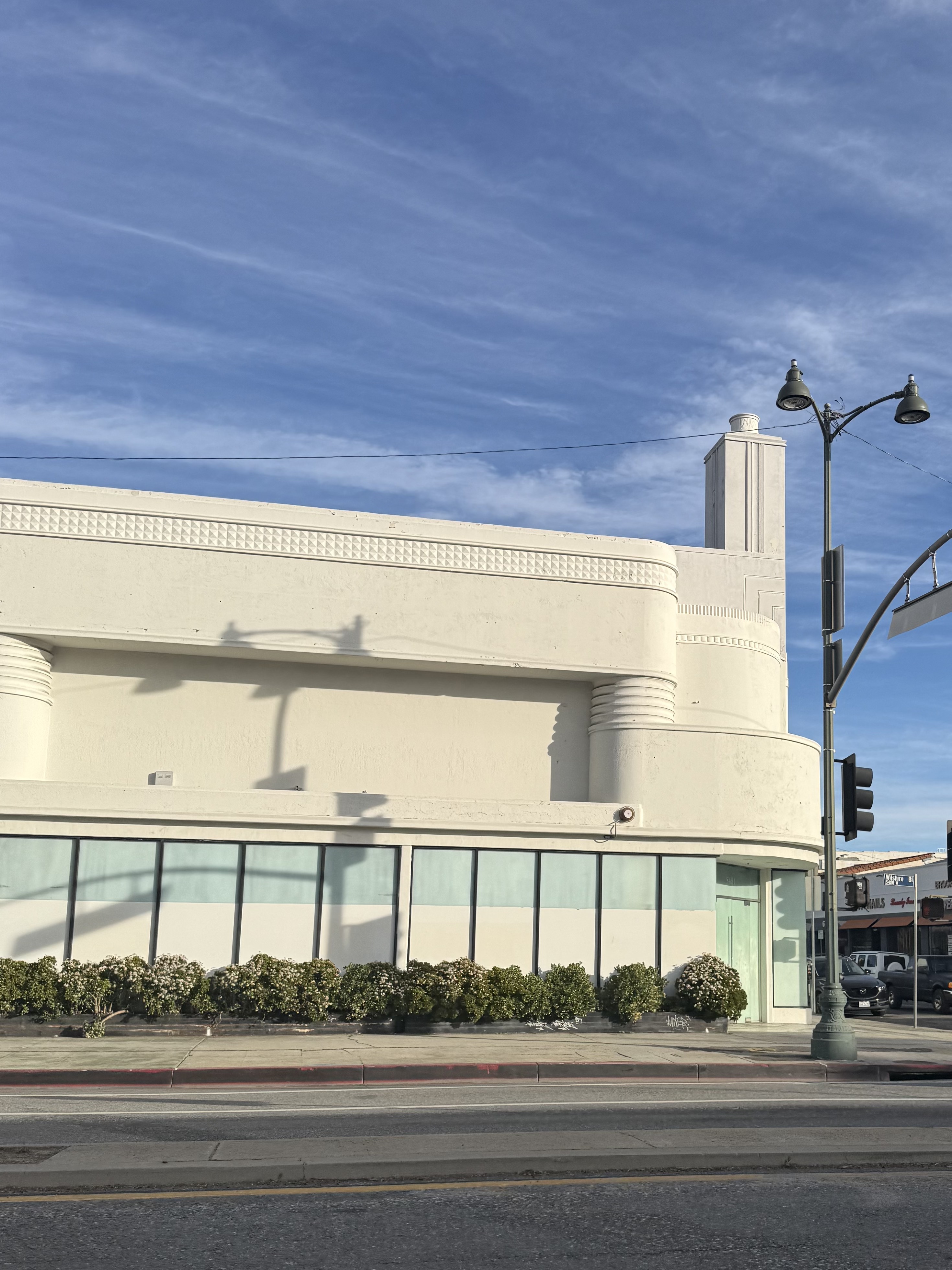
The Sontag Cut Rate Drug Company opened its first Southern California stores in 1929, and by 1935 the chain was ready for a premier Wilshire Boulevard flagship. The Los Angeles firm Norstrom and Anderson designed this gleaming new drugstore at the corner of Wilshire and Cloverdale Avenue, completed in 1936 as what a contemporary Los Angeles Times article called "a model of modern architecture and store designing." The building arrived during the Miracle Mile's commercial heyday, when the corridor was transforming into one of the city's most fashionable retail destinations. Sontag operated here until 1946, when the company moved out and the building was subdivided into smaller tenant spaces.
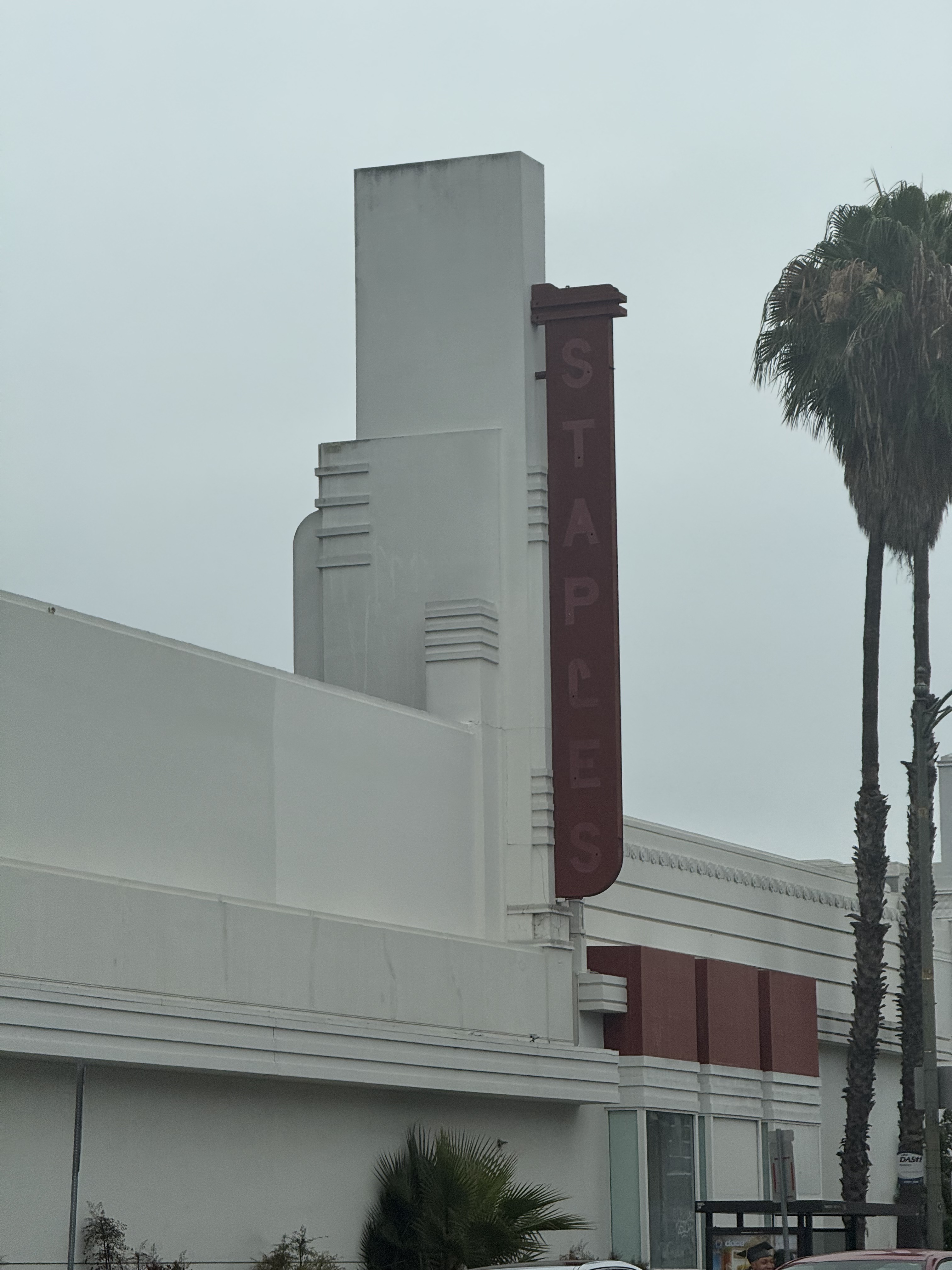
Architectural historians David Gebhard and Robert Winter described the Sontag building as one of the busiest examples ever executed in the Streamline Moderne idiom. The design features a characteristic rounded corner entrance that sweeps pedestrians from sidewalk to storefront, strong horizontal banding that wraps the facade, and a squared spire rising from the roofline. Every surface emphasizes speed and motion through layered horizontal elements. A late 1980s remodel combined the original drugstore with the adjacent sites of the former Flying Saucer restaurant and Brown's Wilshire Bakery into the single large retail space that Staples occupies today, though the corner facade survives as the most visible remnant of the 1936 composition.