
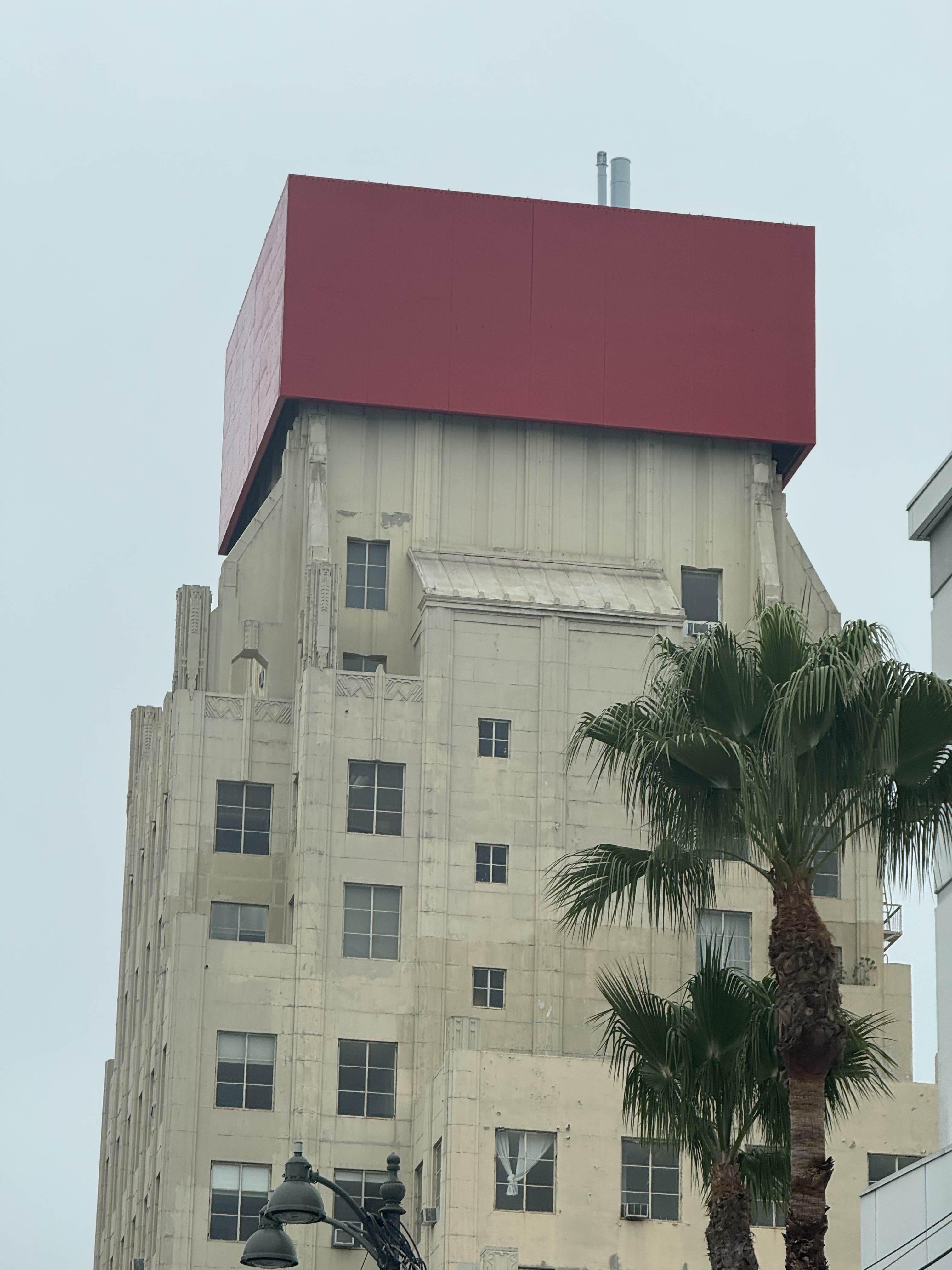
Art Deco emerged in France around 1910 and reached its zenith during the Roaring Twenties, representing the perfect marriage of contemporary tastes with superior craftsmanship and luxurious materials. This architectural movement, originally known as 'arts décoratifs,' wasn't officially termed 'Art Deco' until 1966, decades after the style's peak. Born from the 1925 Paris Exposition Internationale des Arts Décoratifs, the style celebrated opulence, glamour, and eccentricity through kaleidoscopic lobbies with vibrant colors and intricate sculptures, perfectly suited to Hollywood's celebrity culture and the prosperous 1920s. The style synthesized modernist geometry with decorative abundance, rejecting Art Nouveau's organic curves for angular precision. The Great Depression of 1929 marked its decline as expensive materials became scarce, with World War II delivering the final blow as wartime practicality favored pure function over decoration. In Los Angeles, Art Deco found unique expression in movie theaters, department stores, office buildings, and commercial structures.
ELEMENTS
- Crisp cubic shapes and strong uncompromising lines
- Elegant symmetrical compositions and balanced facades
- Complex geometric patterns including zigzags, chevrons, and sunbursts
- Stepped profiles and setback massing
- Ornate decorative elements with stylized motifs
- Large plate glass windows with metallic frames
- Bold vertical emphasis with linear detailing
- Stylized floral and nature-inspired ornamentation
Art Deco buildings
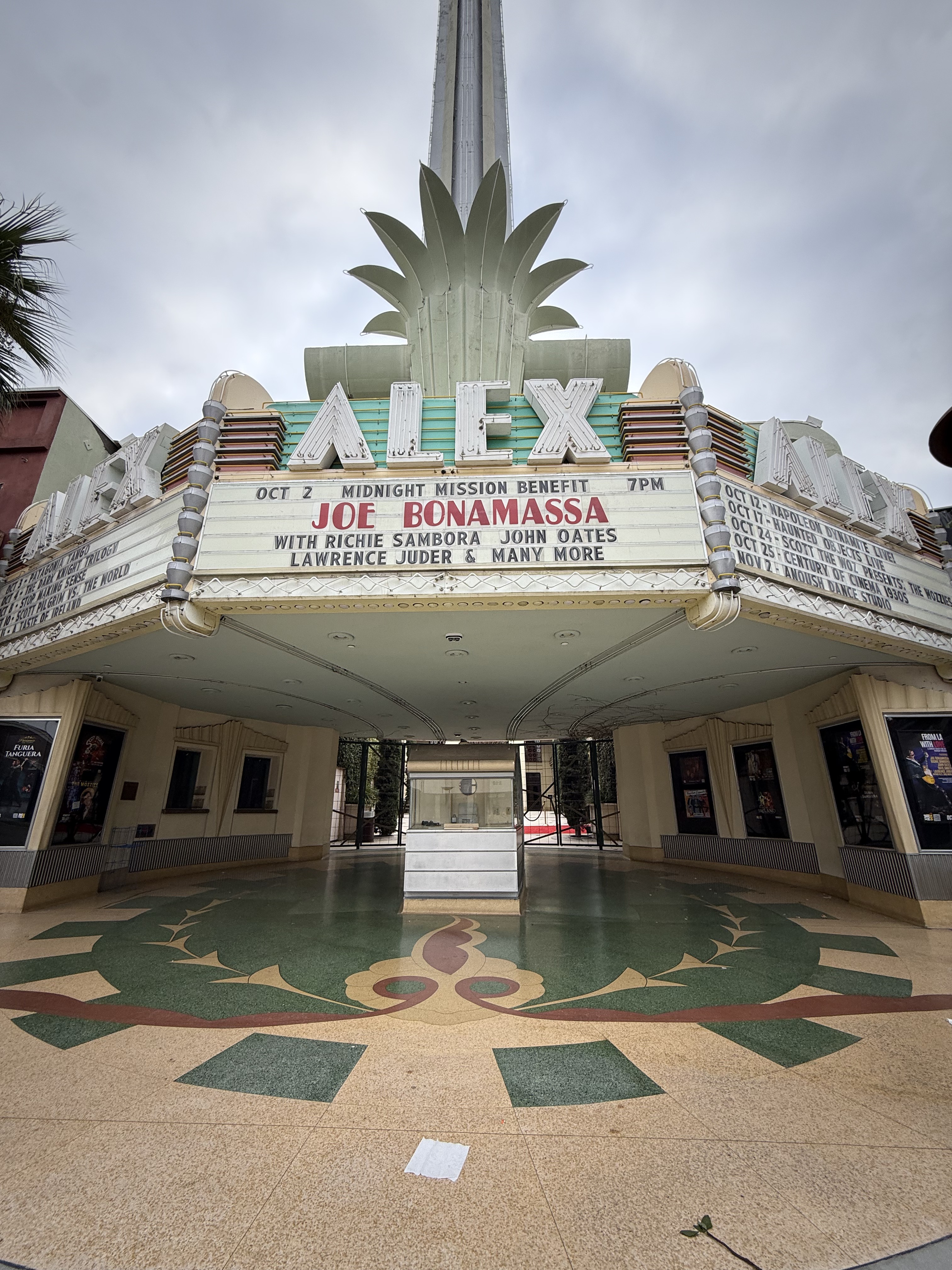 Alex Theatre
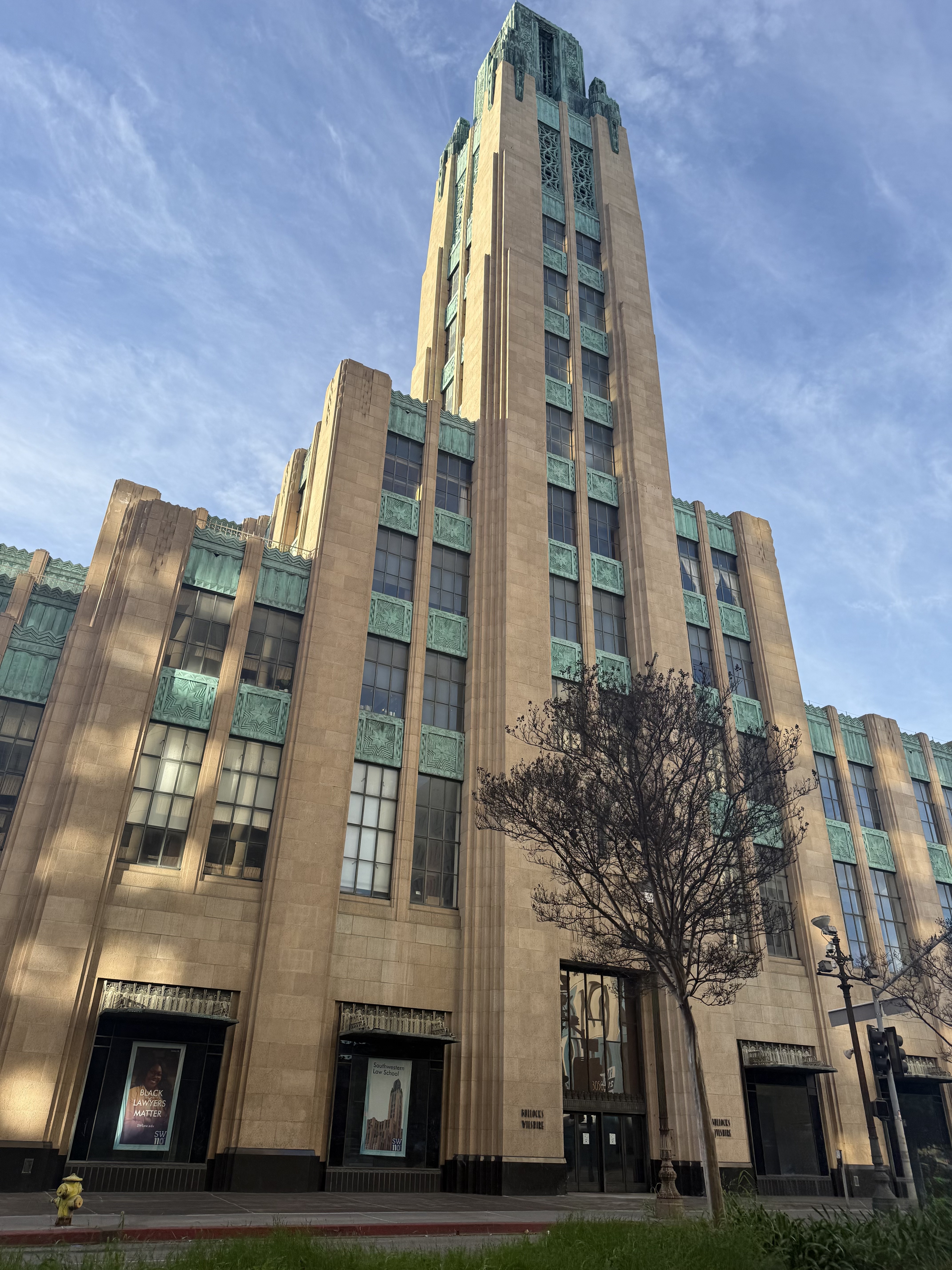 Bullocks Wilshire
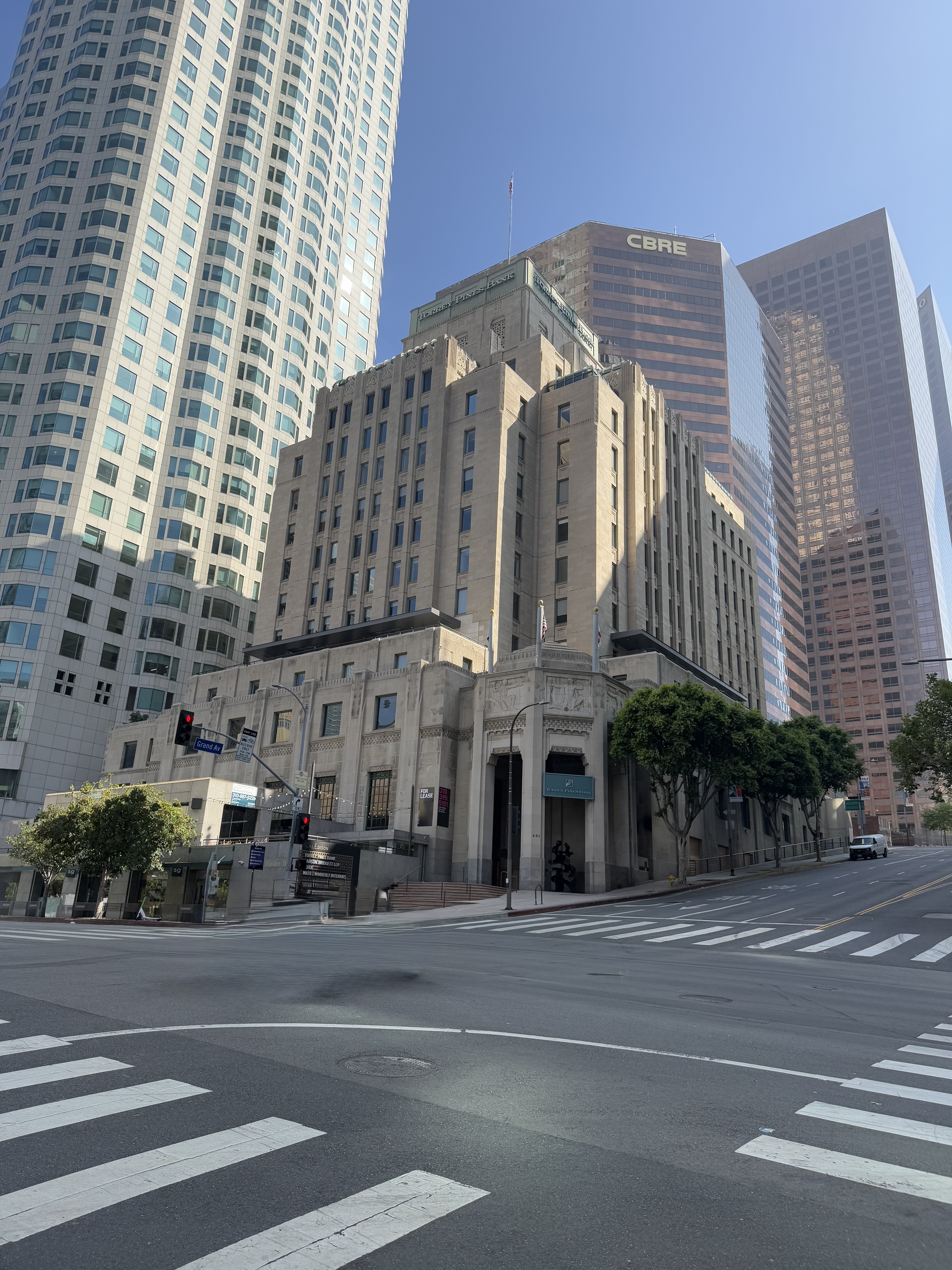 CalEdison Building
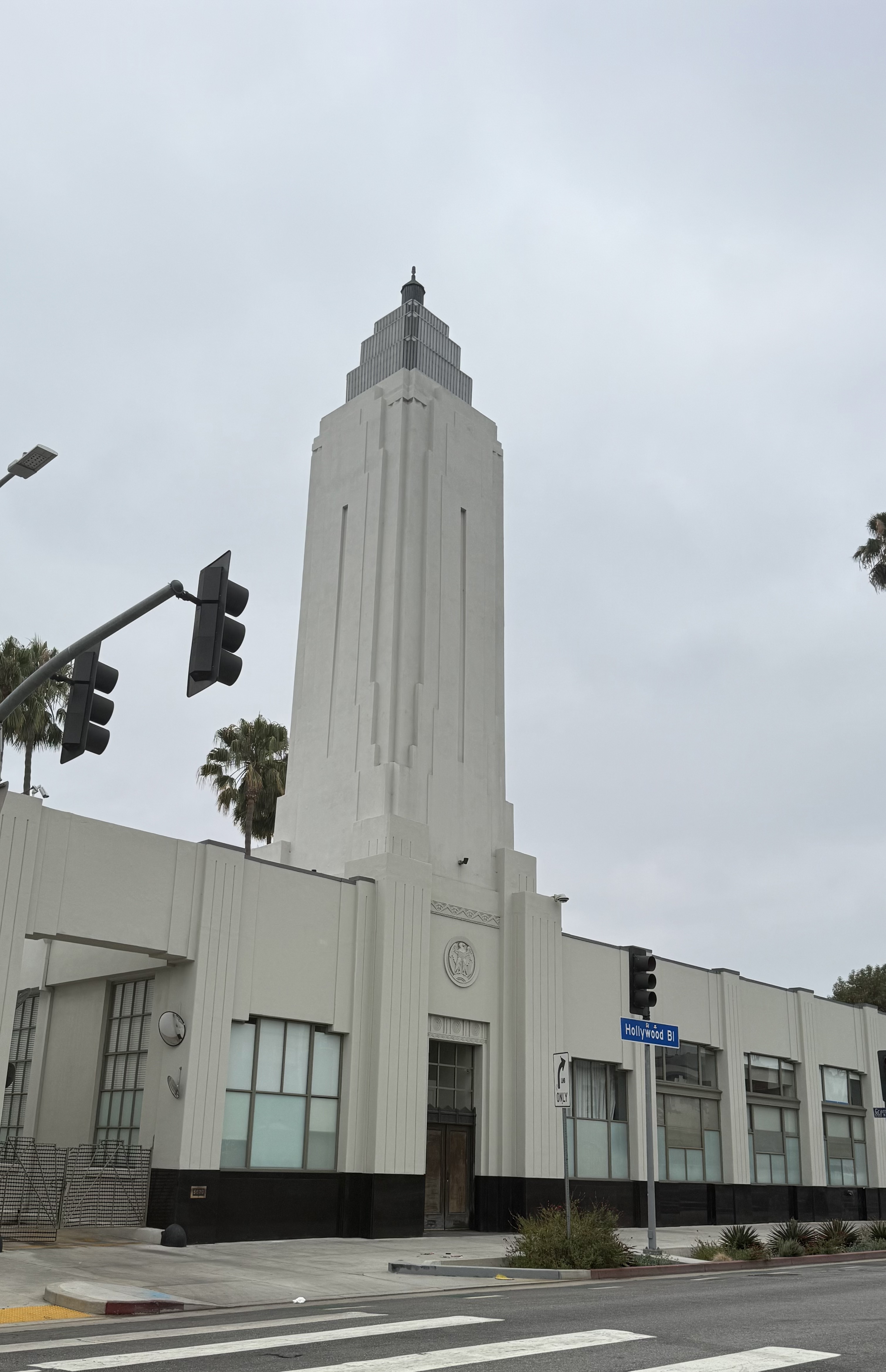 California Bank Building
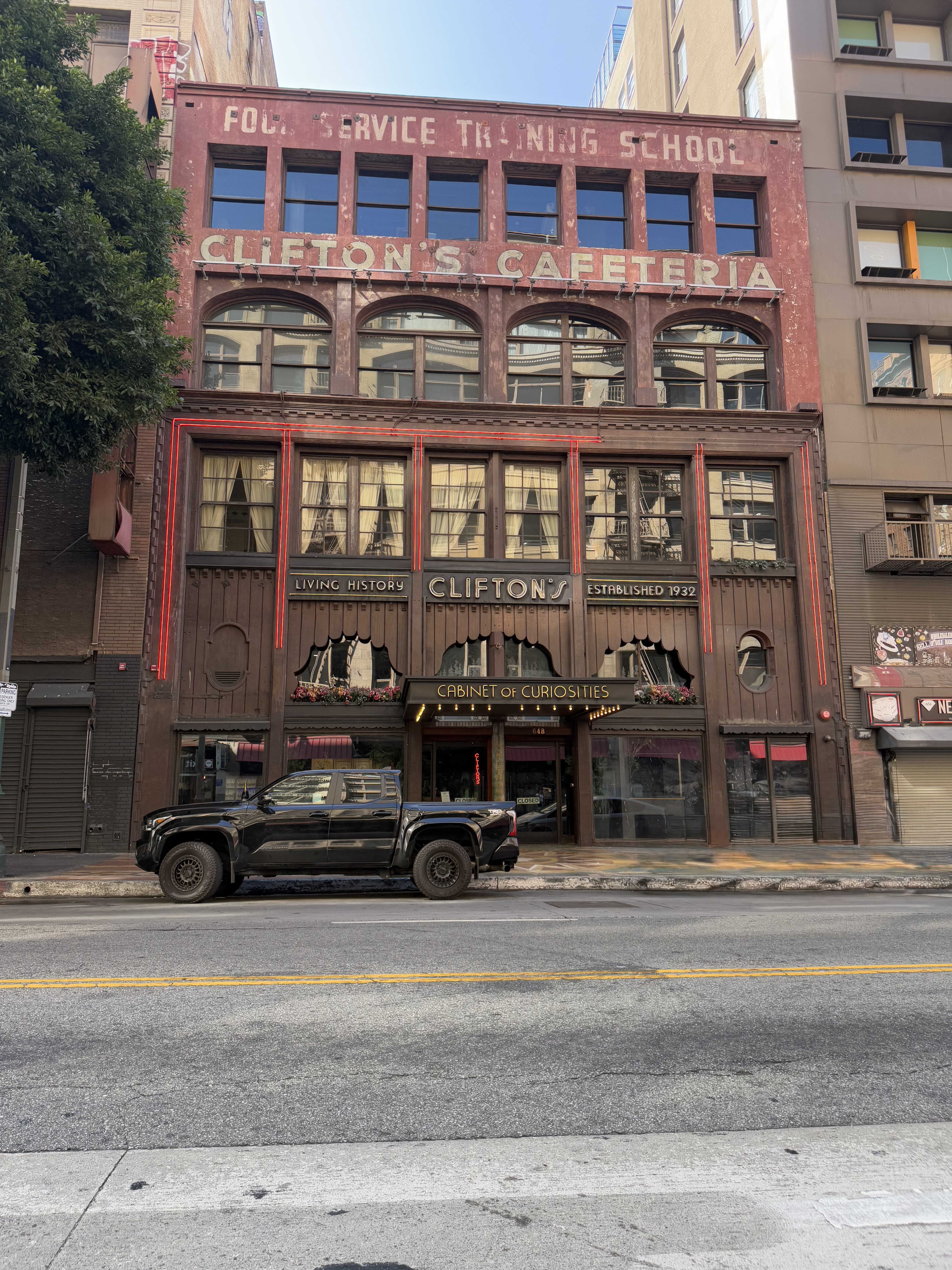 Cliftons
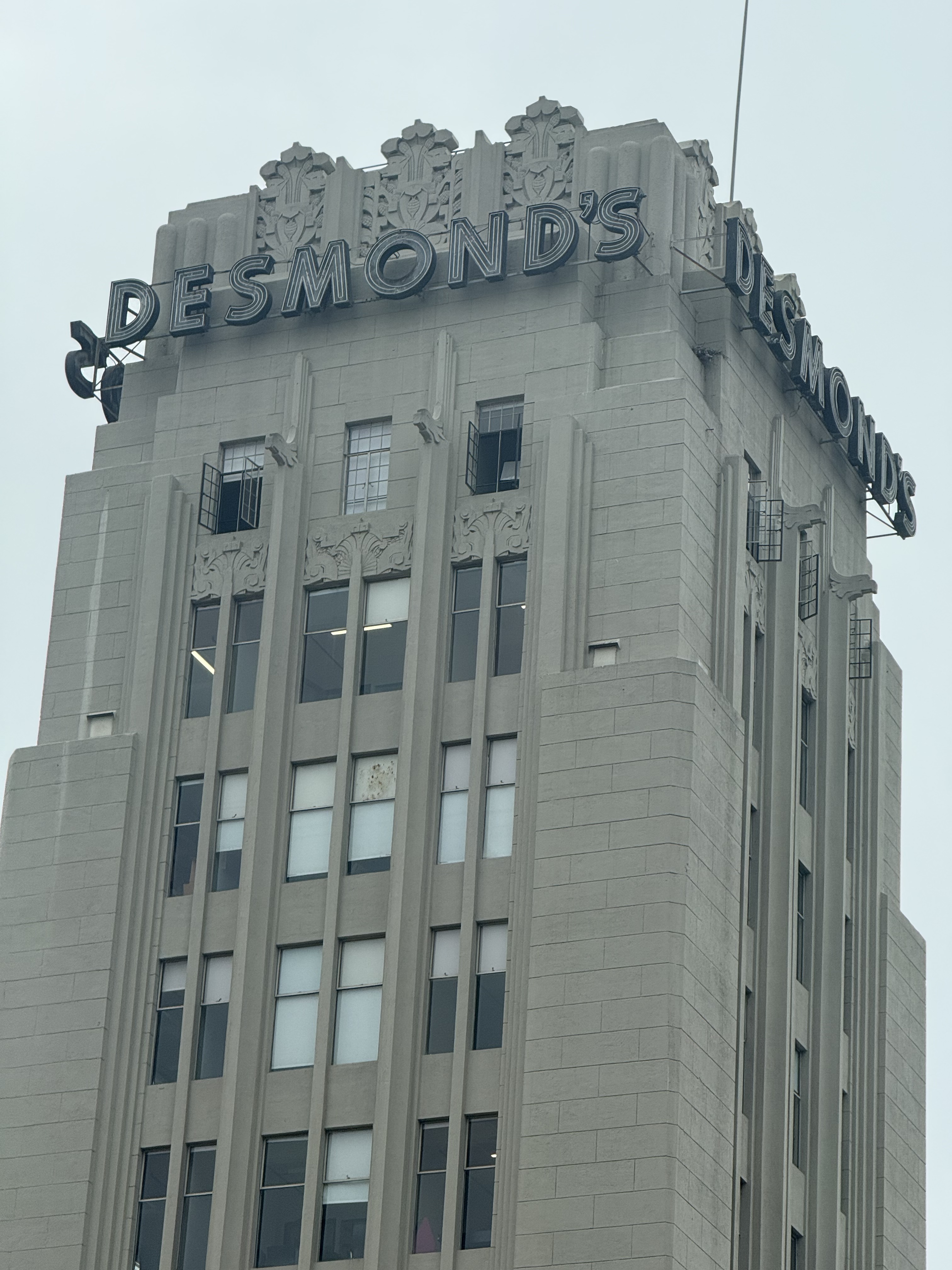 Desmond Building
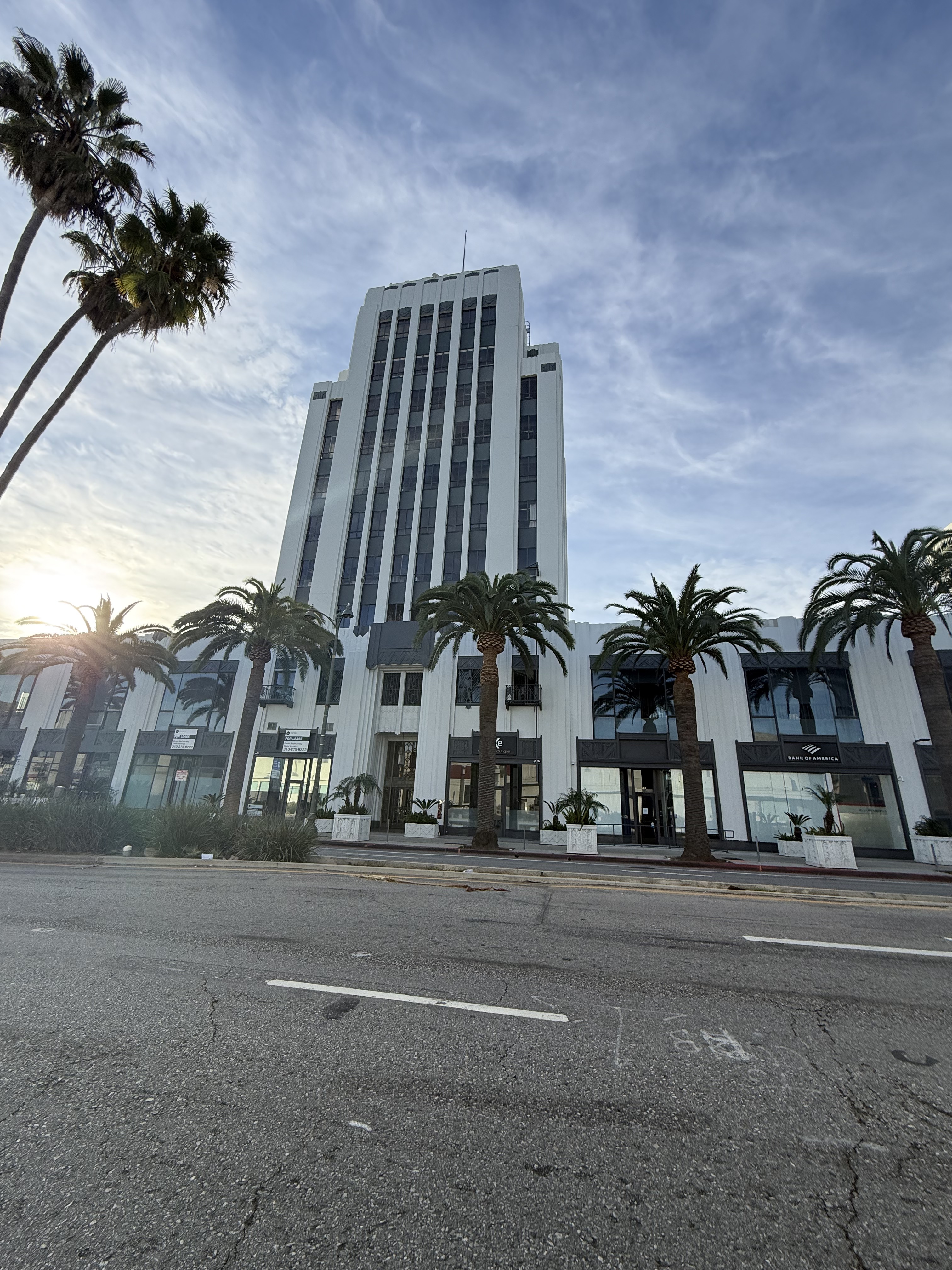 Dominguez-Wilshire BuildingE. Clem Wilson Building
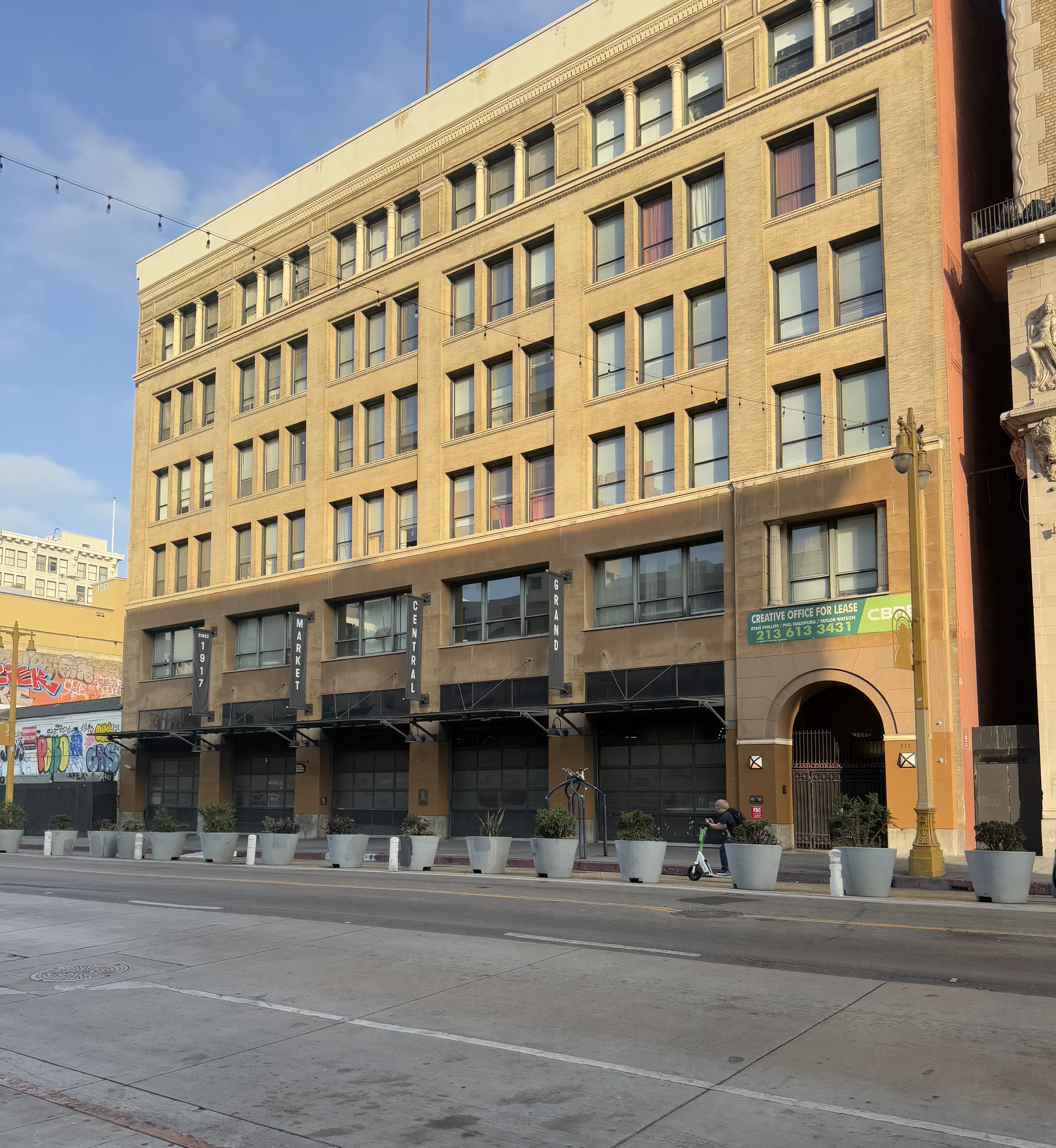
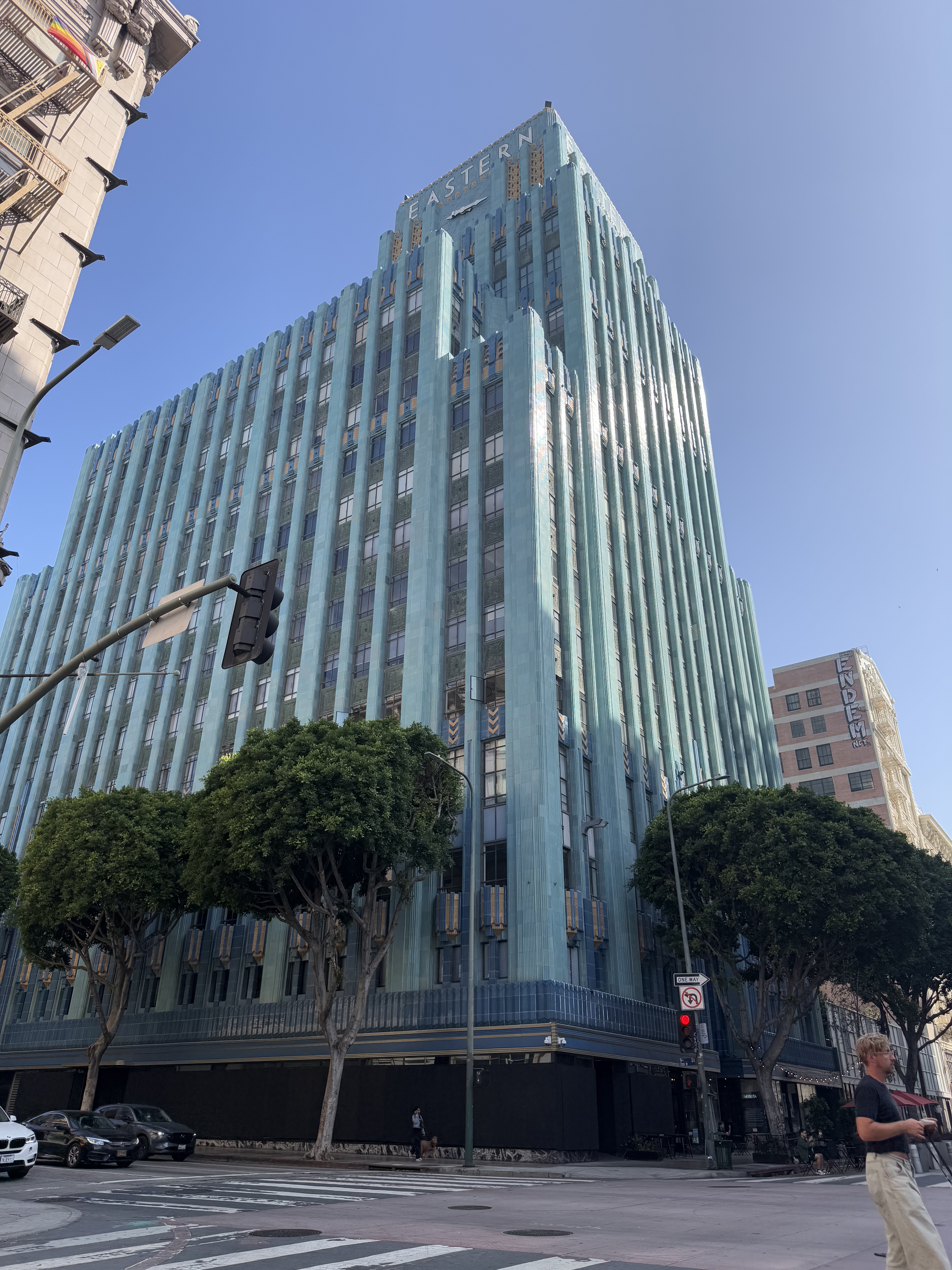 Eastern Columbia BuildingGrand Central Market
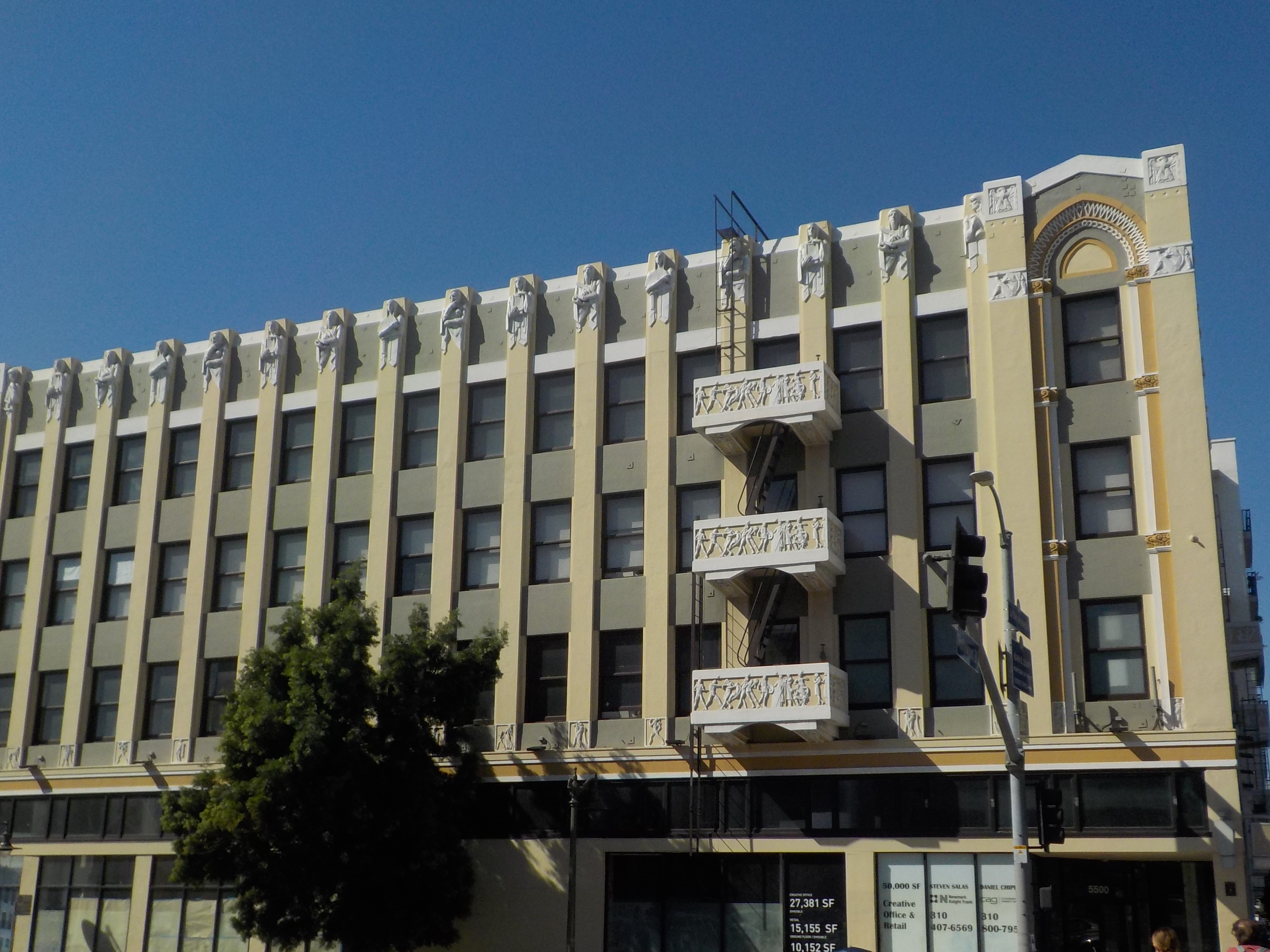 Hollywood Western Building
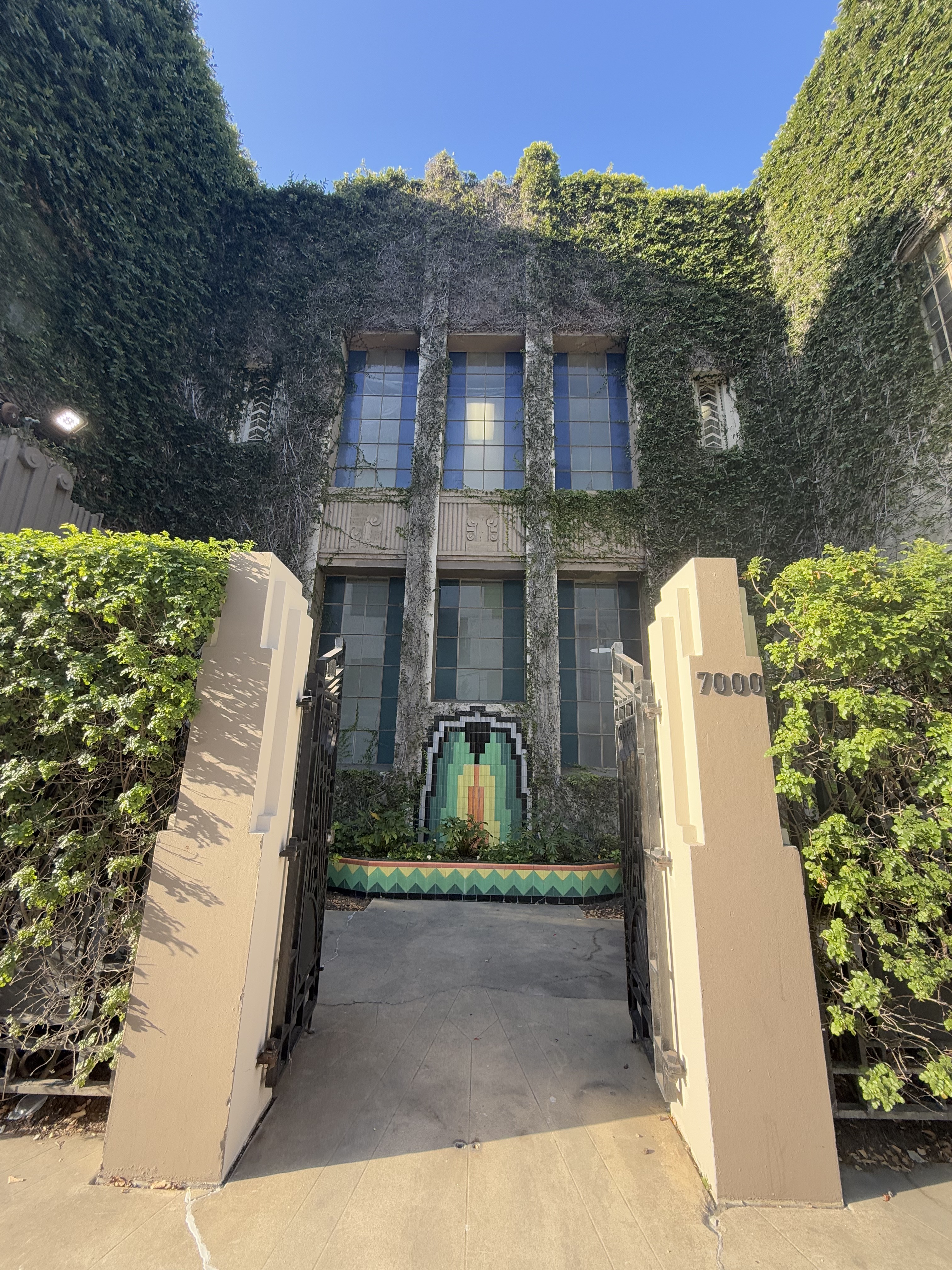 Howard Hughes HQ
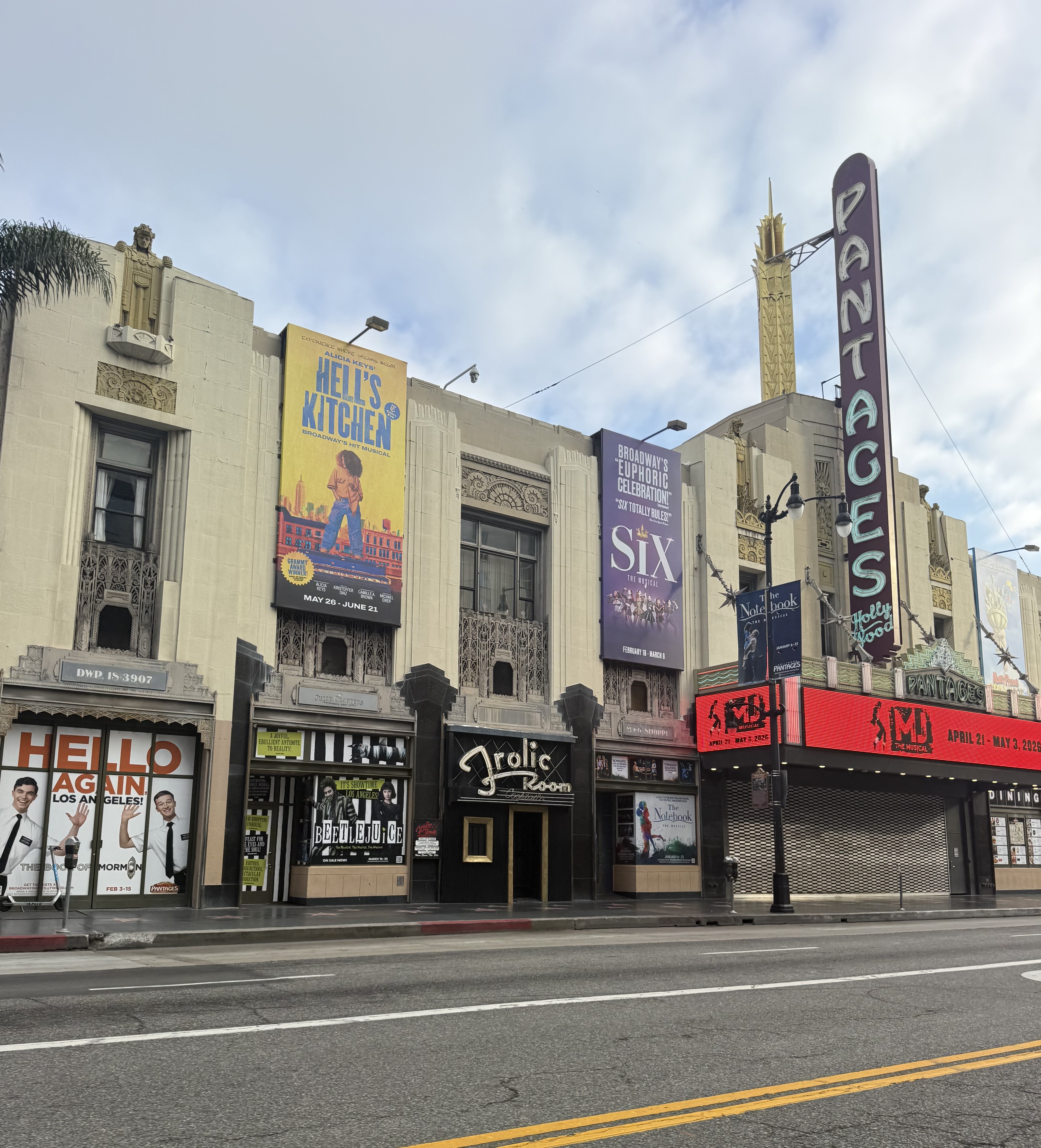
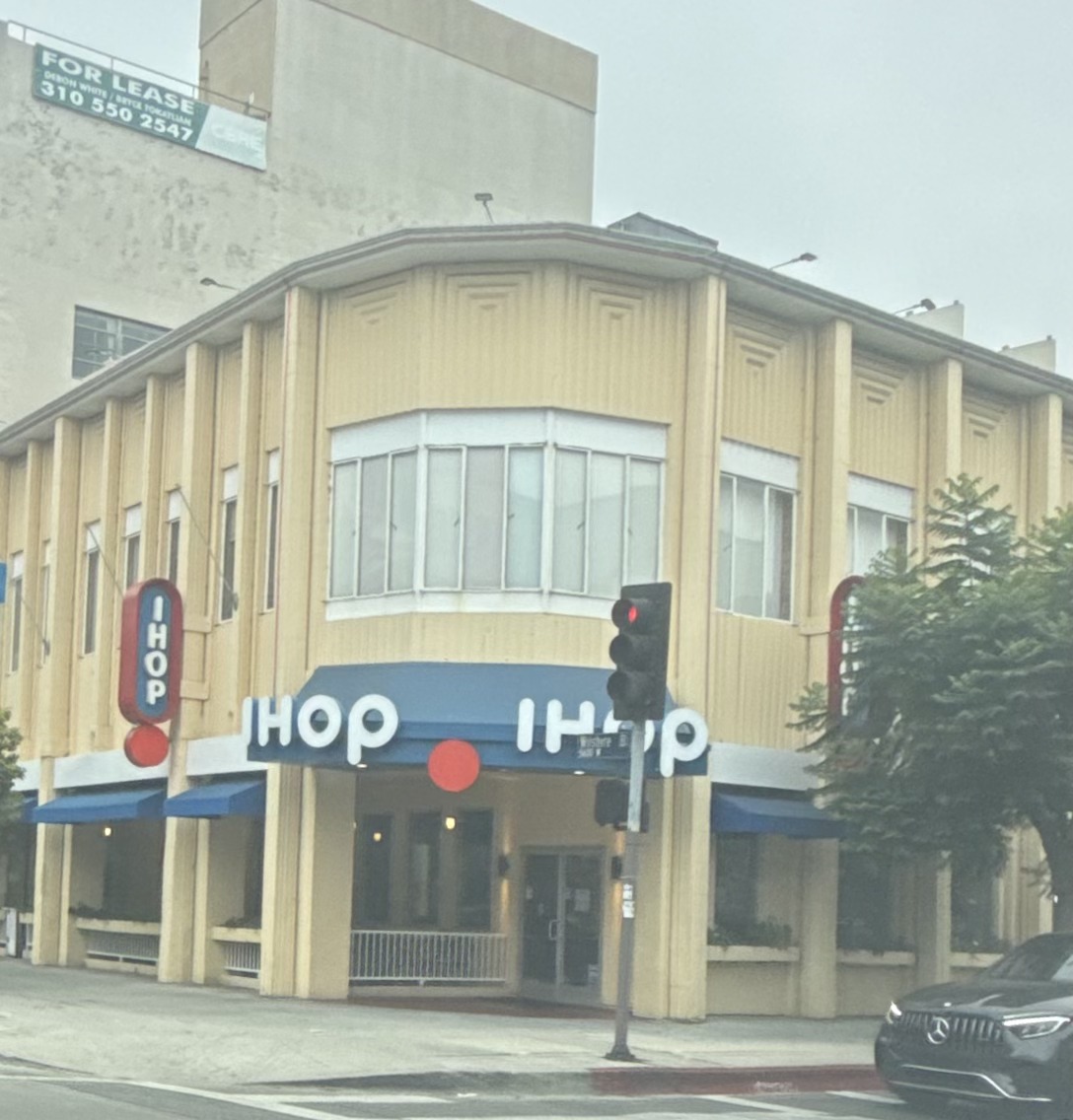 IHOPOviatt BuildingPantages Theatre
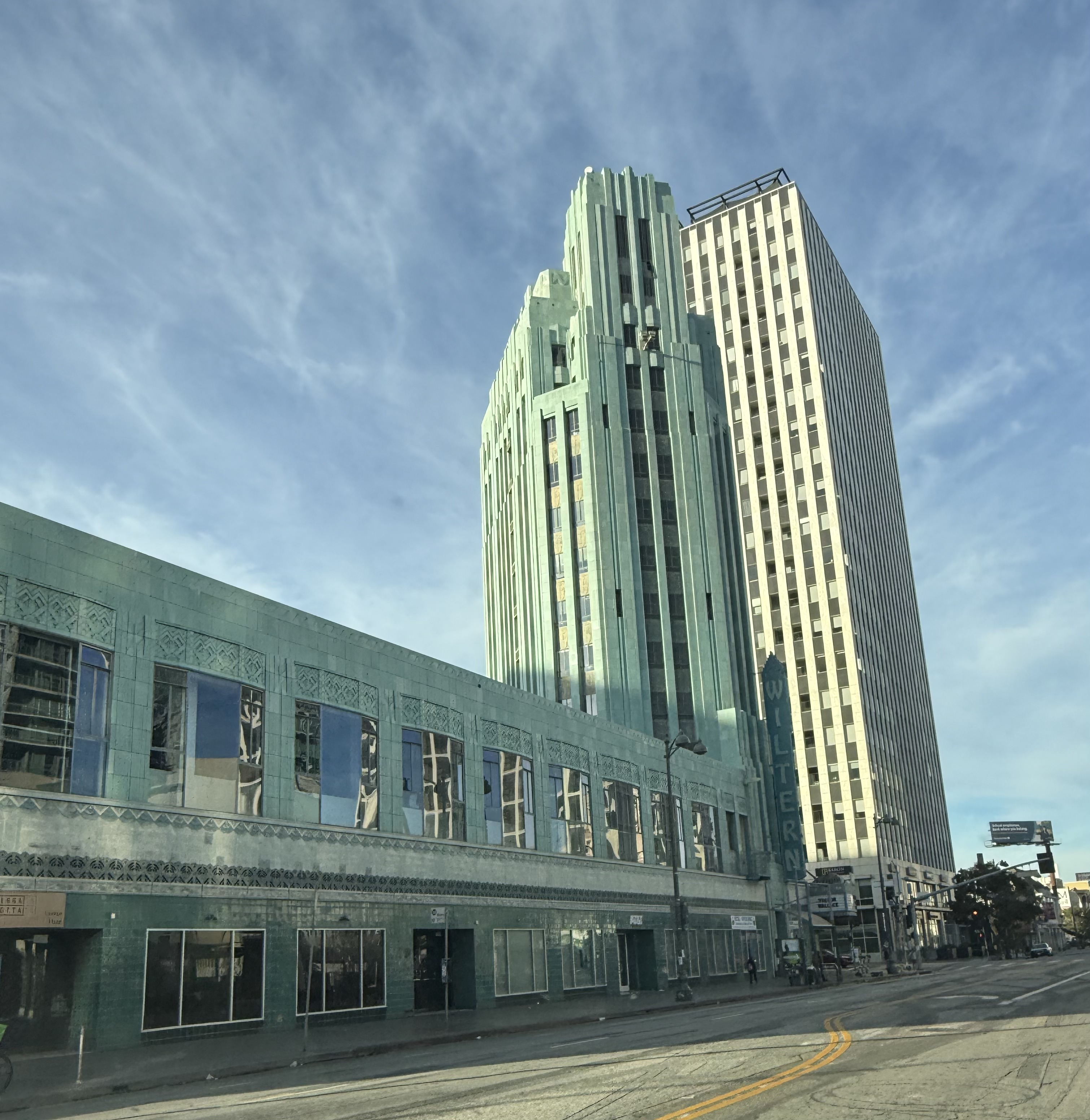 Pellissier Building and Wiltern Theater
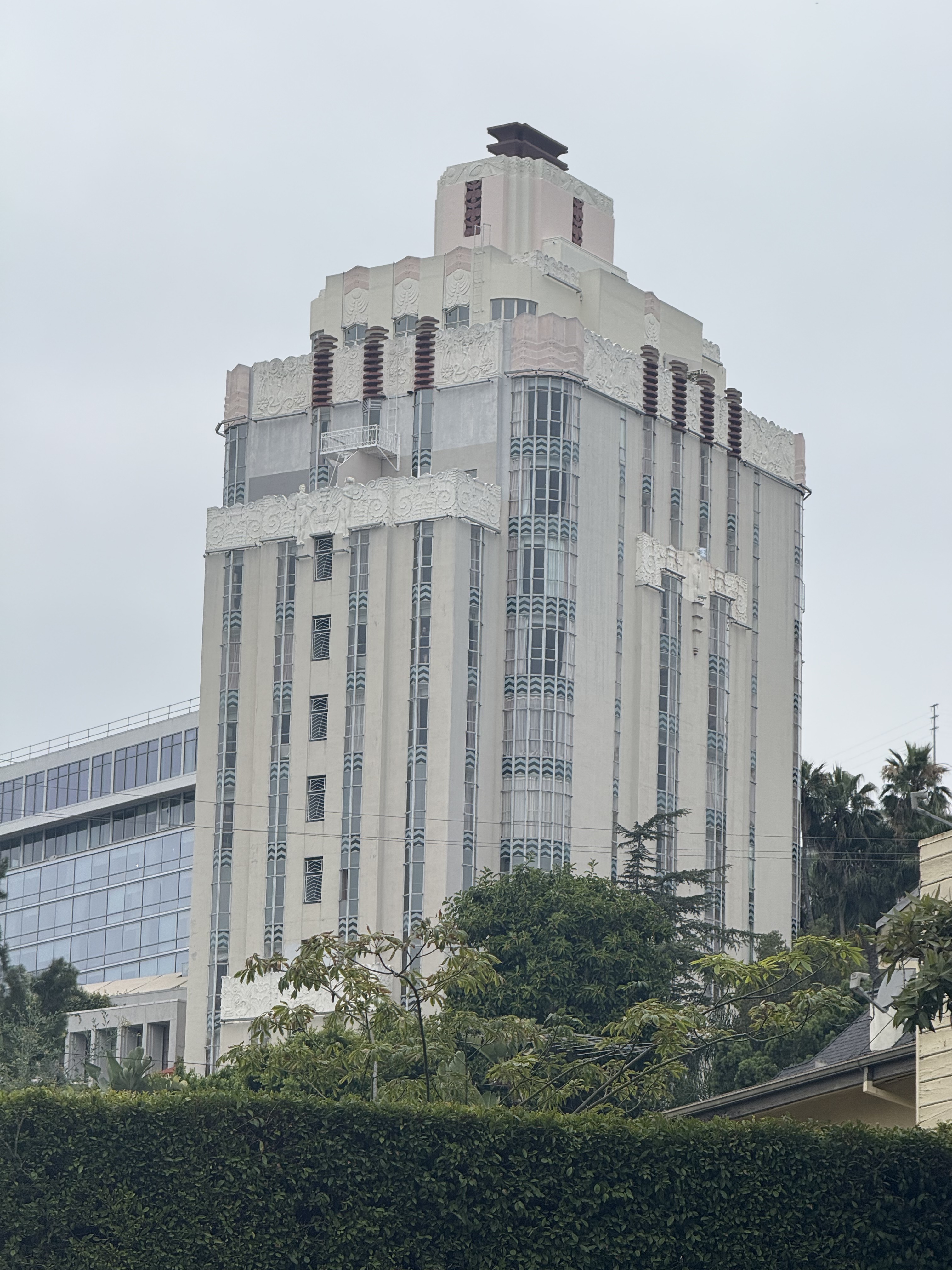 Sunset Tower HotelThe Rowan
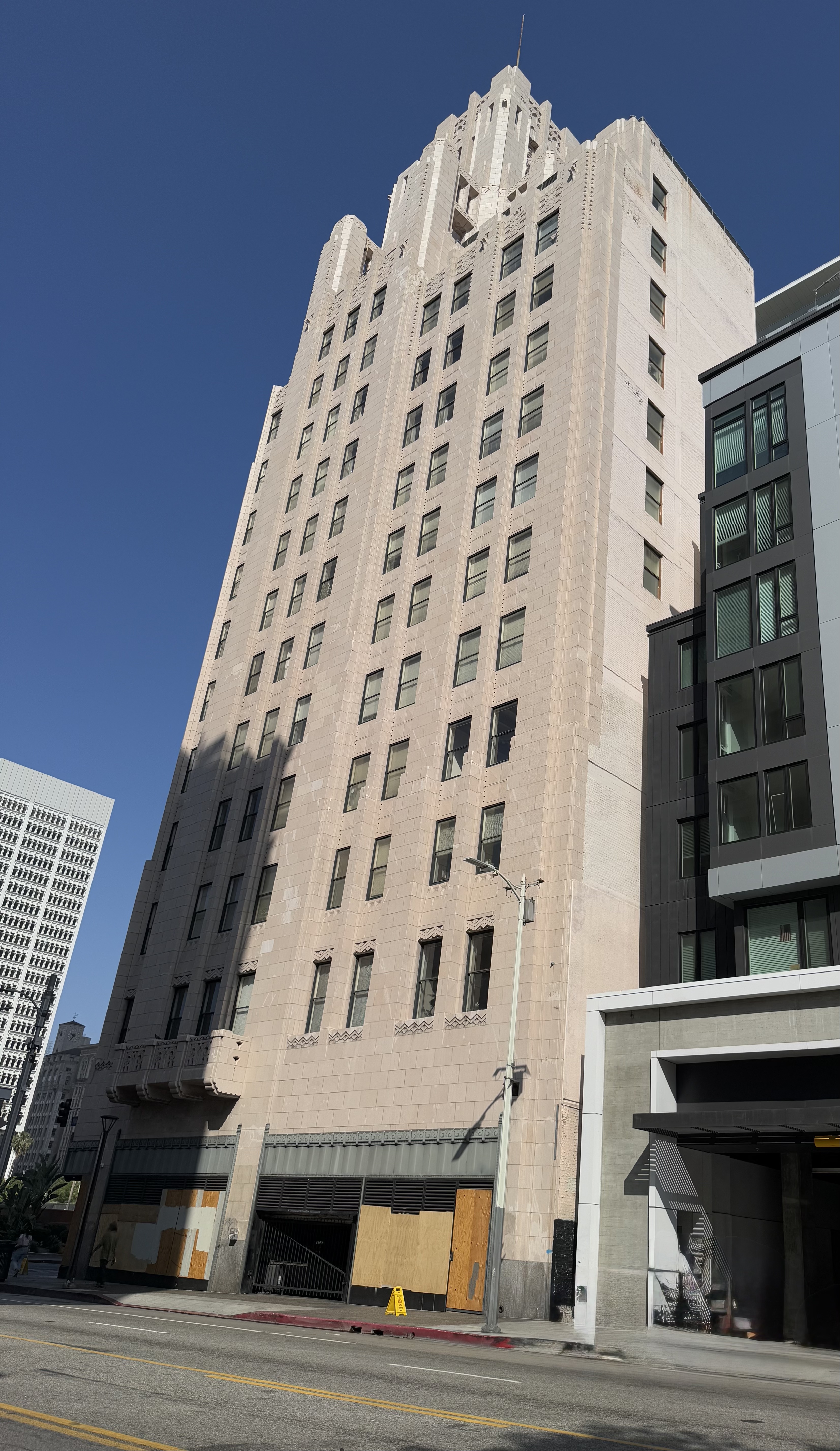 Title Guarantee Building
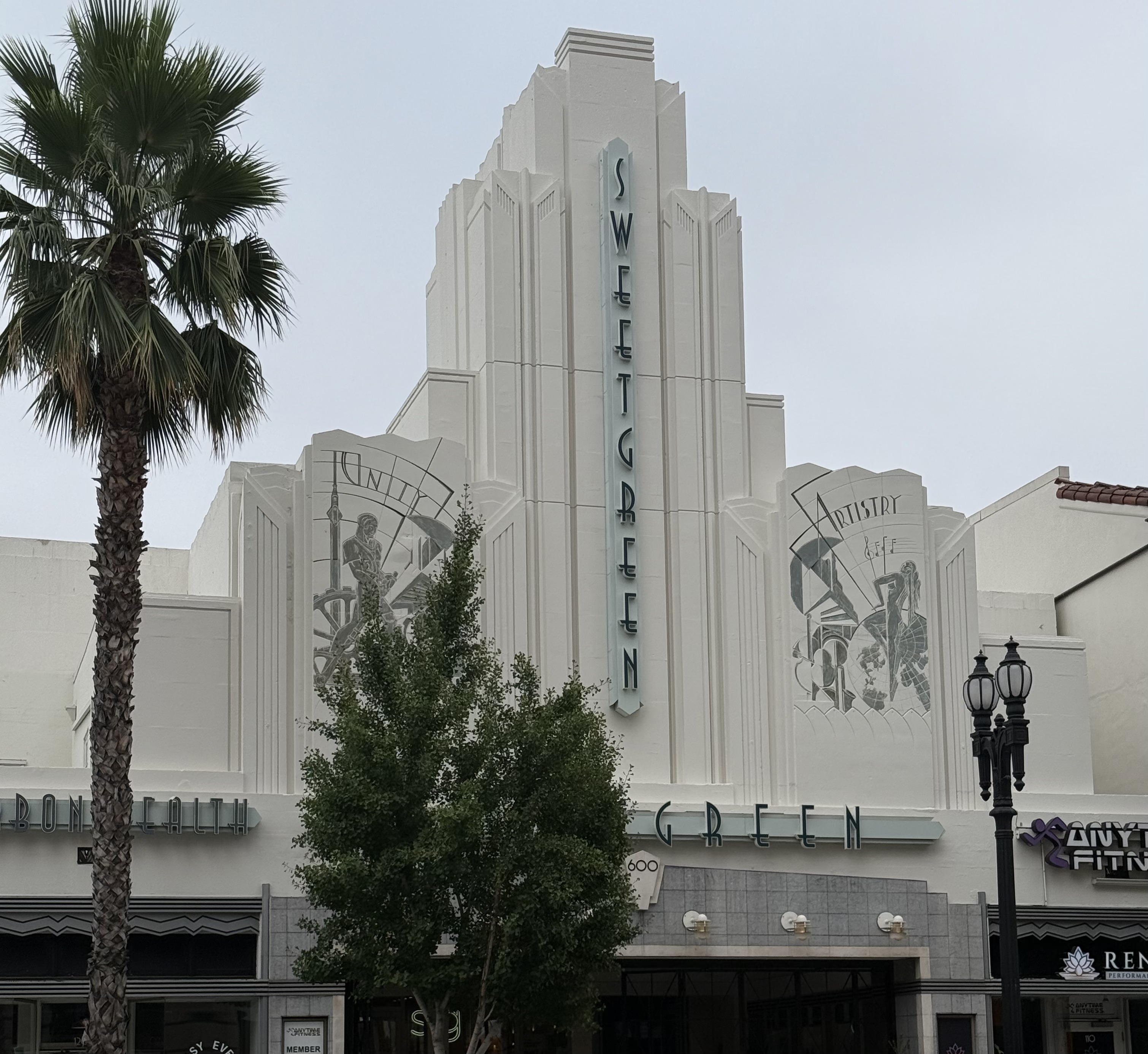 United Artists Theatre (Pasadena)