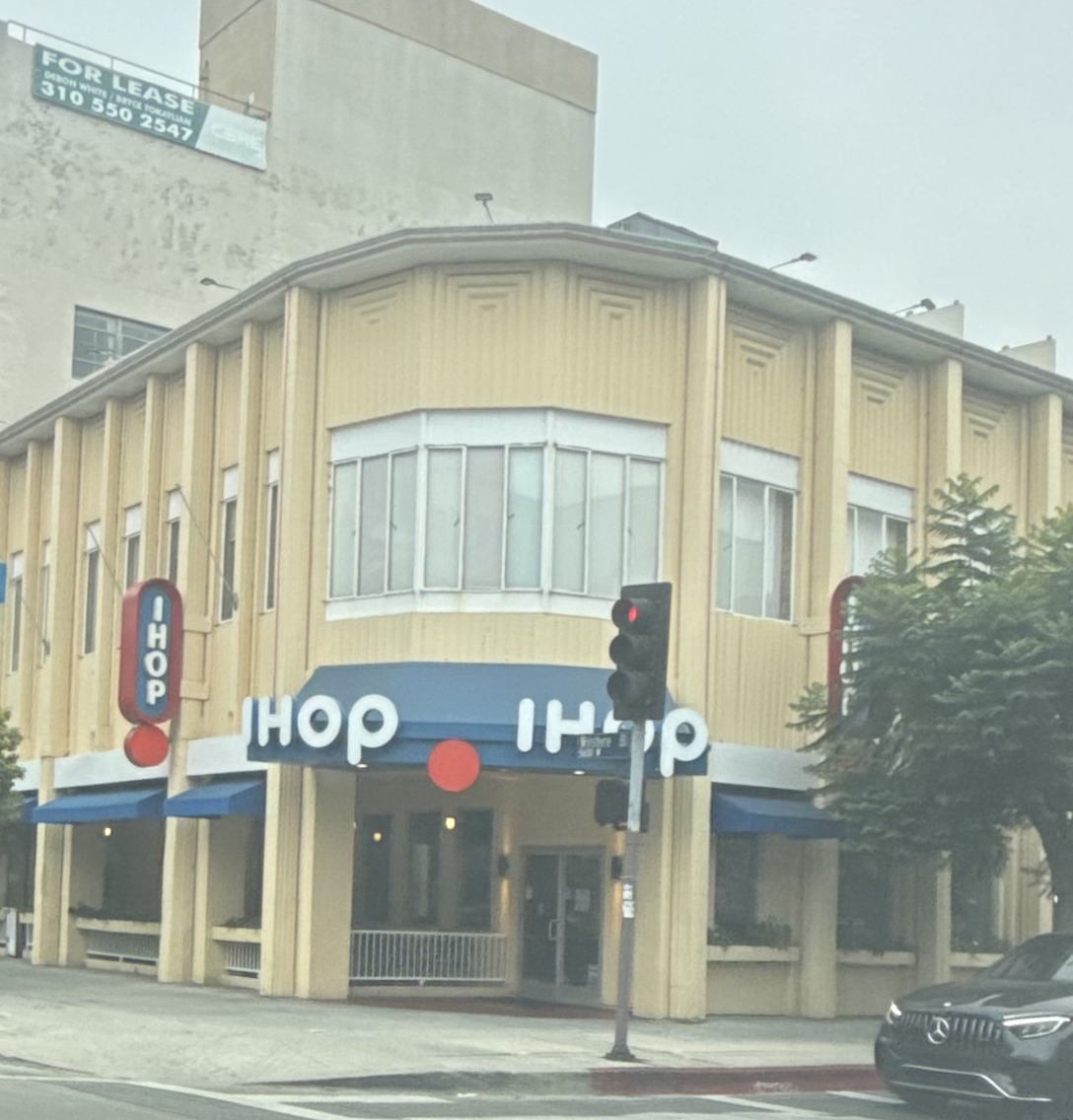
Completed in 1931 at the northwest corner of Wilshire and Hauser Boulevards, this two story structure was designed by architect Carl Lindbom to house the Western Auto Supply Company and a "Pay'n Takit" grocery market. The grocery's signage proudly proclaimed "Something Saved on Everything," a small but vivid artifact of Depression era discount retail marketing. The building's commercial program reflected the practical needs of a neighborhood along the rapidly developing Miracle Mile corridor, where automobile culture and everyday retail converged.
The facade presents vertical stripes of green and black terra cotta, a material choice that gave the building a striking presence when new, though the Los Angeles Conservancy notes it is often overlooked today. This rhythmic vertical treatment distinguished the structure from its neighbors along Wilshire Boulevard, creating visual interest through color and pattern rather than ornamental excess. The two story massing and terra cotta cladding typified the commercial architecture of the early 1930s, balancing economy with a desire for visual impact along one of Los Angeles's most important thoroughfares.