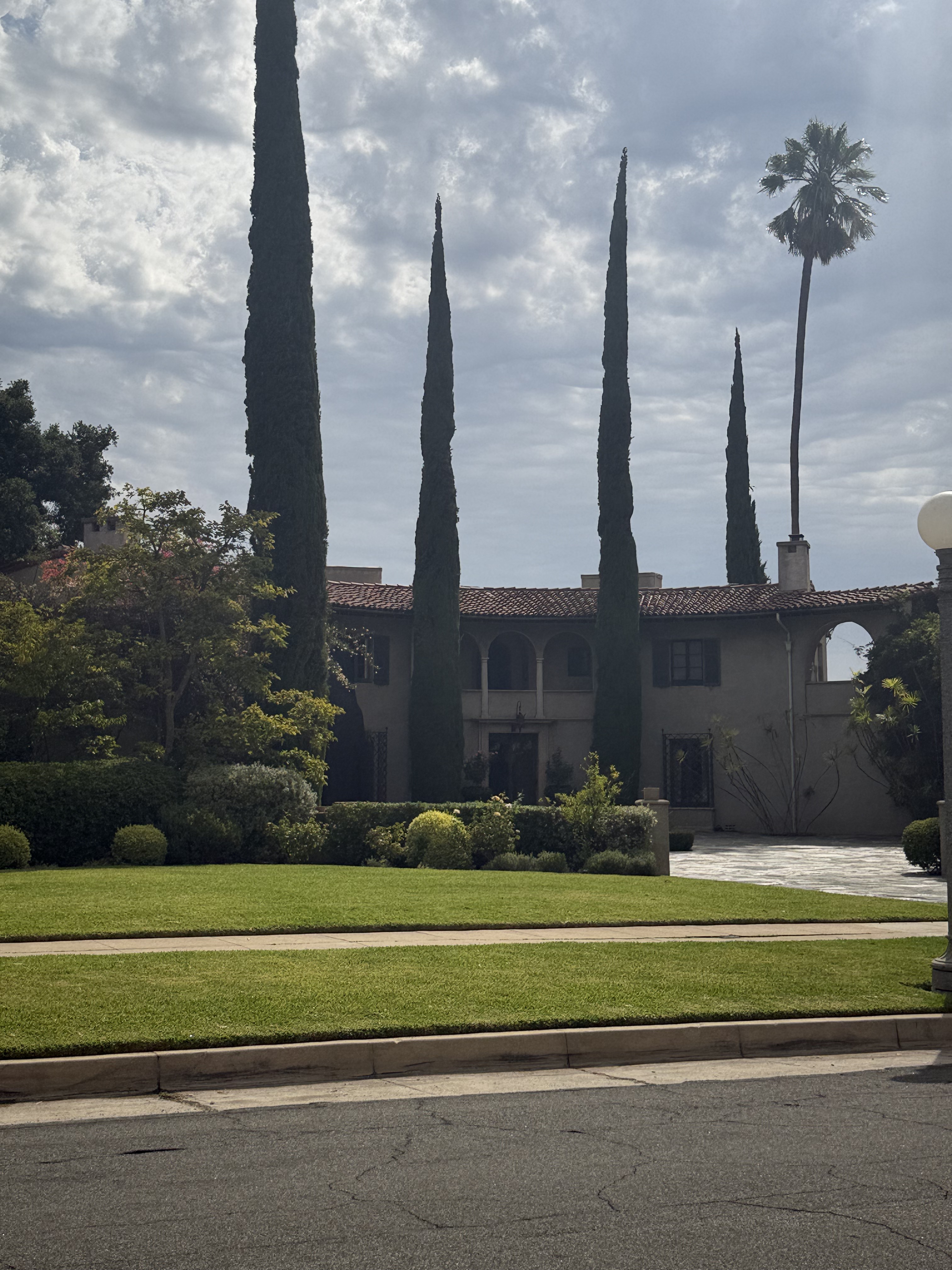
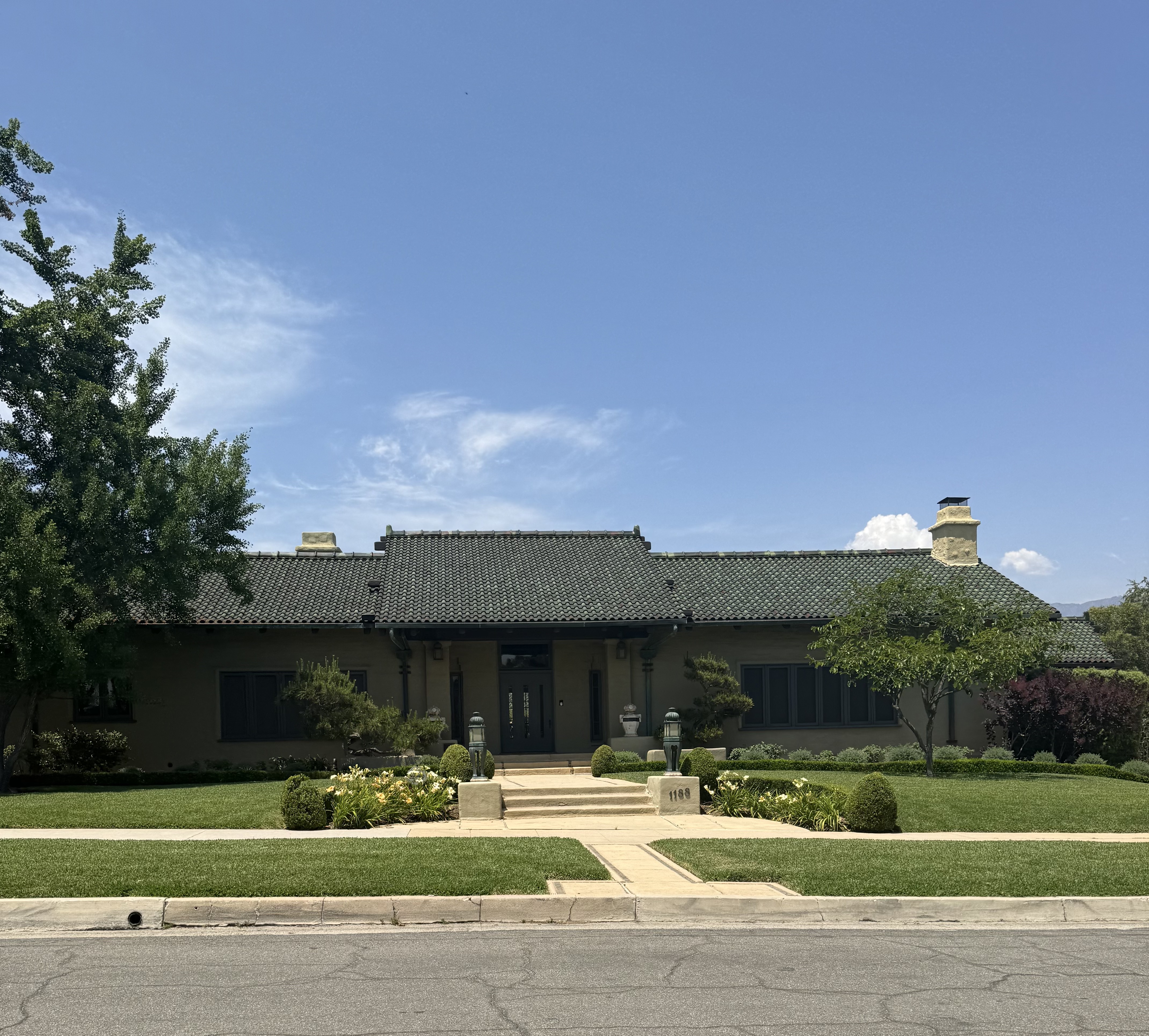
Commissioned in 1911 by Cordelia Culbertson and her two unmarried sisters, the Culbertson House represented a new kind of California patronage: three independent women of means building not a family estate but their own domain. The project became Greene & Greene's final and most expensive residential commission, with construction costs reaching $150,000, equivalent to more than $5 million today. Yet within four years the sisters found the 8,559-square-foot estate too costly to maintain, selling it in 1917 to Elisabeth Allen, a Cleveland philanthropist whose Standard Oil fortune would sustain the property and fund more than 20 subsequent Greene & Greene commissions through the 1930s. The sale coincided with Charles Greene's departure for Carmel, marking the close of an architectural era.
Unlike the inward-focused "ultimate bungalows" at Gamble and Blacker, this two-story residence opens outward through a U-shaped plan that embraces an Italianate courtyard to the east, complete with fountain, wisteria-draped pergolas, and mountain views that anticipate modernist transparency. The exterior breaks entirely from Greene & Greene precedent with sprayed gunite concrete cladding, the only house in their portfolio finished this way, punctuated by dark green glazed ceramic tiles that reference Chinese pagoda forms. More than 130 windows flood the interior with light, a bright and airy quality distinct from the darker, furniture-integrated schemes of earlier commissions. Two marble fireplaces, Japanese-style metal gates, and decorative tilework ornament the rooms, while a ballroom-theater occupies the lower level, added specifically for Mrs. Prentiss.