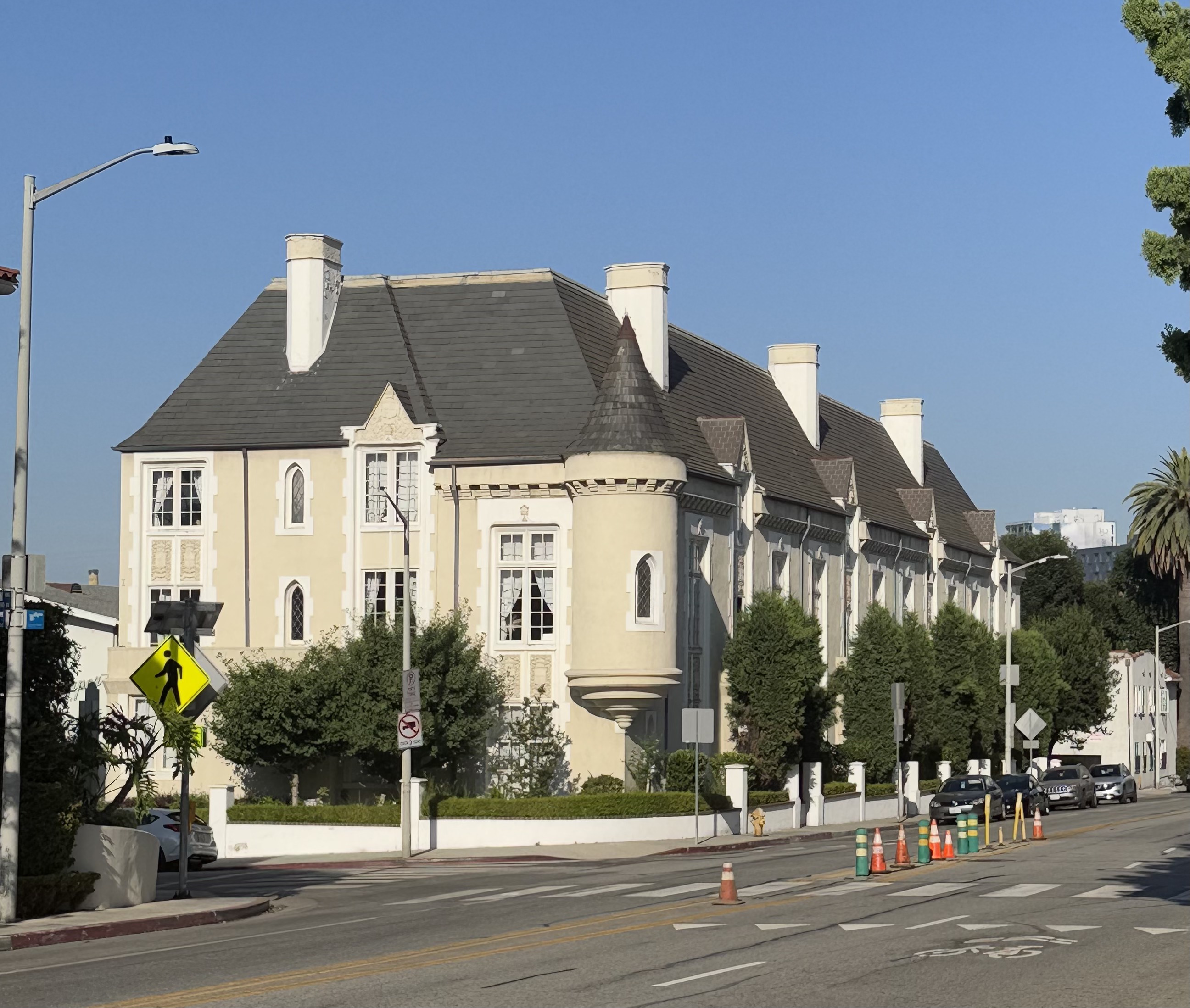
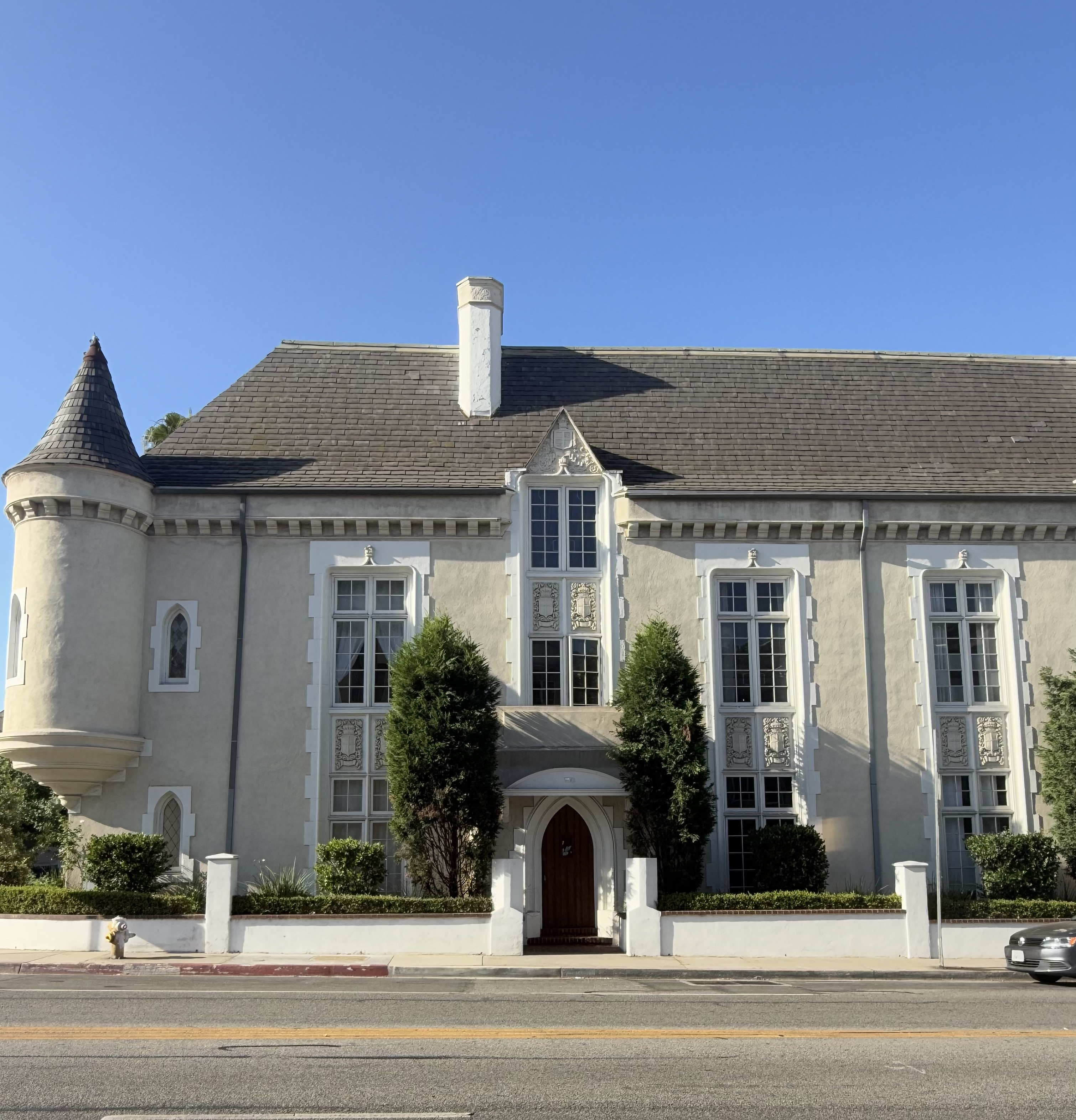
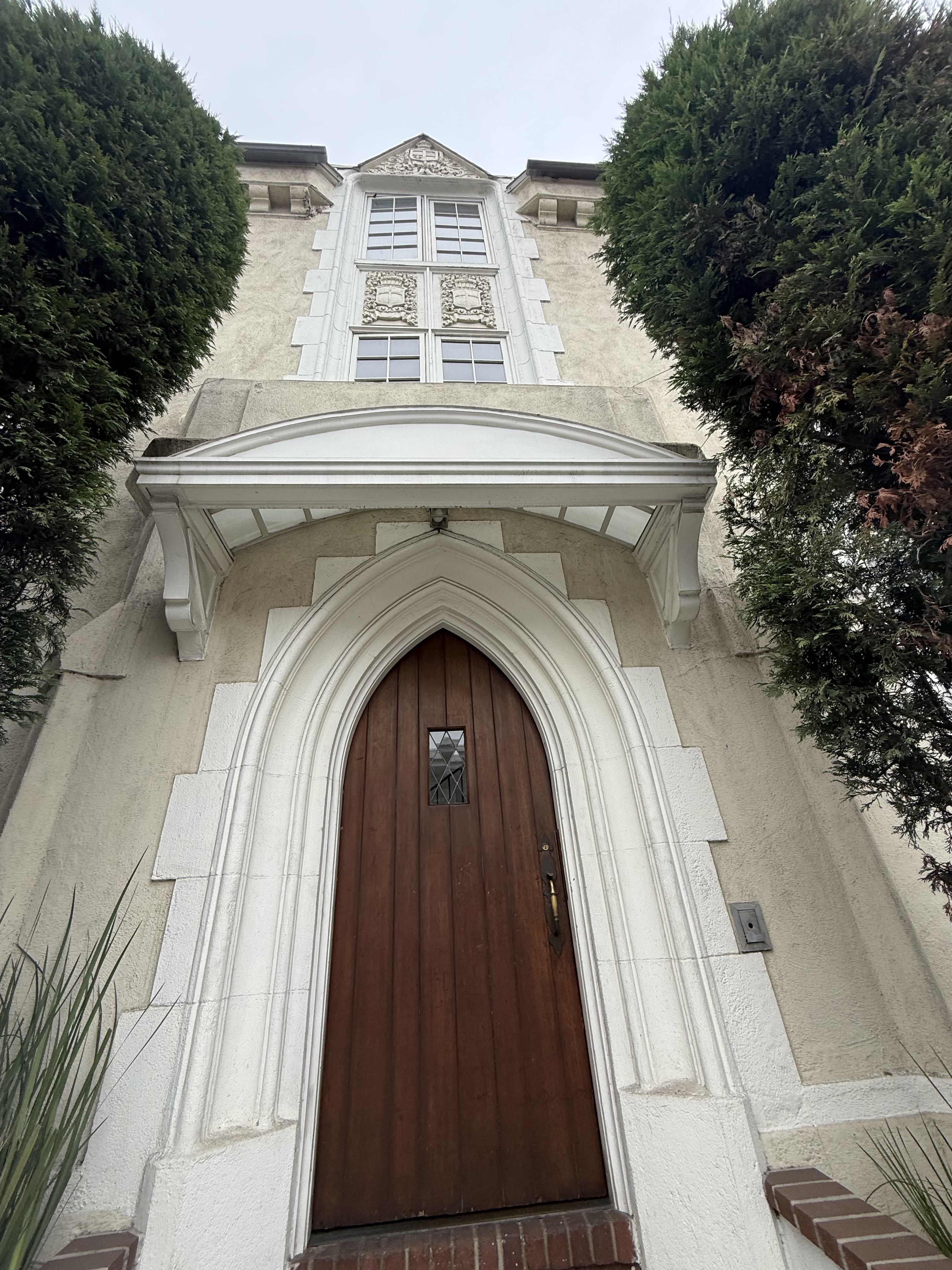
The Four Gables began as a speculative venture between architect Leland A. Bryant and developer Samuel Coine in 1927, marking the first collaboration in what would become a prolific partnership that reshaped West Hollywood's residential landscape. Originally christened Les Maisonettes, the building was conceived as a deluxe rental property targeting the overflow of Hollywood's film industry workforce, a transient and often single population drawn to the unincorporated area's permissive atmosphere and proximity to both the emerging Sunset Strip and the studios. The three-story apartment house sits at the southwest corner of Fountain Avenue, functioning as an architectural anchor at the eastern entrance to the Harper Avenue district. Its construction coincided with the neighborhood's dramatic transformation from modest single-family homes to elegant multi-family buildings designed to accommodate the automobile and sell a European-inflected vision of modern luxury living.
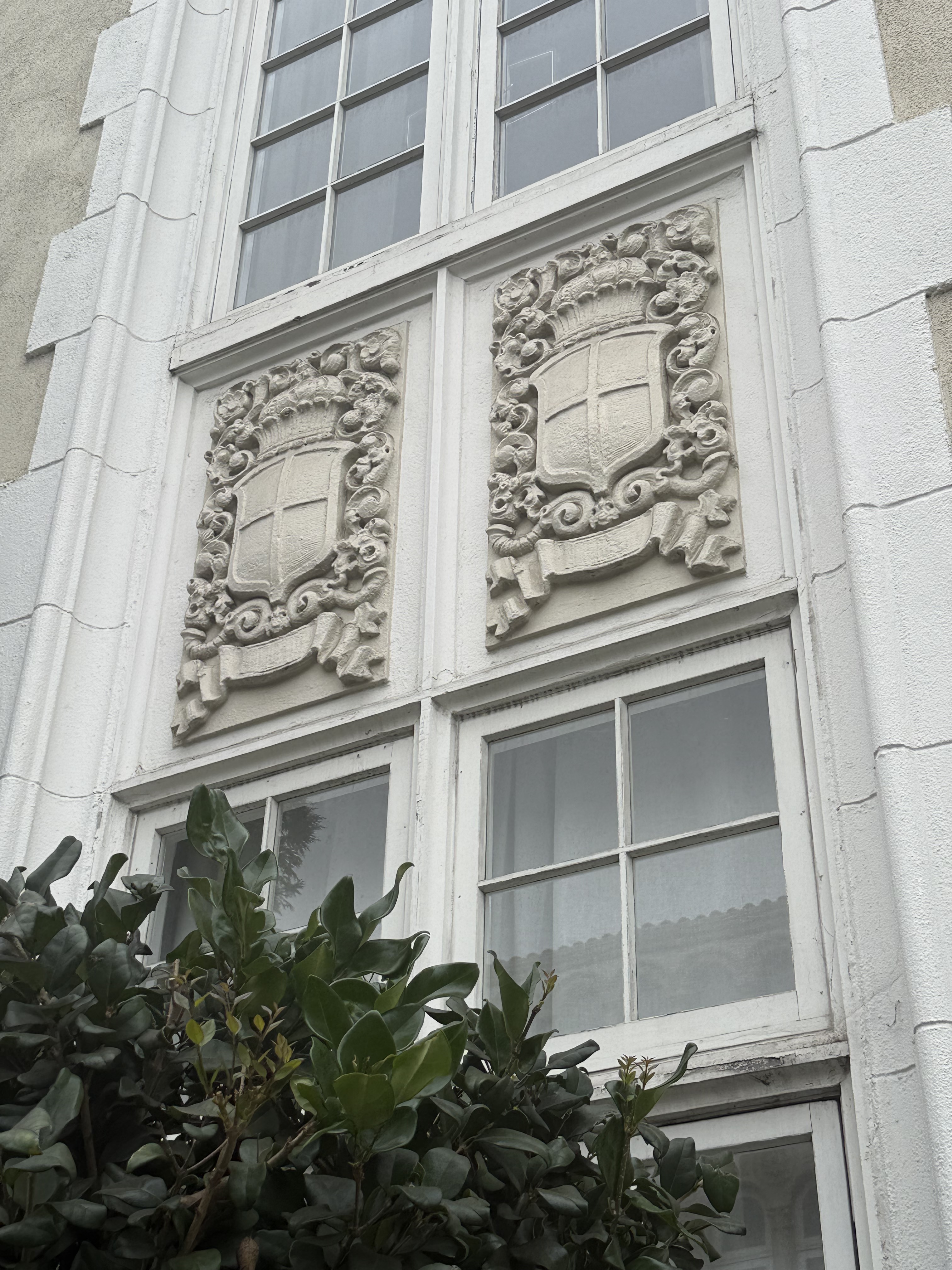
The building's nickname derives from four prominent gabled dormers that pierce the steeply pitched roofline, part of a Chateauesque vocabulary that includes a small corner tourelle at the northeast corner, masonry chimneys, and what contemporary descriptions identified as Gothic and Tudor detailing, making the design a deliberate hybrid rather than a purely French Revival composition. The 16 to 17 units retain an exceptional level of original fabric for a rental property, including decorative exposed plaster beams, built-in cabinetry, hardwood floors, Gothic pointed arches between rooms, and original decorative and mosaic tilework. Several units follow two-story townhouse or split-level plans spanning the second and third floors, with living room ceilings reaching 14 to 18 feet, formal dining rooms, and balconies, while one apartment incorporates the turret as interior space. The building's Medieval-derived massing and ornamental detailing reflect Bryant's Beaux-Arts training under theater architect G. Albert Lansburgh, whose influence instilled the stylistic correctness and fine craftsmanship visible throughout.