William Randolph Hearst commissioned Julia Morgan in 1913 to design a monumental headquarters for his Los Angeles Examiner, the sixth newspaper in his expanding media empire. This first major collaboration between Morgan and Hearst would later lead to their legendary partnership at San Simeon, but the Herald Examiner Building established their working relationship in downtown Los Angeles. The commission demanded a structure that could function simultaneously as editorial offices, industrial printing facility, and civic stage for one of the city's most politically influential newspapers. Morgan delivered a building that operated as architecture-as-masthead, creating a visual symbol of media power in the rapidly growing metropolis.
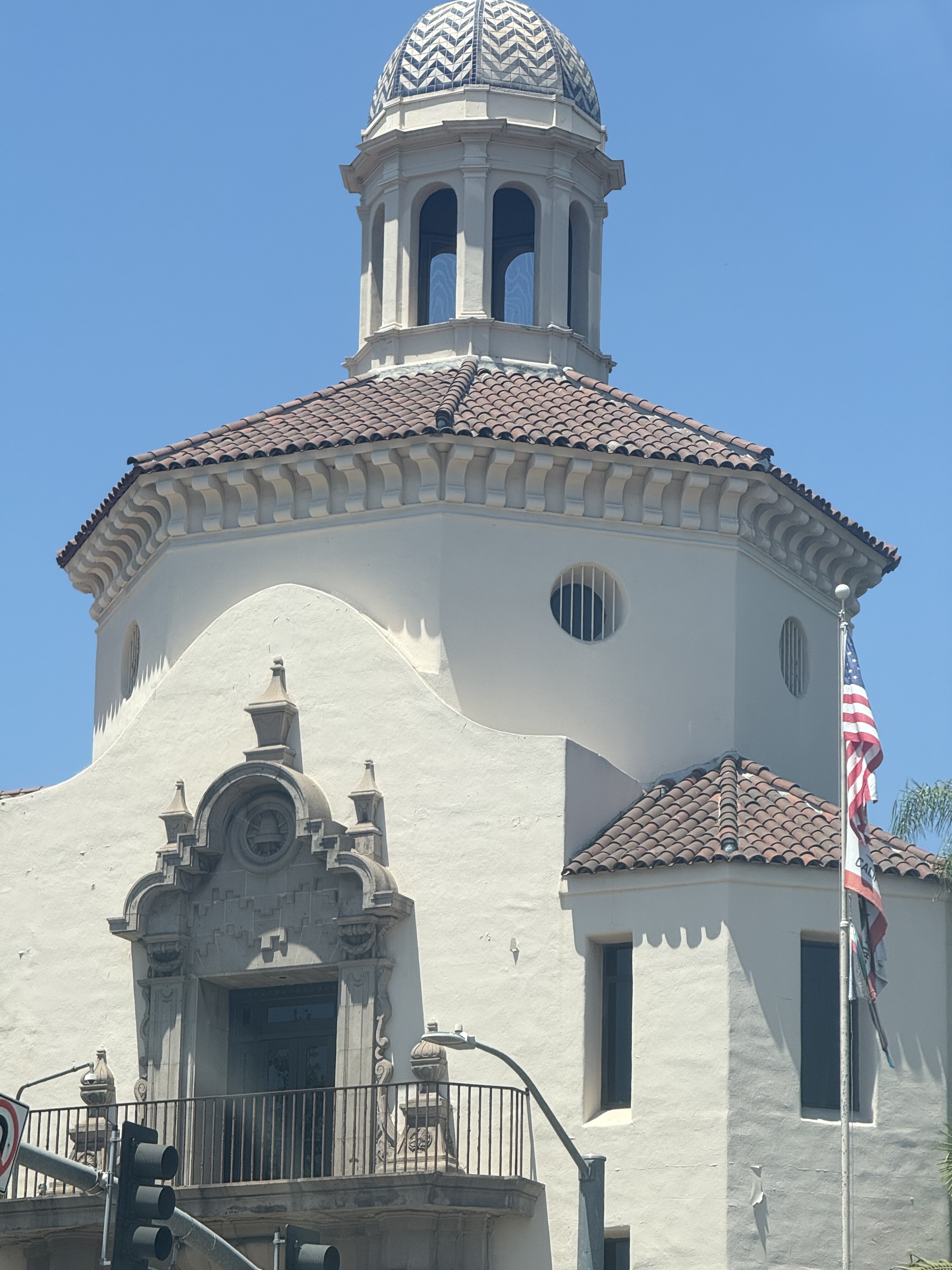
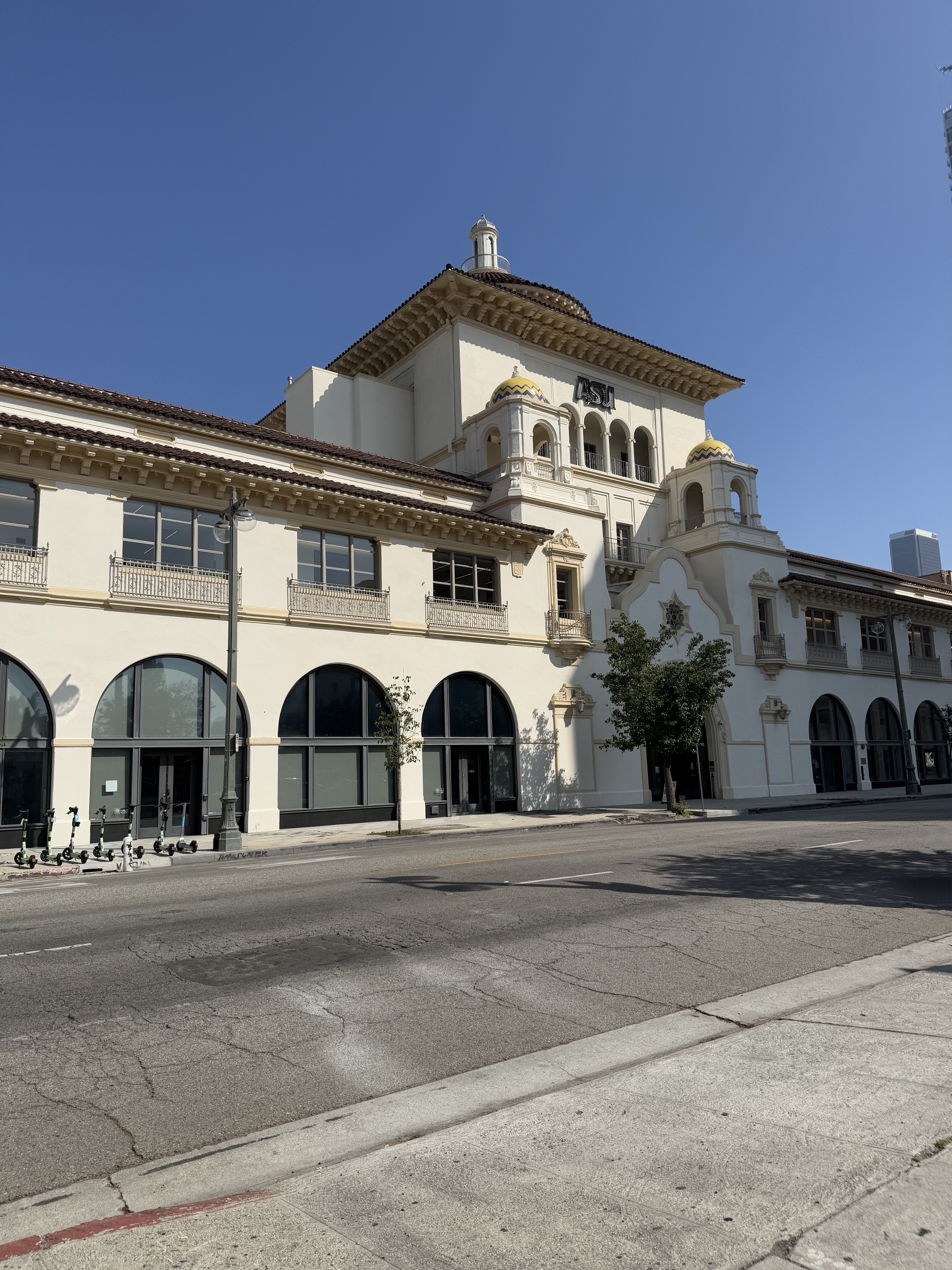
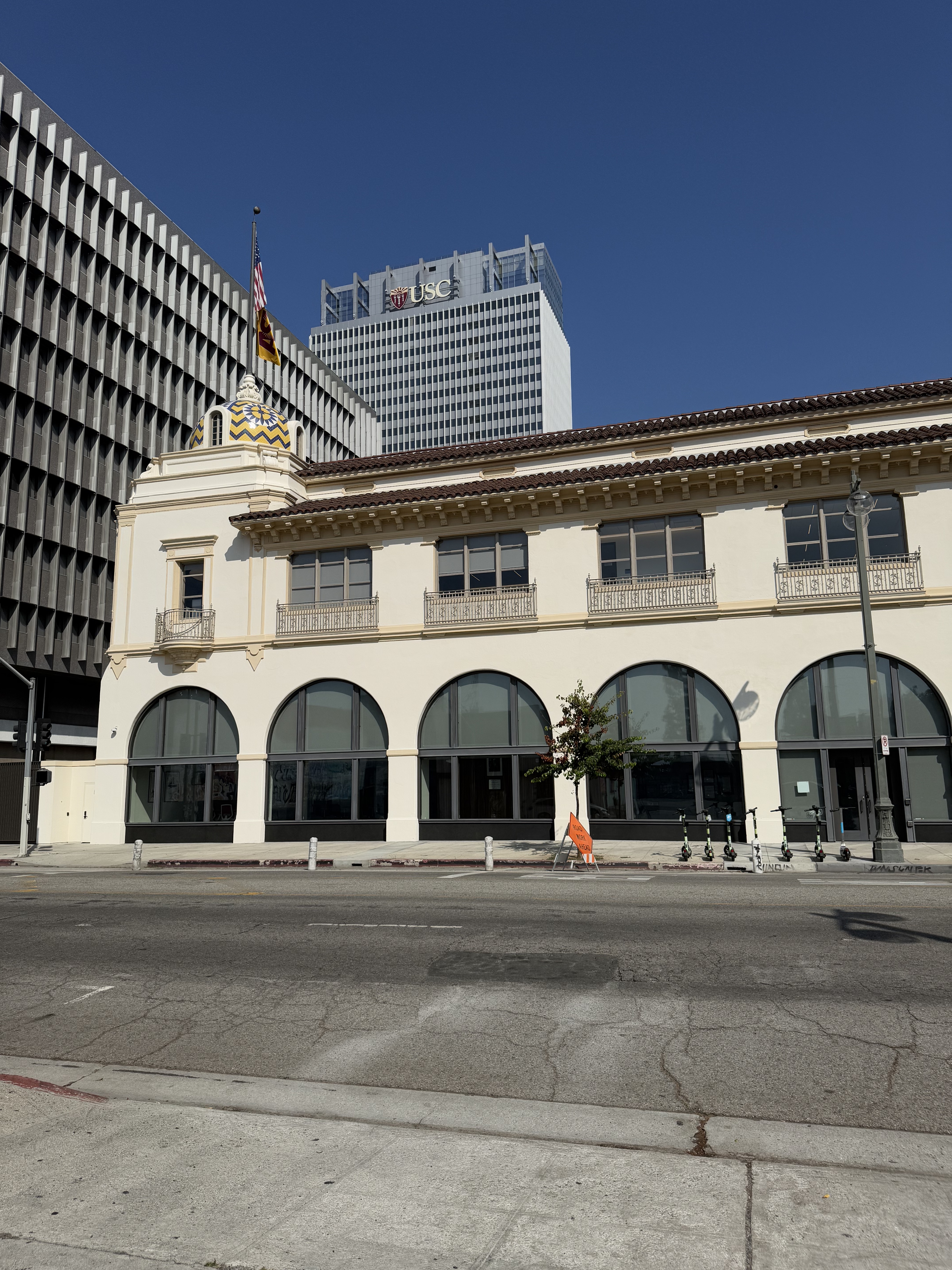
The building's Mission Revival and Spanish Colonial elements produce a disciplined composition rather than mere picturesque decoration. Corner massing anchors the structure while arcaded rhythms establish a stately street presence, crowned by a distinctive red tile roof and blue-and-yellow domes that create an unmistakable silhouette. Morgan's handling of the revival vocabulary demonstrates her engineering background, using regional architectural language to house the complex machinery of newspaper production. The plan accommodated massive printing equipment alongside editorial spaces, making this hybrid typology both functional industrial architecture and symbolic civic monument.