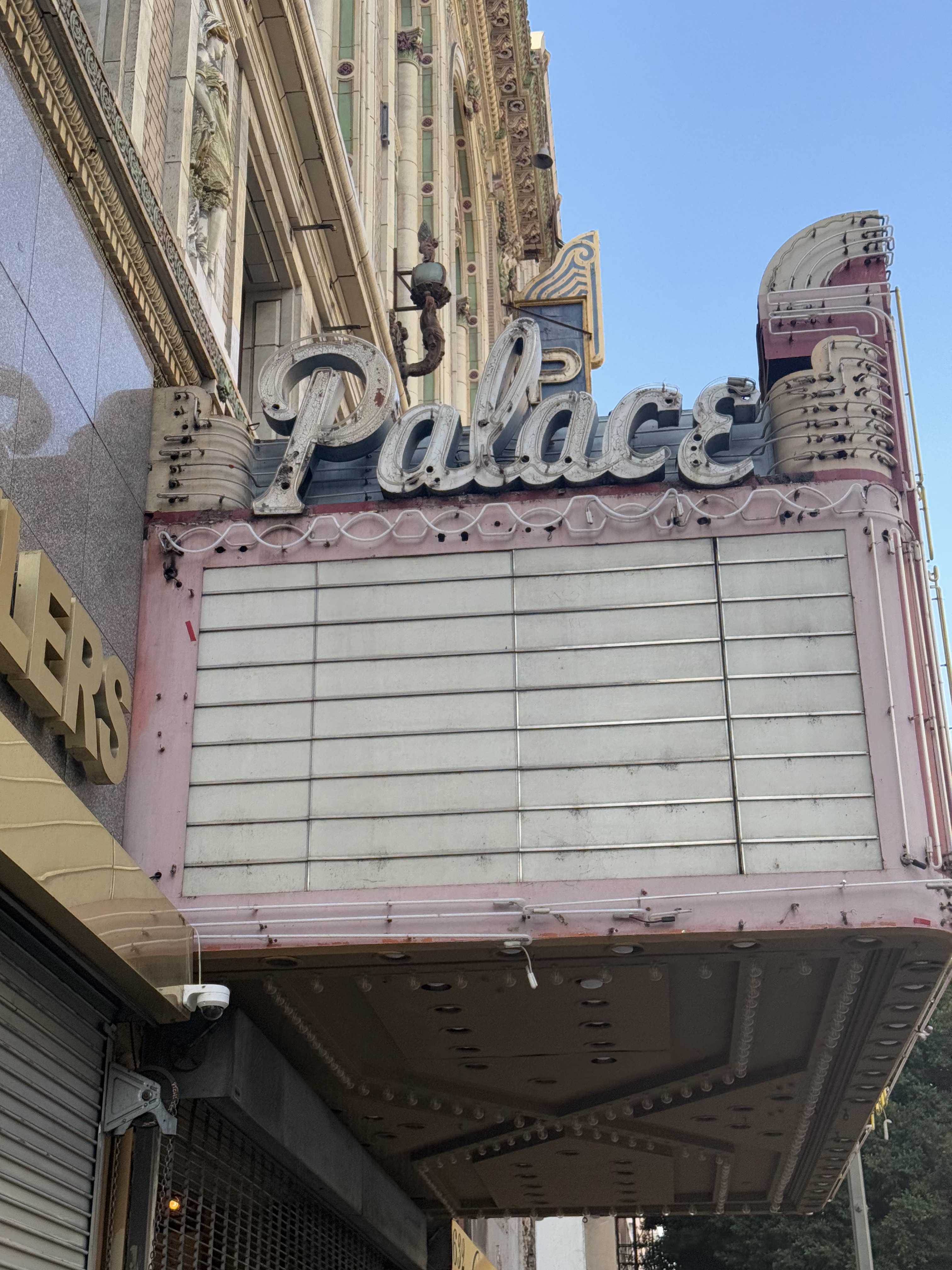
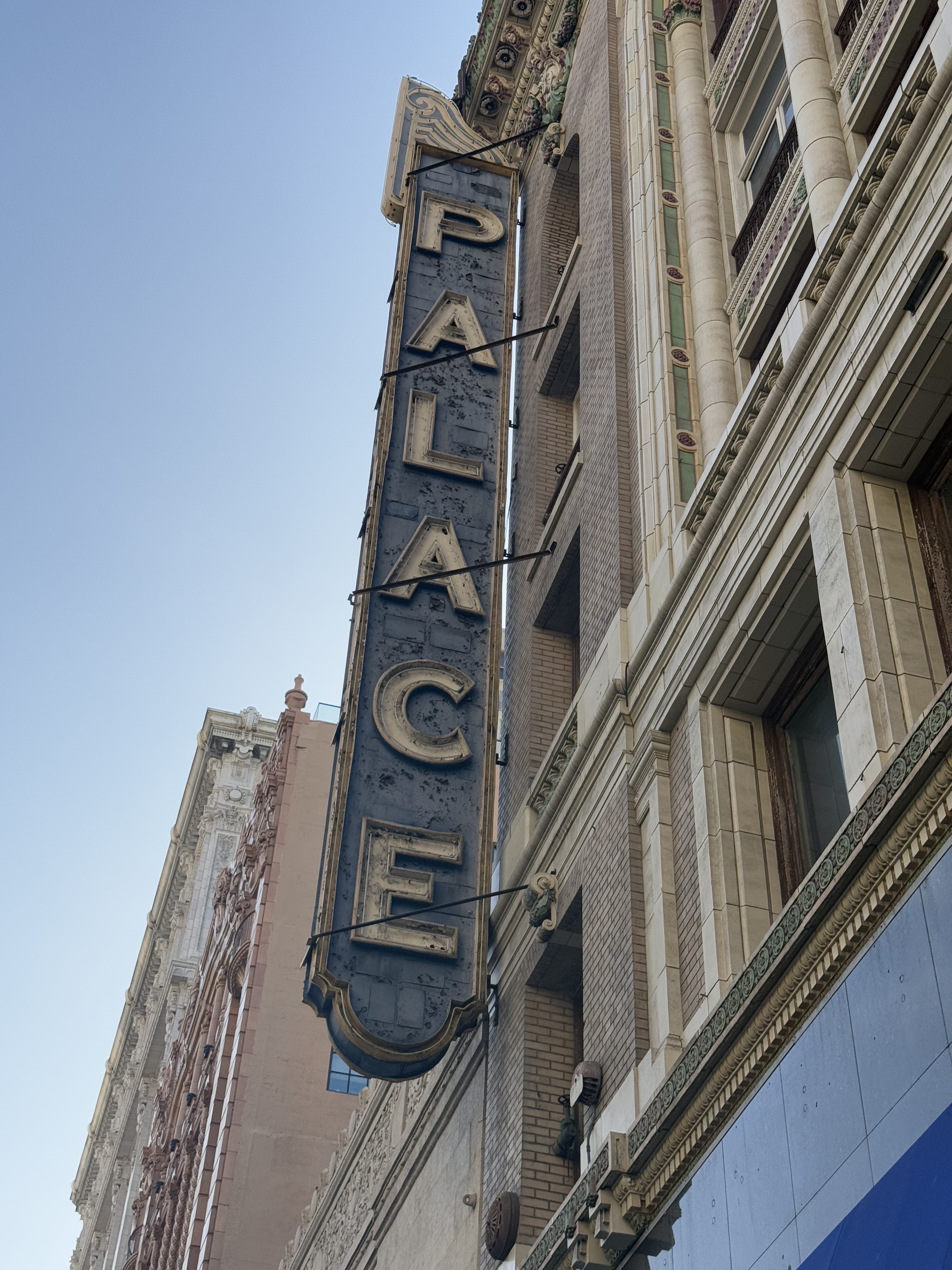
The Orpheum vaudeville circuit commissioned the Palace Theatre in 1911 as the third Los Angeles Orpheum, establishing what would become the oldest surviving major Broadway vaudeville house in the city. Designed by G. Albert Lansburgh, the theater opened during Broadway's emergence as the preeminent entertainment corridor, when vaudeville served as the democratic mass medium before Hollywood cinema reached full industrial power. The building represented corporate entertainment infrastructure rather than personal vanity, functioning as a crucial node in a transcontinental circuit that booked performers from Houdini to the Marx Brothers. This timing positioned the Palace within a city not yet defined by studio lots, when downtown stages remained primary venues where Angelenos encountered celebrity, novelty, and national culture.
Lansburgh's design demonstrates the sophisticated integration of commercial office architecture with lavish performance interiors that characterized early twentieth century theater buildings. The six-story street façade employs an urbane French and Italian Renaissance-Beaux-Arts mixture, featuring arched openings, sculptural ornament, and rich terra-cotta detailing calibrated to Broadway's emerging role as a district of metropolitan spectacle. The upper-level massing strategically masks the deeper auditorium behind, while the interior spatial logic privileges stage performance through carefully orchestrated boxes, ornamented sightlines, and an atmosphere designed for live-event ceremony. Unlike later movie palaces, the original vaudeville configuration emphasized the relationship between performer and audience, creating intimate yet grand spaces for live entertainment.