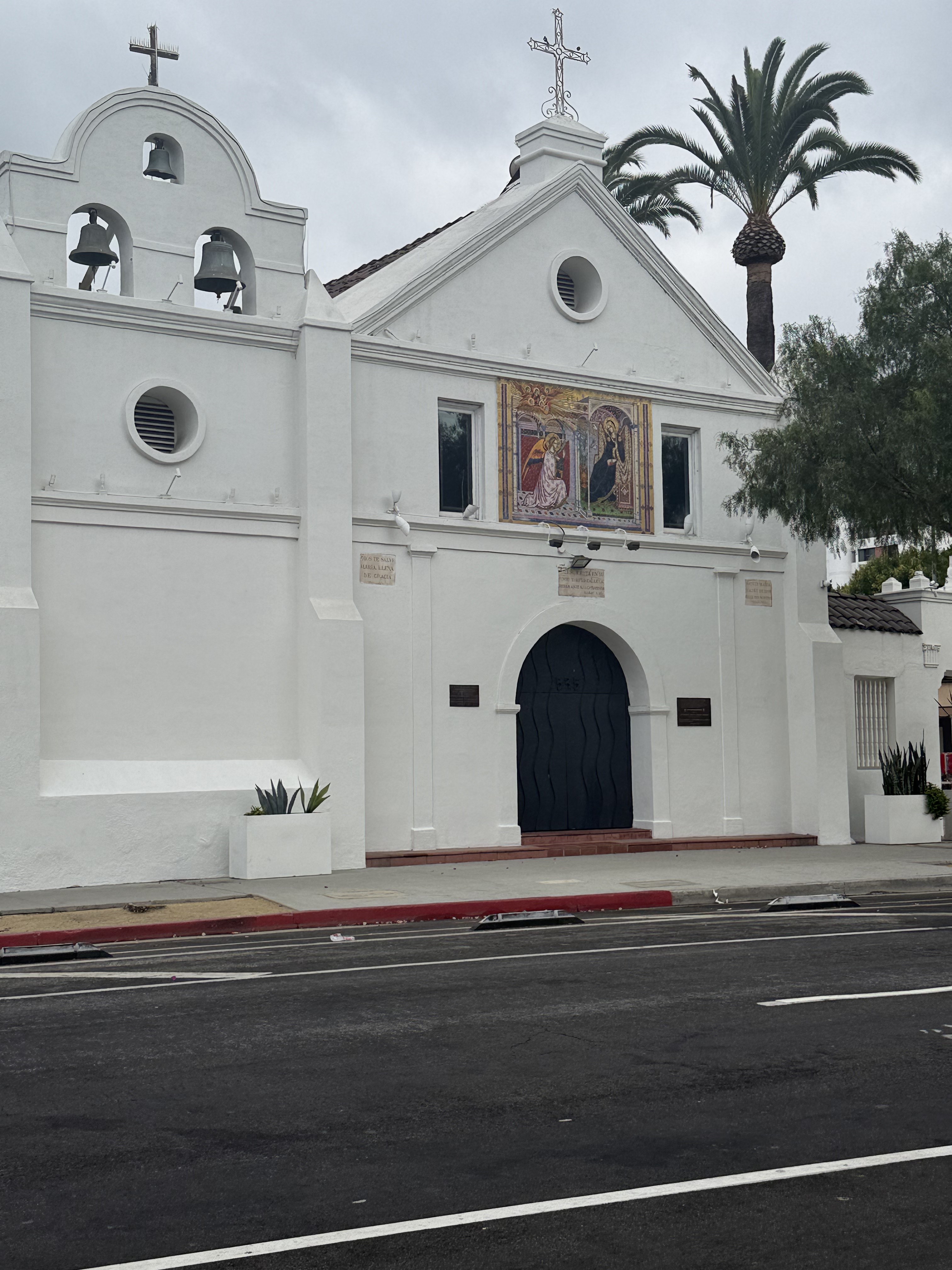
Plaza Church, officially known as La Iglesia de Nuestra Señora la Reina de los Ángeles (The Church of Our Lady Queen of the Angels), stands on a foundation of faith that predates the city itself. In 1784, Franciscan priests from Mission San Gabriel built the original Nuestra Señora Reina de los Ángeles Asistencia, a small adobe structure serving the spiritual needs of Los Angeles' founding pobladores. When this building deteriorated beyond repair, citizens petitioned for a replacement. On August 18, 1814, Franciscan Fray Luis Gil y Taboada placed the cornerstone for a new church on the ruins of the old asistencia. Construction faced numerous setbacks—including the 1815 Los Angeles River flood that forced relocation of the entire plaza to higher ground—but perseverance prevailed. The completed church was finally dedicated on December 8, 1822, becoming the first and only Roman Catholic church in Los Angeles for over half a century.
The church showcases a blend of architectural influences that reflect its long evolution. Following damage from heavy rains in 1859 that caused the front facade to collapse, the church was completely rebuilt in 1861 using original materials but with a brick front and shingle roof replacing the classic red tiles. The most significant transformation came in 1912, when the complex was enlarged and redesigned in Franciscan mission style with Moorish influences, creating the structure visitors see today. The iconic campanario (bell wall) has undergone multiple iterations from the original 1822 design to a pergola style in 1861, and finally restored to its current form in 1915. The Main Street facade features a stunning 1981 mosaic by ecclesiastical artist Isabel Piczek, depicting the Annunciation using tesserae tile from Pietrasanta, Italy. This artwork replaced earlier frescoes by French artist Henri Joseph Penelon that were painted over during renovations.