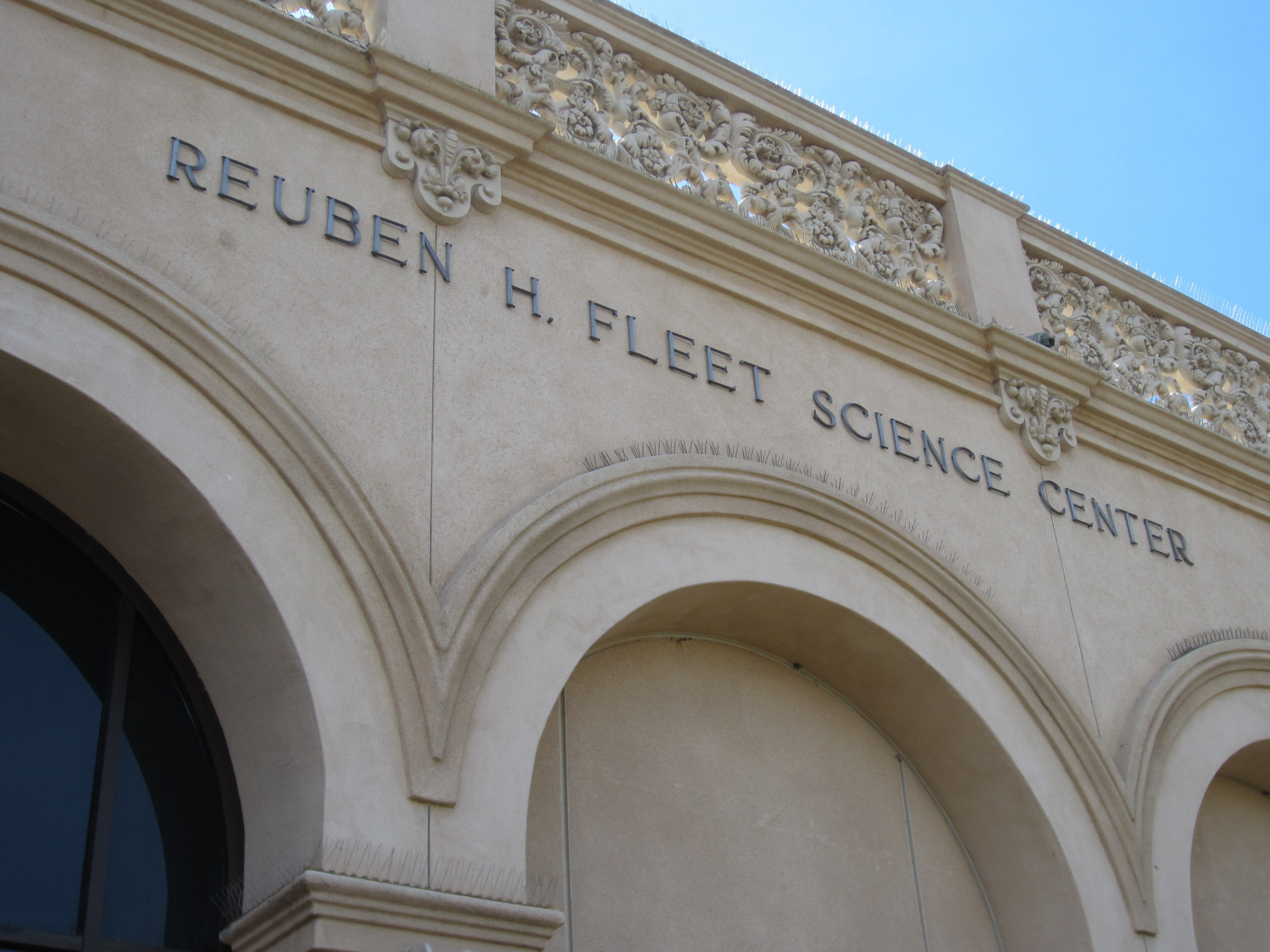
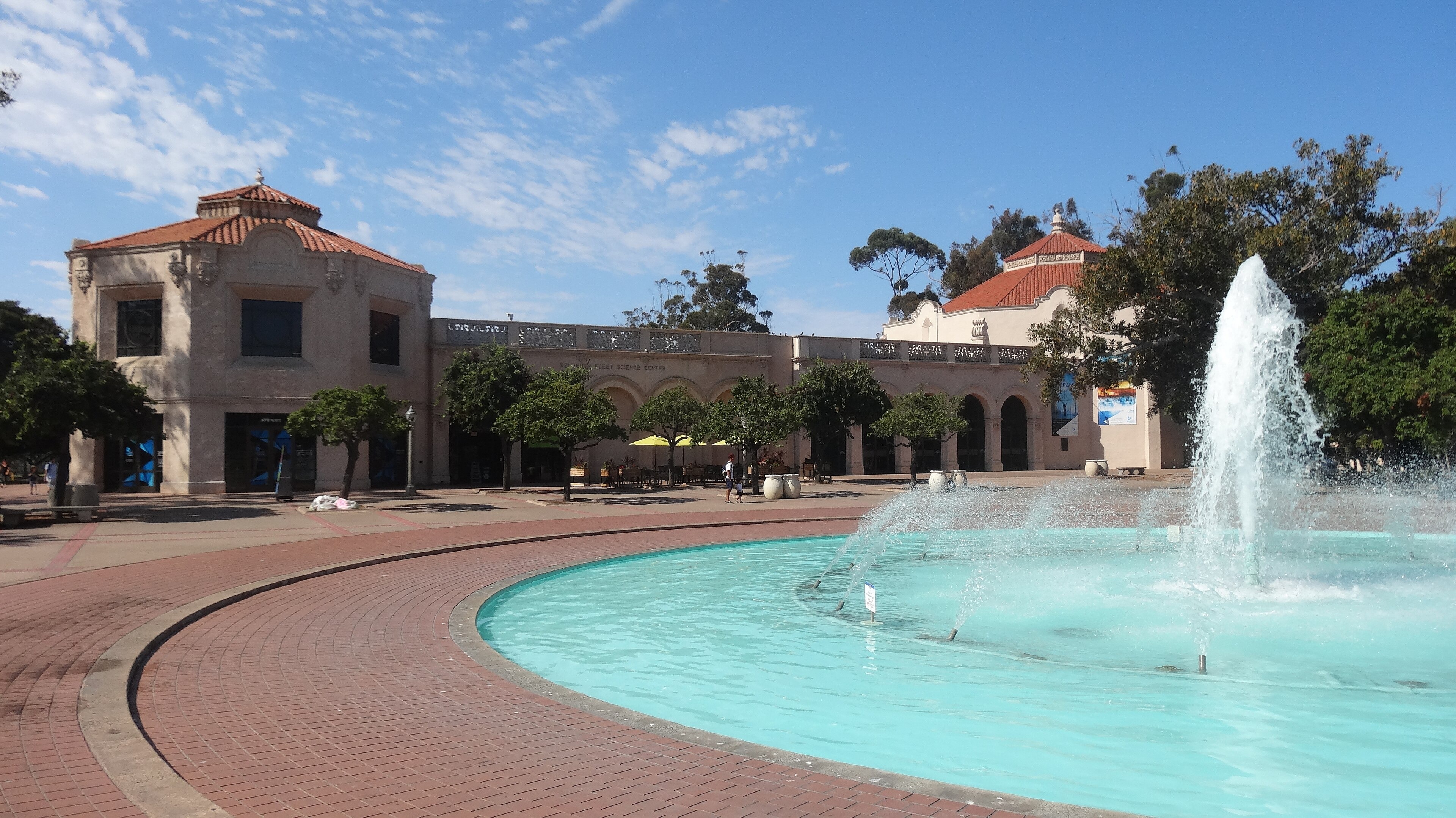
The Reuben H. Fleet Science Center opened on March 10, 1973, at the east end of El Prado, the product of a citizens' group that had first met at the San Diego Hotel in 1957 to propose a science museum built around a planetarium. A gift from the family of Reuben H. Fleet, founder of Consolidated Aircraft and the man who organized the United States Air Mail Service in 1918, enabled construction of what became both a Space Race monument and a genuine technological first. The building was designed by Louis Bodmer to house a Spitz Space Systems digital computer-controlled star projector and a new 70mm projection format that the institution's founders requested from IMAX Corporation: a tilted dome screen with fisheye projection, for which they coined the term OMNIMAX. This was the first OMNIMAX theater in the world, and the wraparound dome format created here became the standard for science museums worldwide.
Bodmer's design uses massing, arcading, tile, and color to blend into Balboa Park's Spanish Colonial Revival vocabulary without imitating it, which was the explicit brief. The result is a late-modern building that sits beside the Bea Evenson Fountain without giving offense, an unglamorous but real achievement given the Committee of 100 was at the height of its influence and El Prado was being converted to a pedestrian mall the same year. The tilted dome that houses the Space Theater, now branded IMAX Dome and seating roughly 300, is the architecturally significant element. The building received a multimillion dollar expansion in 1998 that tripled exhibit space and doubled the facility, and reopened on June 27, 2026, after its first major renovation since the late 1990s, funded by a 5.6 million dollar State of California grant that added more than twenty percent additional exhibit space.