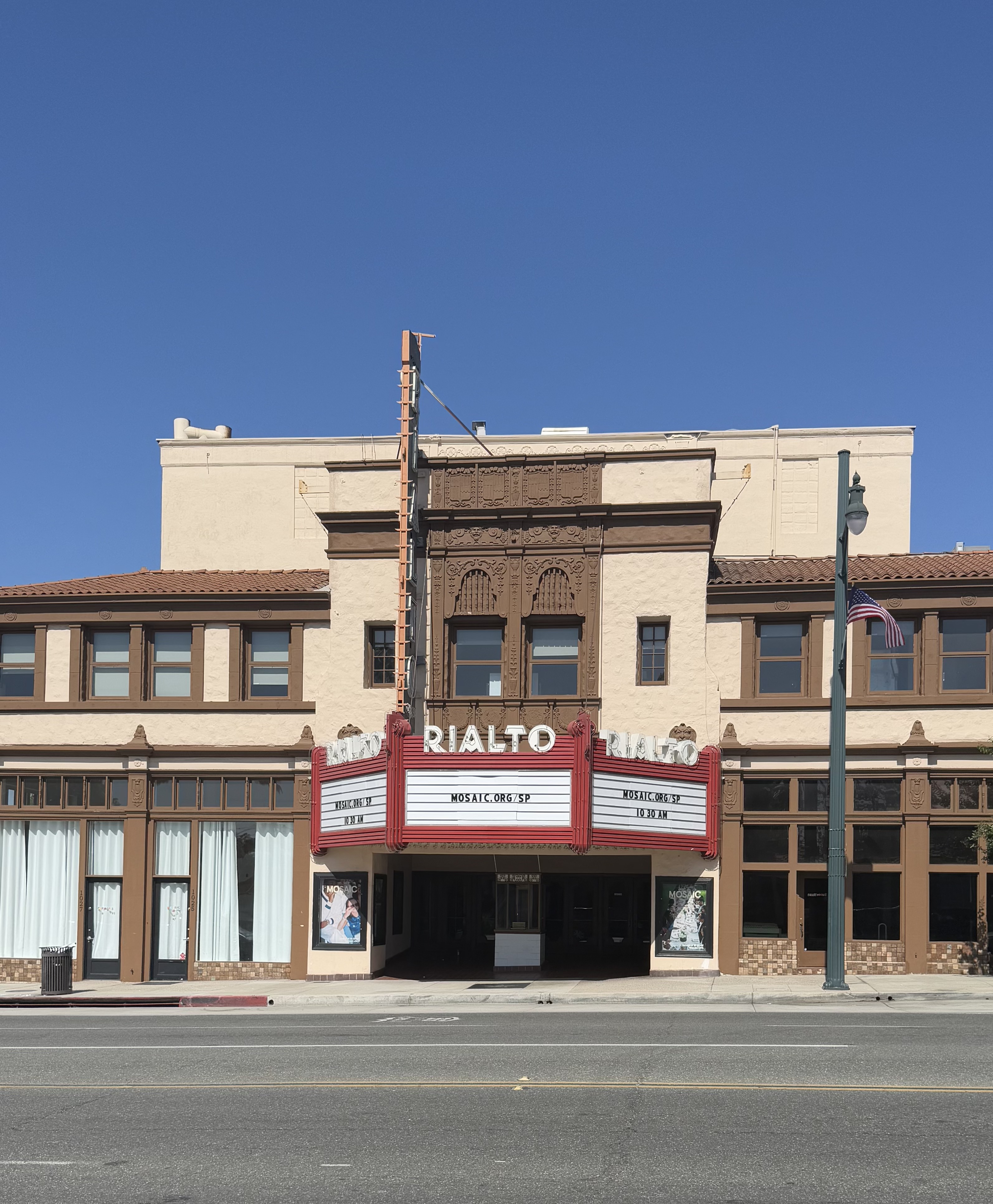
The Rialto Theatre opened on October 17, 1925, commissioned by showman C.L. Langley, who had completed Glendale's Alexander Theatre just one month prior. Built at the height of Jazz Age movie palace culture, when American theaters transformed from functional screening rooms into fantasy environments, the Rialto launched with a world premiere of Universal's *What Happened to Jones* accompanied by a Fanchon and Marco vaudeville show featuring trapeze artists. At 30 cents admission, the South Pasadena venue placed cinematic escapism within middle-class reach, offering audiences a 1,143-seat auditorium designed for both film and live performance.
Lewis Arthur Smith conceived an eclectic Moorish Fantasy interior that the *Los Angeles Times* described as "an odd mashup of Spanish Baroque and Egyptian kitsch," layering Egyptian, Classical, and Spanish Baroque elements into a single atmospheric experience. Original murals still adorn the walls, while a Batchelder tile drinking fountain by noted Pasadena tile-maker Ernest A. Batchelder remains in situ, connecting the theater to the Arts and Crafts movement flourishing nearby. The stage extends 30 feet deep with dressing rooms and an orchestra pit below, its intact scenery loft a vestige of the live productions that ceased in the 1950s. The original Mighty Wurlitzer Organ, removed after a 1970s fire, has been partially returned, with its console now displayed at the South Pasadena Preservation Foundation museum.