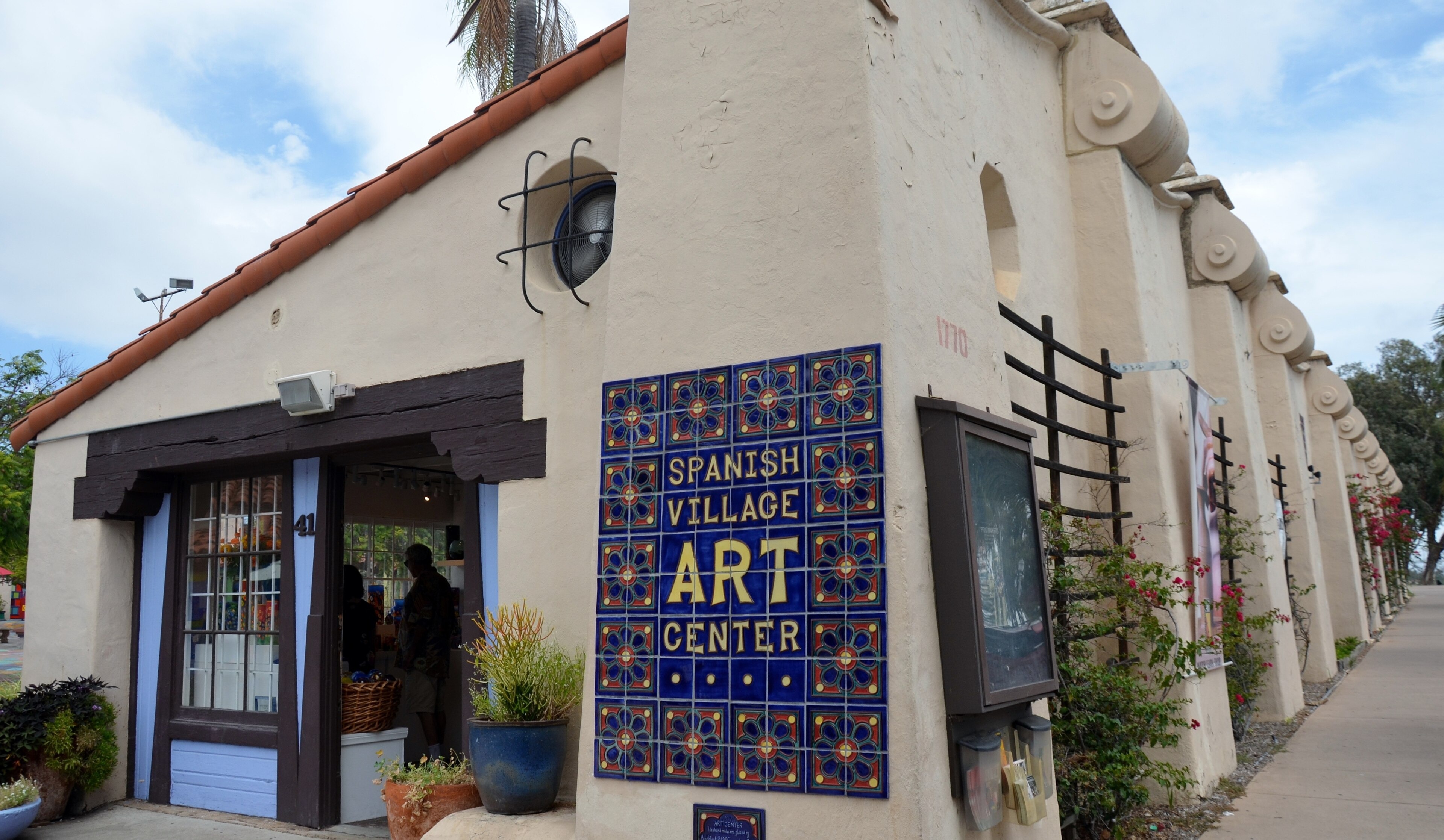
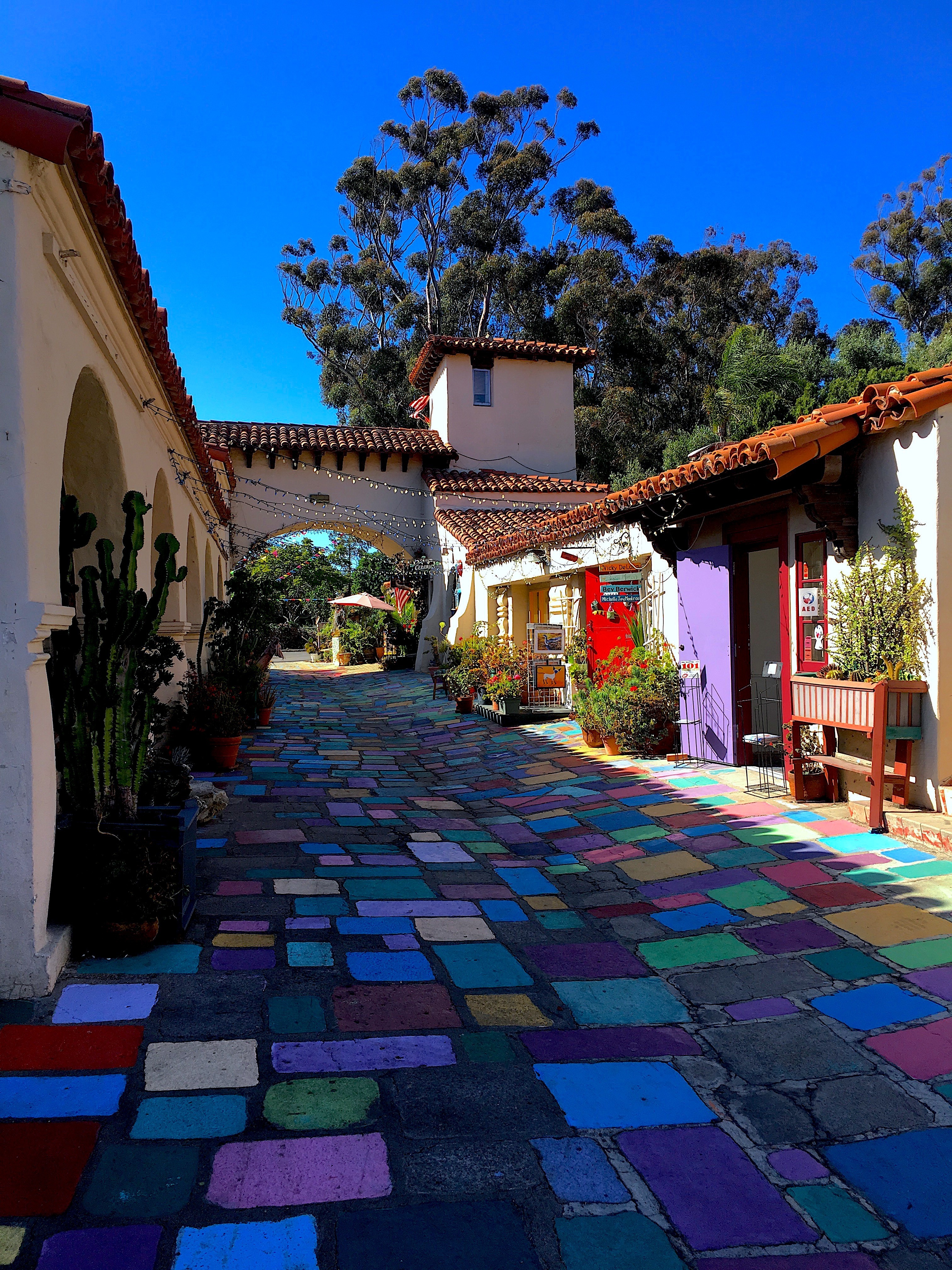
Built for the 1935 California Pacific International Exposition under the direction of Richard S. Requa, the Spanish Village was conceived as an atmospheric fairground attraction where visitors could wander a simulated Spanish town. The exposition, mounted during the Depression as economic stimulus, reused the 1915 fair grounds and drew roughly seven million visitors across two seasons. When the fair closed in 1936, artists asked to use the buildings, and the colony was founded in 1937, making it one of the oldest continuously operating artist colonies in the United States and the oldest on the West Coast in continuous occupation of the same buildings.
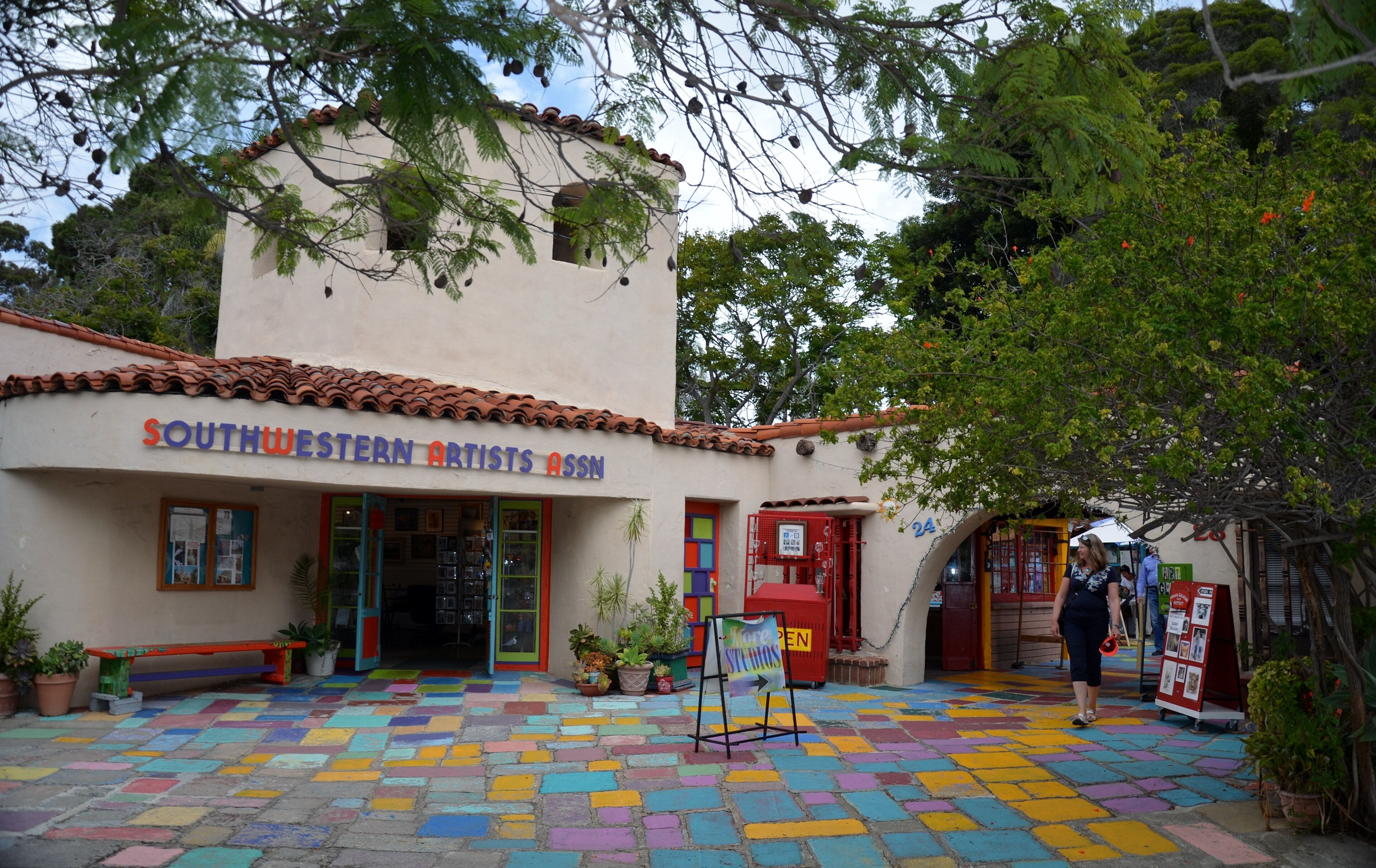
The village consists of modest single-story stucco structures with tile roofs arranged tightly around a central plaza to simulate a village in Spain. The scale is deliberately domestic and the enclosure is deliberately complete: visitors enter through a gate and the outside world disappears. The courtyard paving is the memorable element, a field of irregular colored concrete tiles in reds, blues, greens, and yellows that has become one of the most photographed surfaces in San Diego. Thirty-seven studios house over 200 artists working in ceramics, painting, glass, sculpture, jewelry, photography, printmaking, and textiles, with studios open daily so artists work in public view.