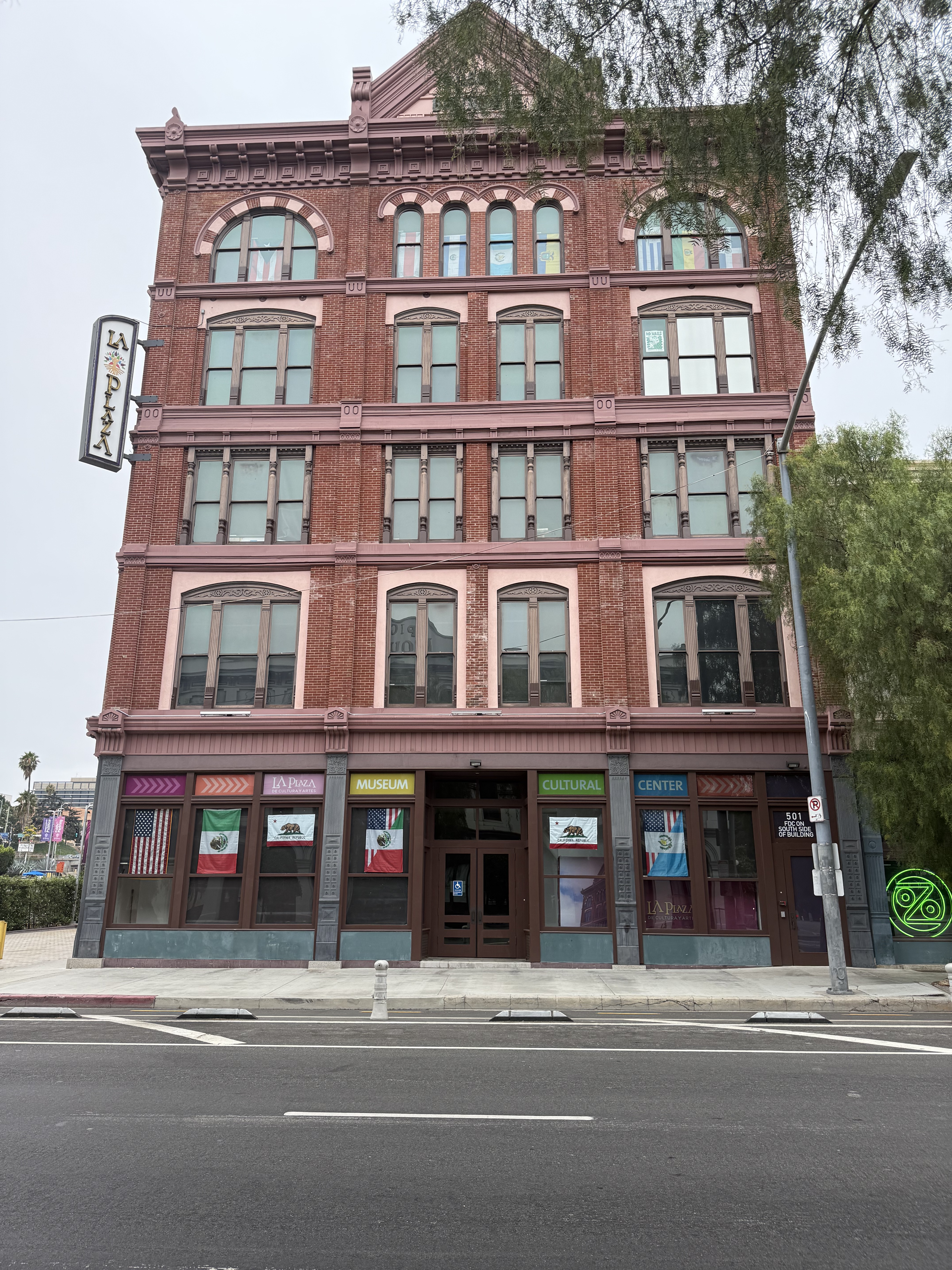
Commissioned in 1888 by Los Angeles businessman William Vickrey as an investment property, this five-story brick commercial block rose during the great Southern California real estate boom that transformed Los Angeles from an agricultural outpost into a commercializing city. The building opened with the Eastside Bank occupying the ground floor and retail and lodging above, anchoring a prominent corner at Main Street and the Plaza where the district was shedding its rural character to become the city's first central business district. The site itself sits atop deeply layered history, on land once tied to the Juan Jose Dominguez family and adjacent to the Camposanto, the city's first cemetery established in 1848. Among the earliest five-story buildings in Los Angeles and sometimes called the city's first skyscraper, it announced the new urban ambitions of a railroad-fed boomtown.
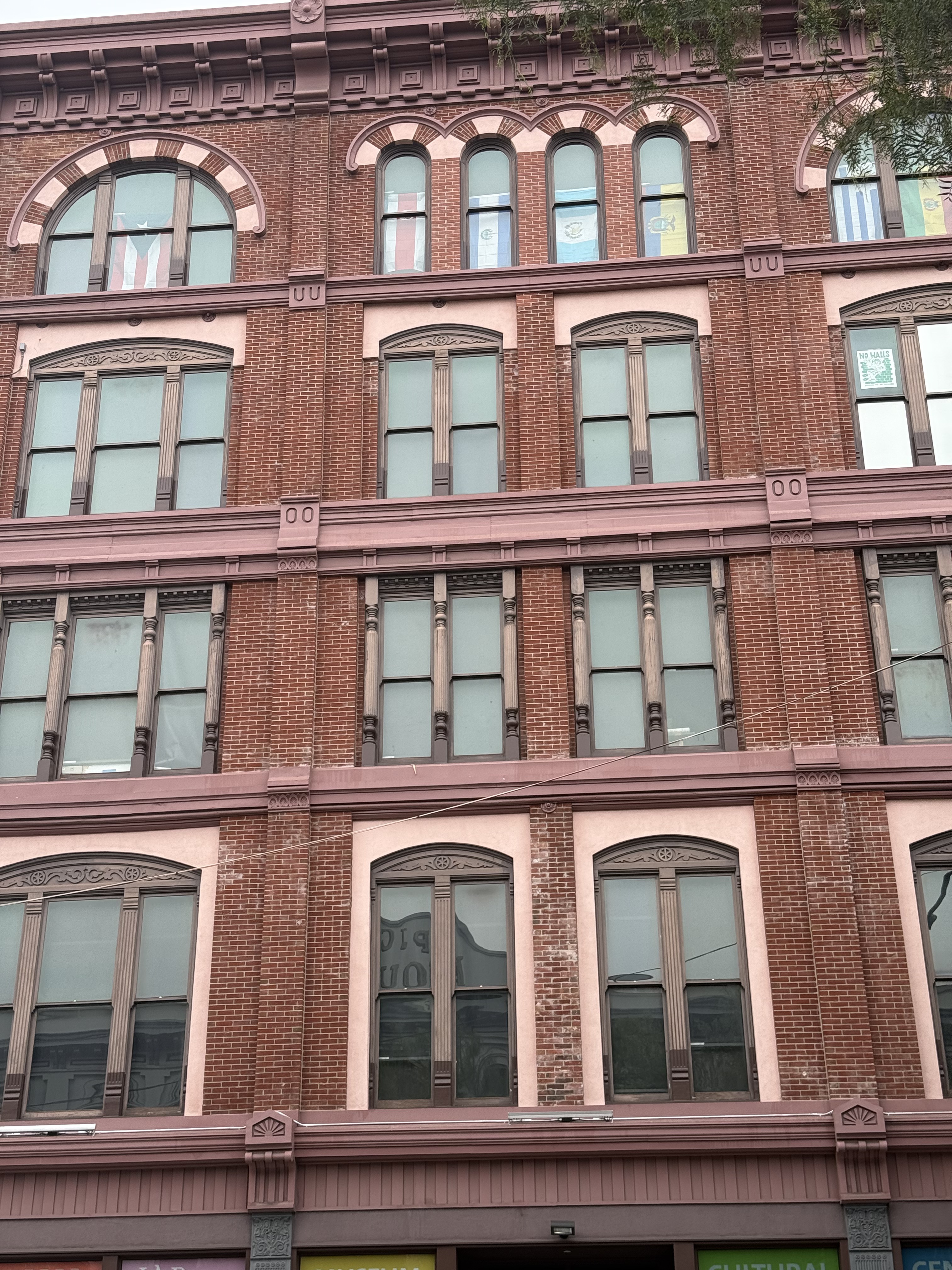
Architect R. B. Young designed the structure in a transitional Italianate style, deliberately varying the treatment of each story of the facade for visual interest. The top-floor windows carry Romanesque arches, while the third-floor windows are embellished with turned posts serving as mullions between grouped sashes. Original cast-iron detailing includes the storefront columns, the stringcourses separating each floor, and decorative arched rails capping the upper-floor windows. An elaborate cornice with false-gable parapets originally crowned the facades, removed for public safety after the 1971 Sylmar earthquake but later reconstructed during rehabilitation. The load-bearing masonry construction reflects Victorian-era commercial building practices, with ground-floor retail designed to support multiple stories of mixed use above.