Congregation B'nai B'rith, the oldest Jewish congregation in Los Angeles, dedicated its third and most architecturally ambitious home in 1929, renaming itself Wilshire Boulevard Temple to mark the occasion. Built for $1.4 to $1.5 million by contractor Herbert M. Baruch, the temple arrived at the height of Hollywood's studio era, funded substantially by the moguls who built that system. The Warner brothers commissioned artist Hugo Ballin's murals depicting 3,000 years of Jewish history in memory of their brothers Milton and Samuel, while Irving Thalberg funded the painting of the Shema prayer, Carl Laemmle donated the bronze chandeliers, and Louis B. Mayer funded the stained glass windows, making this arguably the single greatest concentration of studio era patronage in any religious building in the city. Architects S. Tilden Norton and Abram M. Edelman, the latter being the son of the congregation's first rabbi, designed a structure that merged ecclesiastical tradition with the visual drama their Hollywood patrons were perfecting on nearby studio backlots.
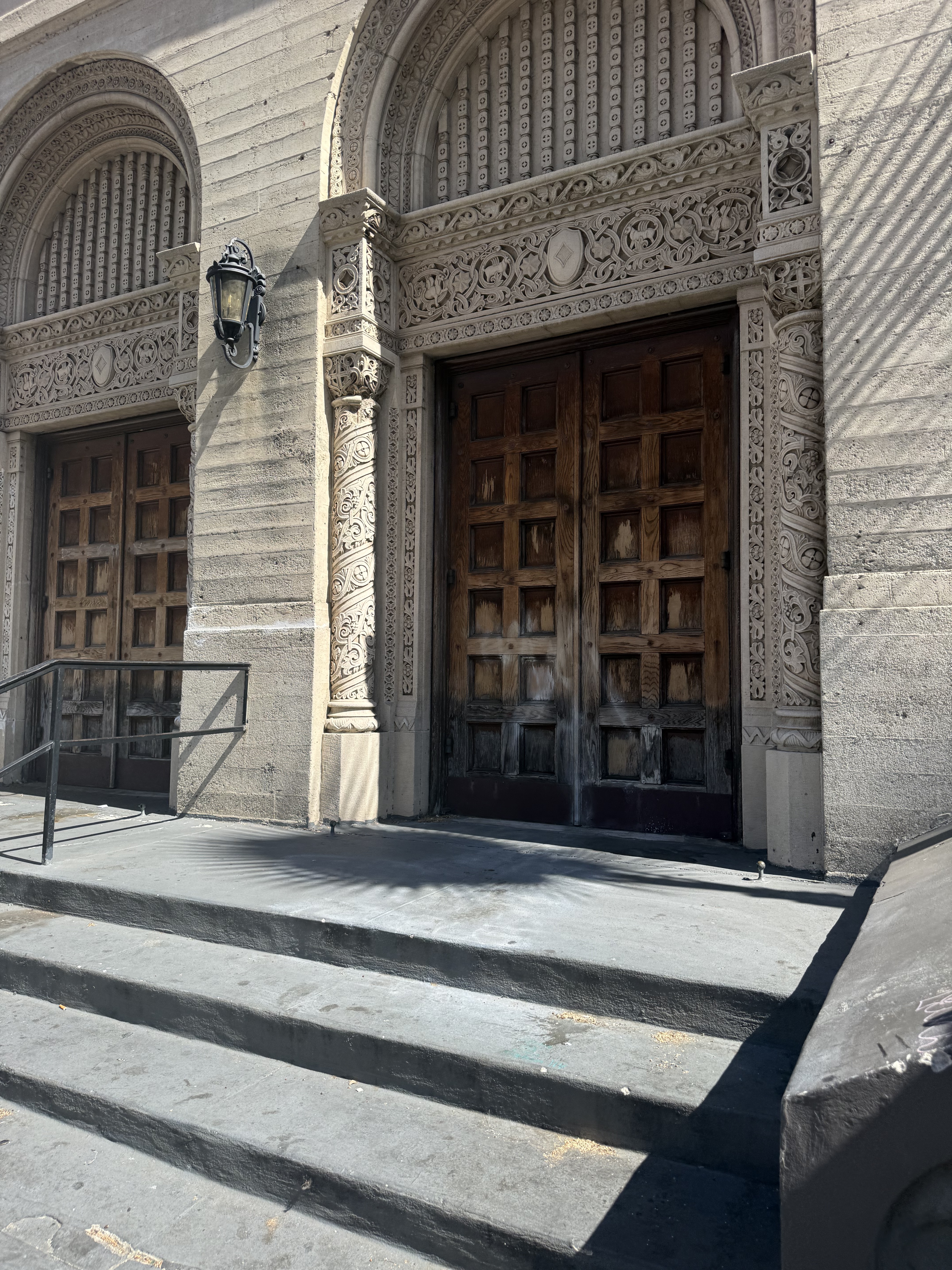
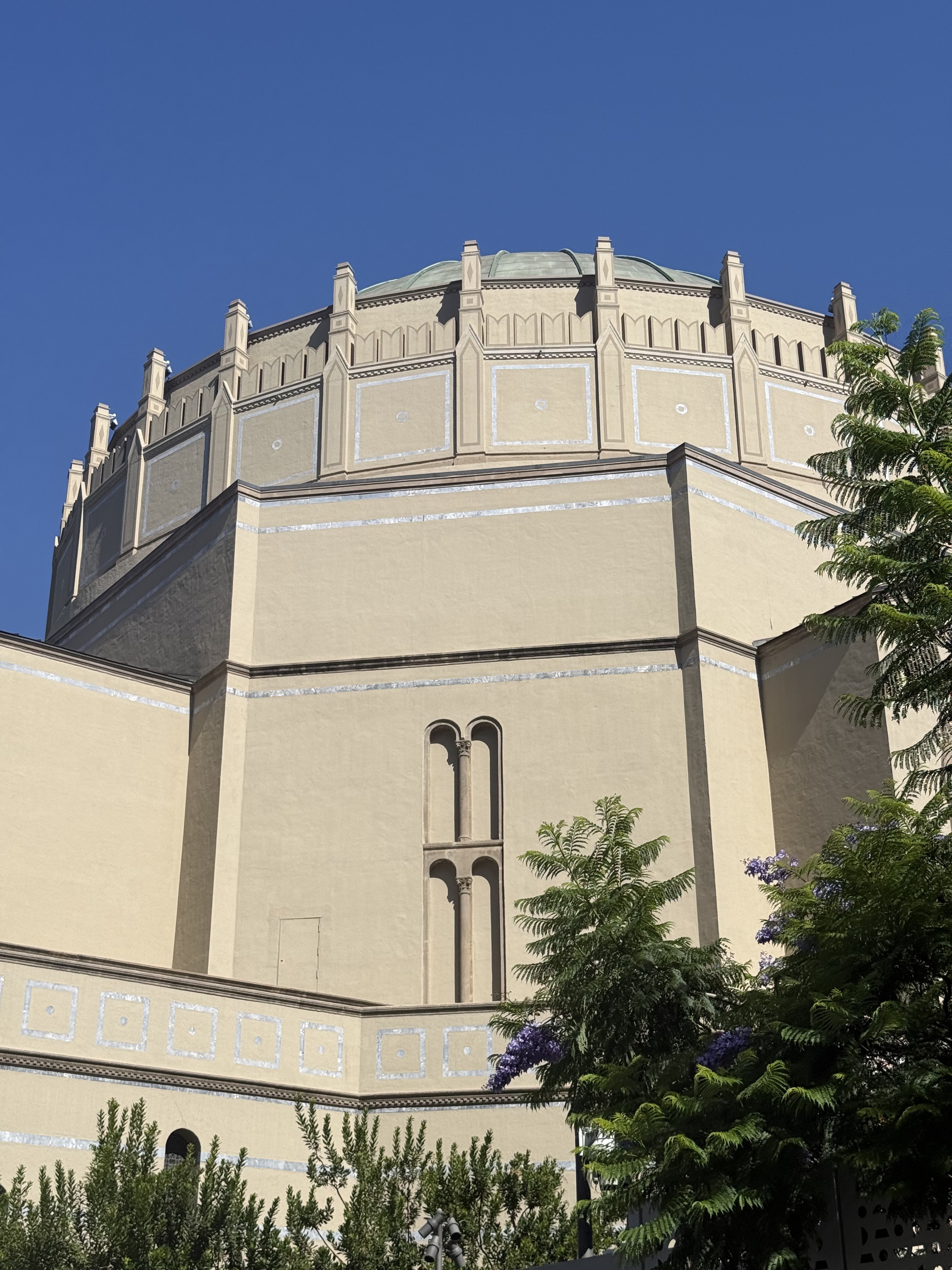
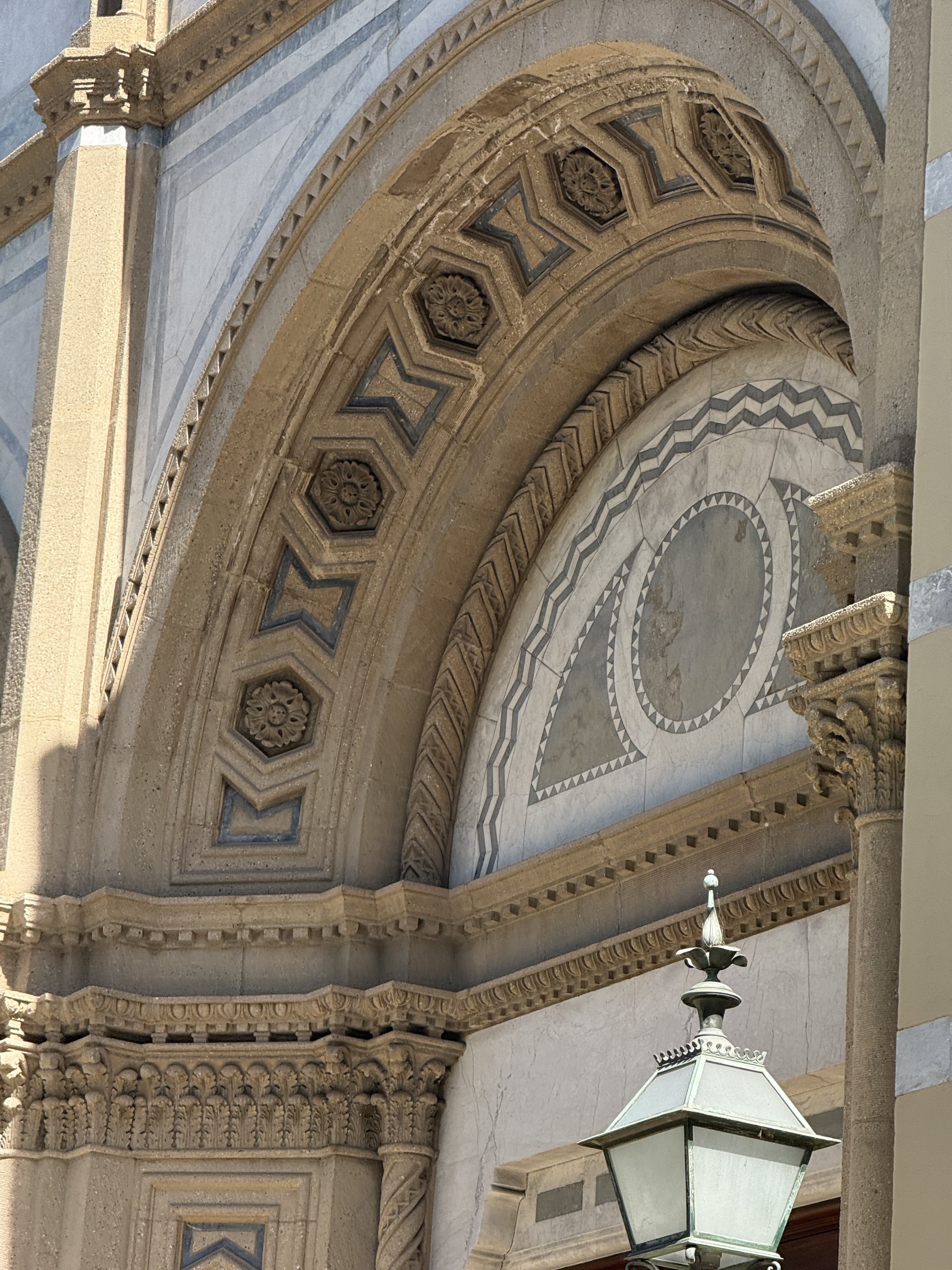
The building presents an octagonal sanctuary crowned by a Byzantine Revival dome spanning 100 feet in diameter and rising nearly 140 feet above street level. Its Wilshire facade combines a traditional Romanesque three arch portal and rose window with the vast dome behind, evoking both the Pantheon in Rome and, per period commentary, a movie theater's sense of spectacle. The interior sanctuary features black Belgian marble columns, teakwood doors, gold altar fixtures, and bronze chandeliers, with stained glass by Judson Studios. Ballin's murals wrap the sanctuary walls in scenes of Jewish history, painted by an artist who had himself worked as a silent film director and art director for Warner Bros. just years before receiving this commission. The coffered dome ceiling culminates in an oculus framed by the Shema prayer, creating a vertical axis that draws the eye upward through layers of ornament and light.