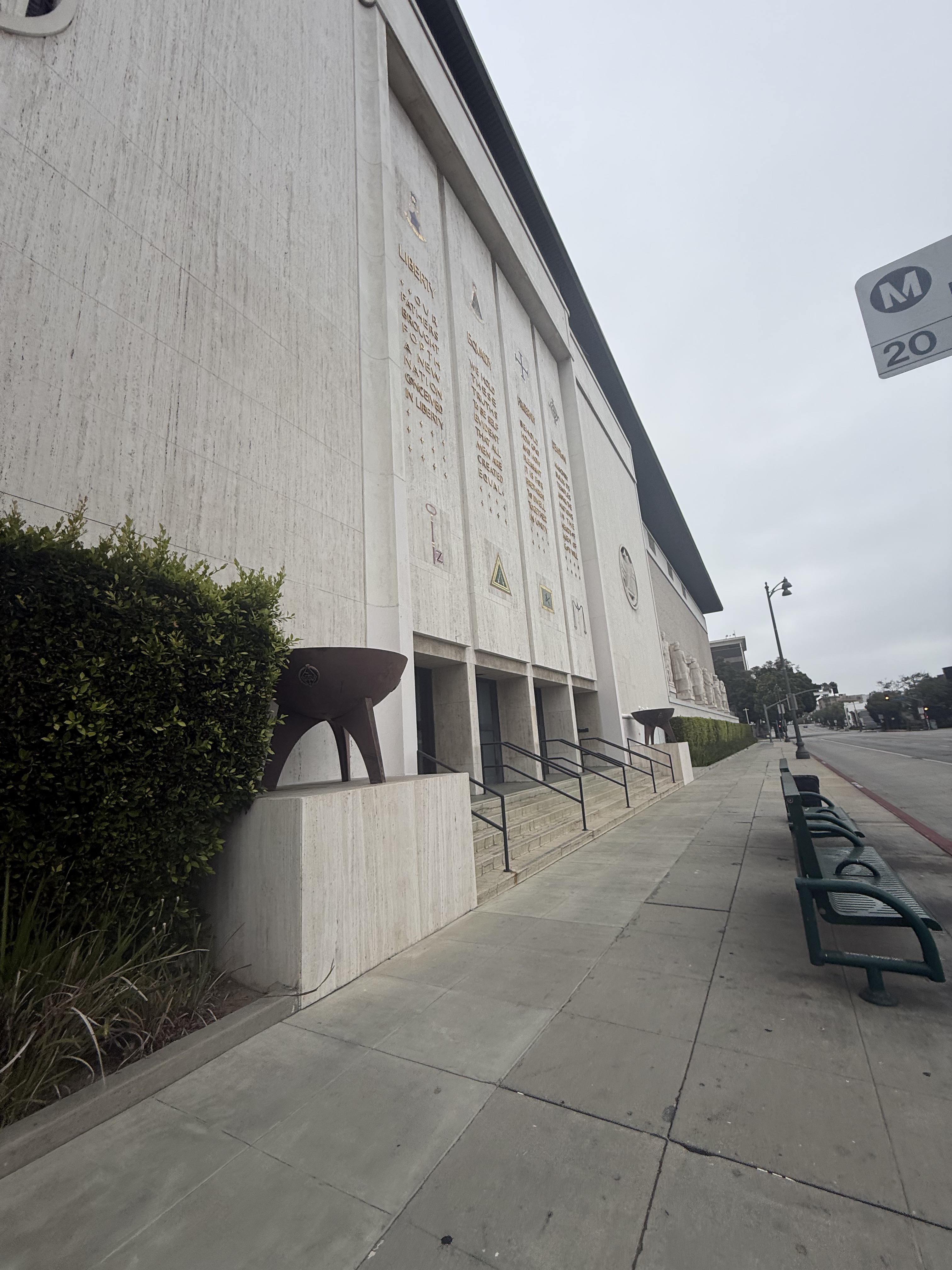
Completed in 1971, the Wilshire Colonnade was originally named the Ahmanson Center after financier Howard F. Ahmanson, founder of Home Savings and Loan and one of the most influential business figures in twentieth century Los Angeles. Ahmanson served as an active client, instrumental in planning and shaping the design of the complex that would replace his earlier 1950s National American Insurance Company building on the same site. He died in 1968, two years before construction finished, making the Colonnade a posthumous monument to his contributions to Los Angeles finance and the postwar savings and loan industry that financed much of the region's suburban growth boom. The complex represents the third building Edward Durell Stone designed for Wilshire Boulevard, bringing the architect of the Museum of Modern Art, the Kennedy Center for Performing Arts, and the U.S. Embassy in New Delhi to this stretch of the corridor.
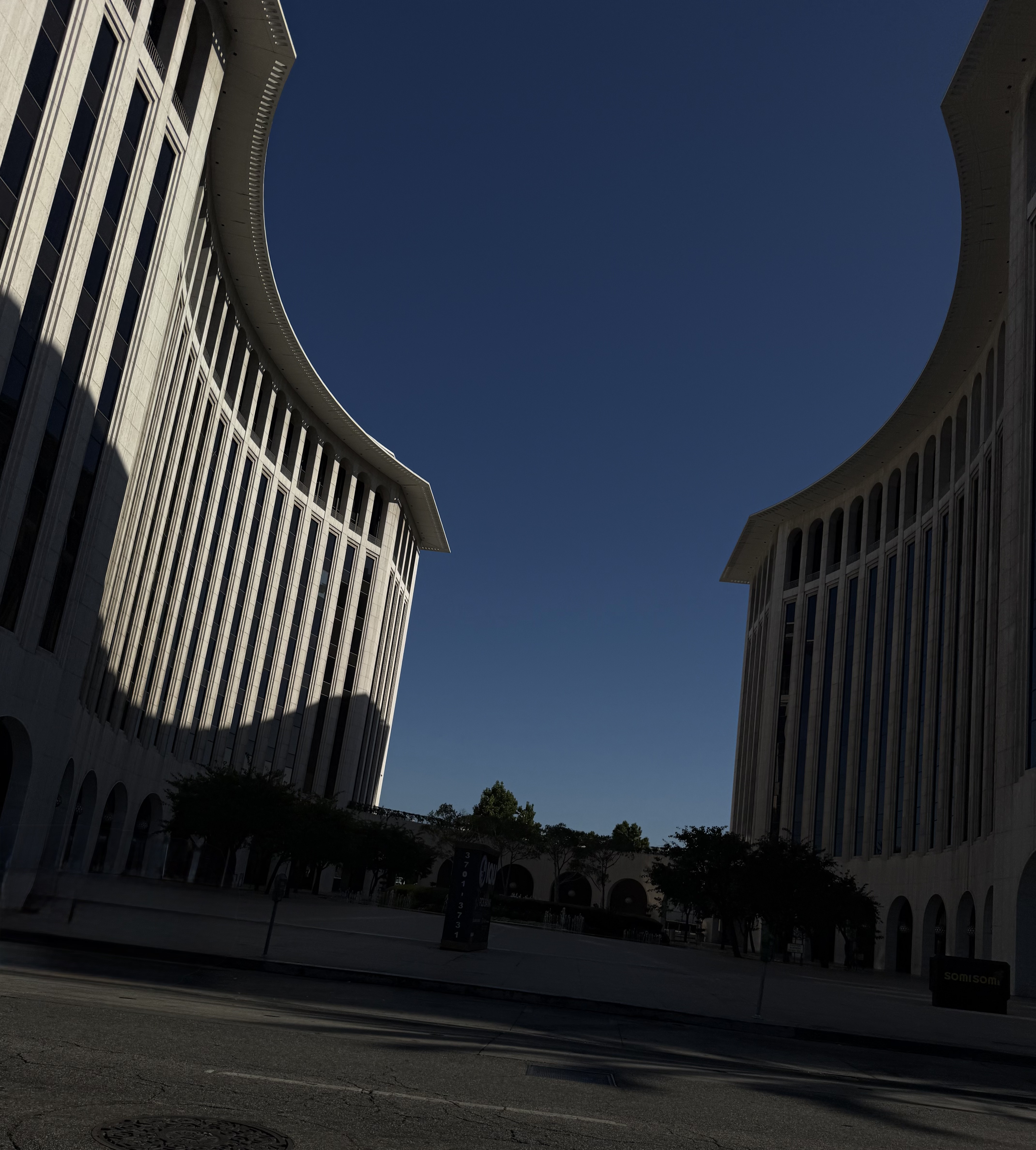
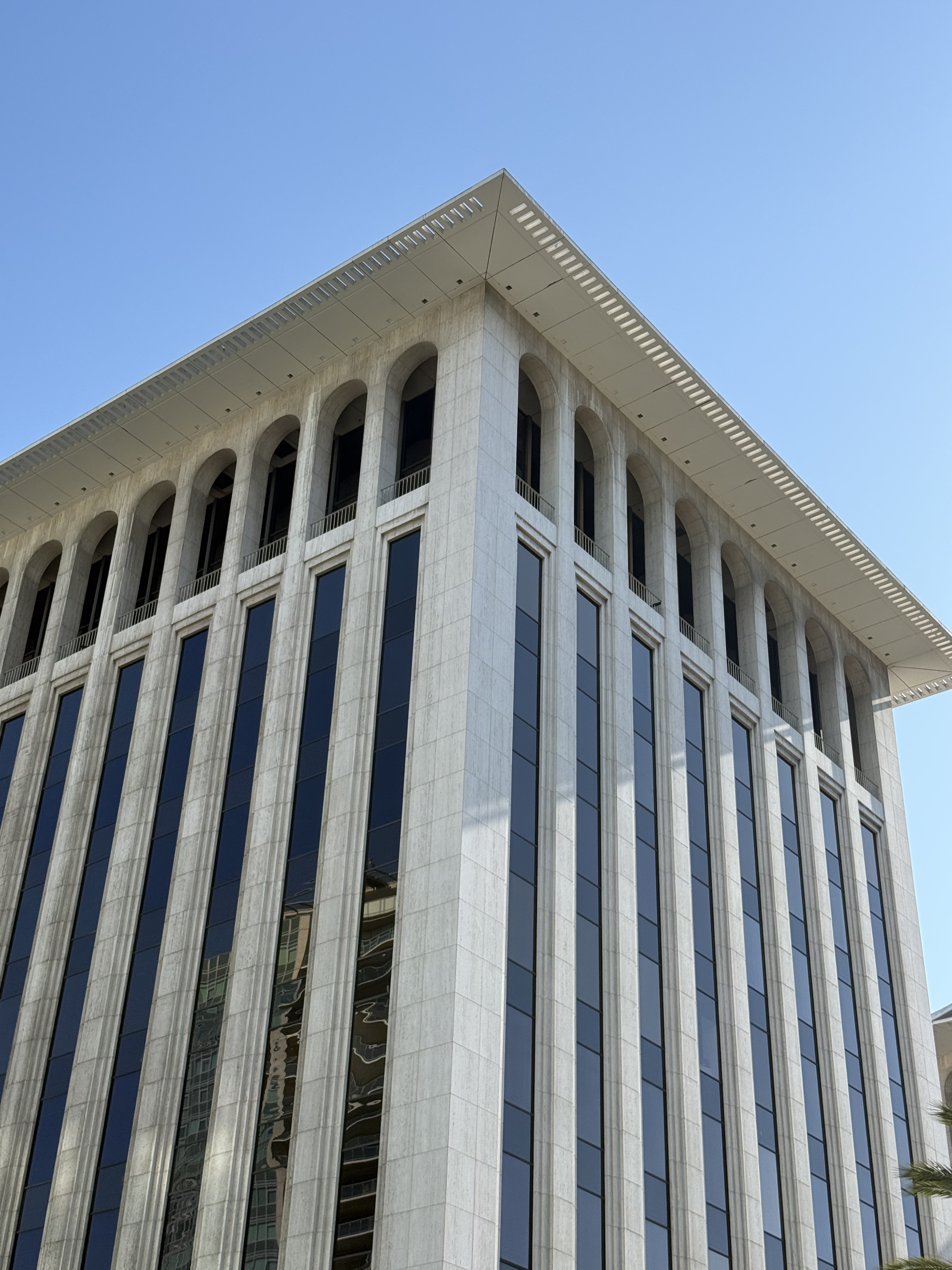
Two symmetrical, curving eleven story buildings clad entirely in travertine form a broken horseshoe shape around a central plaza, deliberately recalling the curved colonnades in front of St. Peter's Basilica in Rome. Walkways paved in Italian Carrara marble lead through the plaza, which features fountains and sculpture beneath the buildings' distinctive arches and hanging lights evocative of the 1970s. The Colonnade exemplifies the New Formalist style, a reaction against the stark minimalism of the International Style that turned instead toward the lushness and abstracted ornament of classical architecture. Stone traveled frequently to Italy to study the classical forms he reinterpreted in travertine and marble at the Colonnade.