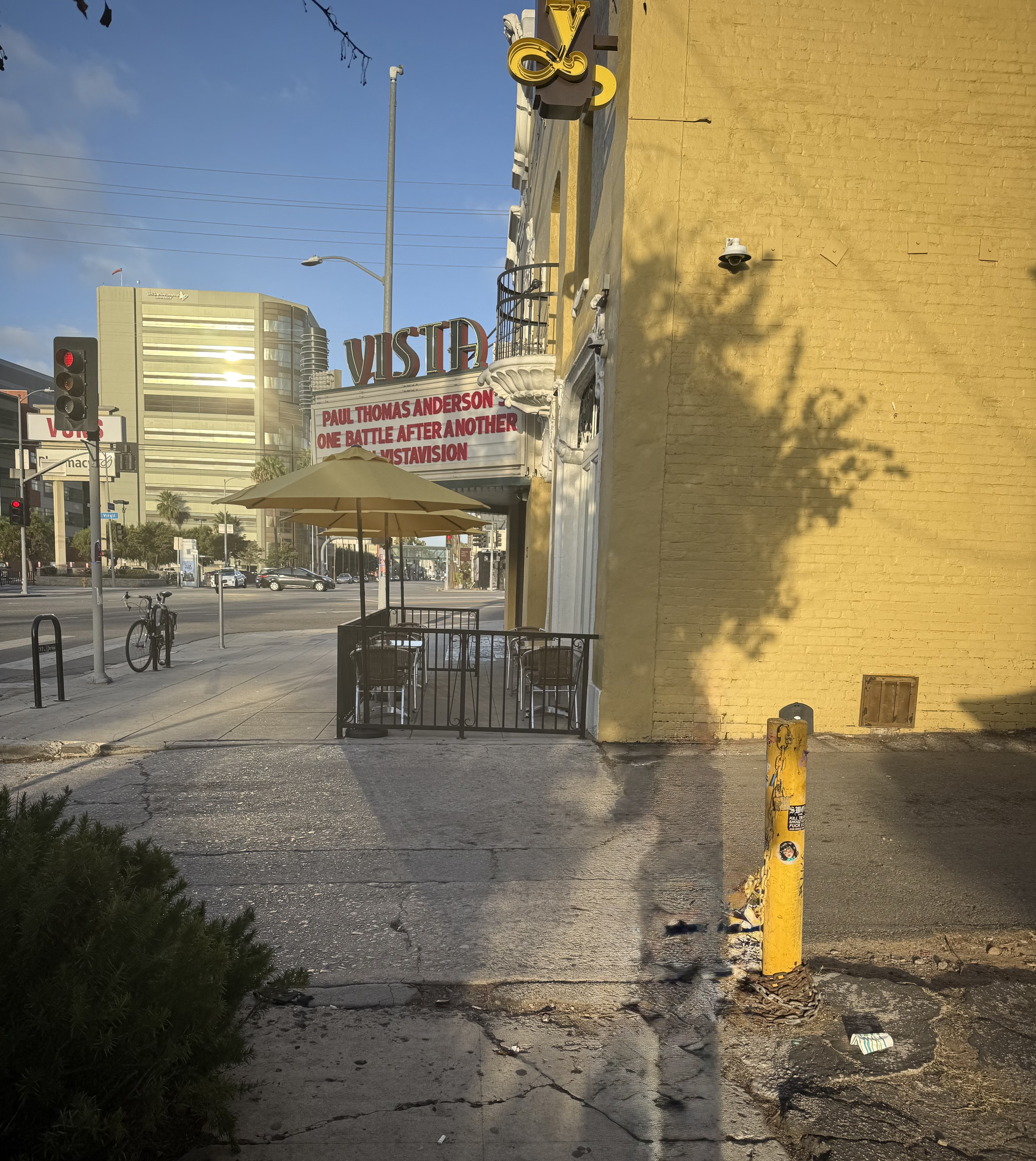
The Vista Theatre was a perfect storm of architectural timing and archaeological discovery in early 1920s Hollywood. Originally conceived in 1922 as the Lou Bard Playhouse by theater chain owner Louis L. Bard, the building was strategically positioned at the intersection of Sunset and Hollywood Boulevards, what Bard called "the great crossroads of Los Angeles." Designed by theater architect Lewis A. Smith, the project began as a Spanish Colonial Revival structure to harmonize with the area's prevalent architectural character. However, the 1922 discovery of King Tutankhamun's tomb created a cultural obsession with Egyptian motifs that swept through American theater design, prompting a dramatic mid-construction pivot. With the Spanish Mission Revival exterior too far along to alter but interior plans still flexible, Smith created an architectural hybrid: a mission-style facade concealing an elaborate Egyptian-themed interior that opened on October 9, 1923, with 838 seats ready for both vaudeville and the new medium of cinema.
The Mission Revival facade harmonizes seamlessly with Los Feliz's established architectural vocabulary, while inside, the auditorium transforms into an ancient temple complete with ten life-size pharaonic masks mounted along the side walls, five flanking each side in eerie illumination. Hieroglyphic plaster relief sculptures cascade throughout the lobby spaces, while Egyptian-themed columns frame the original proscenium arch, creating a theatrical environment that predates the film experience itself. The 1938 neon marquee crowns the street presence, complemented by a gold-toned Egyptian Revival box office addition from 1942 that extends the interior's exotic motifs to the entrance sequence, while ornate Wurlitzer organ grilles remain as illuminated architectural features from the theater's original musical programming.