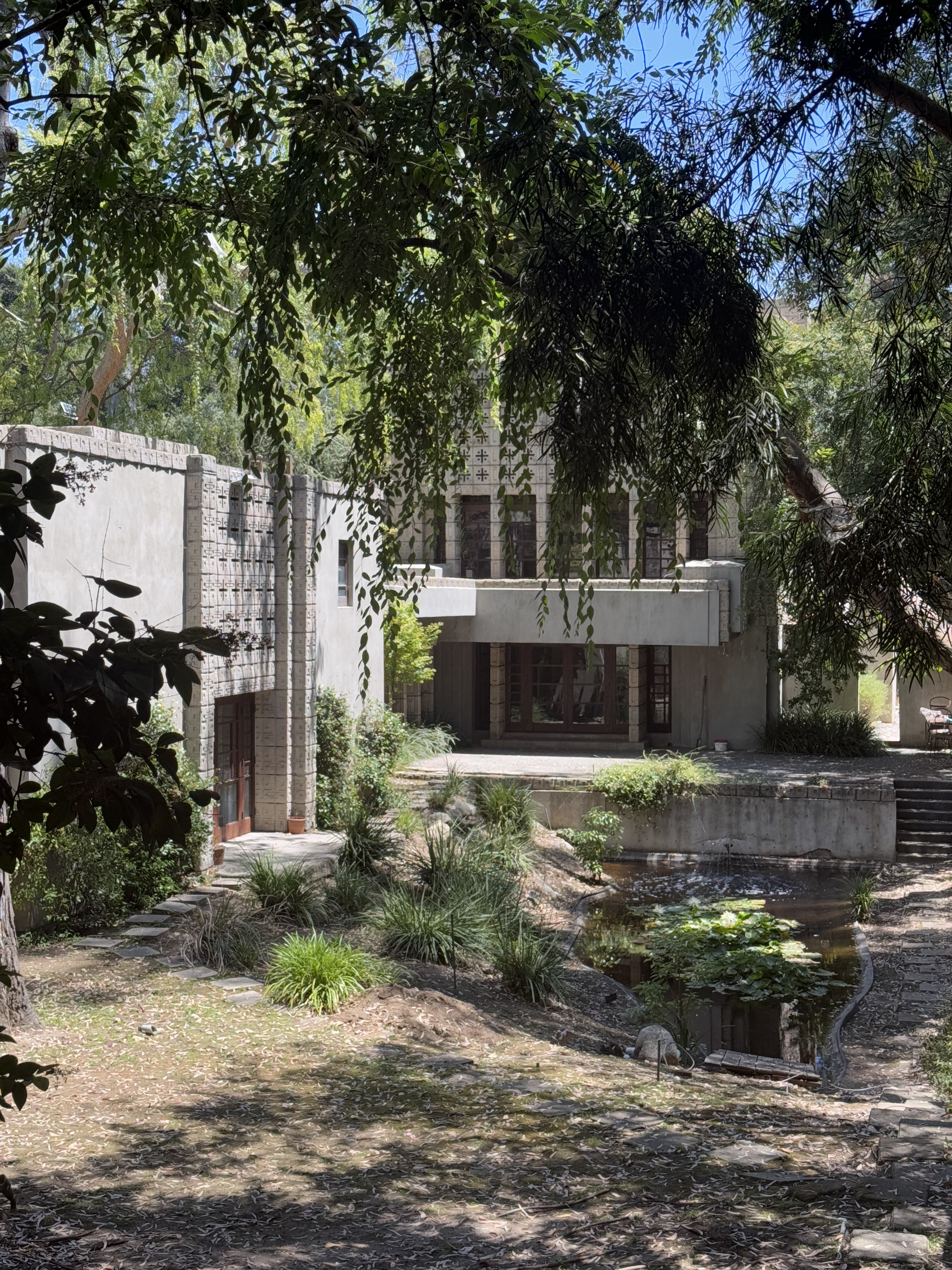
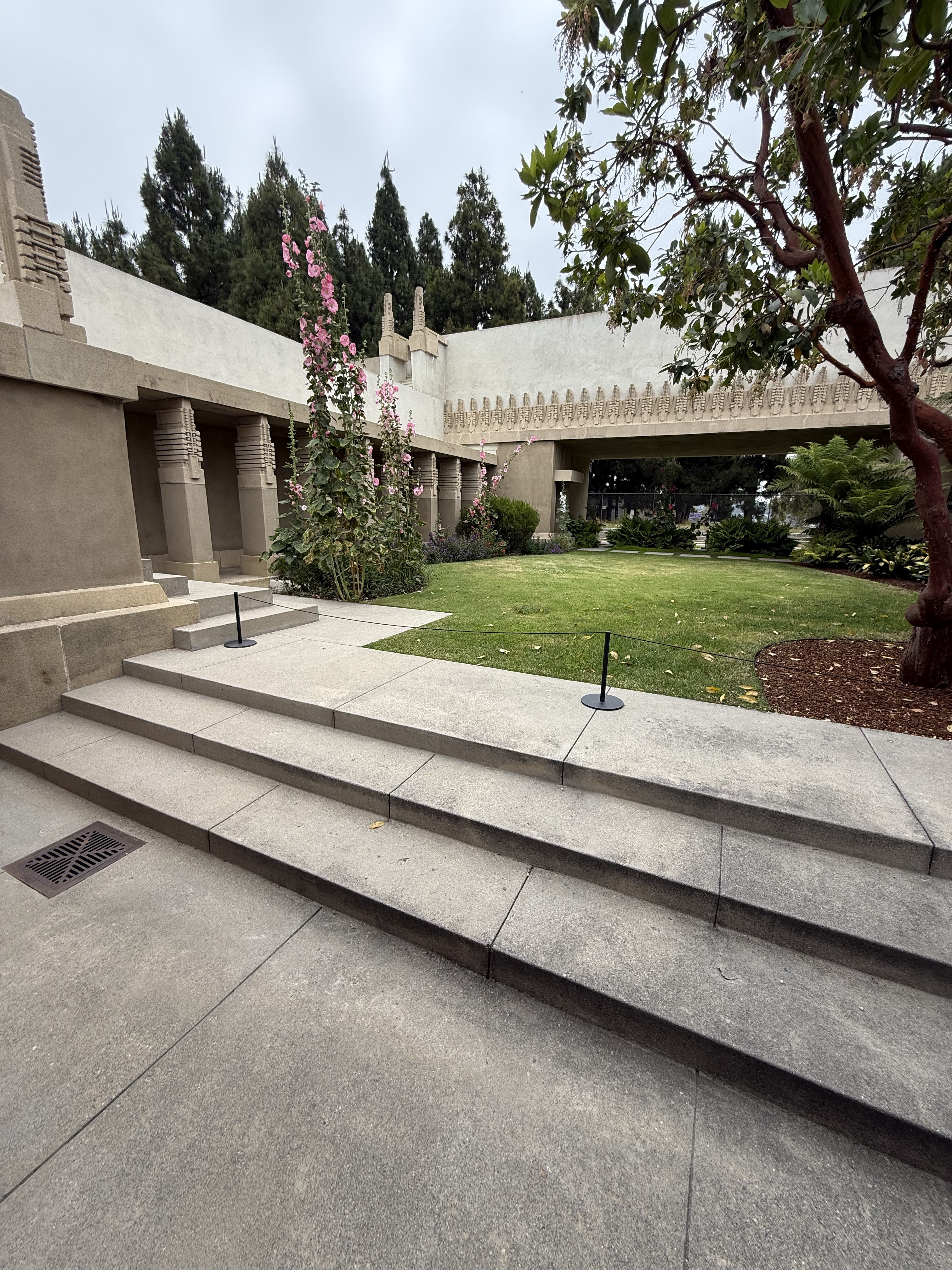
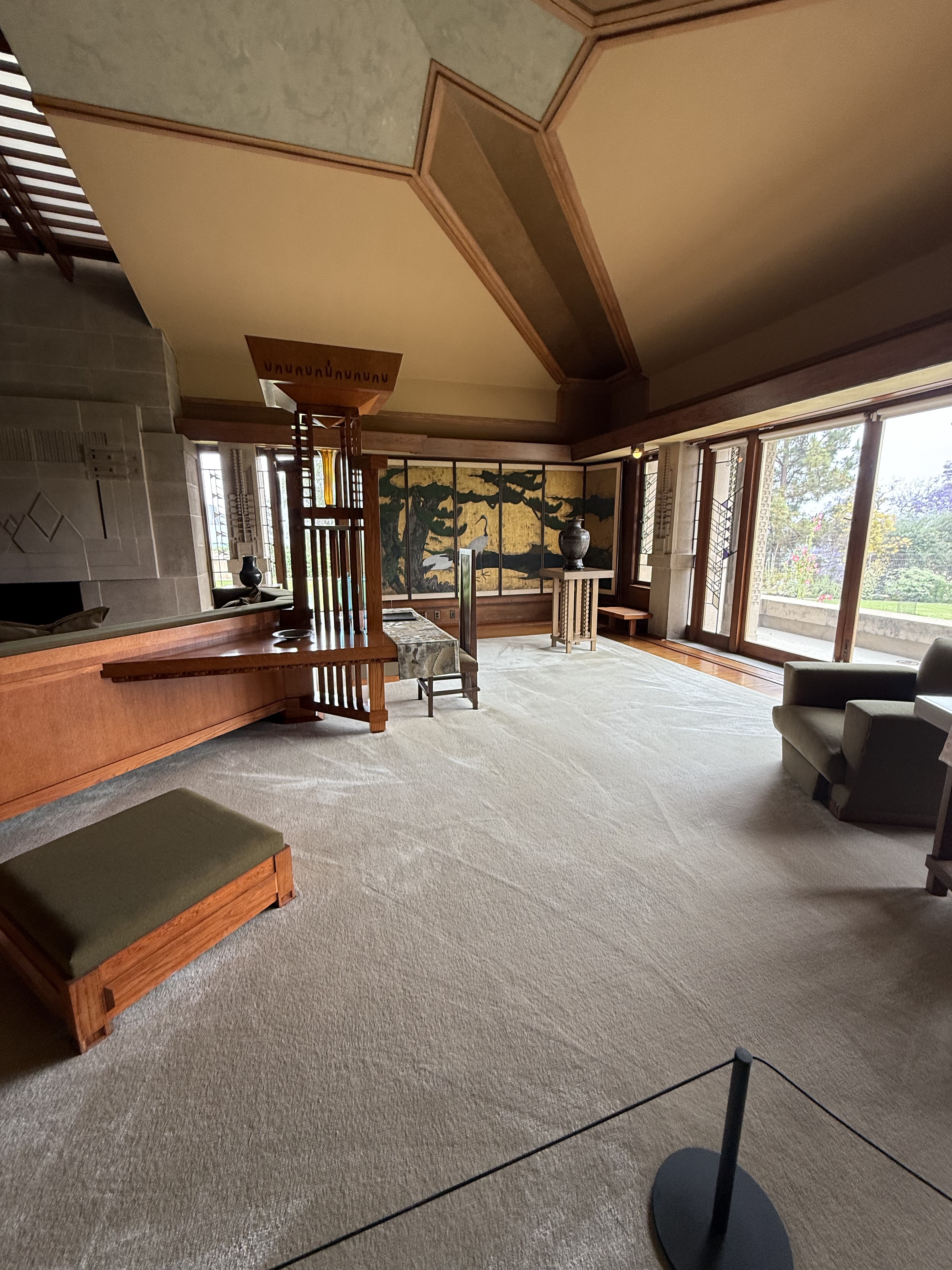
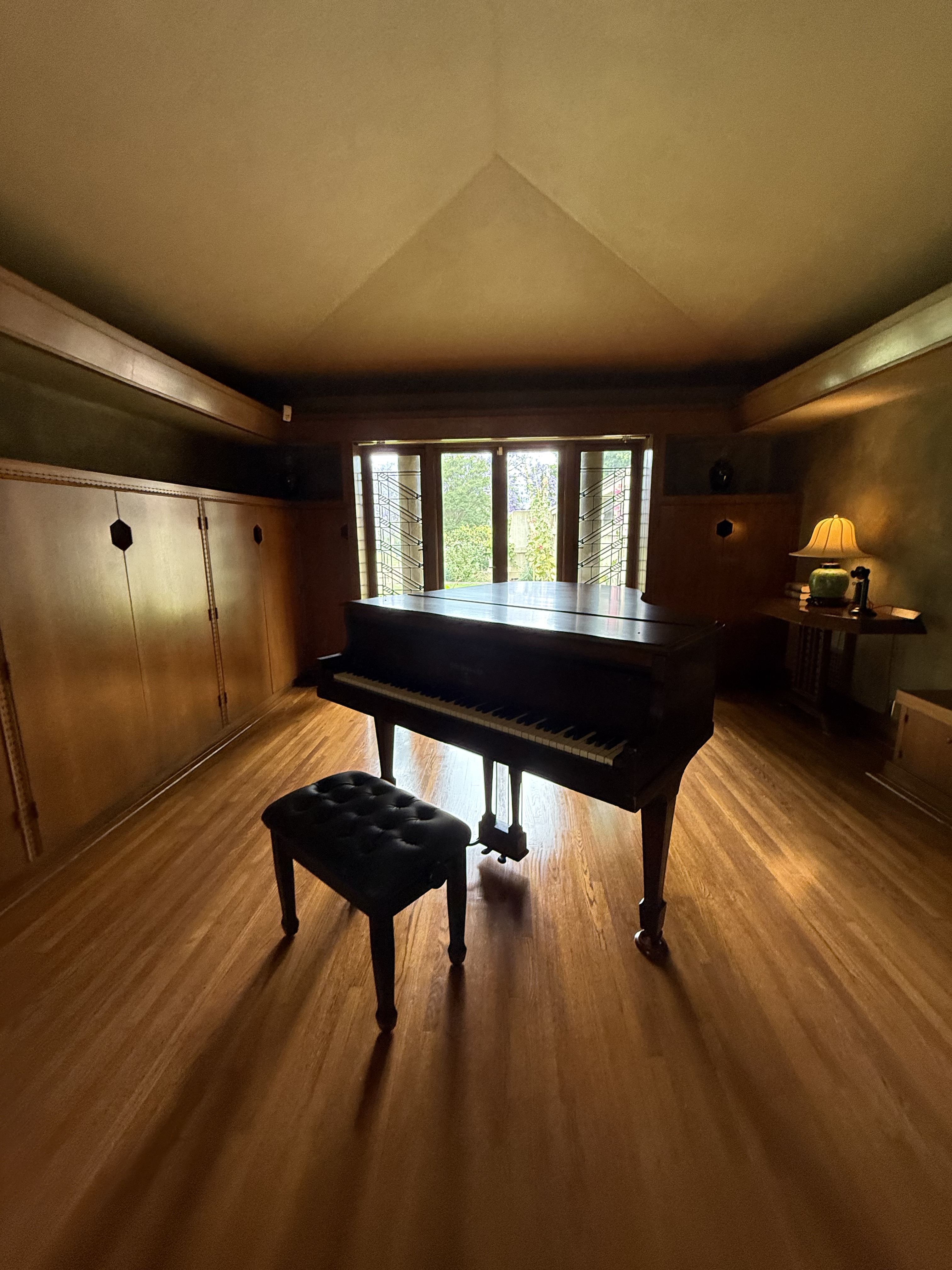
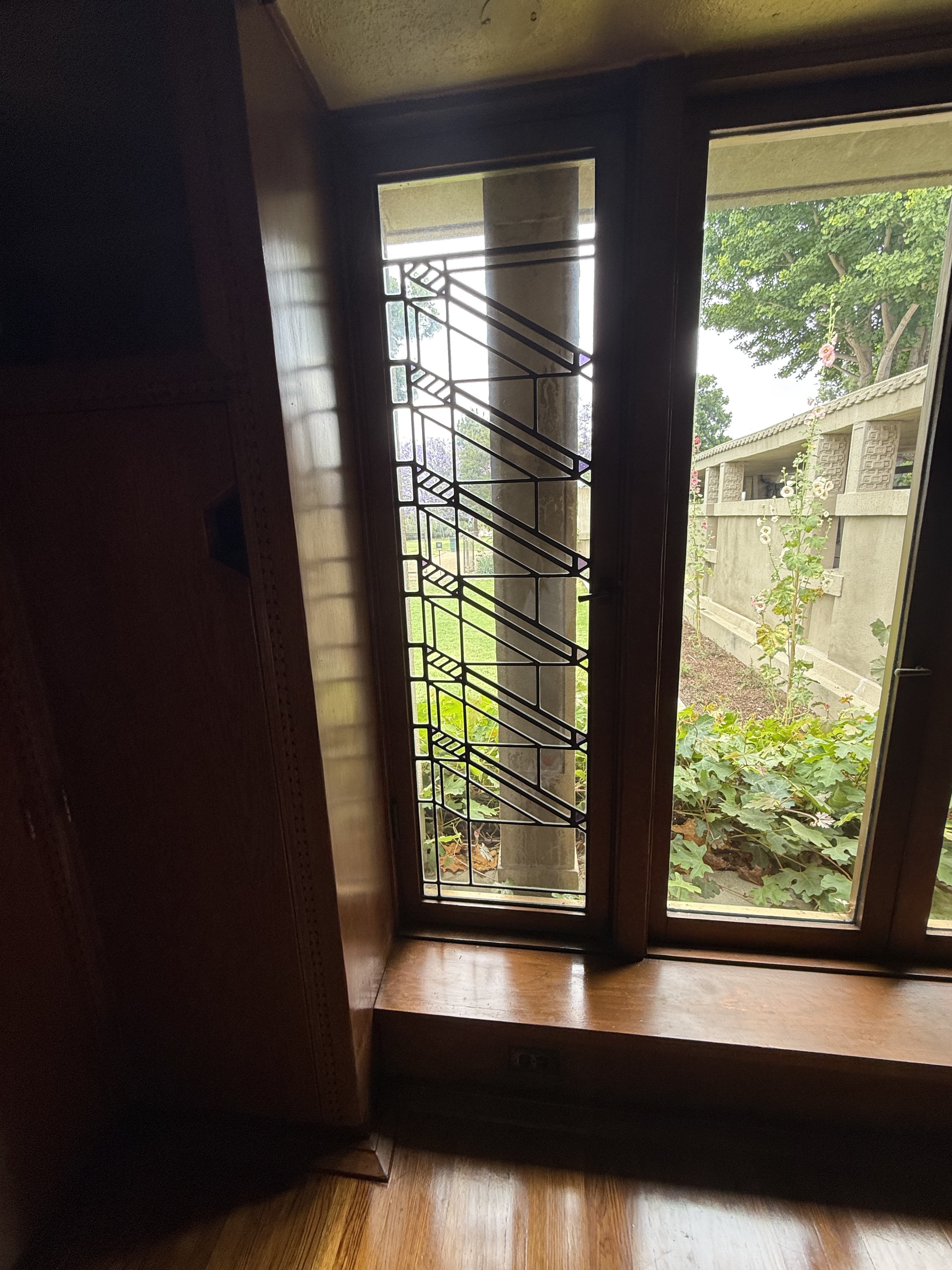
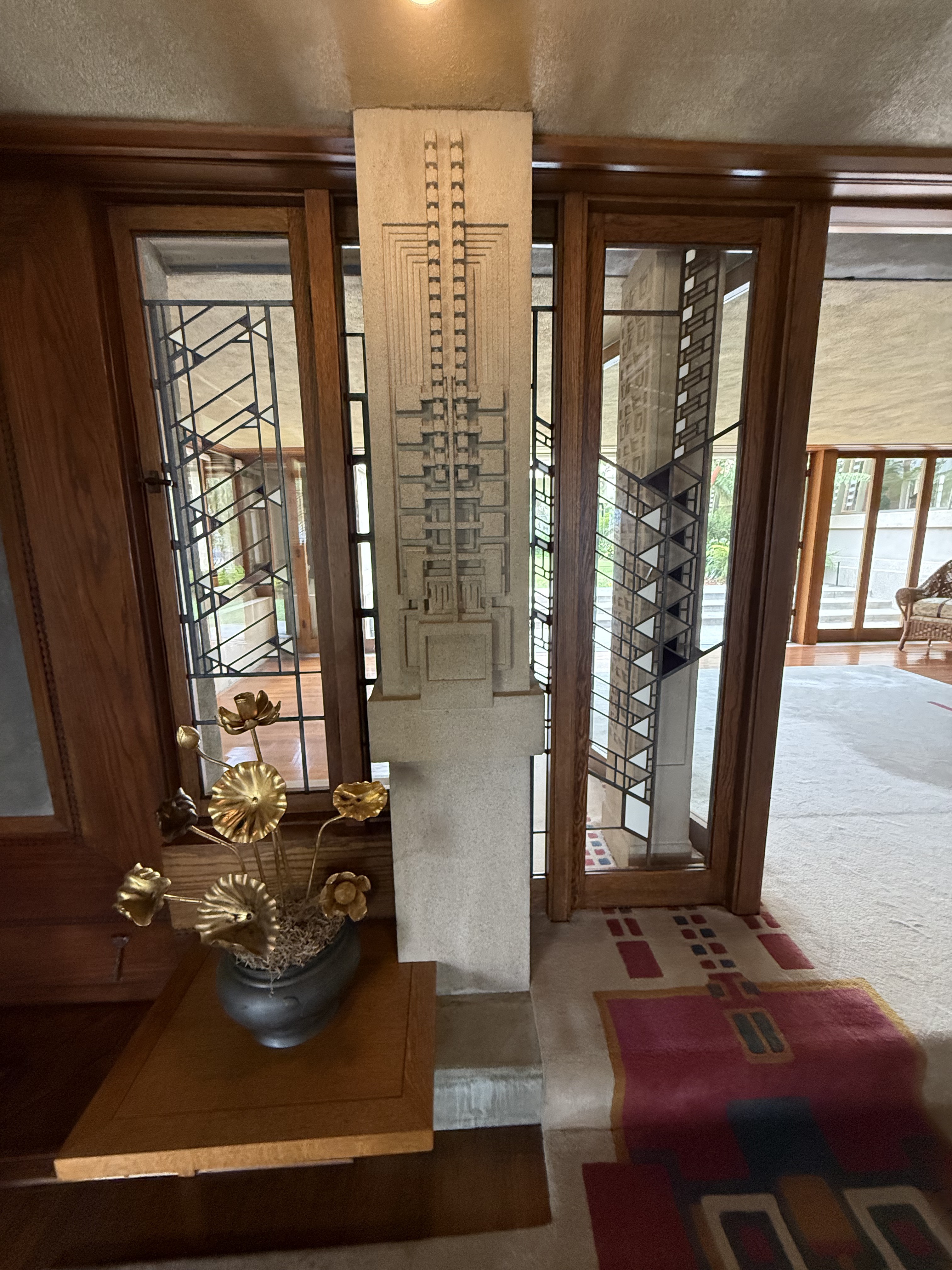
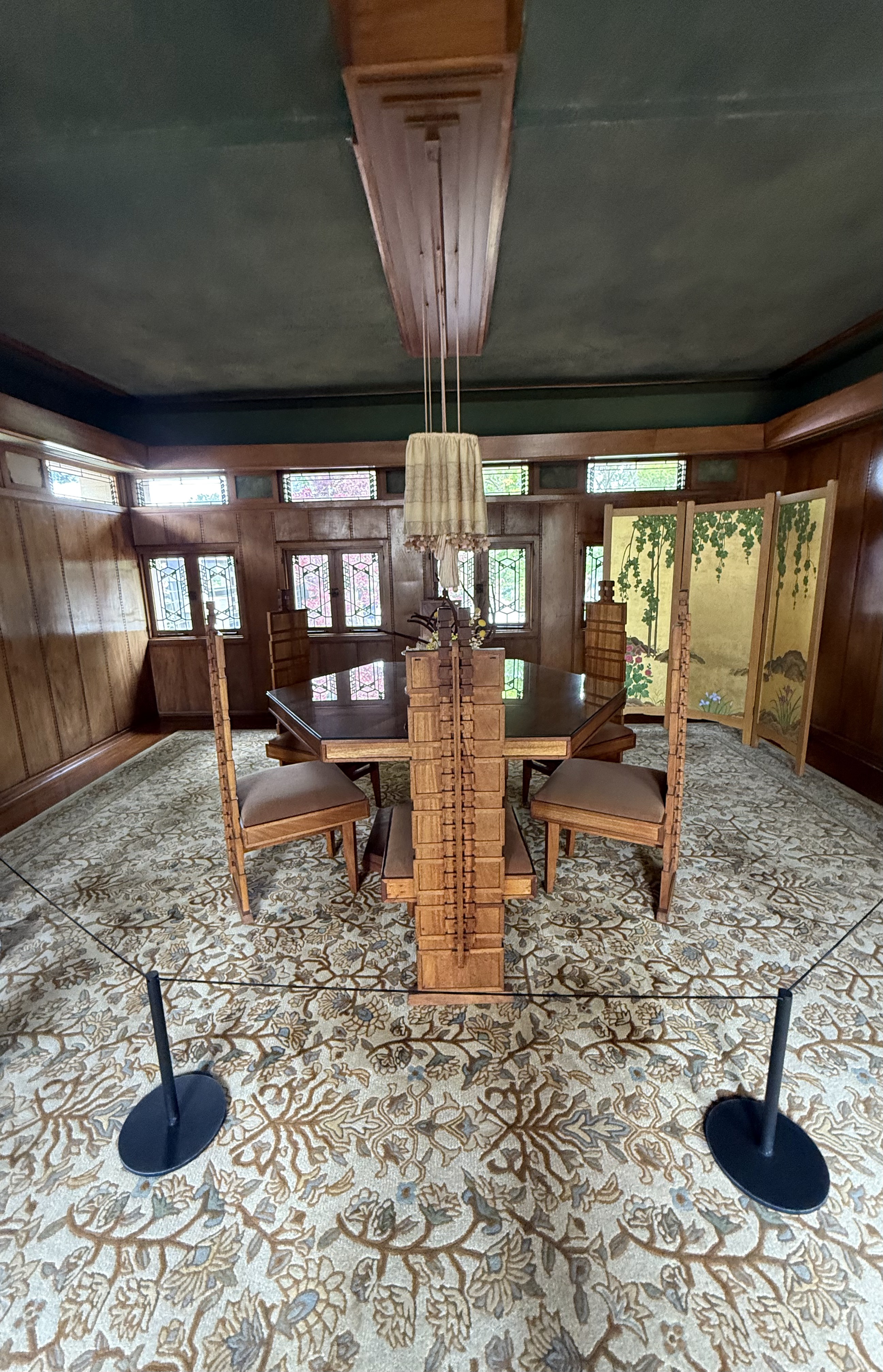
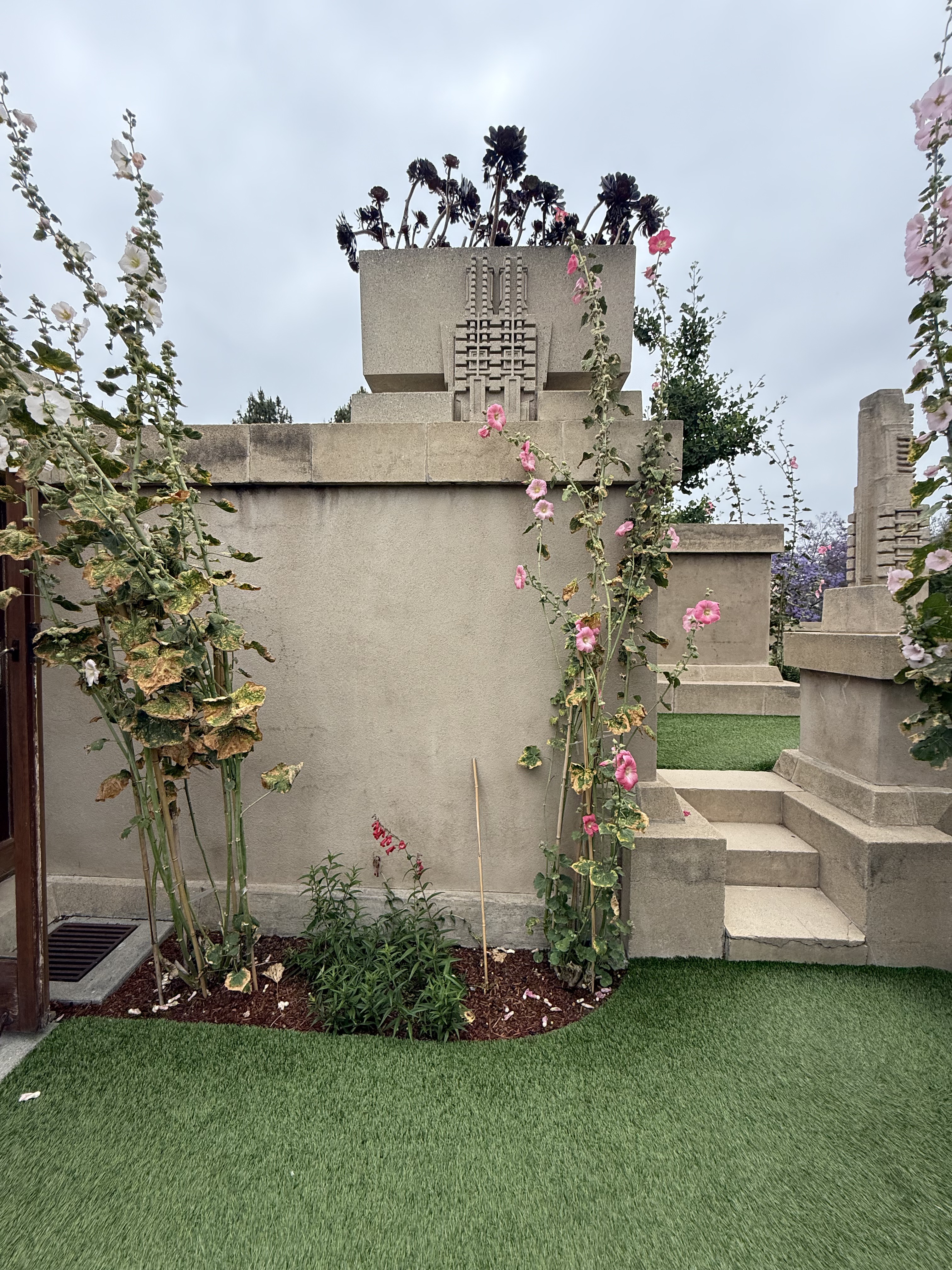
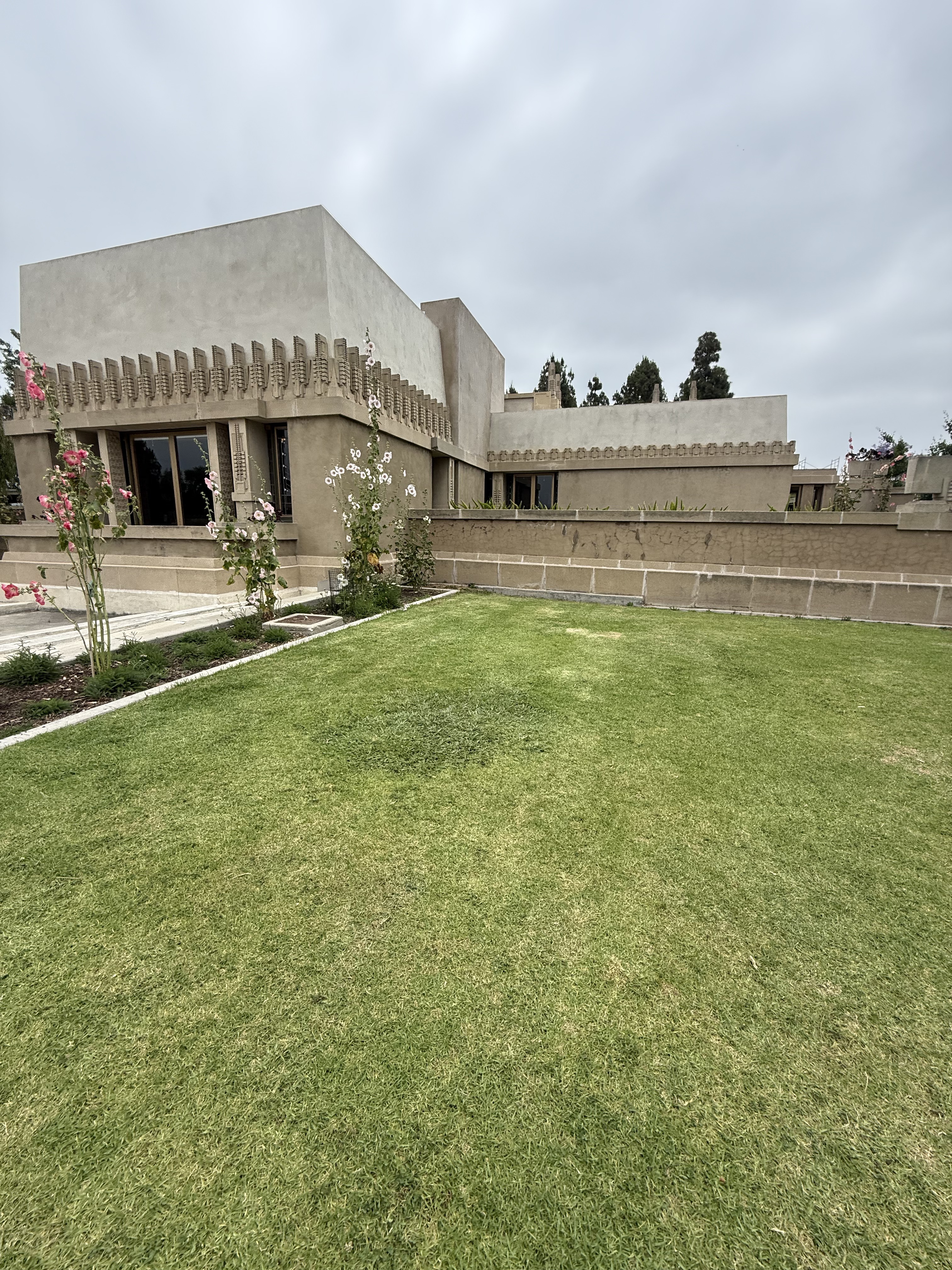
Hollyhock House was created for oil heiress Aline Barnsdall's ambitious vision to create an artists' colony and theatrical complex atop Olive Hill in Los Feliz. After meeting Frank Lloyd Wright in Chicago around 1915, Barnsdall commissioned what would become his first Los Angeles project, with construction beginning in 1920. The build proved tumultuous; cost overruns, design disputes, and construction delays plagued the project while Wright was simultaneously in Japan designing the Imperial Hotel, leaving much of the oversight to his son Lloyd and Rudolf Schindler. Wright was eventually fired in 1921 due to budget conflicts, but not before creating what he termed his "California Romanza", meaning "freedom to make one's own form," completed that same year at a final cost of approximately $125,000-$200,000. Named for Barnsdall's favorite flower, the house integrates stylized hollyhock motifs throughout its design, marking a pivotal moment when Wright's Prairie School principles encountered the California landscape.
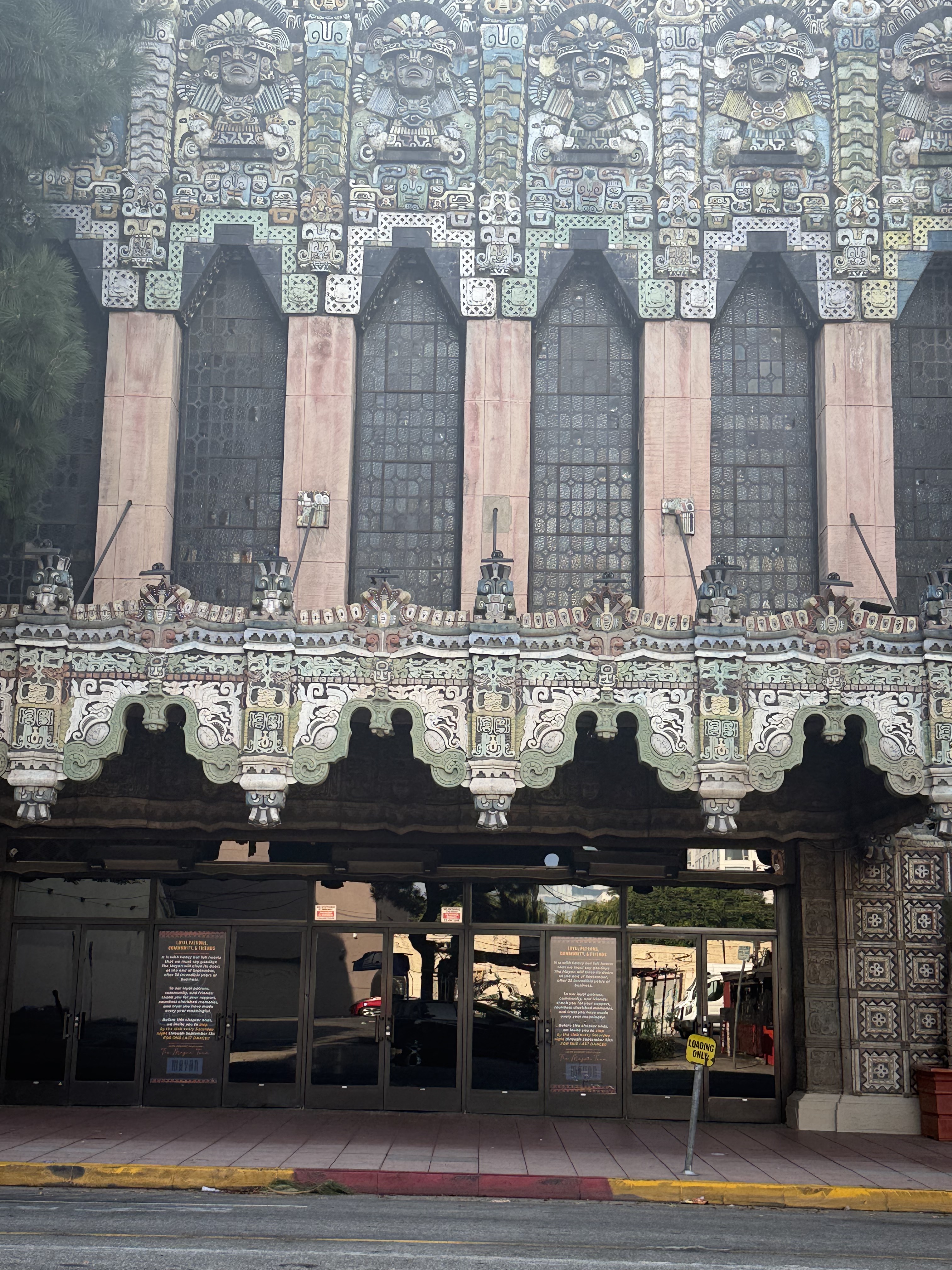
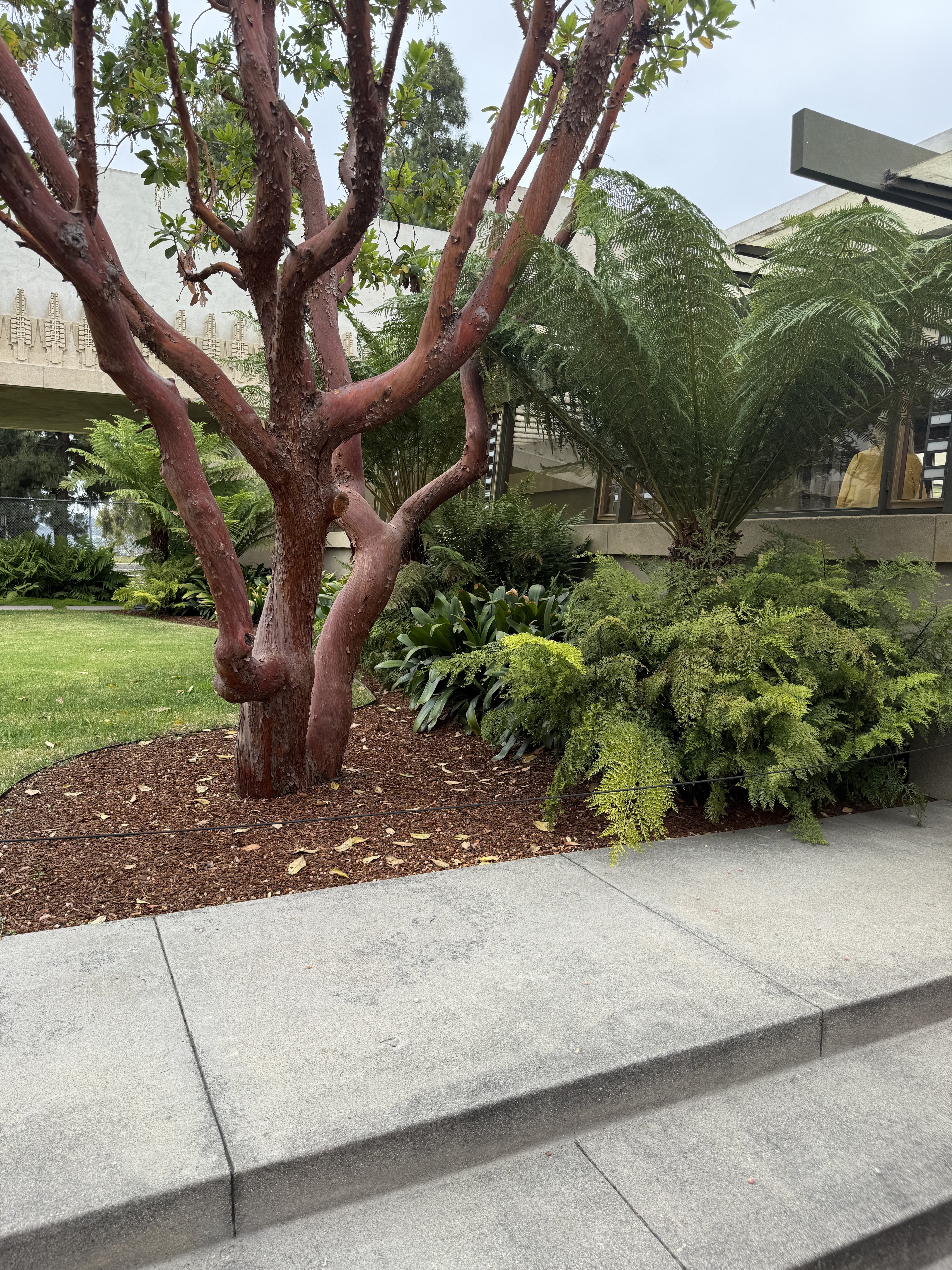
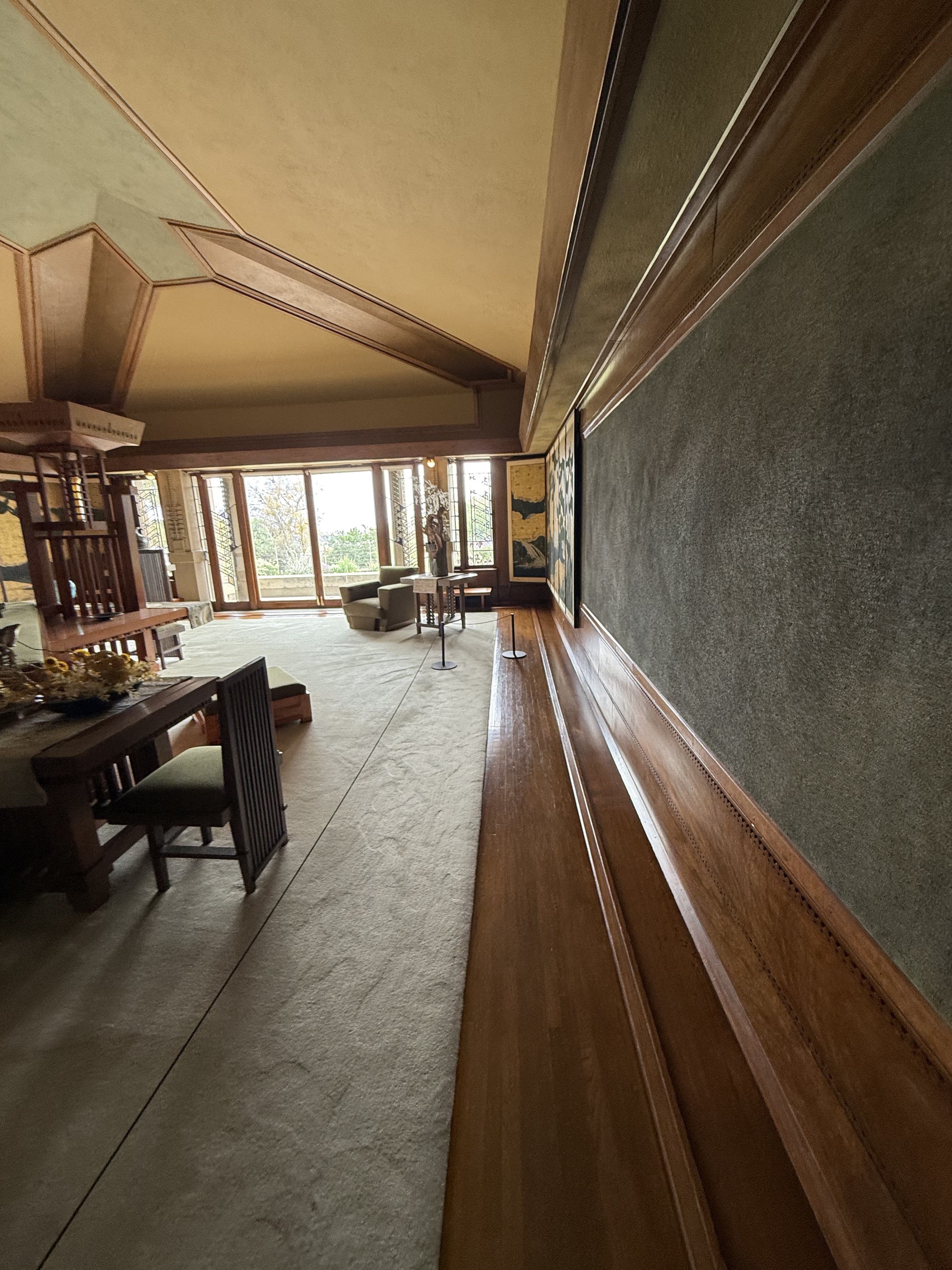
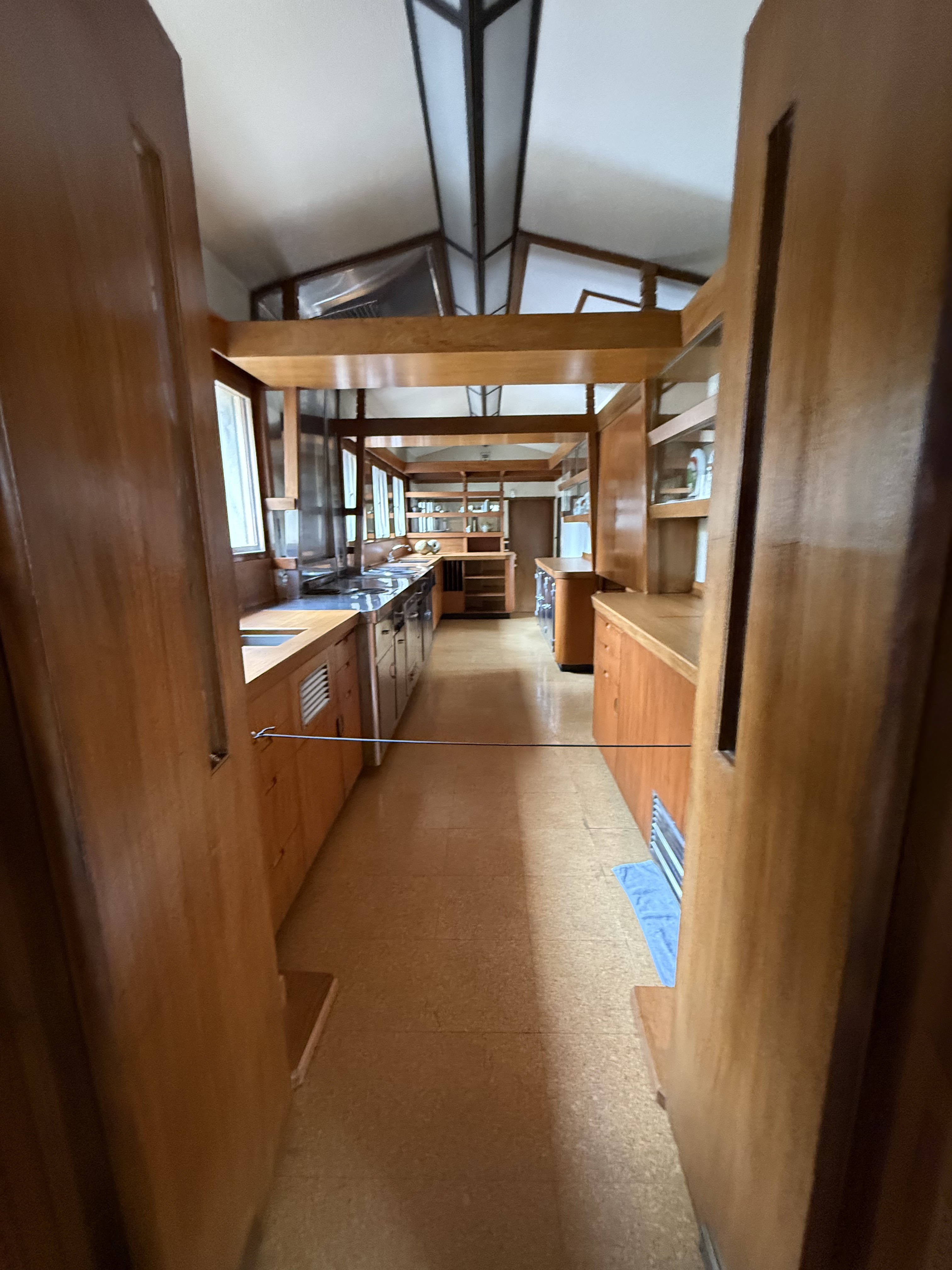
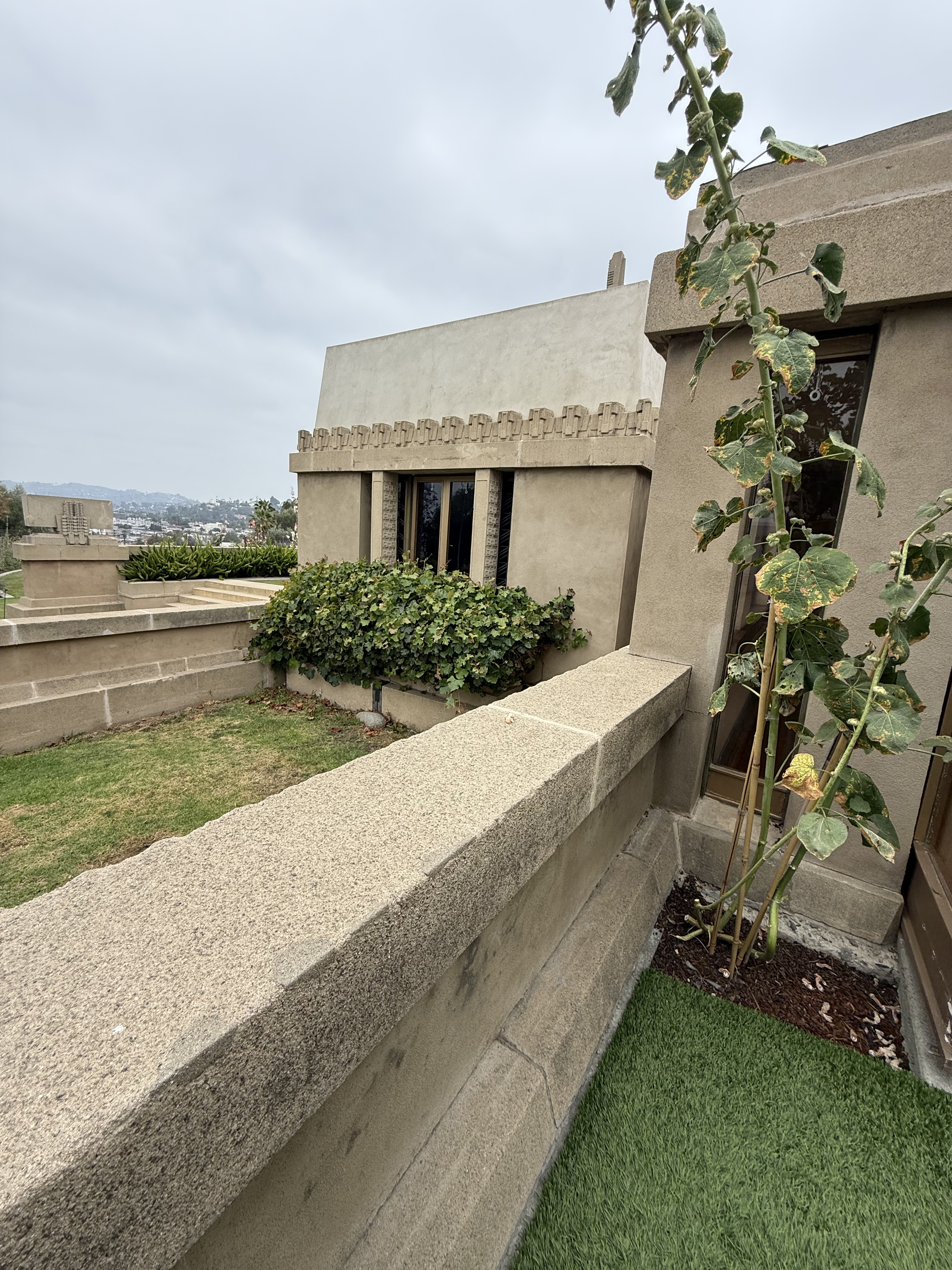
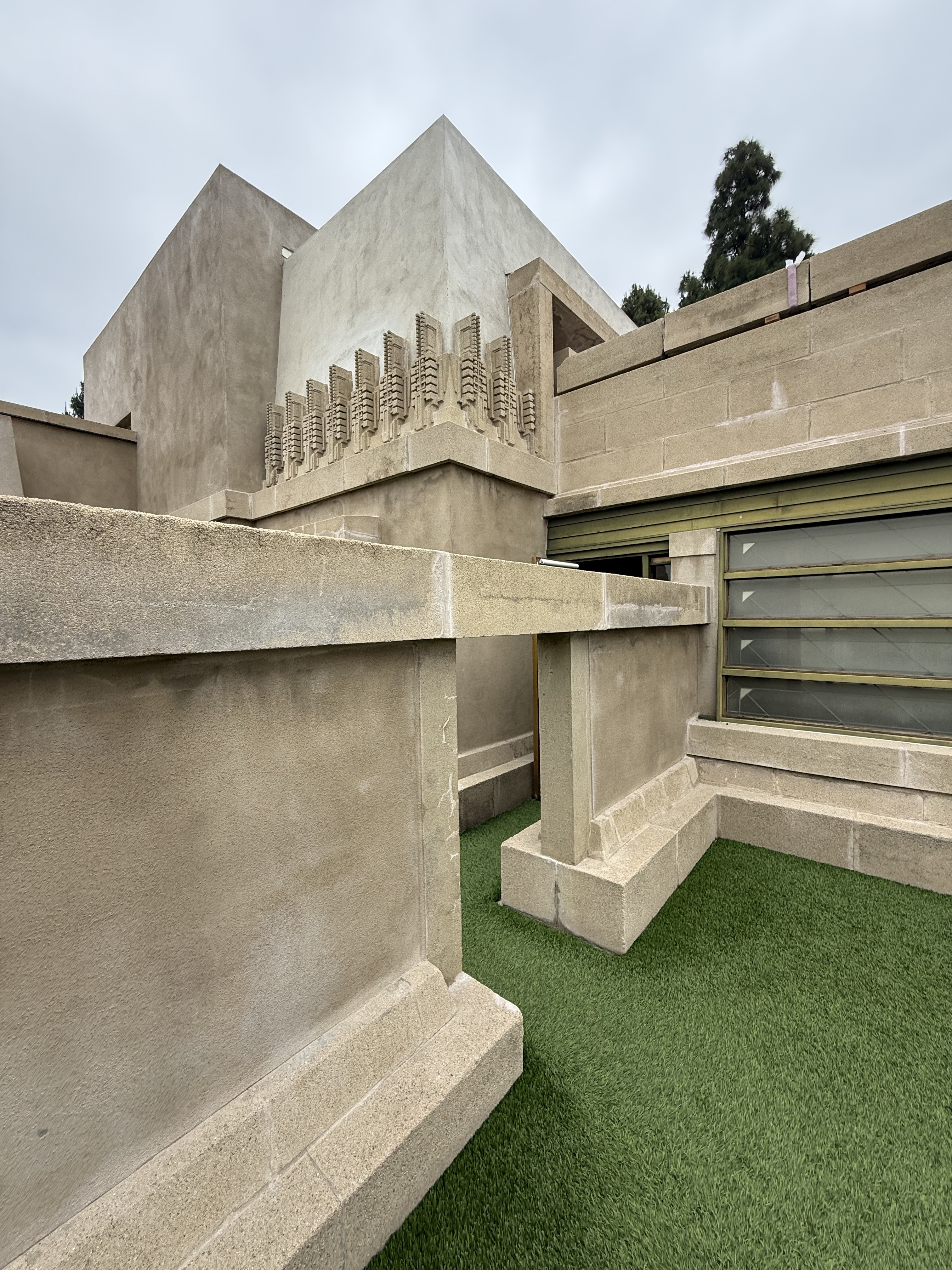
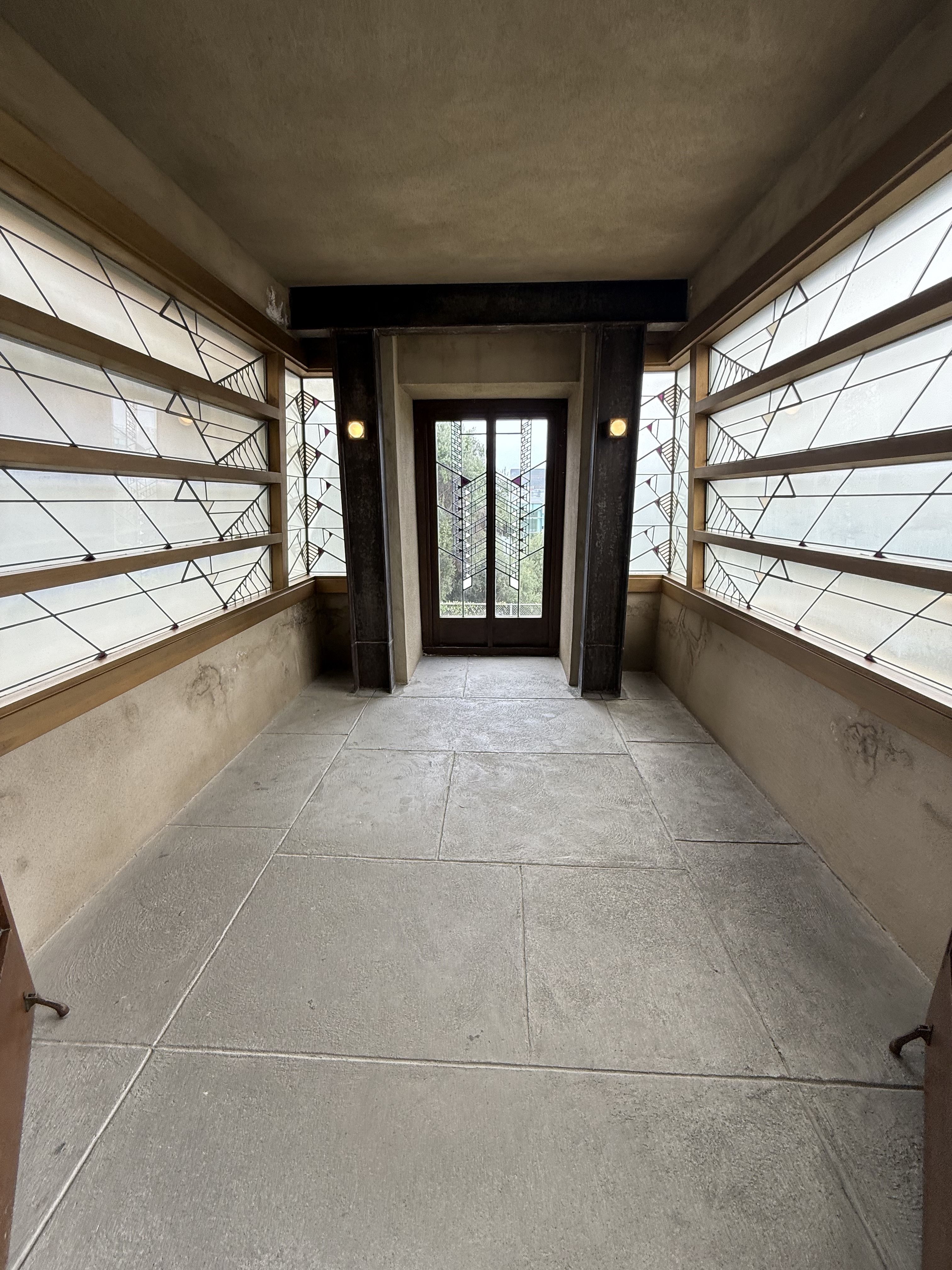
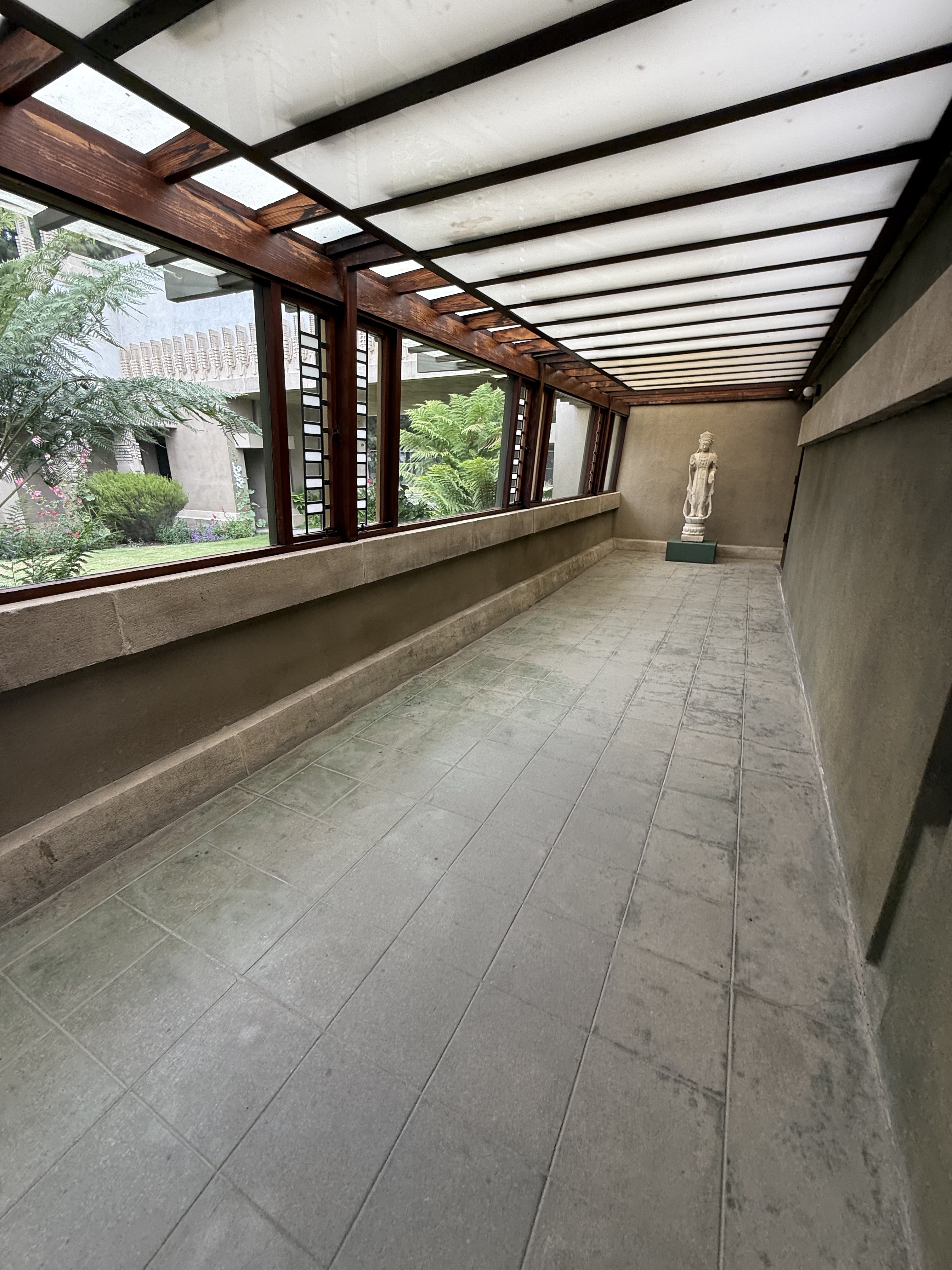
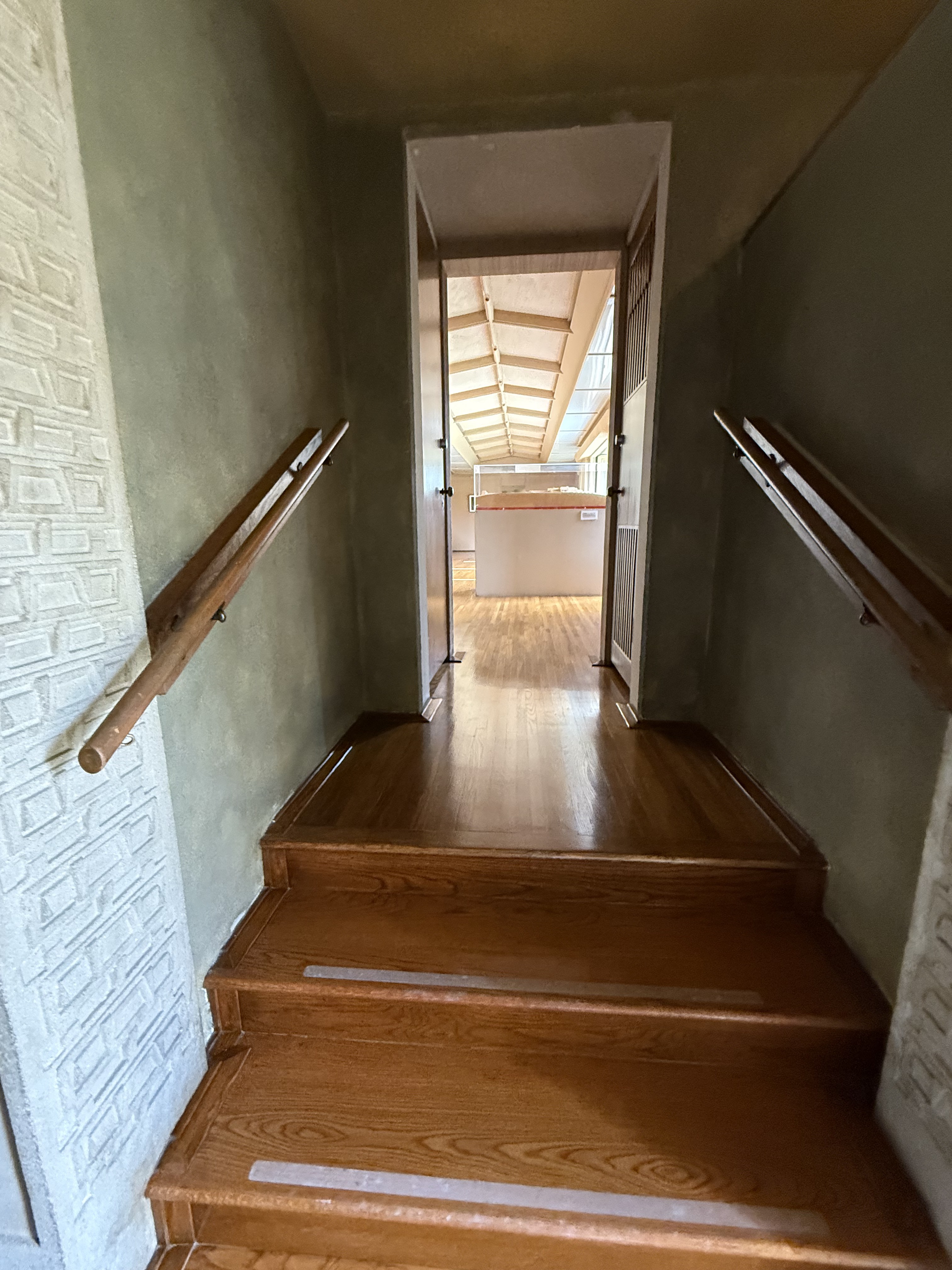
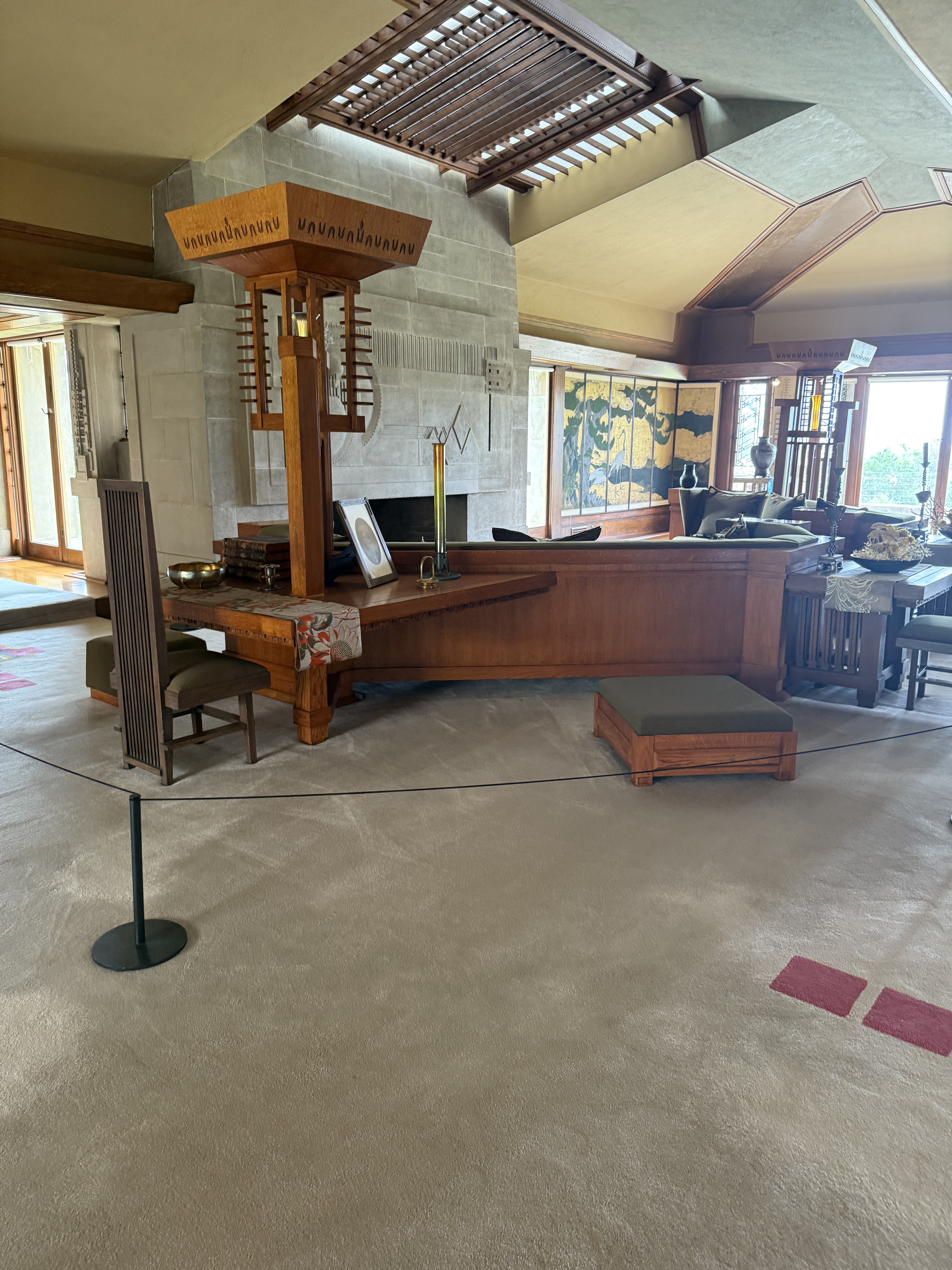
The residence presents a monumental, mesa-like form through its distinctive exterior walls of hollow clay tiles finished with stucco that slopes inward at the top, creating a fortress-like silhouette that stands apart from typical residential architecture. The 6,000-square-foot house organizes itself around a central courtyard with three distinct wings radiating outward: living and music rooms anchor the western wing, dining and kitchen occupy the northern section, and gallery and bedrooms extend to the south. Throughout the composition, stylized hollyhock motifs appear as cast concrete blocks integrated into the walls, while art glass windows punctuate the massive exterior surfaces with geometric patterns that echo the botanical theme. The design seamlessly dissolves the boundary between interior and exterior through a series of terraces, pools, and integrated gardens that extend the living spaces into the landscape. This architectural fusion creates a uniquely Californian expression that combines the horizontal emphasis of Prairie School design with the monumental massing and decorative richness of Mayan Revival architecture.
plan your visit
- INTERIORMUSEUM
- ADDRESS4800 Hollywood Blvd
- HOURSThursday-Sunday
- PARKINGavailable
- PHOTOGRAPHYAllowed inside with restrictions (no flash/tripods/selfie sticks)
- WEBSITEhollyhockhouse.org