
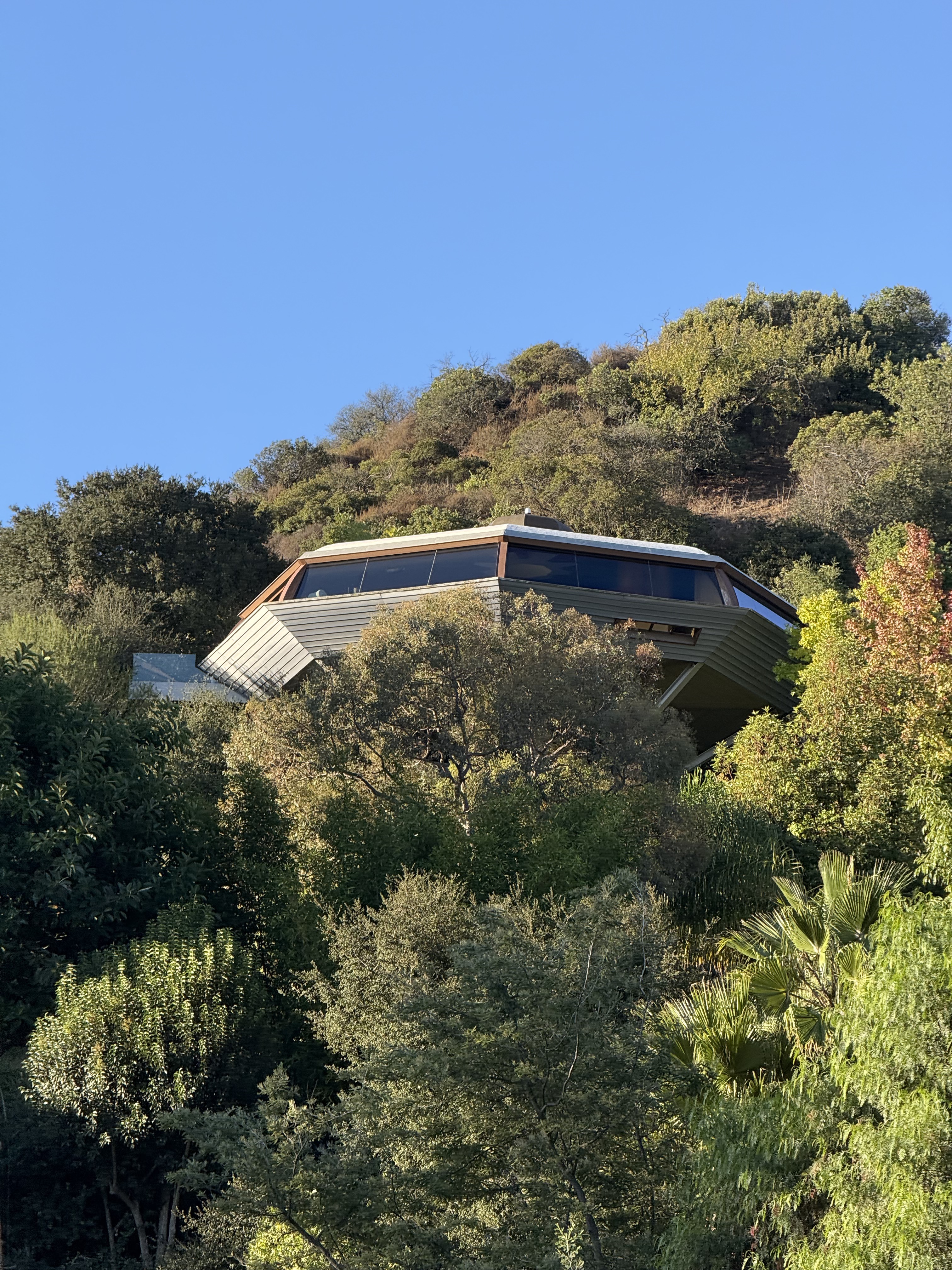
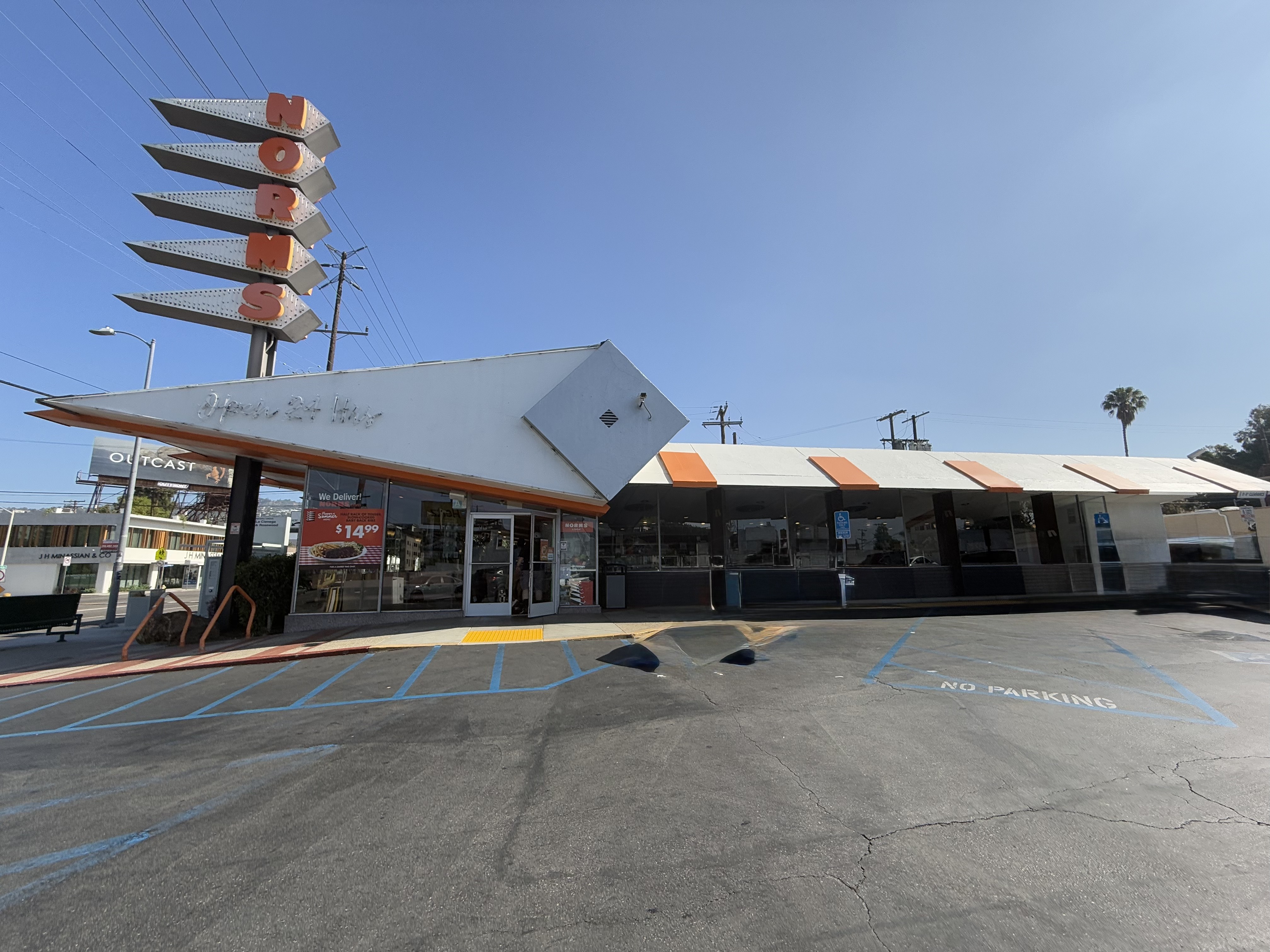
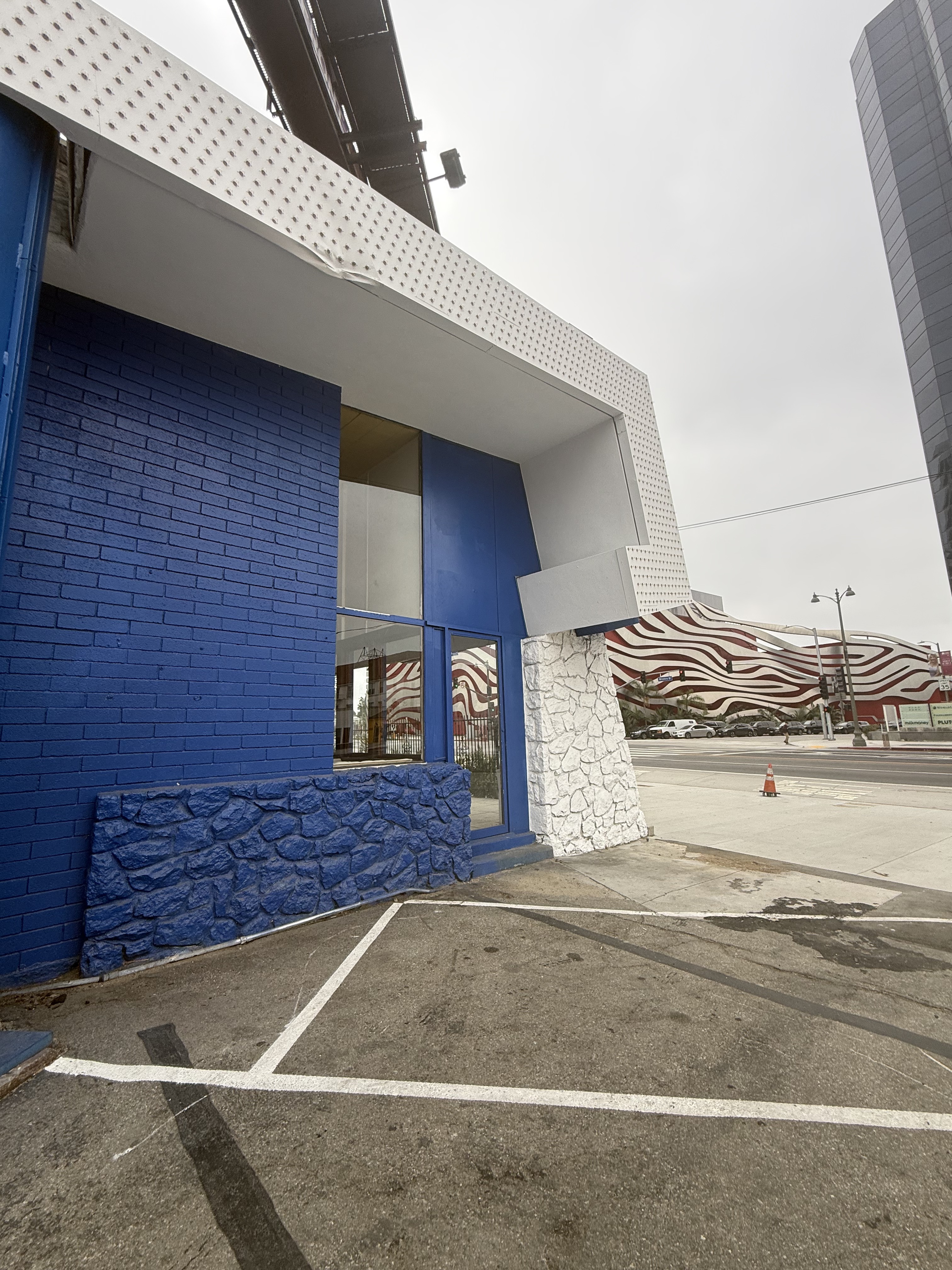
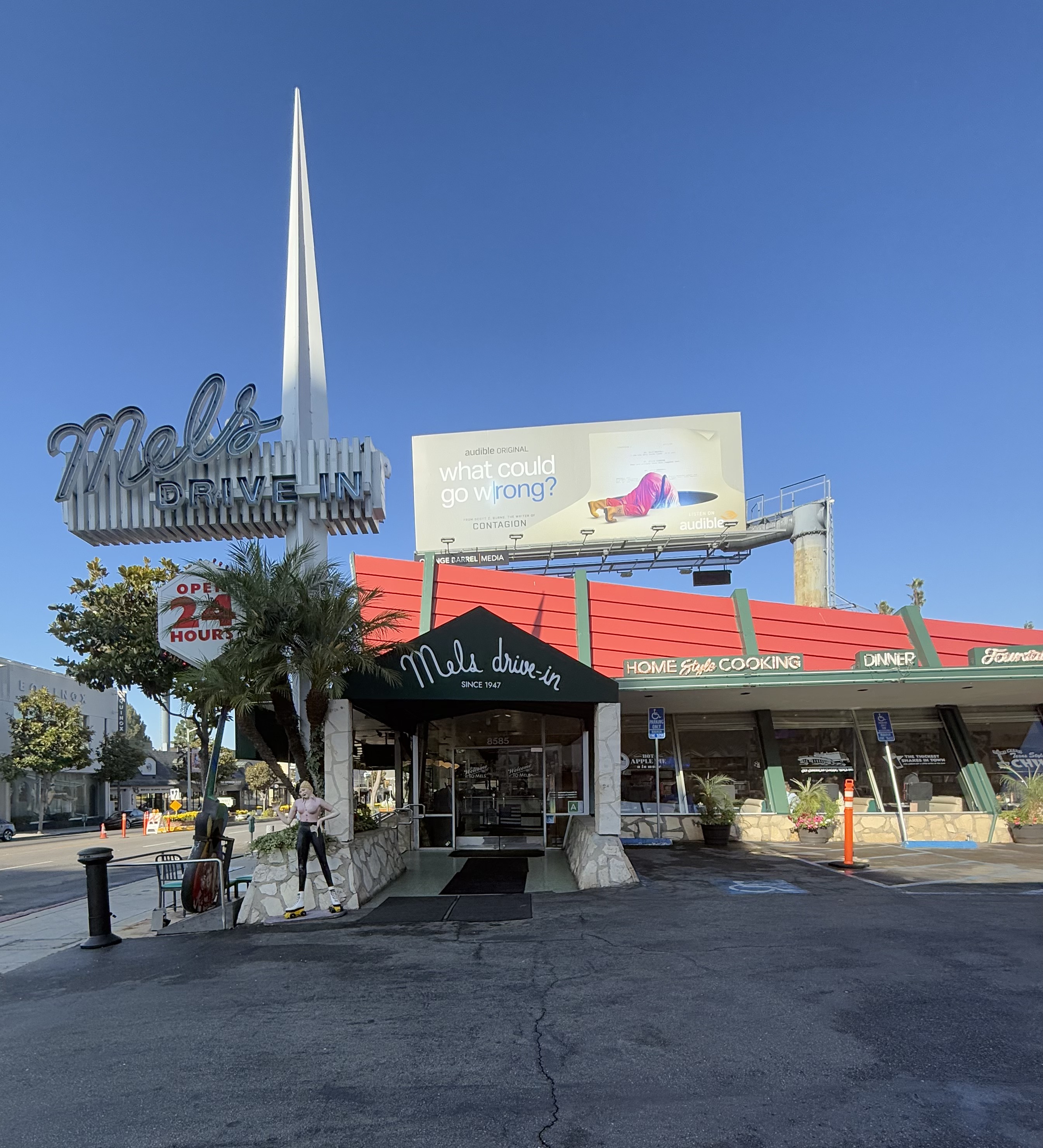
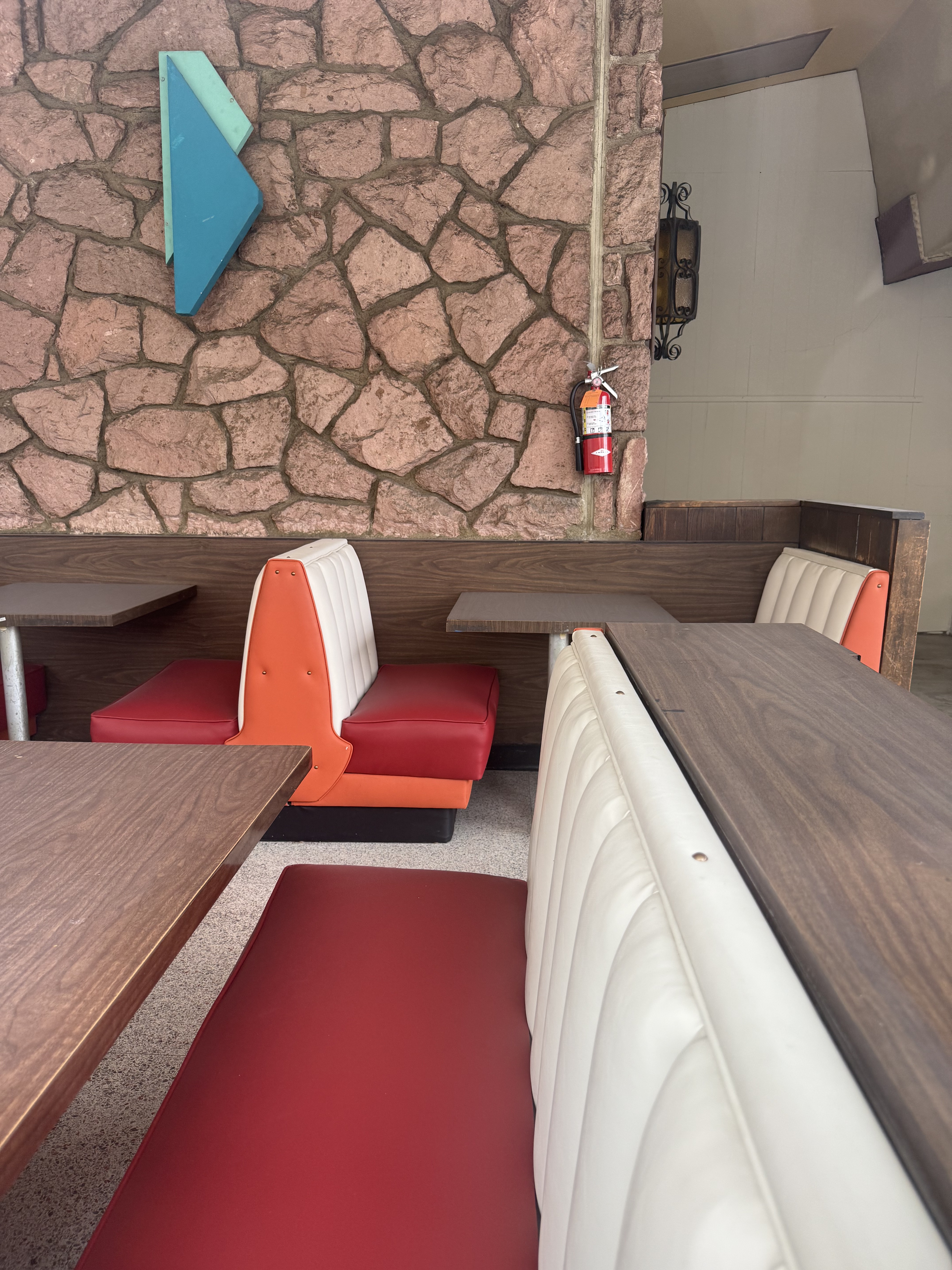
Born in Southern California around 1945, Googie architecture flourished through the early 1970s. Named after John Lautner's Googies Coffee Shop in Hollywood (1949), this futurist style emerged from 1930s Streamline Moderne architecture, capturing America's post-war optimism about technology, space exploration, and car culture. Googie embraced the "future is now" mentality, celebrating atomic power, jet travel, and space race excitement. The style coincided with massive suburban expansion, car culture dominance, and the beginning of the Space Race. Buildings were designed as architectural billboards to catch motorists' attention from moving cars along commercial strips. The style represented democracy in architecture—developed by commercial architects for roadside businesses serving middle-class suburban consumers rather than cultural elite. By the 1970s, environmental consciousness and changing aesthetic preferences led to Googie's decline, with many examples demolished.
ELEMENTS
- Dramatic upswept roofs with angular, gravity-defying slopes that appear to launch skyward
- Space Age motifs including boomerangs, atomic symbols, starbursts, flying saucers, and parabolic curves
- Cantilevered structures that "hang from the sky" and defy conventional support
- Sharp geometric angles and free-form parallelograms
- Artist's palette cutouts and unconventional geometric shapes
- Extensive neon signage and illuminated plastic panels
- Floor-to-ceiling glass walls showcasing interior spaces